
Drug Tracking: How to Monitor Medications for Safety and Effectiveness
When you take more than one medication, drug tracking, the practice of systematically recording and reviewing your medications to ensure they’re working safely and as intended. It’s not just for people on complex regimens—it’s for anyone who’s ever wondered if their pill is actually doing what it’s supposed to. Many people don’t realize that even small changes—like switching from a brand to a generic, or adding a new supplement—can throw off how your body responds. Drug tracking means paying attention to your symptoms, lab results, refill patterns, and side effects over time. It turns guesswork into clear signals.
One of the biggest risks people overlook is drug interactions, when two or more medications affect each other’s performance in your body. For example, magnesium supplements can cut the absorption of osteoporosis drugs like Fosamax by up to 60% if taken too close together. Or, if you’re on warfarin and switch to a different generic version, your INR levels might drift out of range without you noticing. That’s why tracking isn’t about memory—it’s about documentation. Write down when you start a new drug, what dose, and how you feel after a week, two weeks, a month. Did your blood pressure drop too low? Did your joint pain return? Did you get dizzy after starting a new statin? These aren’t random events—they’re data points. And then there’s medication monitoring, the ongoing process of checking whether your drugs are still working as expected over time. It’s not enough to just take your pills. You need to ask: Is my blood sugar stable? Is my mood improving? Is my cholesterol still dropping? If you’re on a narrow therapeutic index drug—like thyroid meds, seizure drugs, or blood thinners—small changes in formulation can make a big difference. That’s why tracking your refill dates matters too. If you’re running out faster than usual, it might mean your body isn’t absorbing the drug properly. Even something as simple as using one pharmacy for all your prescriptions helps. Pharmacists see your full list. They catch duplicates. They flag interactions you didn’t know about. It’s a free safety net most people ignore.
Drug tracking isn’t complicated. It doesn’t need an app or fancy tools. A notebook, a phone note, or even a printed list you keep in your wallet works. The key is consistency. You don’t have to track everything every day. But when you start a new drug, or change a dose, or switch brands—write it down. Check in after a couple of weeks. Talk to your pharmacist. Bring your list to your doctor. The goal isn’t perfection. It’s awareness. You’re not just taking pills. You’re managing your health, one dose at a time. Below, you’ll find real-world guides on how to spot problems after a generic switch, how to avoid dangerous interactions, how to use DailyMed to verify your labels, and why centralizing your prescriptions with one pharmacy could save you from a hospital visit.
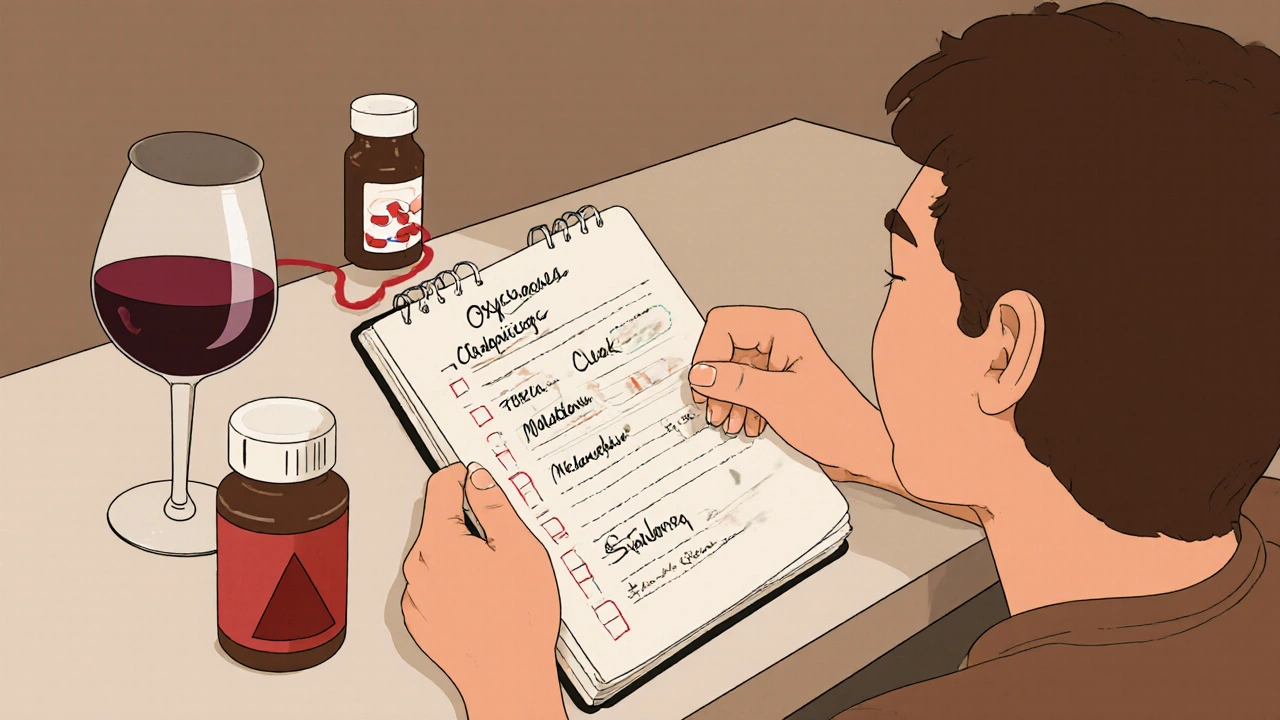
How to Use a Medication Log to Prevent Overdose Errors
Learn how to use a simple medication log to track what you take, when, and how you feel - and prevent accidental overdose from prescription drugs, alcohol, or dangerous combinations.
November 19 2025