
Every year, millions of people in the U.S. take vitamins, herbs, or protein powders without telling their doctor. Many believe these supplements are harmless because they’re sold over the counter. But when mixed with prescription drugs, some of these so-called natural products can cause serious harm-sometimes without warning.
Why This Isn’t Just a ‘Natural’ Problem
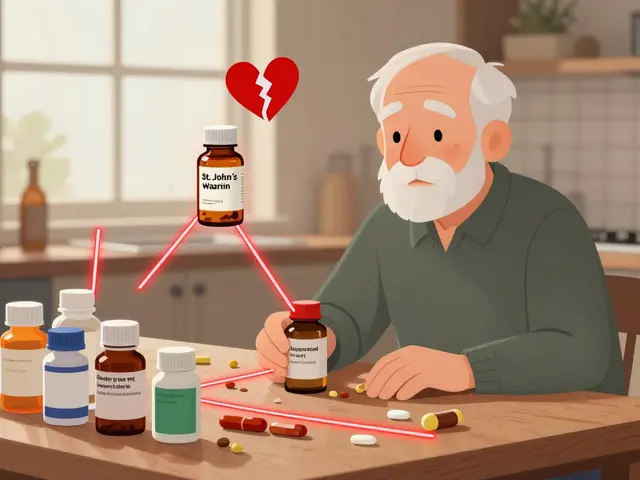
Dietary supplements aren’t regulated like drugs. Under the Dietary Supplement Health and Education Act (DSHEA) of 1994, companies can sell supplements without proving they’re safe or effective before putting them on shelves. The FDA can only step in after someone gets hurt. That means dangerous combinations are often discovered after the fact.Take St. John’s wort, for example. It’s sold as a natural remedy for mild depression. But it can slash the blood levels of life-saving drugs like warfarin, cyclosporine, and even birth control pills. One study found it reduced cyclosporine levels by 57%, putting transplant patients at risk of organ rejection. Another case reported a woman on carbamazepine for seizures had a breakthrough seizure after starting St. John’s wort-her drug level dropped by more than half.
It’s not just herbs. Even common vitamins can interfere. Vitamin K in green tea or multivitamins can make warfarin useless. If you’re on warfarin to prevent clots, that’s not a minor issue-it can lead to strokes or dangerous bleeding. Ginkgo biloba, often taken for memory, has been linked to INR levels spiking above 6.5 when combined with warfarin. Normal therapeutic range? 2 to 3.
Who’s Most at Risk?
Older adults are the most vulnerable group. About 85% of people over 60 take dietary supplements, and most are also on four or five prescription medications. That’s a recipe for hidden conflicts.Calcium supplements, for instance, can block the absorption of levothyroxine, a thyroid hormone. One study showed absorption dropped by 25-50% when taken together. That means someone might be getting the right dose of thyroid medicine-but the calcium pill they took an hour earlier is stopping it from working. Their symptoms don’t improve, so their doctor increases the dose. Now they’re overmedicated.
Antibiotics like ciprofloxacin or levofloxacin can lose up to 90% of their effectiveness if taken with magnesium-containing antacids or multivitamins. People with infections might not get better-not because the drug doesn’t work, but because they took it with their daily calcium pill.
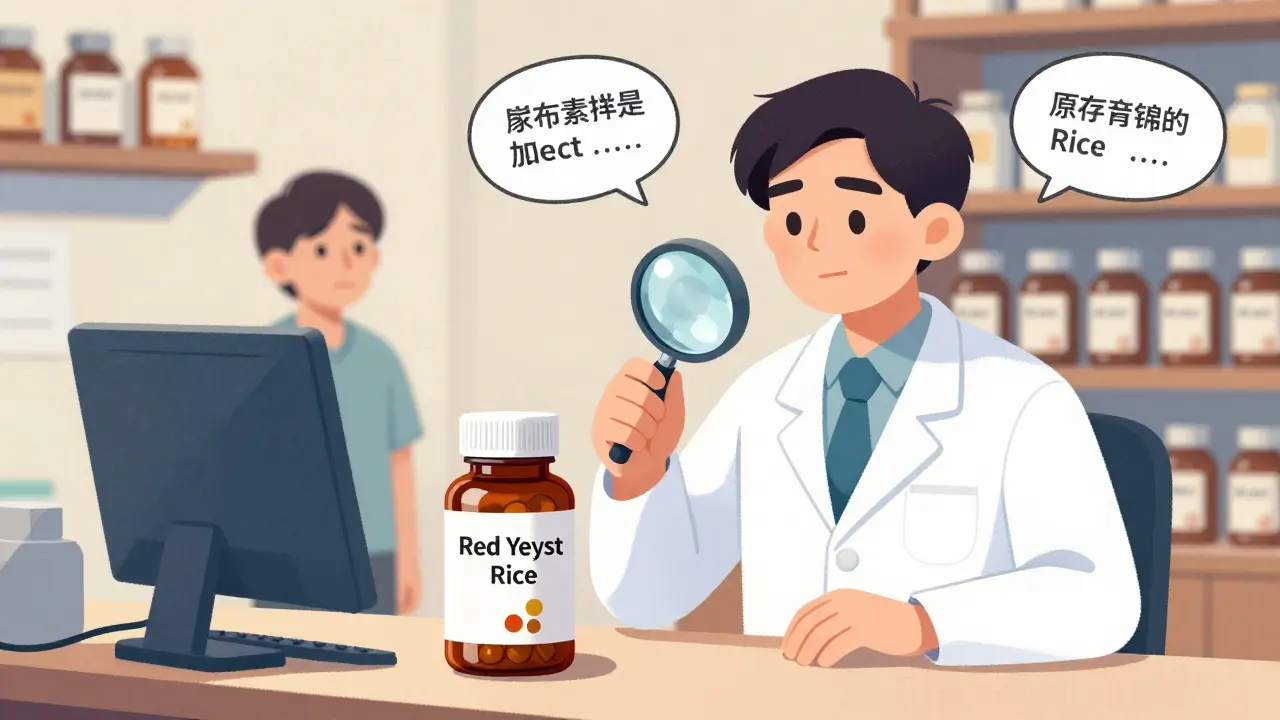
And then there’s red yeast rice. Marketed as a natural cholesterol-lowering supplement, it often contains lovastatin-an actual prescription drug. When taken with gemfibrozil, another cholesterol drug, it can cause rhabdomyolysis, a condition where muscle tissue breaks down and can lead to kidney failure. The FDA has issued multiple warnings about this, but many consumers still don’t know.
Herbs Are the Biggest Culprits
Not all supplements are equal when it comes to interactions. Herbs carry the highest risk. According to the FDA’s adverse event database, herbal supplements make up just 15% of sales but account for 65% of severe interactions.St. John’s wort leads the list, responsible for nearly one-third of all documented serious interactions. Goldenseal is another high-risk herb-it can interfere with liver enzymes that break down over 50 common medications, including antidepressants and heart drugs.
On the other end of the spectrum, supplements like American ginseng, milk thistle, saw palmetto, and valerian have very low interaction potential. That doesn’t mean they’re completely safe, but the risk is far lower. The key is knowing which ones to watch.
Why Don’t People Tell Their Doctors?
A 2022 survey found that 68% of people who take supplements never mention them to their healthcare provider. Why? Many think their doctor won’t care. Others believe supplements are “too natural” to matter. One Reddit user wrote: “My doctor doesn’t know anything about supplements anyway.”But doctors aren’t the only ones in the dark. A 2019 study found that 20% of supplement products contain ingredients not listed on the label. That means you could be taking something you didn’t even know was in your pill.
Even pharmacists aren’t always up to speed. A 2020 study showed only 32% of pharmacists could correctly identify major supplement-drug interactions. After a four-hour training course, that number jumped to 87%. That’s a huge gap.
What You Can Do Right Now
You don’t need to stop taking supplements. But you do need to be smarter about them.- Make a list of every supplement you take-name, dose, and how often. Include everything: fish oil, melatonin, turmeric, protein powder, energy shots.
- Bring it to every appointment. Don’t wait for your doctor to ask. Say: “Here’s what I’m taking outside of my prescriptions.”
- Ask about interactions. Don’t just ask if something is safe. Ask: “Could this interfere with my blood pressure medicine?” or “Will this affect how my thyroid pill works?”
- Check reliable sources. Use the Natural Medicines Database or NIH’s LiverTox. These are used by hospitals and pharmacists-not random blogs.
- Time your doses. If you take calcium and levothyroxine, space them at least four hours apart. Same with antibiotics and antacids.
What’s Changing? And What’s Not
There’s growing pressure to fix the system. The FDA’s 2022 draft guidance now asks manufacturers to submit interaction data for new ingredients. A proposed law, H.R.2409, would require warning labels on high-risk supplements. The National Center for Complementary and Integrative Health (NCCIH) has committed over $15 million to research these interactions through 2025.But here’s the hard truth: regulation moves slowly. The FDA estimates only 1% of adverse events from supplements are reported. That means for every case that shows up in a database, 99 go unnoticed.
Meanwhile, the supplement market is booming. It’s expected to hit $82 billion by 2028. More people are taking more supplements, and more are on multiple medications. Without better labeling, better education, and better reporting, the number of preventable hospitalizations will keep rising.
Real Consequences, Real Stories
A 58-year-old man on warfarin started taking ginkgo biloba for “brain health.” His INR jumped from 2.8 to 6.7. He ended up in the ER with internal bleeding. He didn’t know ginkgo could thin his blood. His doctor didn’t ask.A 72-year-old woman on digoxin for heart failure took a magnesium supplement for leg cramps. Her digoxin levels rose dangerously high. She developed nausea, confusion, and an irregular heartbeat. She didn’t realize magnesium could affect how her heart medication worked.
These aren’t rare cases. They’re common. And they’re preventable.
Bottom Line: Your Health Is Your Responsibility
Supplements aren’t the enemy. But treating them like harmless candy is dangerous. The line between “natural” and “safe” is thin-and often misleading.If you take any prescription drug, and you take anything else-vitamins, herbs, protein powders, sleep aids-you need to treat those supplements like medicine. Ask questions. Track what you take. Talk to your doctor or pharmacist. Don’t assume it’s okay because it’s sold in a health food store.
The truth is simple: what you put in your body doesn’t exist in a vacuum. It interacts. And sometimes, those interactions can change your life-or end it.
Emily P
December 20, 2025 AT 22:35I never realized how many supplements I take that could be silently messing with my meds. I’ve been popping calcium and vitamin D with my levothyroxine because ‘it’s just a pill’ - now I’m going to space them out. Thanks for laying this out so clearly.
Also, I had no idea ginkgo could spike INR like that. My grandma took it for ‘memory’ and ended up in the ER last year. No one connected the dots.
Why do we treat supplements like harmless candy but freak out about a new prescription? Double standards everywhere.
Vicki Belcher
December 22, 2025 AT 01:20YAS GIRL, THIS IS SO IMPORTANT 💪❤️
I used to think ‘natural’ meant ‘safe’ until my aunt had a near-fatal bleed after mixing warfarin with turmeric. She thought it was just ‘anti-inflammatory tea.’
PLEASE bring your supplement list to every doctor visit. Write it on a sticky note if you have to. Your life might depend on it 🙏✨
Also, if your pharmacist looks confused when you ask about interactions? Find a new one. You deserve better.
Jedidiah Massey
December 22, 2025 AT 16:04Let’s be precise: the DSHEA loophole isn’t just a regulatory failure - it’s a systemic epistemological collapse in public health governance. The FDA’s reactive posture reflects a neoliberal abandonment of the precautionary principle, wherein commodification trumps biosecurity.
St. John’s wort induces CYP3A4 and P-glycoprotein upregulation, thereby accelerating phase I metabolism of substrates like cyclosporine - a pharmacokinetic nightmare disguised as ‘wellness.’
And red yeast rice? It’s not a supplement - it’s unregulated lovastatin. The FDA’s enforcement is toothless because Congress prioritizes market freedom over patient safety. Classic libertarian pathology.
Lynsey Tyson
December 23, 2025 AT 12:43I get why people don’t tell their doctors - I used to feel the same way. Like, ‘Oh, they’ll just shrug and say ‘take it if you want.’
But I started bringing my list to my last appointment, and my doctor actually paused, looked at me, and said, ‘I’m glad you told me. We need to adjust your statin.’
It’s not about being ‘perfect’ - it’s about being honest. Even if you feel silly. Even if you think they won’t care. They might.
And if they don’t? Find someone who does. Your body deserves that kind of attention.
Edington Renwick
December 24, 2025 AT 20:05People are dying because they think ‘natural’ = ‘no consequences.’
It’s not just ignorance - it’s willful stupidity wrapped in yoga pants and smoothie bowls.
And don’t get me started on the ‘my doctor doesn’t know anything’ crowd. You think your Instagram wellness influencer knows more than a board-certified internist? Please.
This isn’t a ‘conversation.’ It’s a public health emergency disguised as a lifestyle choice.
Allison Pannabekcer
December 25, 2025 AT 06:57For anyone feeling overwhelmed by this - you’re not alone. I used to take 12 different supplements and thought I was being ‘proactive.’ Turns out, I was just poisoning my own liver enzymes.
Start small. Pick one thing you take daily - maybe your multivitamin or fish oil - and look it up on LiverTox. Just one. That’s it.
Then, next week, pick another. No need to overhaul everything at once. Progress > perfection.
And if you’re scared to talk to your doctor? Write it down. Hand them the note. You’d be surprised how many of them appreciate the effort.
We’re all learning. No shame in being curious.
Also - if you’re on warfarin, PLEASE don’t drink green tea without checking. I didn’t know that until I almost bled out. I’m alive because I asked.
Sarah McQuillan
December 27, 2025 AT 02:34Okay but why are we acting like the U.S. is the only country with this problem? In Canada, supplements are regulated like drugs - and guess what? They’re still sold everywhere.
Stop acting like this is some uniquely American failure. It’s capitalism. Always has been.
Also, ‘natural’ doesn’t mean safe - but neither does ‘prescription.’ I’ve seen people die from blood thinners too. Why aren’t we screaming about that?
Let’s not pretend this is about health. It’s about profit. And you’re all just mad because you like your turmeric lattes.
Kitt Eliz
December 27, 2025 AT 12:42As a clinical pharmacist with 12 years in integrative medicine, let me tell you - this is the #1 preventable cause of hospitalization in seniors. Not falls. Not heart disease. SUPPLEMENT-DRUG INTERACTIONS.
I’ve seen 78-year-olds on digoxin take magnesium for cramps and end up in ICU. No one asked. No one told.
Here’s what you do: print this post. Tape it to your fridge. Give a copy to your mom, your dad, your auntie. Make it a family ritual - ‘Supplement Sunday’ - where you all review what you’re taking together.
And if your pharmacist says ‘I don’t know’? Ask for the one who does. Or go to a specialty pharmacy. They have databases that can flag 90% of these interactions in seconds.
This isn’t fear-mongering. It’s harm reduction. And it’s doable.
❤️ You’ve got this. And I’m here if you need help decoding your list.