
Why Food Changes How Your Medication Works
Ever taken a pill and wondered if it really worked because you ate right after? You’re not alone. Many people don’t realize that what’s on your plate can make your medicine stronger, weaker, or even cause side effects. Food doesn’t just fill your stomach-it changes how your body absorbs drugs. Some medications need food to work at all. Others can’t touch it. Get this wrong, and you might not get the full benefit-or you could end up sick.
How Food Slows Down or Speeds Up Absorption
When you eat, your stomach slows down. That’s normal. But for drugs, that delay matters. A high-fat meal can stretch gastric emptying by 1.5 to 2 hours. That means a pill you swallowed might sit in your stomach twice as long before moving to the small intestine, where most drugs get absorbed.
Take acetaminophen, for example. On an empty stomach, it hits peak levels in about 45 minutes. With a fatty meal? It takes 90 to 120 minutes. The total amount absorbed might be the same, but the delay can mean slower pain relief. For something like a fever or headache, that delay can feel like forever.
On the flip side, some drugs need fat to even be absorbed. Griseofulvin, an antifungal, gets absorbed 200-300% better with a high-fat meal. Why? Fat triggers bile release, which helps dissolve the drug so your body can grab it. Without that fat, the drug just passes through.
When Food Blocks Your Medicine
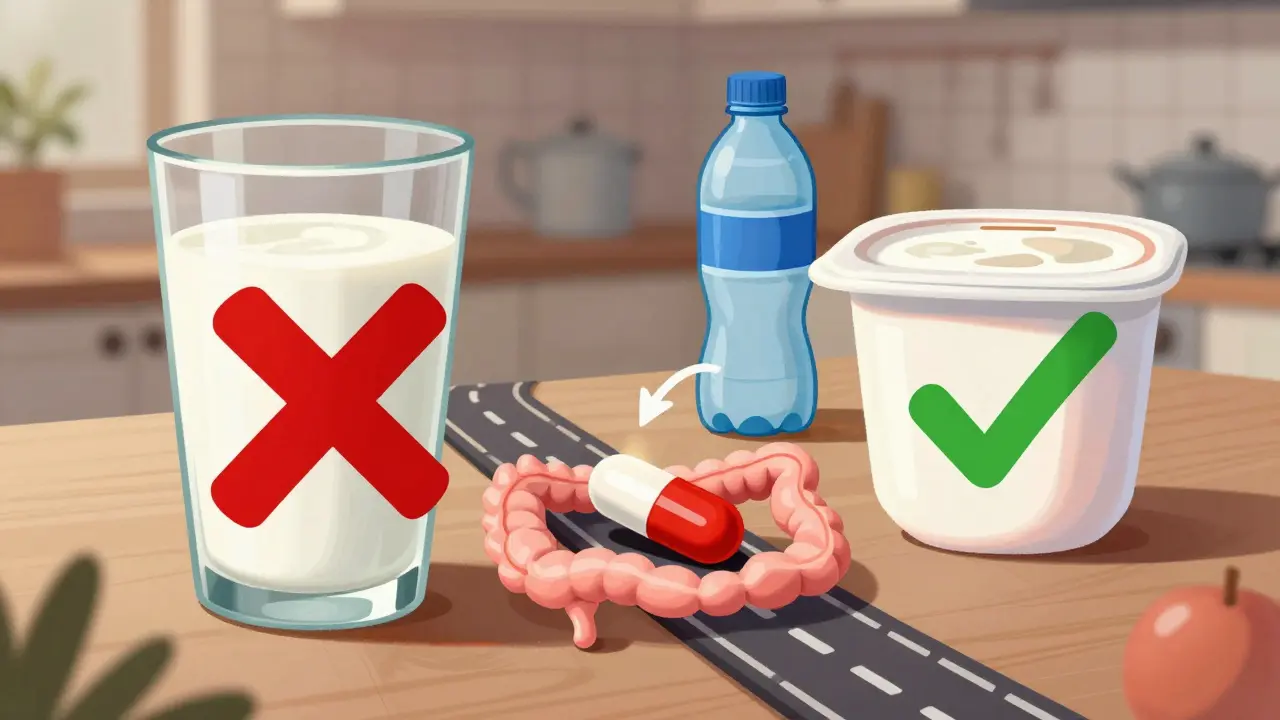
Not all interactions are helpful. Some foods actively block absorption. Calcium is a big one. Dairy products, fortified plant milks, even antacids with calcium can bind to antibiotics like tetracycline and doxycycline. This forms a compound your body can’t absorb. Studies show absorption drops by 50-75% when taken with milk or yogurt.
That’s why people on antibiotics for a UTI sometimes feel like the treatment isn’t working-until they realize they’ve been swallowing their pill with a glass of milk. One Reddit user shared how a recurring infection cleared up only after switching to water and waiting two hours after dairy.
Other minerals like iron, magnesium, and aluminum (found in some antacids) do the same thing. Even coffee and tea, with their tannins, can interfere with certain antibiotics and thyroid meds. It’s not just about what you eat-it’s about what’s in it.
Drugs That Need Food to Work
Some medicines are designed to be taken with food-not because it helps, but because it prevents side effects or boosts effectiveness.
Nitrofurantoin, a common UTI antibiotic, absorbs 40% better with food. Cefpodoxime? Up to 60% more absorbed. Both are less likely to cause nausea when taken with a light snack. Same goes for many HIV medications and cholesterol drugs like atorvastatin. Food helps stabilize absorption and reduces stomach upset.
For drugs like glipizide, used for type 2 diabetes, food isn’t just helpful-it’s essential. Taking it on an empty stomach can crash your blood sugar. Studies show 23% of patients who skip meals with this drug end up with dangerous hypoglycemia, needing emergency help. The fix? Take it 30 minutes before eating. That way, the drug kicks in just as your blood sugar starts rising from the meal.
Empty Stomach Rules: Thyroid Meds and More
Levothyroxine, the most common thyroid hormone replacement, is one of the most sensitive drugs to food. Even a small breakfast can cut absorption by 30-55%. That’s why guidelines say: take it first thing in the morning, with a full glass of water, at least 30 minutes before anything else-not even coffee.
Patients often struggle with this. On Drugs.com, 62% of users say they forget or find it impossible to wait. Many end up taking it with breakfast, then wonder why their TSH levels stay high. The fix? Set an alarm 60 minutes before breakfast. Or take it at bedtime, if your doctor approves-studies show nighttime dosing works just as well for many people.
Other meds that need an empty stomach include bisphosphonates (for osteoporosis), certain antifungals like itraconazole, and the weight-loss drug semaglutide. For semaglutide, taking it within 30 minutes of eating cuts absorption by 44%. That’s a huge drop.
What Counts as "With Food"?
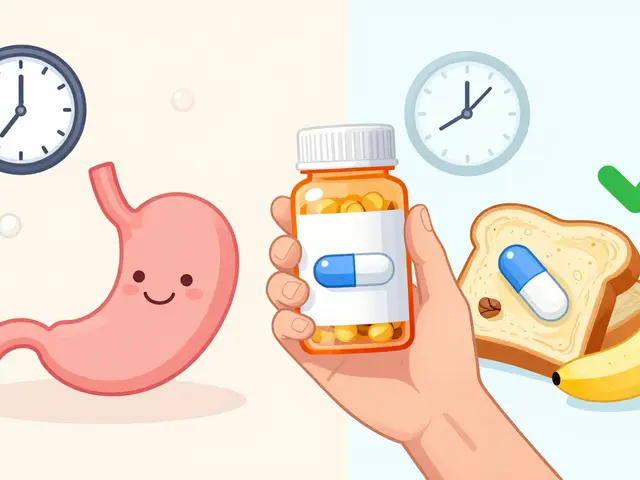
"Take with food" doesn’t mean a full three-course meal. For many drugs, a small snack-200 to 300 calories-is enough. A banana, a handful of nuts, a slice of toast. That’s enough to coat the stomach and reduce irritation without slowing absorption too much.
But here’s the problem: 45% of patients misunderstand this. They think "with food" means "with breakfast." So they wait until 8 a.m. to take a pill that’s meant to be taken with lunch. That throws off the whole rhythm. Pharmacists now recommend using specific language: "within 30 minutes of starting your meal" or "with a light snack."
For NSAIDs like ibuprofen, food reduces stomach irritation by more than 70%. A 2022 GoodRx survey found stomach pain dropped from 42% to 12% when taken with food. But enteric-coated versions (like some aspirin) don’t need food at all. Always check the label.
Timing Matters More Than You Think
It’s not just about food. It’s about consistency. Taking your pill at 7 a.m. one day and 8 p.m. the next can mess with your levels-even if you always take it with food. For chronic meds, routine beats perfection.
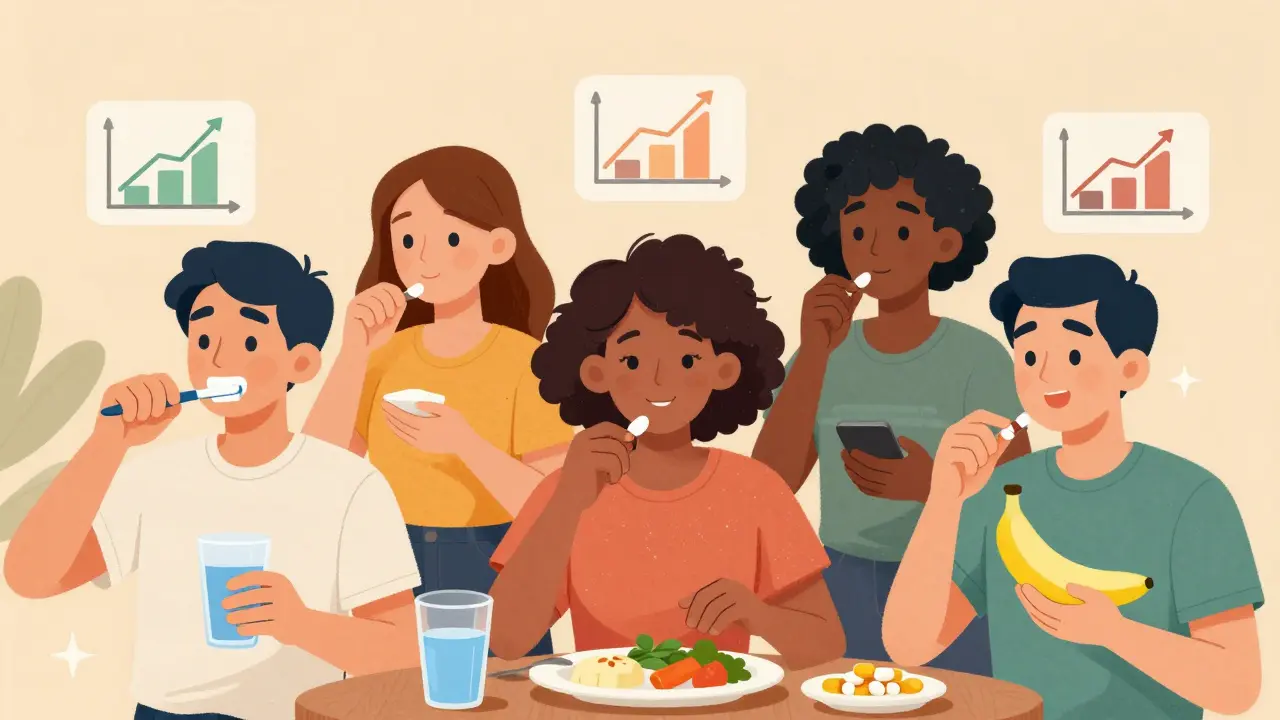
Studies show that inconsistent timing leads to 18% of treatment failures. That’s why pharmacists now tie medication schedules to daily habits: take your blood pressure pill with your morning coffee, your statin with dinner, your thyroid med before you brush your teeth.
Apps like Medisafe and MyTherapy now include food-timing reminders. Users who turn them on see 27% fewer timing errors. Simple tools make a big difference.
Who’s at Highest Risk?
Older adults. People taking five or more medications. That’s the group most likely to have food-drug interactions. One study found they’re 65% more likely to have a problem. Why? More pills, more meals, more changes in digestion as we age.
Also, people on special diets-vegan, keto, gluten-free-might not realize their meals don’t match the food-effect studies done by drug companies. FDA’s 2023 draft guidance now asks for testing with plant-based meals, but most labels haven’t caught up yet.
What You Can Do Today
- Check every prescription label for "take with food," "on empty stomach," or "avoid dairy."
- Ask your pharmacist: "Should I take this before, during, or after meals?" Don’t assume.
- Set phone alarms for timing-sensitive meds like levothyroxine or glipizide.
- Keep a simple log: what you took, when, and what you ate. It helps spot patterns.
- Don’t mix calcium-rich foods or antacids with antibiotics unless told it’s safe.
Future of Food and Medicine
Science is getting smarter. In 2023, researchers started using ingestible sensors that track stomach pH and emptying in real time. One trial showed 38% better absorption consistency for pH-sensitive drugs when timing was adjusted on the fly.
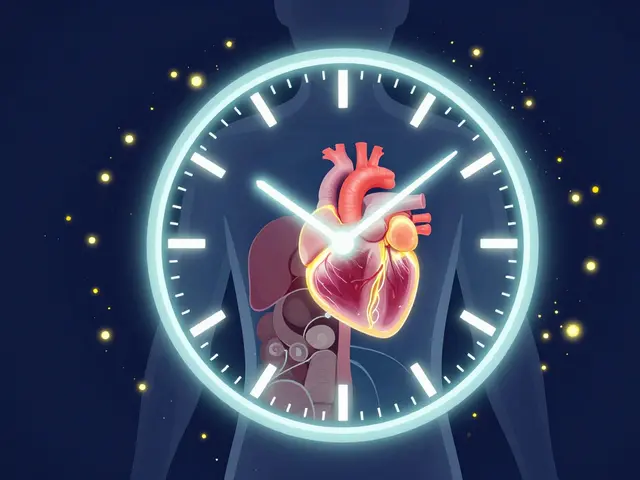
And now, there’s chronopharmacology-timing meds not just with meals, but with your body’s natural rhythms. Taking blood pressure meds at night? Some studies show better control. Taking asthma meds before bed? More effective. The future isn’t just about food-it’s about your whole daily rhythm.
For now, though, the rules are simple: read the label. Ask your pharmacist. Be consistent. Your medicine works better when you work with your body-not against it.
Can I take my medication with coffee or tea?
It depends on the drug. Coffee and tea contain tannins and caffeine, which can interfere with antibiotics like tetracycline, iron supplements, and thyroid meds like levothyroxine. For most pills, water is the safest choice. If you’re unsure, wait at least 30 minutes after taking your medicine before drinking coffee or tea.
What if I forget to take my pill on an empty stomach?
If you took a drug like levothyroxine with food, don’t double up. Wait until the next scheduled dose. Taking extra can be dangerous. For most other meds, just take it as soon as you remember, even if you’ve eaten. Consistency over time matters more than one missed window.
Do I need to wait two hours after eating to take medicine?
Only if the label says "empty stomach" and you’ve had a large or fatty meal. For most people, waiting one hour after eating is enough. Two hours is the safest buffer if you’re unsure. If you’re taking a drug like levothyroxine, aim for at least 30 minutes before food, but two hours is ideal if you had a heavy dinner the night before.
Can I take multiple pills with food at the same time?
Sometimes yes, sometimes no. Calcium and iron can block absorption of other drugs. If you’re taking thyroid meds, antibiotics, and a multivitamin, space them out. Use a pill organizer with time slots. Ask your pharmacist to check for interactions-many pharmacies offer free med reviews.
Are generic drugs affected the same way as brand-name ones?
Yes. Generic drugs must meet the same absorption standards as brand-name versions. If the label says "take with food," it applies to both. Don’t assume generics are different-they’re tested to behave the same way in your body.
What if I have trouble remembering to take my meds with food?
Link your pills to daily habits. Take your statin with dinner. Take your diabetes pill before lunch. Use phone alarms labeled "Take pill with snack" or "Wait 30 min before breakfast." Apps like Medisafe or MyTherapy send reminders tied to meals. Even sticky notes on your fridge help.
clarissa sulio
February 3, 2026 AT 03:56Ansley Mayson
February 4, 2026 AT 22:07Bob Hynes
February 6, 2026 AT 01:35Marc Durocher
February 7, 2026 AT 08:17Nick Flake
February 8, 2026 AT 20:47Akhona Myeki
February 8, 2026 AT 22:05Chinmoy Kumar
February 9, 2026 AT 22:52Bridget Molokomme
February 10, 2026 AT 19:05Vatsal Srivastava
February 10, 2026 AT 23:44phara don
February 12, 2026 AT 05:33