
Anticholinergic Burden Calculator
How This Works
This tool calculates your total Anticholinergic Cognitive Burden (ACB) score using the ACB Scale. Each medication is assigned a score (0-3) based on its anticholinergic effects. A score of 3 or more indicates high risk for cognitive decline and cardiac issues.
Your Selected Medications
Your Anticholinergic Burden Score
Total Score: 0
Risk Assessment
What you should do:
- Check your total ACB score
- Ask about alternatives
- Don't stop suddenly
- Get an ECG
- Review all your meds
When you’re prescribed a tricyclic antidepressant like amitriptyline or nortriptyline, you’re not just getting help for depression or chronic pain. You’re also taking a drug that quietly blocks a key chemical in your brain and body - acetylcholine. This isn’t a side effect you can ignore. It’s a anticholinergic burden that builds up over time, and for many people, especially those over 50, it can lead to real, lasting harm - memory problems that look like dementia, irregular heartbeats, and even hospital visits.
What Exactly Is Anticholinergic Burden?
Anticholinergic burden isn’t just one drug’s side effect. It’s the total impact of all the medicines in your system that block acetylcholine. Think of acetylcholine as your body’s messenger for memory, digestion, bladder control, and even heart rhythm. When multiple drugs block it, your brain and heart start struggling. Tricyclic antidepressants (TCAs) are among the worst offenders. They’re not just mildly anticholinergic - they’re rated as the highest possible risk on the Anticholinergic Cognitive Burden (ACB) Scale. That’s a score of 3 out of 3. Only a few other drugs, like certain allergy pills and bladder medications, match that level.Here’s the catch: you might not even realize you’re taking something with anticholinergic effects. A common over-the-counter sleep aid like Nytol (diphenhydramine) or an allergy pill like Piriton (chlorphenamine) adds to your burden. If you’re on a TCA and also take one of these, your total ACB score could hit 4 or 5 - a red flag for doctors. Research shows that even a single drug with an ACB score of 3 increases dementia risk. When you stack them, the danger multiplies.
How TCAs Damage Memory - And Why It’s Often Mistaken for Dementia
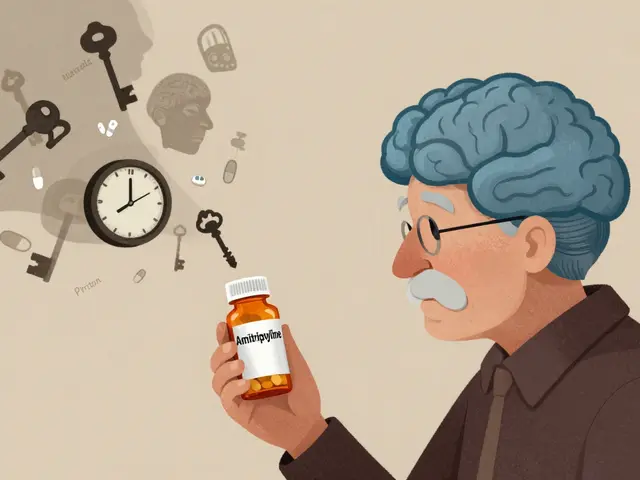
One of the most dangerous things about TCAs is how easily their side effects mimic dementia. People start forgetting names, losing track of conversations, or struggling to follow a recipe. Families assume it’s early Alzheimer’s. Doctors may even order brain scans or refer them to memory clinics. But in many cases, the problem isn’t neurodegeneration - it’s medication.A 2022 study tracking over 3,400 adults over 65 found that those taking medications with high anticholinergic burden had a 54% higher risk of developing dementia over seven years. TCAs were a major driver of that risk. What’s worse? The damage may not reverse even after stopping the drug. Some patients report memory returning slowly over months, but others never fully get it back.
Clinicians on Reddit and in NHS forums have shared case after case: a 72-year-old on amitriptyline for back pain starts forgetting where they put their keys, then stops recognizing family members. After switching to an SNRI like duloxetine, their memory improves within three months. But if no one checks their medication list, they could be misdiagnosed and started on dementia drugs - drugs that do nothing for anticholinergic brain fog.
The Heart Risks Are Just as Serious
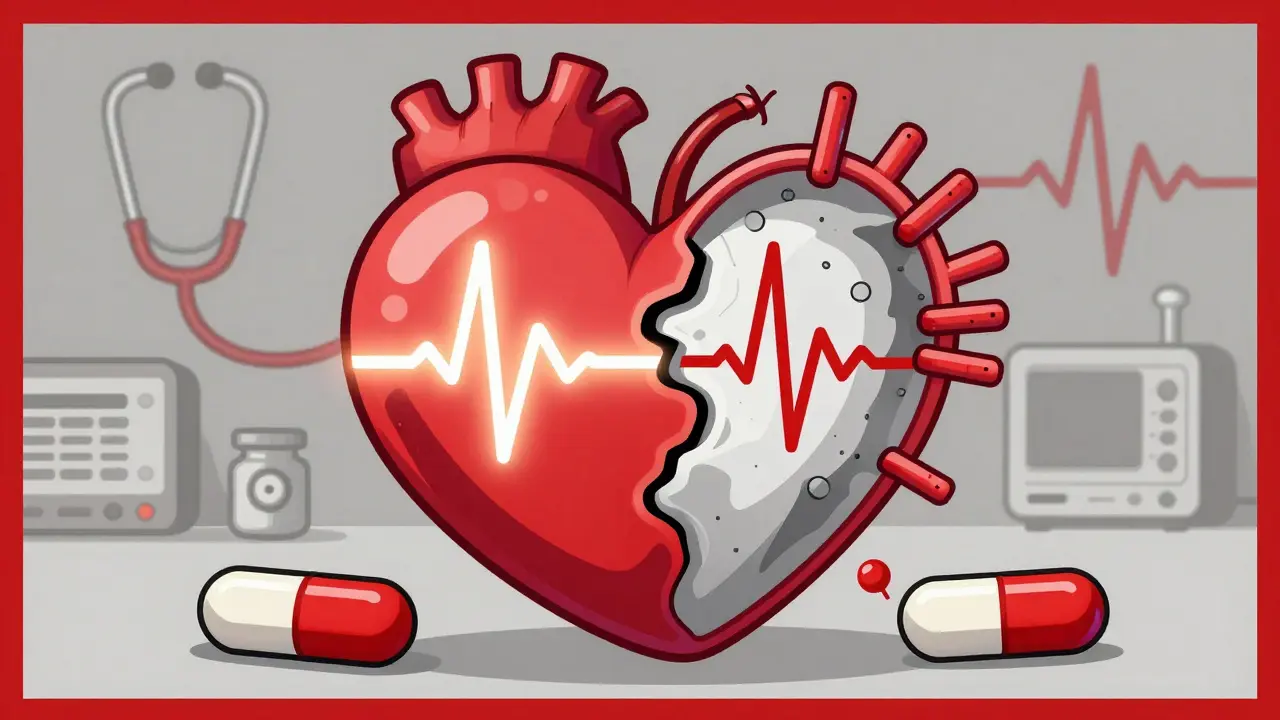
While memory loss gets attention, the cardiac risks are often deadlier. TCAs act like class 1A antiarrhythmics - the same category of drugs used to treat irregular heart rhythms. But here’s the irony: they can cause the very problem they’re meant to fix. Amitriptyline, in particular, can prolong the QT interval on an ECG. That’s the time your heart takes to recharge between beats. When it’s too long, your heart can skip or flutter dangerously - sometimes leading to sudden cardiac arrest.Studies show amitriptyline carries 2.8 times the risk of QT prolongation compared to sertraline, a common SSRI. At therapeutic doses, it can widen the QRS complex by 10-25%. In overdose, that number jumps to 50%. That’s why TCAs are among the most dangerous antidepressants in overdose situations. Even at normal doses, people with existing heart conditions - high blood pressure, prior heart attacks, or a family history of arrhythmias - are at much higher risk.
One patient on a Mended Hearts forum described how, after just three weeks on amitriptyline for depression, they started feeling dizzy and had palpitations. Their ER visit found a prolonged QT interval. They were hospitalized. Their doctor hadn’t checked their ECG before prescribing. That’s not rare. It’s predictable.
Why TCAs Are Still Prescribed - And When They Might Still Make Sense
So if the risks are so clear, why are TCAs still around? Because they work - sometimes better than anything else. For treatment-resistant depression, especially when SSRIs and SNRIs have failed, TCAs can be a lifeline. They’re also highly effective for certain types of nerve pain, like diabetic neuropathy or postherpetic neuralgia. In these cases, the benefit can outweigh the risk - but only if you’re young, healthy, and closely monitored.For most people, though, they’re outdated. Since 2000, TCA prescriptions for depression in the U.S. have dropped from 15% to under 5%. Why? Because better options exist. SSRIs like sertraline and escitalopram have ACB scores of 0 or 1. SNRIs like duloxetine and venlafaxine are also low-risk and just as effective for pain and mood. Even non-drug options like cognitive behavioral therapy (CBT) have proven results for depression and chronic pain without any anticholinergic effects.
The National Institute for Health and Care Excellence (NICE) says it plainly: clinicians should minimize medicines with high anticholinergic burden. The Beers Criteria, used by doctors across the U.S. and UK, lists TCAs as potentially inappropriate for anyone over 65 - unless every other option has failed.

What You Should Do If You’re on a TCA
If you’re taking amitriptyline, nortriptyline, or another TCA, here’s what to do:- Check your total ACB score. Add up every medication you take - including OTC pills. A score of 3 or more is high risk. Tools like the ACB Calculator are free and used in UK NHS systems.
- Ask about alternatives. Can you switch to duloxetine, sertraline, or mirtazapine? All have lower anticholinergic risk.
- Don’t stop suddenly. TCAs can cause withdrawal - nausea, dizziness, brain zaps. Tapering over 4-8 weeks is essential.
- Get an ECG. Especially if you’re over 50 or have heart issues. Check your QT interval.
- Review all your meds. Are you taking diphenhydramine for sleep? Chlorphenamine for allergies? These are silent contributors.
One NHS Somerset program successfully reduced anticholinergic burden in 78% of older patients. Of those, 63% saw measurable cognitive improvement within six months. That’s not magic. That’s just stopping harmful drugs.
The Bigger Picture: Why This Matters Now
We’re living longer, and we’re taking more pills. The average person over 65 takes five or more medications. Add in a few OTC drugs, and anticholinergic burden becomes invisible - until it’s too late. That’s why systems in the UK and U.S. are starting to flag high-risk prescriptions automatically. NHS Digital is testing AI tools that scan prescriptions and warn doctors before they write a TCA for someone over 60.The future isn’t about banning TCAs. It’s about using them wisely - only when absolutely necessary, only with full awareness of the risks, and only with a plan to get off them as soon as possible. For most people, the cost of memory and heart health is too high.
Can tricyclic antidepressants cause dementia?
Yes, long-term use of tricyclic antidepressants (TCAs) is strongly linked to an increased risk of dementia. Research shows people taking medications with high anticholinergic burden - like amitriptyline or nortriptyline - have up to a 54% higher risk of developing dementia over seven years. The cognitive decline caused by these drugs can mimic dementia symptoms, leading to misdiagnosis. In some cases, memory improves after stopping the medication, but for others, the damage may be irreversible.
Is amitriptyline safe for older adults?
Amitriptyline is generally not recommended for adults over 65. It has the highest possible anticholinergic burden score (ACB=3) and carries significant risks for cognitive decline, urinary retention, constipation, and dangerous heart rhythm changes like QT prolongation. Guidelines from NICE and the Beers Criteria advise avoiding TCAs in older adults unless other treatments have failed and the benefits clearly outweigh the risks.
What are safer alternatives to tricyclic antidepressants?
Safer alternatives include SSRIs like sertraline and escitalopram (ACB score 0-1), and SNRIs like duloxetine and venlafaxine (ACB score 0-1). These are just as effective for depression and nerve pain but have far fewer anticholinergic side effects. Non-drug options like cognitive behavioral therapy (CBT) are also proven effective, especially for chronic pain and mild to moderate depression.
Can anticholinergic side effects be reversed?
Some anticholinergic side effects, especially cognitive ones, can improve after stopping the medication. Studies show that 63% of older adults who stopped high-burden drugs saw measurable memory and attention improvements within six months. However, the longer the drug was taken, the less likely full recovery becomes. Heart rhythm changes often resolve after discontinuation, but prolonged QT intervals should be monitored by a doctor.
How do I check my anticholinergic burden?
You can calculate your anticholinergic burden using the Anticholinergic Cognitive Burden (ACB) Scale. Add up the scores of all your medications - including over-the-counter ones. Each drug is rated 0 (no effect), 1 (possible), 2 (moderate), or 3 (high). A total score of 3 or more is considered high risk. Many UK and U.S. electronic health systems now flag high-burden prescriptions automatically. Ask your pharmacist or doctor to run a review using the ACB Calculator.

Sarthak Jain
December 15, 2025 AT 03:56bro i was on nortriptyline for 2 years for back pain and didnt even know it was wrecking my brain. started forgetting my own phone number, lol. switched to duloxetine and my memory came back like a reboot. also stopped taking that diphenhydramine sleep stuff - total game changer. acb calculator is your new best friend.
Thomas Anderson
December 16, 2025 AT 08:04if you’re over 50 and still on a tca, you’re basically playing russian roulette with your brain and heart. just ask your pharmacist to run your med list through the acb tool. 5 minutes, free, could save you from a dementia misdiagnosis.
Edward Stevens
December 18, 2025 AT 01:43so let me get this straight - we’re still prescribing drugs that were invented in the 1950s because ‘they work’... while ignoring SSRIs that don’t make you forget your kids’ names? capitalism is a medical disaster.
Rulich Pretorius
December 18, 2025 AT 10:36the tragedy here isn’t just the drugs - it’s the system that lets them be prescribed without scrutiny. doctors are overworked, patients are told ‘take this, it’s fine,’ and acetylcholine - the neurotransmitter that lets you remember your wife’s birthday - gets quietly erased. this isn’t medicine. it’s negligence dressed in white coats.
we need mandatory acb screening before prescribing anything with anticholinergic potential. not optional. not ‘if you ask.’ mandatory.
and for those who say ‘but what about treatment-resistant cases?’ - yes, tcas have a place. but only after a full audit of every pill in the cabinet, including that nightly allergy tablet. the burden is cumulative. the harm is silent. the reckoning is overdue.
Jonny Moran
December 18, 2025 AT 22:16as someone who’s helped older patients in rural clinics switch off tcas - i can tell you, the improvement isn’t just statistical. it’s human. one woman started recognizing her grandchildren again after 6 months off amitriptyline. she cried. we all did. this isn’t theory. it’s real life.
Rich Robertson
December 20, 2025 AT 15:07my grandpa was on nortriptyline for 8 years. started calling my mom by his sister’s name. we thought it was alzheimer’s. turned out his sleep aid (benadryl) + tca = acb score of 5. switched him to melatonin and sertraline. he remembered my wedding 3 months later. never took another tca.
Dwayne hiers
December 22, 2025 AT 10:04let’s break down the pharmacokinetics: tcas inhibit reuptake of norepinephrine and serotonin - fine. but their high affinity for muscarinic receptors is the real problem. that’s the cholinergic blockade. qt prolongation? yes, due to sodium channel blockade in cardiac myocytes. and the cognitive effects? hippocampal hypometabolism from acetylcholine depletion. it’s not ‘brain fog’ - it’s neurochemical assault. and yes, some damage is irreversible. don’t wait for the ekg to catch it.
jeremy carroll
December 22, 2025 AT 18:00yo if you’re on a tca and also take that ‘just one pill to sleep’ thing - stop. right now. your brain is getting hit with a double whammy. i did it. switched to cbt and melatonin. slept better, remembered where i put my keys, and didn’t need a doctor to tell me i wasn’t losing it.
Daniel Thompson
December 24, 2025 AT 15:46I’ve reviewed your post. While the clinical data presented is largely accurate, I must point out that your framing of TCAs as universally dangerous ignores individual variability in pharmacogenetics. Some patients metabolize these drugs differently, and for them, the risk-benefit ratio may still favor TCA use. You also failed to mention that SSRIs carry their own risks - sexual dysfunction, emotional blunting, and withdrawal syndromes that are equally debilitating. Your narrative is reductionist.
Wade Mercer
December 24, 2025 AT 22:50So you’re telling me we’re just supposed to trust these ‘guidelines’? NICE, Beers Criteria - who even are these people? My uncle took amitriptyline for 20 years and lived to 92. He’s sharp as a tack. You’re demonizing a drug that saved lives while pushing ‘modern’ meds that are just repackaged placebos with bigger price tags. Wake up.
Alexis Wright
December 26, 2025 AT 08:32Oh wow. Another ‘medical reform’ post. Let me guess - you’re also against fluoride, vaccines, and the patriarchy? This is just another chapter in the anti-pharma cult’s playbook. TCAs have been used for 70 years. Millions of lives improved. Now suddenly they’re ‘toxic’ because some overworked researcher crunched numbers? Don’t you see the pattern? Every time a drug becomes cheap and effective, the establishment needs to scare people into buying the new expensive version. Wake up. This is profit-driven fearmongering.
And don’t even get me started on ‘ACB calculators.’ That’s not medicine. That’s algorithmic authoritarianism disguised as safety.
Natalie Koeber
December 27, 2025 AT 20:04did you know the acb scale was created by a pharma-funded think tank? and the ‘improvement’ after stopping tcas? totally placebo. they just switched people to SSRIs and told them they’d feel better. the real reason tcas are being phased out? because they’re generic. no patent. no profit. watch how fast the ‘safer’ alternatives get jacked up in price. this isn’t about health. it’s about control.
Tim Bartik
December 28, 2025 AT 22:11tfw you take a tca for depression and your doc says ‘it’s fine’ but you’re walking around like a zombie forgetting your dog’s name. then you find out your nightly allergy pill is the real villain. yeah, i’m mad. and yeah, i’m switching. but not because of some ‘guideline.’ because i’m not gonna let some pill make me forget my own damn life.
Daniel Wevik
December 30, 2025 AT 13:56you’re not alone. i was on amitriptyline for chronic pain and didn’t realize how much my focus was slipping - missed deadlines, forgot meetings, felt like my thoughts were underwater. got an ekg - qt was borderline. switched to venlafaxine. my brain cleared up in 8 weeks. no magic. just better science. if you’re on meds, get your acb checked. it’s not fear. it’s responsibility.
Sinéad Griffin
January 1, 2026 AT 00:19AMERICA NEEDS TO STOP LETTING DOCTORS PRESCRIBE THIS CRAP 😤💊 STOP THE ANTICHOLINERGIC APOCALYPSE!! 🇺🇸🧠💔 #TCAOUT #MEMORYISNOTAOPTION