
When you walk into a clinic or urgent care center, you might not think about how much the staff pays for the antibiotics, lidocaine, or saline bags they use every day. But for providers managing tight budgets, those small costs add up fast. The secret to cutting those expenses without sacrificing care? Bulk purchasing of generic medications.
Generic drugs make up over 90% of all prescriptions filled in the U.S. But they account for less than 25% of total drug spending. That gap isn’t magic-it’s the result of smart, large-scale buying. Hospitals, clinics, and even small practices are saving 20% or more by buying generics in bulk instead of ordering small amounts month after month.
How Bulk Buying Actually Saves Money
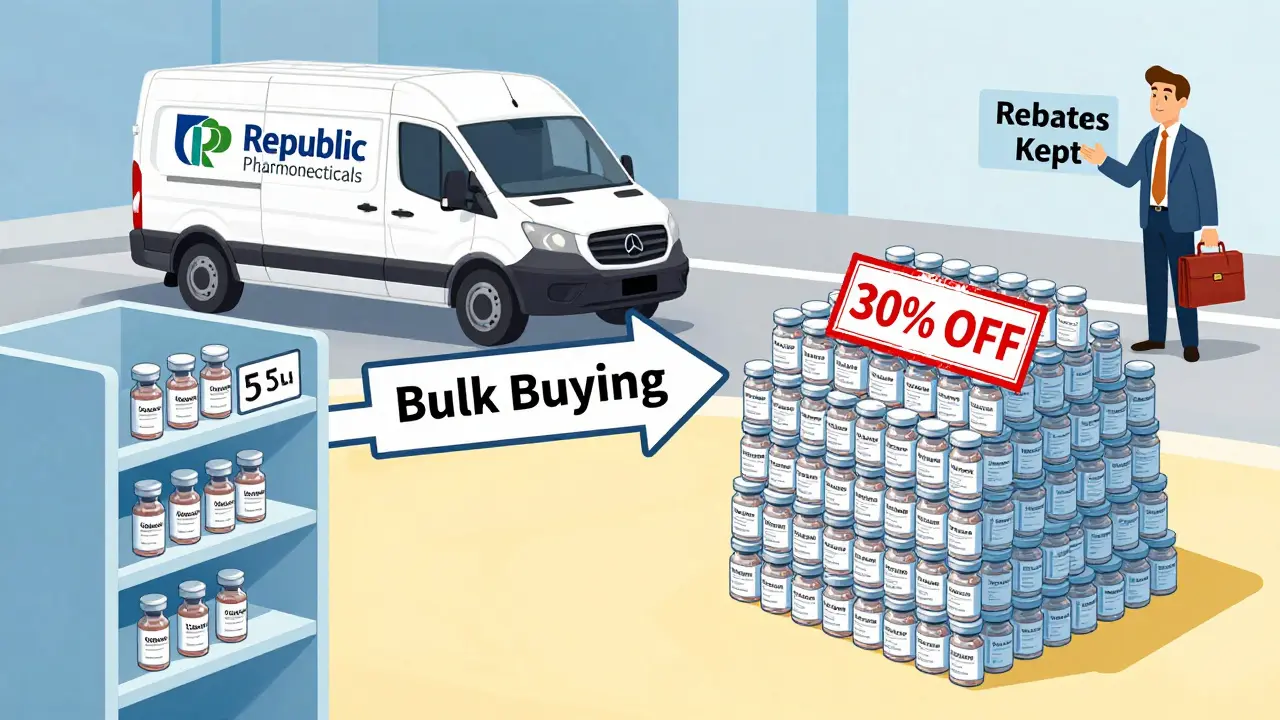
It’s simple math: buy more, pay less per unit. But it’s not just about stacking up boxes. The real savings come from how manufacturers and distributors structure their discounts. For example, if a clinic orders 1,000 units of amoxicillin at once, they might get a 10% discount off the list price. Order 10,000 units? That jumps to 20-30% off. These aren’t hypothetical numbers-they’re standard in the industry.
There are three main ways these discounts work:
- Direct volume discounts from manufacturers or wholesalers when you hit a minimum order size.
- Rebates from Pharmacy Benefit Managers (PBMs), which are often tied to how much of a drug you buy compared to others.
- Short-dated stock-medications that expire in 6 to 12 months. These are sold at 20-30% off because they’re close to expiration, but if you use them fast, you save big.
A Texas urgent care center switched 60% of its injectable purchases to bulk orders and short-dated stock. In just two months, they cut their medication costs by 20%. No change in patients. No change in drugs. Just smarter buying.
Who’s Selling and What Are the Options?
You’ve probably heard of McKesson, Cardinal Health, and AmerisourceBergen. These three companies control about 85% of the U.S. pharmaceutical wholesale market. But they’re not your only option.
Secondary distributors like Republic Pharmaceuticals specialize in helping smaller providers get better deals. They don’t carry every drug, but they focus on the high-volume generics that clinics use every day: antibiotics, pain relievers, IV fluids. Their discounts? Often 20-25%. Primary wholesalers? Usually only 3-8%.
Why the difference? Secondary distributors don’t have the same overhead. They buy in bulk from manufacturers and pass the savings along. They also handle short-dated stock more openly, which primary wholesalers often avoid.
State Medicaid programs have another trick: pooling. Groups like the National Medicaid Pooling Initiative (NMPI) or Sovereign States Drug Consortium (SSDC) let multiple states buy together. Individually, a state might save 1-2%. Together, they save 3-5%. That’s millions of dollars saved across the country.
What Drugs Save the Most?
Not all generics are created equal when it comes to bulk savings. The biggest wins come from high-use, low-cost drugs:
- Lidocaine injections
- Antibiotics like amoxicillin, cephalexin, azithromycin
- Corticosteroids like prednisone
- Saline solutions and IV bags
- Oral diabetes meds like metformin
- Cholesterol drugs like atorvastatin
These are the drugs that clinics go through by the case, not by the bottle. A single urgent care might use 500 vials of lidocaine a month. Buying that in bulk instead of five boxes a week? That’s where the real savings happen.
On the flip side, bulk buying doesn’t help much for low-use drugs-or during shortages. If you’re ordering a rare specialty generic and there’s a nationwide shortage, you can’t just buy more to get a discount. You’ll pay more, or go without. That’s why smart buyers focus on the top 15-20 medications that make up 60-70% of their drug spending.
The Hidden Costs and Risks
Bulk buying isn’t free. It comes with trade-offs.
First, cash flow. Buying 10,000 units of a drug upfront means spending thousands at once. That’s 15-25% more working capital needed than if you ordered monthly. For a small clinic, that’s a real challenge.
Second, inventory management. Short-dated stock is a goldmine-if you can use it before it expires. One Ohio clinic saved 25% on injectables by buying 6-month-dated stock. But they had to track expiration dates closely, train staff, and adjust ordering cycles. Miss one batch, and you lose money.
Third, minimum order requirements. Some suppliers force you to buy more than you need just to qualify for a discount. A 2023 MGMA survey found that 35% of urgent care centers said they ended up with unused stock because of this.
And then there’s the PBM problem. PBMs negotiate rebates of 15-40% on generics-but they don’t always pass the savings to the provider. Research from the USC Schaeffer Center shows only half to 70% of those rebates actually reach the plan sponsor. The rest? Kept by the PBM as profit.
How to Start Buying in Bulk
If you’re ready to cut costs, here’s how to do it right:
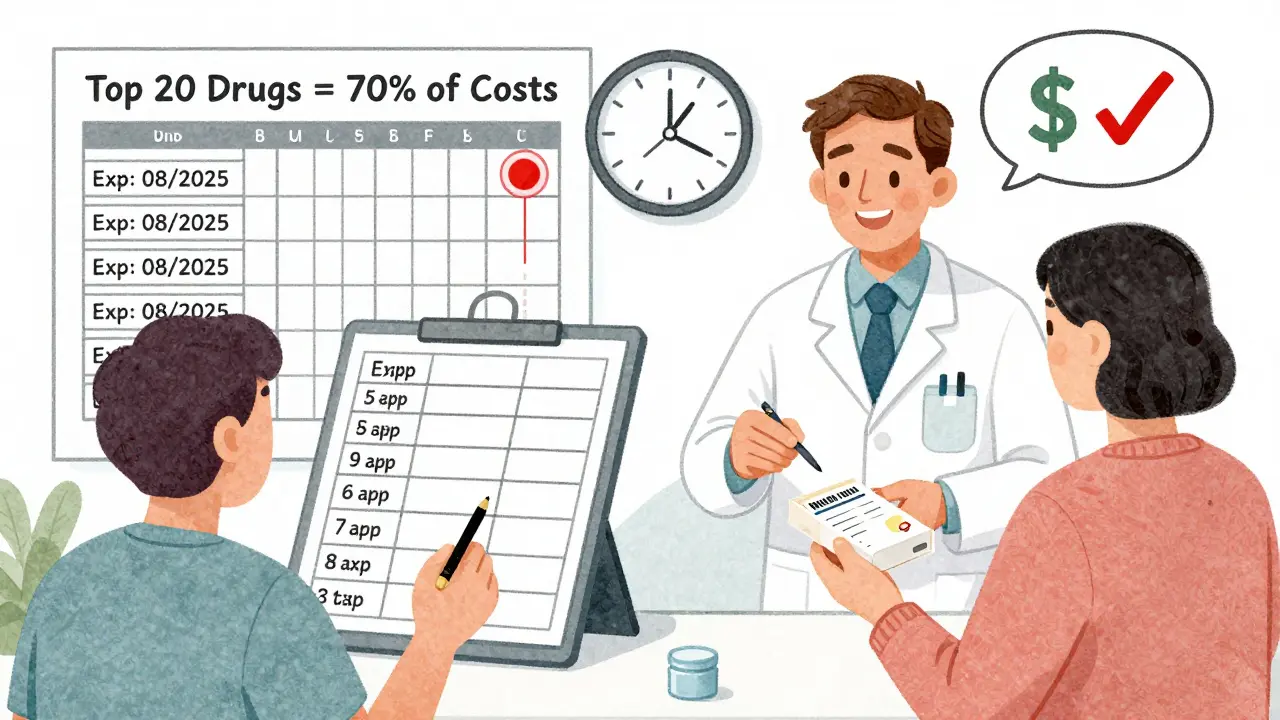
- Track your top 20 drugs. Look at your last 6 months of prescriptions. Which 15-20 medications make up 60-70% of your spending? Focus there first.
- Compare suppliers. Get quotes from your current wholesaler and a secondary distributor like Republic Pharmaceuticals. Ask about volume discounts, short-dated stock, and minimums.
- Start small. Pick one or two high-use drugs. Order a bulk quantity. See how it affects your inventory and cash flow.
- Set up tracking. Use a simple spreadsheet or inventory system to log expiration dates. Update it weekly. No one wants to throw away $500 worth of antibiotics.
- Scale up. Once you’ve got the system down, add more drugs. Most clinics see full savings within 4-6 weeks of starting.
Successful clinics spend 5-10 hours a month on inventory optimization. That’s it. No fancy software. No consultants. Just consistent tracking and smart ordering.
What’s Changing in 2025?
The rules are shifting. The Inflation Reduction Act is starting to let Medicare negotiate drug prices directly. That’s expected to cut prices by 38-79% on 10 high-cost drugs by 2026. That won’t affect generics directly-but it’s changing the whole pricing landscape.
Also, PBMs are now rolling out integrated point-of-sale discounts. Instead of needing a discount card or coupon, the lower price shows up automatically at the pharmacy counter for common generics like metformin or atorvastatin. That means patients pay less-and providers don’t have to manage extra paperwork.
The FTC is also cracking down on price manipulation. With 17 active investigations into drug pricing practices as of late 2023, the days of hidden markups and artificial inflation are numbered.
Bottom Line: Bulk Buying Works-If You Do It Right
Generic drugs are already the cheapest option. But buying them in bulk? That’s where real savings happen. Whether you’re a solo practitioner or a multi-location clinic, you can cut your medication costs by 20% or more without changing a single patient’s treatment.
The key is focusing on the right drugs, choosing the right supplier, and managing inventory carefully. It’s not about buying more than you need. It’s about buying smarter.
For clinics still paying full price on antibiotics and lidocaine? You’re leaving money on the table. And in today’s healthcare economy, that’s a cost you can’t afford to ignore.
Can small clinics really save money with bulk purchasing?
Yes. Even small clinics can save 15-25% on high-use generics by switching to secondary distributors or buying short-dated stock. One Texas urgent care center cut costs by 20% in two months by ordering lidocaine and antibiotics in bulk quarterly instead of monthly. You don’t need to be a hospital to benefit.
What’s the difference between primary and secondary pharmaceutical distributors?
Primary distributors like McKesson and Cardinal Health control most of the market but offer smaller discounts-usually 3-8%. Secondary distributors like Republic Pharmaceuticals focus on high-volume generics and short-dated stock, offering 20-25% discounts. They have fewer drugs but better prices for the ones clinics actually use.
Are short-dated generics safe to use?
Absolutely. The FDA requires generics to be effective until their expiration date. Medications with 6-12 months left are still fully potent. Many clinics use them safely with proper tracking. The risk isn’t safety-it’s waste. If you don’t use them before they expire, you lose money.
Why don’t all providers use bulk purchasing?
Three main reasons: cash flow constraints, fear of inventory waste, and lack of awareness. Many providers don’t know secondary distributors exist or think bulk buying requires huge upfront costs. But starting with just one or two drugs can show quick savings with minimal risk.
Do rebates from PBMs actually lower patient costs?
Not always. PBMs negotiate rebates of 15-40% on generics, but research shows only 50-70% of those savings reach the plan sponsor. The rest are kept as profit. That’s why direct bulk discounts from distributors often give more reliable savings than PBM rebates.
What should I do if a generic drug goes on shortage?
Don’t lock in bulk orders during known shortages. Monitor the FDA’s Drug Shortage Database. If a drug is in short supply, switch to alternatives or delay bulk purchases. Most successful buyers keep a backup list of comparable generics for exactly this reason.
How long does it take to see savings from bulk purchasing?
Most clinics see savings within 4-6 weeks. The first month is usually spent setting up supplier relationships and adjusting inventory systems. By the second month, you’re ordering in bulk and seeing the lower prices on invoices. The Texas urgent care center reported cost cuts in just two months.
Nicola George
December 29, 2025 AT 09:35So let me get this straight-you’re telling me clinics are still paying full price for amoxicillin like it’s premium champagne? 😏
Robyn Hays
December 29, 2025 AT 13:49OMG YES. I work at a rural health clinic and we switched to Republic Pharmaceuticals for lidocaine and saline last year-our monthly med bill dropped from $8k to $5.2k. The only catch? We had to start labeling every vial with expiration dates in neon pink Sharpie. It’s like a forensic science project, but with more IV bags. 🎨💉
Anna Weitz
December 30, 2025 AT 10:46Bulk buying is just capitalism with a Band-Aid on its conscience. We treat medicine like toilet paper-buy in bulk because it’s cheap, not because it’s sacred. The system rewards hoarding, not healing. We’re not saving lives-we’re optimizing spreadsheets. And don’t get me started on PBMs
Miriam Piro
December 31, 2025 AT 04:43EVERYTHING IS A CONSPIRACY. PBMs are just middlemen for Big Pharma to hide the real cost. The FDA knows short-dated stock is safe-but they let you think it’s risky so you keep paying full price. And McKesson? They’re not a distributor-they’re a cartel with a warehouse. They even control how many boxes of saline you can order in one go. I’ve seen the documents. It’s not about health. It’s about control. 🕵️♀️💊
Kylie Robson
December 31, 2025 AT 17:18Per the 2023 MGMA benchmarking report, the 35% utilization inefficiency threshold for bulk-purchased generics is directly correlated with inventory turnover rate below 4.2x annually. Secondary distributors like Republic offer a 22.7% Landed Cost Advantage (LCA) over primary wholesalers due to lower SFAS 157 markups and reduced carrier surcharge pass-throughs. Also, short-dated stock requires a 98.3% FIFO compliance rate to avoid write-offs. Just saying.
Caitlin Foster
January 1, 2026 AT 20:41YES YES YES!!! I’ve been screaming this from the rooftops!!! Bulk buying is the SECRET WEAPON we’ve been ignoring!!! My clinic saved $14,000 last quarter on just 3 drugs!!! I started with azithromycin!!! Now we’re adding prednisone and metformin!!! I even made a color-coded spreadsheet!!! It’s beautiful!!! 🎉📊🫶
Todd Scott
January 3, 2026 AT 02:55In Nigeria, we don’t have the luxury of secondary distributors or PBM rebates. Our clinics buy from local wholesalers who import from India or China-often without expiration tracking. But the principle is the same: buy in volume, save in scale. We use community cooperatives to pool orders across 10 clinics. One month, we bought 5,000 vials of lidocaine together. Cost per vial dropped from $2.10 to $0.85. No fancy software. Just trust, spreadsheets, and a shared fridge to store the inventory. It’s not perfect-but it’s better than paying full price.
Andrew Gurung
January 3, 2026 AT 10:52Oh wow. A whole article about how to buy antibiotics cheaper? How quaint. I suppose you also think buying toilet paper in bulk is revolutionary? Meanwhile, real innovators are developing AI-driven predictive dosing algorithms and lab-grown pharmaceuticals. But sure, let’s keep playing with Excel sheets and expired saline. 🙄
Paula Alencar
January 4, 2026 AT 19:40This is not just about cost-it’s about dignity. When a small clinic can afford to stock essential medications without begging for grants or skipping payroll, it restores the soul of medicine. I wept the first time I saw our nurse hand a patient a full course of amoxicillin without hesitation. No more rationing. No more ‘we’re out.’ Just care. And it started with one bulk order. One decision. One brave administrator who dared to ask, ‘What if we just… bought more?’
Nikki Thames
January 6, 2026 AT 19:08You all are missing the point. This is a gateway. Once clinics get used to bulk purchasing, they’ll start questioning why insulin costs $300. Why epinephrine is $500. Why we’re still using 1970s-era supply chains. This isn’t about savings-it’s about systemic rebellion. And if you’re not thinking three steps ahead, you’re already complicit.
Chris Garcia
January 8, 2026 AT 12:46In my village in Lagos, we barter. One clinic trades extra glucose test strips for antibiotics from another. No invoices. No distributors. Just human need and shared trust. But when I saw your system-bulk, tracked, calculated-I realized: we’re not so different. You just use spreadsheets instead of handshakes. The goal is the same: keep people alive. And that? That’s universal.
Will Neitzer
January 10, 2026 AT 05:35While the economic rationale for bulk procurement of generic pharmaceuticals is well-documented in peer-reviewed literature (see: JAMA Health Forum, 2022; Health Affairs, 2023), the operational implementation remains fraught with logistical and behavioral barriers. Notably, the cognitive load associated with expiration-date tracking, coupled with the psychological resistance to capital outlay, often outweighs the marginal cost savings for small-provider settings. A structured, phased pilot-anchored in activity-based costing and supported by automated inventory alerts-is recommended to mitigate attrition risk.
Alex Lopez
January 10, 2026 AT 09:41Interesting. But you didn’t mention that some secondary distributors have been flagged by the DEA for sourcing from unlicensed overseas vendors. Just because it’s cheaper doesn’t mean it’s legal. You might save money-but your license could be next.