
Lower GI Bleeding: Causes, Signs, and What You Need to Know
When blood shows up in your stool or comes out of your rectum, it’s not something to ignore. This is lower GI bleeding, bleeding that occurs in the digestive tract below the ligament of Treitz, typically from the colon, rectum, or anus. Also known as gastrointestinal bleeding, it’s not a disease itself—it’s a symptom of something else going wrong inside you. Unlike upper GI bleeding, which often causes vomiting blood or black, tarry stools, lower GI bleeding usually means bright red or maroon blood in your stool, on toilet paper, or in the toilet bowl. It’s common, but it’s not normal—and it’s often misunderstood.
Many people assume it’s just hemorrhoids, and yes, those are a top cause. But other serious issues like diverticulosis, small pouches in the colon wall that can rupture and bleed, or inflammatory bowel disease, conditions like ulcerative colitis or Crohn’s that cause chronic gut inflammation, can also lead to bleeding. Polyps, colorectal cancer, infections, and even certain medications like blood thinners or NSAIDs can trigger it too. The location matters: bleeding from the right colon may look darker, while left colon or rectal bleeding tends to be bright red. And if you’re over 50, or have a family history of colon cancer, this symptom demands attention—not just a quick fix with over-the-counter cream.
What you feel matters as much as what you see. Dizziness, weakness, or a rapid heartbeat along with bleeding? That could mean you’re losing blood fast. No pain? Doesn’t mean it’s harmless. Some cancers bleed silently for months. Your doctor will likely start with a physical exam, then order tests like a colonoscopy or CT scan to find the source. The good news? Most cases are treatable, especially when caught early. Lifestyle changes, medication adjustments, or minor procedures can stop the bleeding and prevent it from coming back.
What you’ll find below are real, practical posts that dig into related issues—like how constipation can worsen bleeding from hemorrhoids or fissures, how herbal supplements like garlic or ginkgo might increase bleeding risk, and why medication logs help track if a new drug is triggering symptoms. You’ll also see how gut health ties into bleeding through inflammation and microbiome balance, and how tools like DailyMed help you check if your meds list bleeding as a side effect. This isn’t just about spotting blood—it’s about understanding what’s behind it, and what to do next.
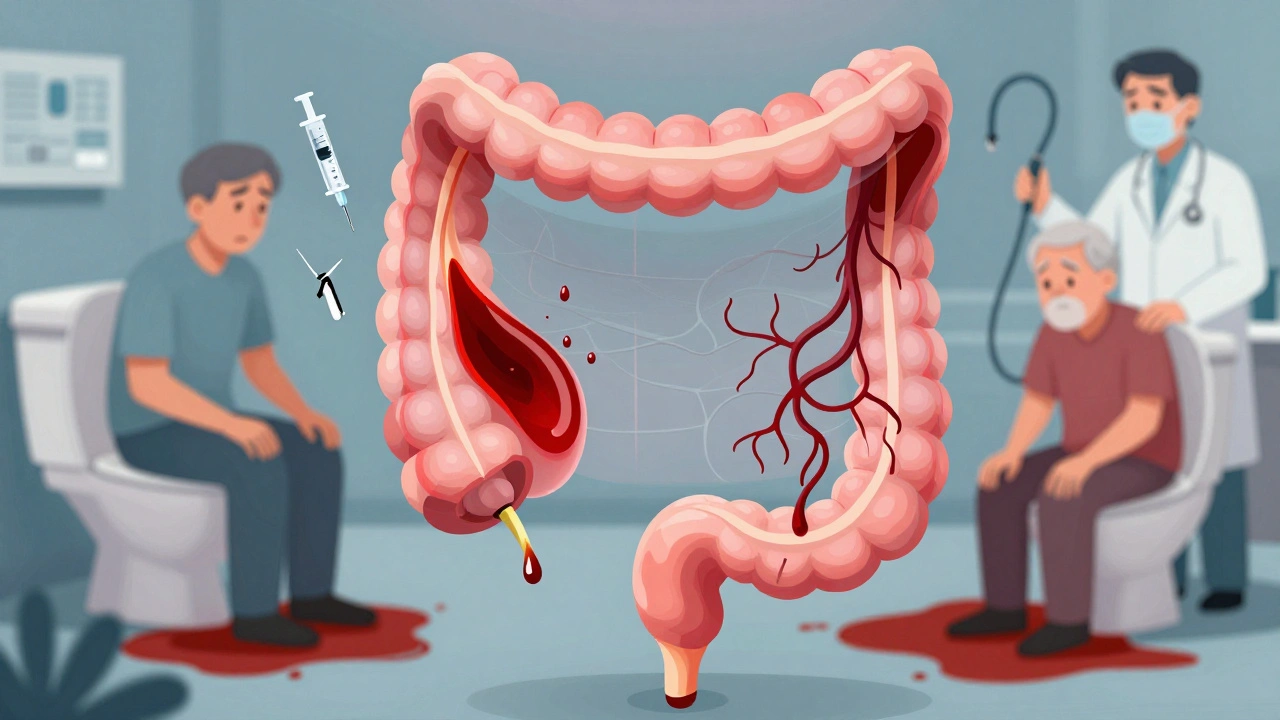
Lower GI Bleeding: Diverticula, Angiodysplasia, and How Doctors Diagnose It
Lower GI bleeding is often caused by diverticula or angiodysplasia, especially in older adults. Learn how doctors diagnose and treat these common but serious causes of rectal bleeding, and what to expect after diagnosis.
December 1 2025