
AGEP Medication Risk Checker
Check Medication Risks for AGEP
AGEP is a rare but serious drug reaction. This tool helps identify medications that may trigger it based on evidence from medical literature.
What Is AGEP?
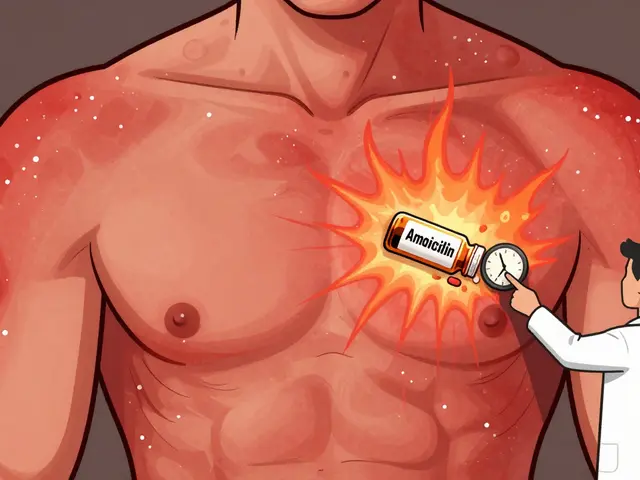
Acute Generalized Exanthematous Pustulosis (AGEP) is a rare but serious skin reaction triggered by certain medications, marked by the sudden appearance of hundreds of small, sterile pustules on red, inflamed skin. It doesn’t come from infection-it’s your body’s overreaction to a drug you recently took. The rash typically shows up within 1 to 5 days after starting a new medication, often peaking within 48 hours. Unlike acne or folliculitis, these pustules aren’t filled with pus from bacteria. They’re made of white blood cells, mostly neutrophils, flooding the top layer of your skin.
AGEP usually starts in skin folds-armpits, groin, under the breasts-and spreads quickly to the face, chest, and limbs. The skin looks fiery red and feels hot to the touch. Many people also get a fever, feel tired, or have swollen lymph nodes. It’s not contagious, but it can be frightening if you’ve never seen it before. The good news? Most people recover fully within 10 to 14 days after stopping the drug that caused it.
What Causes AGEP?
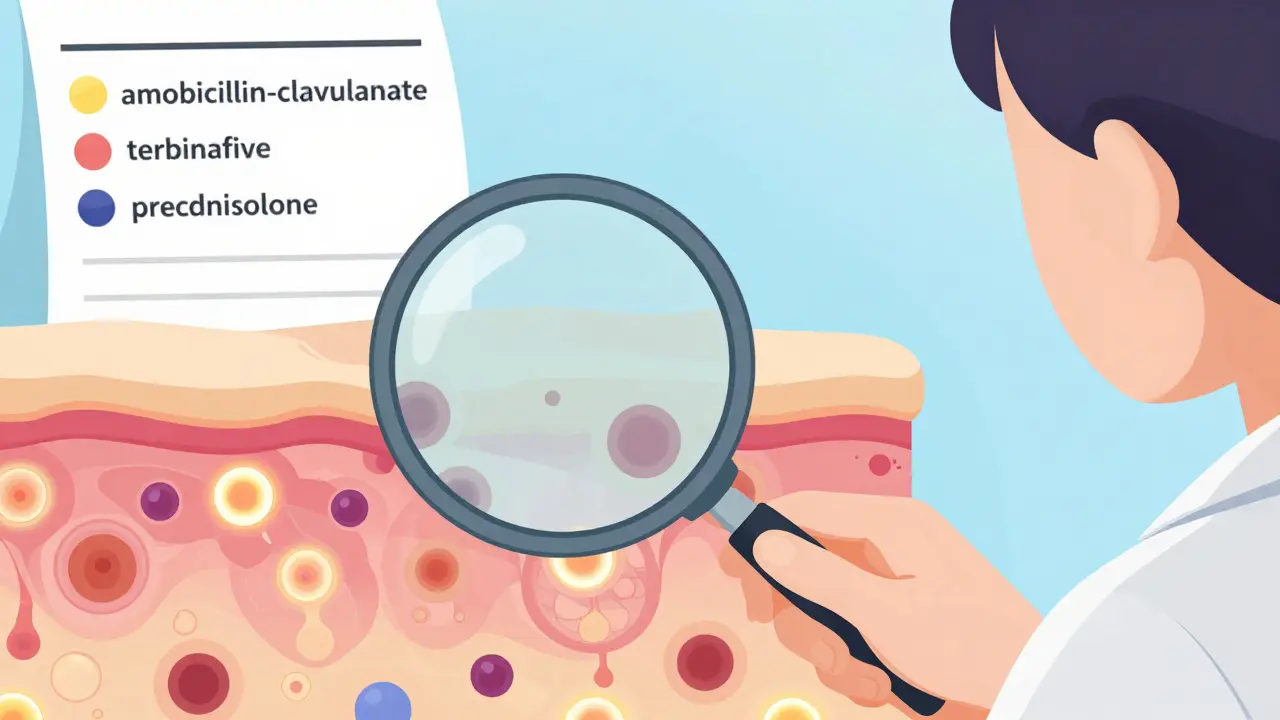
Over 90% of AGEP cases are caused by medications. The most common culprits are antibiotics-especially amoxicillin-clavulanate, which accounts for nearly half of all cases. Other frequent offenders include macrolide antibiotics like erythromycin, antifungal drugs like terbinafine, and even common blood pressure meds like calcium channel blockers.
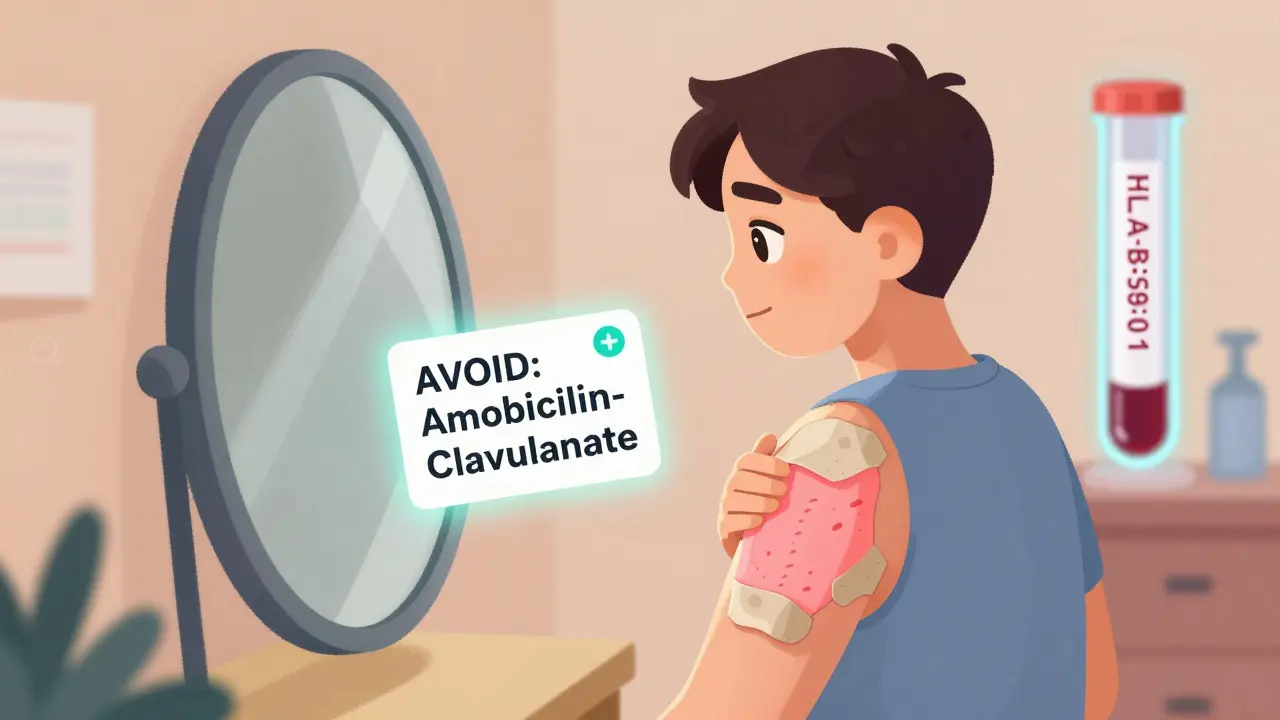
It’s not about allergies in the traditional sense. You don’t need to have had a reaction before. Someone can take amoxicillin for years without issue, then suddenly develop AGEP on the 12th day of treatment. That’s why it’s so hard to predict. Researchers are starting to find genetic links, like the HLA-B*59:01 gene variant, which increases risk significantly in Asian populations. But for most people, there’s no warning.
Even drugs you’d think are safe can trigger it. There are documented cases of AGEP from prednisolone-yes, a steroid. One patient developed it after switching from prednisolone to methylprednisolone and tolerated the latter fine, suggesting it’s not the whole class, but specific molecules. This complexity is why doctors have to dig deep into your medication history, even looking at supplements or over-the-counter painkillers you might not think matter.
How Is AGEP Diagnosed?
Getting the diagnosis right is critical-because AGEP looks a lot like other serious skin conditions, especially generalized pustular psoriasis. In community clinics, misdiagnosis happens in 35% to 40% of cases. Dermatologists use a combination of clinical signs, lab tests, and skin biopsies to tell them apart.
Key signs include:
- Pinpoint pustules (1-2 mm) on red skin, not centered on hair follicles
- Rash starting in skin folds, spreading rapidly
- No history of psoriasis
- Onset within days of new medication
Lab work often shows high white blood cell counts with neutrophils making up more than 75% of the total. CRP (C-reactive protein) levels spike too, signaling inflammation. A skin biopsy is the gold standard: it shows pustules just below the skin’s surface, filled with neutrophils and surrounded by swelling and eosinophils. That’s different from psoriasis, where pustules form deeper and the skin has a different pattern of thickening.
A new tool called the AGEP Probability Score (APS) is now being used in major hospitals. Developed by the EuroSCAR group, it assigns points based on symptoms, timing, and lab results. With 94% sensitivity and 89% specificity, it’s helping reduce errors. If you’re admitted with a suspected rash, ask if they’re using this tool.
How Is AGEP Treated?
The first and most important step is simple: stop the drug that caused it. That’s it. In most cases, that’s all you need. Once the trigger is removed, your body clears the reaction on its own.
Supportive care includes:
- Moisturizers and cool compresses to soothe irritated skin
- Antihistamines for itching
- Topical corticosteroids for localized redness
But here’s where things get controversial: should you take oral steroids like prednisone?
Some experts say no. Dermatologists at Baylor College of Medicine, after treating 15 cases over three years, argue that steroids don’t speed up recovery and can mask symptoms or cause side effects like high blood sugar or mood swings. They point out that 90% of patients recover fully without them.
Others say yes-especially if the rash covers more than 20% of your body or you have a high fever. A 2023 European study found that patients given oral steroids cleared the rash in 7 days on average, compared to 11 days for those who didn’t. Hospital stays were shorter by about 3 days. The same study showed that patients who got steroids were less likely to need IV fluids or intensive care.
The current consensus? It’s not black and white. The American Journal of Clinical Dermatology review from May 2023, based on input from 27 dermatologists across 15 countries, says: “The decision should be individualized.” If you’re otherwise healthy with mild rash, skip the steroids. If you’re elderly, diabetic, or the rash is spreading fast, steroids might be worth the risk.
What If Steroids Don’t Work?
For the small number of cases that don’t improve after stopping the drug and using steroids, newer options are showing promise. One is secukinumab, a biologic drug normally used for psoriasis. In a 2021 case report, a patient with AGEP who couldn’t take steroids got secukinumab and was completely clear in 72 hours. No infection. No relapse.
Secukinumab blocks IL-17, a key inflammation signal in AGEP. Other biologics targeting IL-23 are now in early trials. At the 2023 European Dermatology Congress, researchers shared data from a Phase II trial showing 92% of patients treated with a new IL-17 inhibitor had near-total clearance within 5 days. These aren’t standard yet, but they’re becoming lifelines for severe or recurrent cases.
Cyclosporine, an immune suppressant, is another alternative. It works similarly to steroids but has fewer metabolic side effects. It’s often used in patients with kidney disease or diabetes who can’t tolerate steroids.
Recovery and Aftercare
Once the pustules dry up, your skin will start peeling-like a bad sunburn. This usually happens 7 to 10 days after the rash starts. It’s normal, but it can be itchy and uncomfortable. Many patients don’t know this phase is part of healing and panic, thinking the rash is getting worse.
Use fragrance-free emollients daily. Avoid hot showers. Stay out of direct sunlight-your skin is extra sensitive and can burn easily. A 2022 survey found that patients given written instructions on aftercare had a 78% compliance rate. Those who only got verbal advice? Only 42% followed through.
Most people make a full recovery with no lasting damage. But it’s important to know what caused it. You’ll need to avoid that drug-and possibly others in the same class-forever. Your doctor should give you a medical alert card or entry in your electronic health record. Don’t rely on memory. Some people accidentally re-expose themselves years later, thinking, “It was just a rash.”
Why This Matters for the Future
AGEP is rare-only 1 to 5 cases per million people each year. But its impact is growing. Pharmaceutical companies now have to monitor for AGEP in clinical trials for new antibiotics and heart medications. The European Medicines Agency has required specific reporting since 2018. In 2021, the label for amoxicillin-clavulanate was updated to include AGEP as a known risk after 127 confirmed cases were reported in Europe.
Research is accelerating. The EuroSCAR group is rolling out a new diagnostic scoring system called AGEP 2.0 in early 2024. Genetic screening for HLA-B*59:01 might one day help identify high-risk patients before they even take a drug. Imagine a simple blood test before you start antibiotics that tells you if you’re genetically prone to this reaction.
For now, the key is awareness. If you develop a sudden, widespread rash with pustules after starting a new medication, don’t wait. See a doctor immediately. AGEP is treatable. It’s not fatal for most. But catching it early-and stopping the drug fast-is what makes the difference between a week of discomfort and a trip to the ICU.
What to Do If You Suspect AGEP
- Stop taking the new medication immediately (but call your doctor first-don’t stop critical drugs like blood pressure meds without advice)
- Take a photo of the rash. It helps doctors track progress
- Make a list of all medications you’ve taken in the past 14 days, including supplements and OTC drugs
- Go to urgent care or the ER if you have fever over 38.5°C, trouble breathing, or rash covering more than 10% of your body
- Follow up with a dermatologist for confirmation and long-term guidance
Is AGEP the same as psoriasis?
No. While both can cause pustules, AGEP is triggered by drugs and clears within weeks after stopping the medication. Generalized pustular psoriasis is a chronic autoimmune condition that often recurs, affects the palms and soles more commonly, and has a much higher mortality rate. Skin biopsy and medical history help doctors tell them apart.
Can AGEP come back if I take the same drug again?
Yes. Re-exposure to the same drug almost always causes a faster, more severe reaction. Once you’ve had AGEP from a medication, you must avoid it for life. Cross-reactivity with similar drugs is also possible-so if amoxicillin-clavulanate caused it, you’ll likely need to avoid all penicillin-based antibiotics.
How long does it take to recover from AGEP?
Most people start improving within 2 to 3 days after stopping the drug. The rash typically clears completely in 10 to 14 days. Peeling skin may last another week. Hospital stays average 5 to 9 days for severe cases, but outpatient recovery is common with mild cases.
Are children at risk for AGEP?
Yes, though it’s rare. Most cases occur in adults, but documented cases exist in children and even infants. The same drugs can trigger it-especially antibiotics. Pediatricians are increasingly aware of AGEP, but diagnosis is often delayed because the rash looks like a viral exanthem or heat rash.
Can I get AGEP from herbal supplements or vitamins?
Yes. While most cases come from prescription drugs, there are reports linking AGEP to herbal products like green tea extract, black cohosh, and even high-dose vitamin B3 (niacin). If you’ve recently started a new supplement and developed a rash, tell your doctor-even if you think it’s harmless.
Is AGEP life-threatening?
It can be, but rarely. The mortality rate is 2% to 4%, mostly in older adults or those with other serious health conditions. Death usually comes from secondary infection, organ failure, or complications from prolonged hospitalization. With prompt care and drug withdrawal, most people survive without long-term issues.
Sazzy De
January 31, 2026 AT 09:27Gaurav Meena
February 2, 2026 AT 05:41Beth Beltway
February 3, 2026 AT 17:23Amy Insalaco
February 5, 2026 AT 02:41Jason Xin
February 6, 2026 AT 14:38Bobbi Van Riet
February 7, 2026 AT 15:28Jodi Olson
February 8, 2026 AT 22:54Yanaton Whittaker
February 10, 2026 AT 05:28April Allen
February 11, 2026 AT 03:54Marc Bains
February 11, 2026 AT 20:32Katie and Nathan Milburn
February 12, 2026 AT 15:59Sarah Blevins
February 12, 2026 AT 16:33Kathleen Riley
February 14, 2026 AT 01:31