
AE Reporting: What It Is and Why It Matters for Patient Safety
When a medicine causes an unexpected or harmful reaction, that’s called an adverse event, a harmful and unintended response to a medication taken at normal doses. Also known as side effect, it’s not always listed in the pamphlet — and that’s why AE reporting, the formal process of documenting and submitting these reactions to health authorities exists. Without it, dangerous patterns stay hidden until someone dies.
AE reporting isn’t just for doctors. Patients, pharmacists, and even caregivers can and should report when something feels off after taking a pill. Think of it like a smoke alarm for drugs. If ten people report the same weird dizziness after starting a new blood pressure med, regulators take notice. That’s how drugs get updated warnings, or sometimes pulled from the market. The pharmacovigilance, the science and activities focused on detecting, assessing, understanding, and preventing adverse effects or any other drug-related problems system runs on these reports. Without them, we’d be flying blind. And yes, it’s not just about rare side effects. Even common ones like nausea or fatigue matter if they’re happening more than expected or hitting certain groups harder — like older adults or people on multiple meds.
You’ll find real-world examples in the posts below. One article explains how herbal supplements like St. John’s wort can trigger dangerous interactions — and how those cases get tracked. Another shows how benzodiazepine overdoses are monitored in ERs, not just treated. There’s even a guide on how to use a medication log to spot patterns before they become emergencies. These aren’t abstract concepts. They’re the building blocks of safer care. Whether you’re managing a chronic condition, caring for a child on fever meds, or just wondering why your new pill makes you sleepy, your observations matter. The system only works if people speak up.
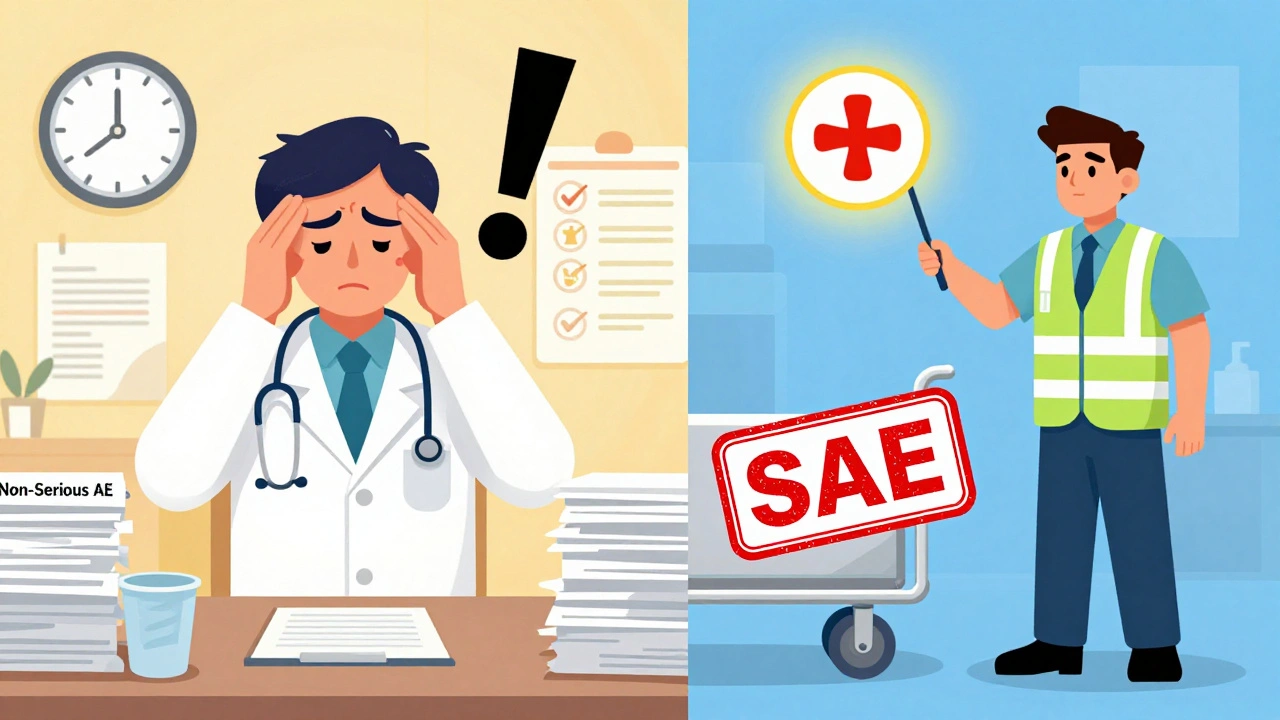
Serious vs Non-Serious Adverse Events: When to Report in Clinical Trials
Understand when to report serious vs non-serious adverse events in clinical trials. Learn the FDA and ICH criteria, reporting timelines, common mistakes, and how to avoid over-reporting that slows down safety monitoring.
December 5 2025