
Blood Thinner & Turmeric Safety Checker
Is Your Turmeric Supplement Safe?
This tool helps you determine if your turmeric supplement could dangerously interact with your blood thinner medication.
High Risk
DANGERSTOP taking turmeric supplements immediately if you're on blood thinners.
The combination can cause dangerous bleeding and liver damage. See your doctor right away.
Why this is dangerous
-
Black pepper increases curcumin absorption by up to 2,000%, creating dangerous blood thinning
-
Turmeric interferes with blood thinner metabolism, increasing bleeding risk
-
Warfarin has a narrow therapeutic window - small changes can cause dangerous INR spikes
What to do next
- Stop turmeric supplements immediately
- See your doctor or pharmacist today
- Request an INR test if you're on warfarin
- Monitor for symptoms of bleeding or liver damage
Symptoms to watch for
- Unexplained bruising or bleeding
- Nosebleeds or bleeding gums
- Blood in urine or stool
- Yellowing of skin or eyes
- Extreme fatigue or nausea
Every year, millions of people take turmeric supplements hoping for reduced inflammation, better joint health, or a natural boost to their immune system. Many of those same people are also on blood thinners-medications like warfarin, apixaban, or clopidogrel-that keep their blood from clotting too easily. What they don’t always realize is that mixing turmeric, especially when it’s paired with black pepper, can turn a harmless supplement into a serious health risk.
Why Turmeric Matters
Turmeric’s main active ingredient, curcumin, is what gives the spice its bright yellow color and its reputation as a natural anti-inflammatory. But curcumin doesn’t just reduce swelling in your joints-it also interferes with how your blood clots. It slows down platelet aggregation, which is the process where blood cells stick together to form clots. That’s helpful if you’re trying to prevent a stroke or heart attack, but it becomes dangerous when you’re already taking a medication designed to do the same thing.The problem isn’t just turmeric alone. It’s what happens when you combine it with black pepper. Piperine, the compound in black pepper, boosts curcumin absorption by up to 2,000%. That sounds great on a supplement label-“enhanced absorption!”-but in reality, it means your body is getting far more curcumin than it’s meant to handle. Instead of a gentle, natural effect, you’re flooding your system with a potent anticoagulant.
How This Interaction Can Go Wrong
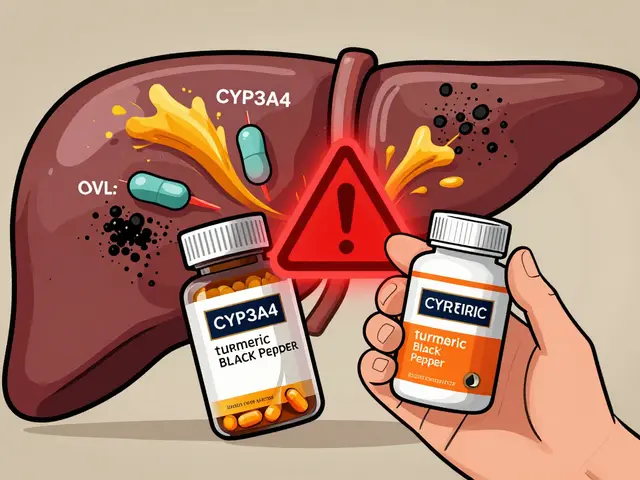
When curcumin levels spike in your bloodstream, your liver struggles to break it down. At the same time, piperine blocks key liver enzymes-CYP3A4 and P-glycoprotein-that are responsible for clearing out not just curcumin, but also your blood thinner. This creates a double whammy: more curcumin stays in your body, and your blood thinner stays in your body longer than it should.For people on warfarin, this is especially risky. Warfarin has a narrow therapeutic window-meaning the difference between a safe dose and a dangerous one is very small. A single turmeric supplement can push your INR (a blood test that measures how long it takes your blood to clot) into the danger zone. One documented case from the Welsh Medicines Advice Service involved a patient whose INR jumped from a stable 2.5 to over 6.0 after starting a turmeric-black pepper capsule. That’s a level that puts you at high risk for internal bleeding, even from minor bumps or falls.
It’s not just warfarin. Turmeric interacts with nearly every common blood thinner:
- Aspirin and ibuprofen: Both already thin the blood. Add turmeric, and bleeding risks rise sharply.
- Clopidogrel (Plavix): Turmeric increases its concentration in the blood, making it harder to control bleeding after surgery or injury.
- Apixaban (Eliquis) and Rivaroxaban (Xarelto): Even newer anticoagulants aren’t safe. Studies show turmeric can interfere with their metabolism, leading to unpredictable effects.
- Heparin and enoxaparin (Lovenox): These injectable blood thinners carry a higher risk of bruising and internal bleeding when combined with turmeric.
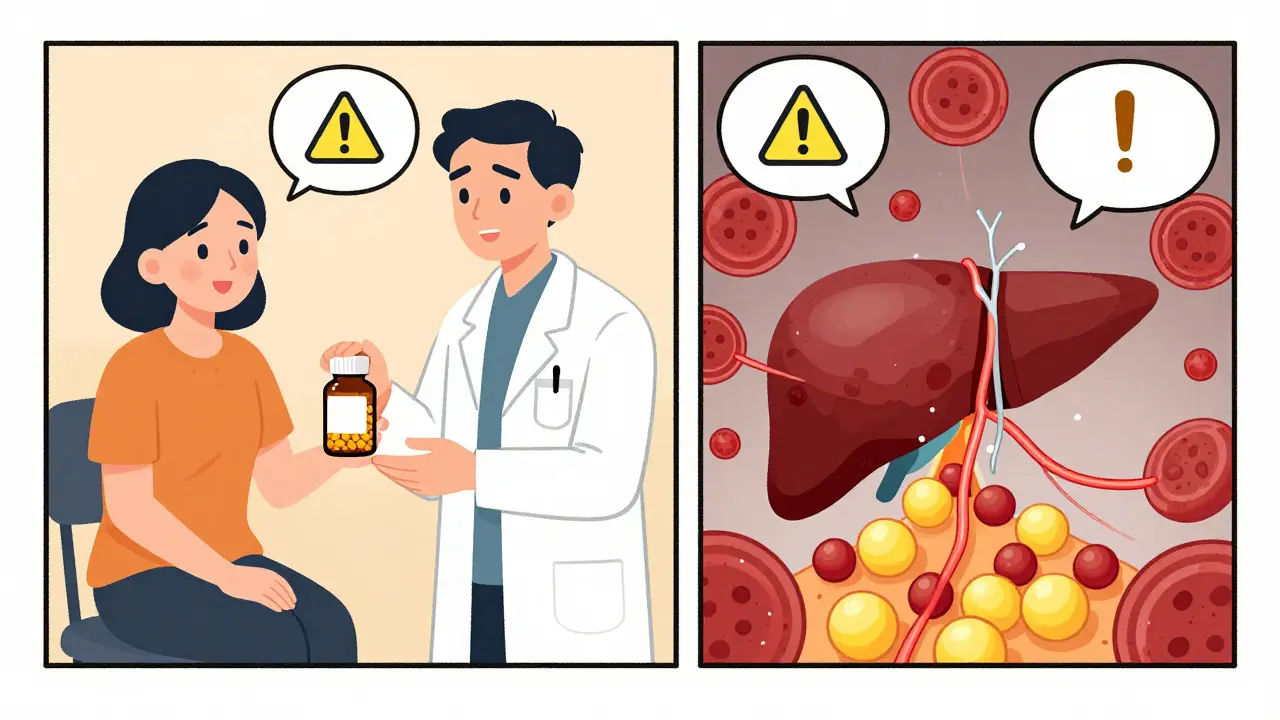
And it’s not just bleeding. There’s also liver damage. Some users report dark urine, nausea, yellowing of the skin or eyes, and extreme fatigue-all signs of liver stress. In one case, a patient developed acute liver injury after just six weeks of taking a daily turmeric-black pepper supplement. The symptoms disappeared only after they stopped taking it.
Dietary Turmeric vs. Supplements: A Crucial Difference
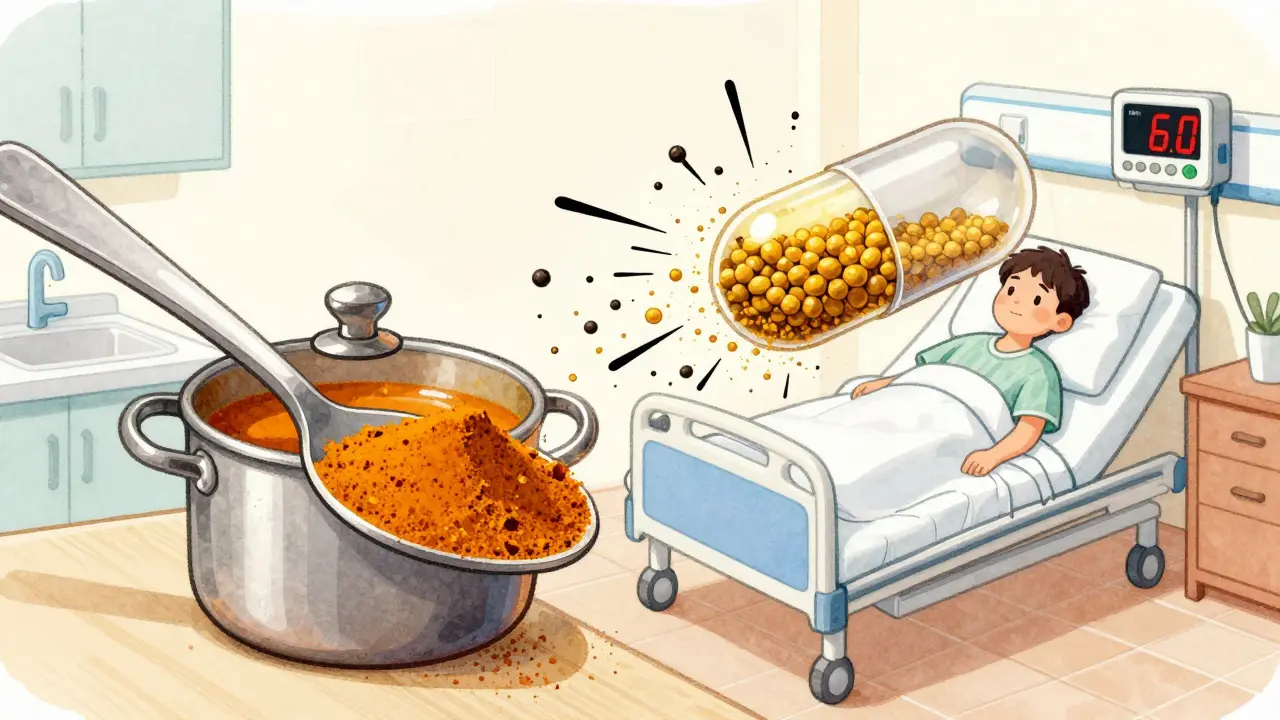
Here’s something many people don’t understand: eating turmeric in food is not the same as taking it in pill form. A teaspoon of turmeric in your curry or golden milk won’t raise your curcumin levels enough to cause harm. Your body naturally limits how much it absorbs from food. That’s why the British Heart Foundation and Cleveland Clinic both say it’s generally safe to use turmeric as a spice.But supplements? They’re a different story. A single capsule can contain 500-1,000 mg of curcumin. That’s the equivalent of eating over a pound of turmeric root in one go. And when that’s mixed with black pepper extract? You’re essentially forcing your body to absorb a massive, unnatural dose.
One man in Manchester, who took a daily turmeric-black pepper capsule for three weeks while on apixaban, ended up in the hospital with gastrointestinal bleeding. He didn’t think it was a problem because he’d read turmeric was “natural.” He didn’t tell his doctor about the supplement, either. That’s not unusual. A 2022 JAMA study found that 42% of patients on blood thinners never mention their supplement use to their healthcare provider.
What the Experts Say
The message from medical authorities is clear: avoid turmeric supplements if you’re on blood thinners.The American College of Cardiology updated its guidelines in March 2024 to specifically warn against turmeric-black pepper combinations in patients taking warfarin and to proceed with extreme caution with other anticoagulants. The Welsh Medicines Advice Service, which updated its guidance in October 2024, calls it a “well-documented and potentially life-threatening interaction.”
Dr. Bishop at the Cleveland Clinic puts it bluntly: “If you’re on a blood thinner, don’t take turmeric supplements. The risks aren’t theoretical-they’re documented in real patients.”
Even the supplement industry is starting to take notice. Grand View Research found that 63% of turmeric supplements on the market now include black pepper-marketed as “bioavailable” or “enhanced.” But only 41% of those products carry a warning about blood thinner interactions, even though the law requires it.
What You Should Do
If you’re on a blood thinner, here’s what to do right now:- Stop taking turmeric supplements immediately. Even if you haven’t had symptoms, the damage can build up silently.
- Don’t assume “natural” means safe. Many herbal supplements interact dangerously with prescription drugs. Turmeric is one of the most common offenders.
- Talk to your doctor or pharmacist. Tell them exactly what supplements you’re taking-even if you think it’s harmless. They need to check your INR and adjust your medication if needed.
- Use turmeric in food, not pills. A teaspoon or two in cooking is fine. But avoid concentrated extracts, powders, or capsules.
- Check your supplement labels. Look for “black pepper extract,” “piperine,” or “enhanced absorption.” If it’s there, don’t take it.
And if you’ve been taking turmeric supplements and start feeling unusual fatigue, nausea, yellow skin, or unexplained bruising-get medical help right away. Liver damage and internal bleeding don’t wait for convenient times.
What’s Coming Next
Researchers are working on safer ways to deliver curcumin. A 2023 study is testing lecithin-based formulations that boost absorption without piperine. That could mean a future where turmeric supplements are safer-but right now, that’s still experimental.Meanwhile, regulatory pressure is growing. The National Center for Complementary and Integrative Health predicts that by 2025, turmeric-black pepper supplements may face stricter labeling rules or even dosage limits. But until then, the risk remains real.
The bottom line? Your blood thinner is a precision tool. Turmeric supplements are not. Don’t mix them. Your body will thank you.
Can I still use turmeric in my cooking if I’m on blood thinners?
Yes. Using turmeric as a spice in food-like in curry, soups, or golden milk-is generally safe. The amount of curcumin you get from cooking is too low to interfere with blood thinners. The real danger comes from supplements, which deliver concentrated doses that your body can’t process safely when combined with anticoagulant medications.
Does black pepper alone affect blood thinners?
Black pepper by itself doesn’t thin the blood. But its active compound, piperine, interferes with how your liver breaks down medications-including blood thinners. This can cause your medication levels to rise dangerously high. So while black pepper in your food is fine, black pepper extract in supplements is a red flag, especially when paired with turmeric.
What are the signs that turmeric is interacting with my blood thinner?
Watch for unexplained bruising, nosebleeds, bleeding gums, blood in your urine or stool, or unusually heavy menstrual bleeding. If you feel unusually tired, nauseous, or notice yellowing of your skin or eyes, that could mean liver damage. These symptoms need immediate medical attention. Don’t wait to see if they go away.
Are there any safe turmeric supplements for people on blood thinners?
No. There are no turmeric supplements currently proven safe for people taking blood thinners. Even those labeled “piperine-free” or “standardized curcumin” still contain enough curcumin to interfere with anticoagulant medications. The safest choice is to avoid all turmeric supplements entirely.
How long does it take for turmeric to affect my blood thinner?
Effects can show up within days to weeks. Some people notice increased bruising or bleeding within a week of starting a supplement. Others develop dangerous INR spikes after a few weeks. Liver damage symptoms may appear between 2 and 12 weeks. That’s why it’s not worth the risk-there’s no safe window to test it.
Should I tell my doctor if I’ve taken turmeric supplements in the past?
Absolutely. Even if you stopped taking them weeks ago, your doctor needs to know. Turmeric can linger in your system, and it may affect how your blood test results are interpreted. Full disclosure helps them make better decisions about your care.
Next Steps
If you’re currently taking a turmeric-black pepper supplement and are on a blood thinner:- Stop taking it today.
- Call your doctor or pharmacist to discuss your supplement use.
- Ask for an INR test if you’re on warfarin, or discuss monitoring if you’re on a newer anticoagulant.
- Replace the supplement with safe alternatives like omega-3s from fish oil (if approved by your doctor) or simply focus on diet and exercise.
Remember: natural doesn’t mean harmless. The most dangerous interactions often come from things people assume are safe. When it comes to blood thinners, caution isn’t optional-it’s essential.
Angie Thompson
January 26, 2026 AT 00:52OMG I JUST REALIZED I’VE BEEN TAKING TURMERIC CAPSULES WITH BLACK PEPPER FOR MY KNEES 😱 I’M SO GLAD I READ THIS. MY DOCTOR NEVER MENTIONED IT. I’M DROPPING IT TODAY. THANK YOU FOR THE WARNING!! 🙏💛
Neil Thorogood
January 27, 2026 AT 08:39So let me get this straight… you’re telling me the ‘natural miracle spice’ that’s been on every influencer’s morning smoothie is basically a silent blood-thinning ninja? 🤯
And we’re supposed to trust supplement labels that say ‘enhanced absorption’ like it’s a damn award? 😂
My grandma used turmeric in curry and lived to 92. But she didn’t chug 1000mg pills with piperine like it was Red Bull. Natural ≠ harmless. Never has been. Never will be.
Skye Kooyman
January 28, 2026 AT 06:27My INR spiked last month. Doctor asked if I started any new supplements. I said no. Turned out I’d been taking turmeric for inflammation. He looked at me like I’d just admitted to drinking bleach. Lesson learned.
Peter Sharplin
January 30, 2026 AT 02:29As a pharmacist, I see this every week. Patients think ‘natural’ means ‘no side effects’ - it’s one of the most dangerous myths in health. Turmeric + black pepper + anticoagulants is a textbook interaction. The liver enzymes involved are the same ones that process 60% of all medications. This isn’t theory - it’s clinical reality. If you’re on warfarin, Eliquis, or Plavix, skip the capsules. Use the spice. End of story.
Kipper Pickens
January 30, 2026 AT 14:24Curcumin’s pharmacokinetic profile is profoundly altered by piperine-mediated inhibition of CYP3A4 and P-gp efflux transporters. This results in non-linear bioavailability, significantly elevating plasma concentrations beyond therapeutic thresholds in patients on narrow-therapeutic-index anticoagulants. The clinical implications are non-trivial.
Faisal Mohamed
January 31, 2026 AT 01:31Think about it… we’ve been conditioned to believe that ‘bioavailability’ is a virtue. But what if it’s just corporate manipulation dressed up as science? 🤔
We’ve outsourced our bodies to labs and pills. Meanwhile, our ancestors ate turmeric in food - and lived. Maybe the real problem isn’t the spice… it’s our addiction to extraction. The body knows how to handle nature. We don’t.
Allie Lehto
February 1, 2026 AT 06:13you know what else is dangerous? trusting doctors who dont even ask about supplements!! i stopped taking mine after i read this and my skin stopped turning yellow!! why dont they warn people?? its all about profits!! 🤬
Dan Nichols
February 2, 2026 AT 23:11Everyone’s panicking over turmeric but what about ginger? Garlic? Ginkgo? Same damn mechanism. Why single out one herb? You’re just fueling fear porn. And that ‘63% of supplements include black pepper’ stat? Source? Link? No? Then it’s just noise.
Also - I’ve been taking turmeric with apixaban for 4 years. No bleeding. So maybe it’s not universal. Maybe you’re just a hypochondriac.
Renia Pyles
February 4, 2026 AT 09:45Oh wow so now I’m a murderer because I took a supplement? Great. Now I feel guilty. Thanks for the guilt trip, Dr. Doomsday. My mom’s 80 and takes turmeric. She’s healthier than your entire clinic. You people make natural remedies sound like poison because you’re scared of losing your prescription profits.
Rakesh Kakkad
February 4, 2026 AT 17:48Respected Sir/Madam,
It is with utmost sincerity that I wish to express my profound gratitude for this meticulously researched exposition. In my homeland of India, turmeric is not merely a spice but a sacred element of daily life. The distinction between culinary usage and pharmacological dosage is indeed critical. I shall share this knowledge with my community without delay.
With deep respect,
Rakesh
Suresh Kumar Govindan
February 6, 2026 AT 17:39Big Pharma pushed turmeric supplements to distract from their own dangerous drugs. The FDA doesn’t regulate supplements. The black pepper? That’s a deliberate trap. They want you to overdose so you end up in the ER. Then they sell you more drugs. It’s all a scheme.
Karen Droege
February 7, 2026 AT 15:56Thank you for writing this with so much clarity - I’ve been telling my clients this for years and they always roll their eyes until they read something like this. I’m sharing it with every single one of my patients on anticoagulants. Also - if you’re on blood thinners and still taking turmeric supplements? Please, for the love of all that’s holy, stop. Your body doesn’t need to be a lab experiment. You’re not a guinea pig. Eat the curry. Skip the capsule. You’ll live longer. I promise.