
When a child refuses to take their medicine, it’s rarely about being stubborn. More often, it’s because the medicine tastes awful. That bitter, chemical aftertaste can turn a simple daily dose into a daily battle - for the child, the parent, and even the pharmacist. But there’s a simple, proven solution: flavoring services for pediatric medications. These aren’t just about making medicine taste better. They’re about making sure kids actually get the treatment they need.
Why Taste Matters More Than You Think
It’s easy to assume that if a medicine is prescribed, it will be taken. But studies show that’s far from true. In fact, more than 78% of pediatric patients struggle with their treatment regimens, and nearly half of those struggles come down to one thing: bad taste. A child who spits out antibiotics, gags on antifungals, or hides pills in their cheek isn’t being defiant - they’re reacting to a sensory experience they can’t control. Research from FLAVORx Pharmacies found that when medications were unflavored, non-compliance rates hit 76%. After flavoring was added, that number dropped to just 20%. The National Community Pharmacists Association (NCPA) reported similar results: adherence jumped from 53% to over 90% when children could choose their preferred flavor. These aren’t small improvements. These are life-changing shifts in how well a child’s treatment works. The FDA recognizes this too. They’ve stated that palatability is a key factor in successful therapeutic outcomes. If a child can’t swallow the medicine, it doesn’t matter how effective it is on paper. The medicine might as well not exist.How Flavoring Services Actually Work
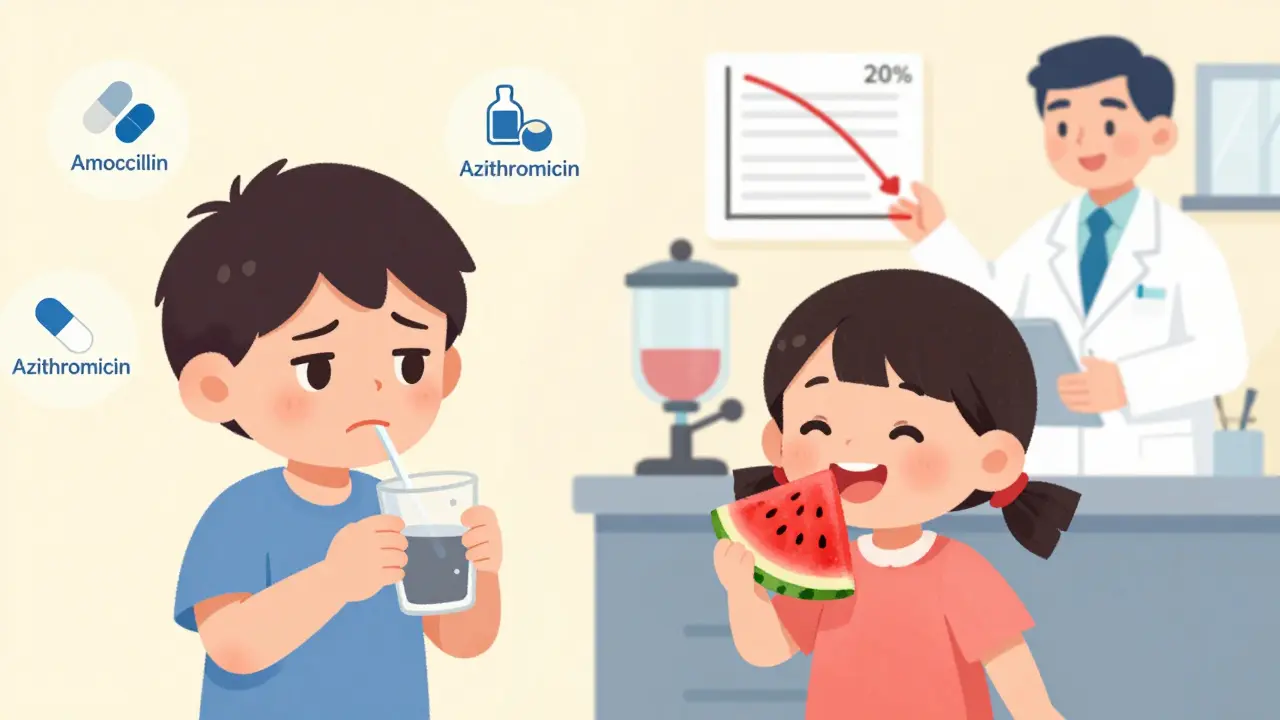
Flavoring services aren’t magic. They’re pharmacy-based compounding done right. When a parent brings in a liquid prescription - say, amoxicillin or azithromycin - the pharmacist doesn’t just hand it over. They ask: “What flavor does your child like?” The most common flavors offered? Grape, bubblegum, strawberry, watermelon, and cherry. These aren’t random choices. They’re based on years of feedback from kids and parents. The flavoring agents are dye-free, sugar-free, and formulated to be safe for children with allergies. They don’t change the dose, the strength, or how the medicine works. They just make it easier to swallow. The process takes about one to two minutes. The pharmacist adds the flavoring directly to the bottle, shakes it gently, and it’s ready. No special equipment. No complicated steps. Just a quick, low-cost addition that makes a huge difference.What Medications Get Flavoring?
Not every liquid medicine needs flavoring - but many do. The top five medications most often re-flavored are:- Augmentin
- Amoxicillin
- Azithromycin
- Cefdinir
- Clindamycin
Flavoring vs. Other Solutions
Parents often try to fix bad-tasting medicine on their own. They mix it with juice, applesauce, or chocolate syrup. But these hacks come with risks. Mixing medicine with food can alter how it’s absorbed. Some juices interfere with drug metabolism. Sugary syrups can affect blood sugar or dental health. And if the child doesn’t finish the whole spoonful, they don’t get the full dose. Compare that to professional flavoring: precise, controlled, and safe. The flavoring agent is added in a way that doesn’t affect viscosity, density, or stability. It’s designed to work with the medication, not against it. Even chewable tablets or orally disintegrating tablets - often seen as alternatives - don’t solve the problem for every child. Some kids under five can’t chew. Others have trouble swallowing tablets. For them, liquid is still the best option. And when that liquid tastes good, adherence skyrockets.Real Stories, Real Impact
At Germantown Pharmacy in Mississippi, pharmacists let kids pick their own flavor. One mother said her child, who used to scream and run at the sight of a medicine bottle, now asks for it. “He says, ‘Can I have my bubblegum medicine today?’” Another parent, who’d spent weeks hiding antibiotics in yogurt, shared: “I cried the first time he took it without a fight. I didn’t realize how much stress I was under until it was gone.” These aren’t isolated cases. FLAVORx research found that customers who used the service were far more likely to recommend the pharmacy to friends. Why? Because it solved a real, daily problem. It turned a stressful chore into something routine - even pleasant.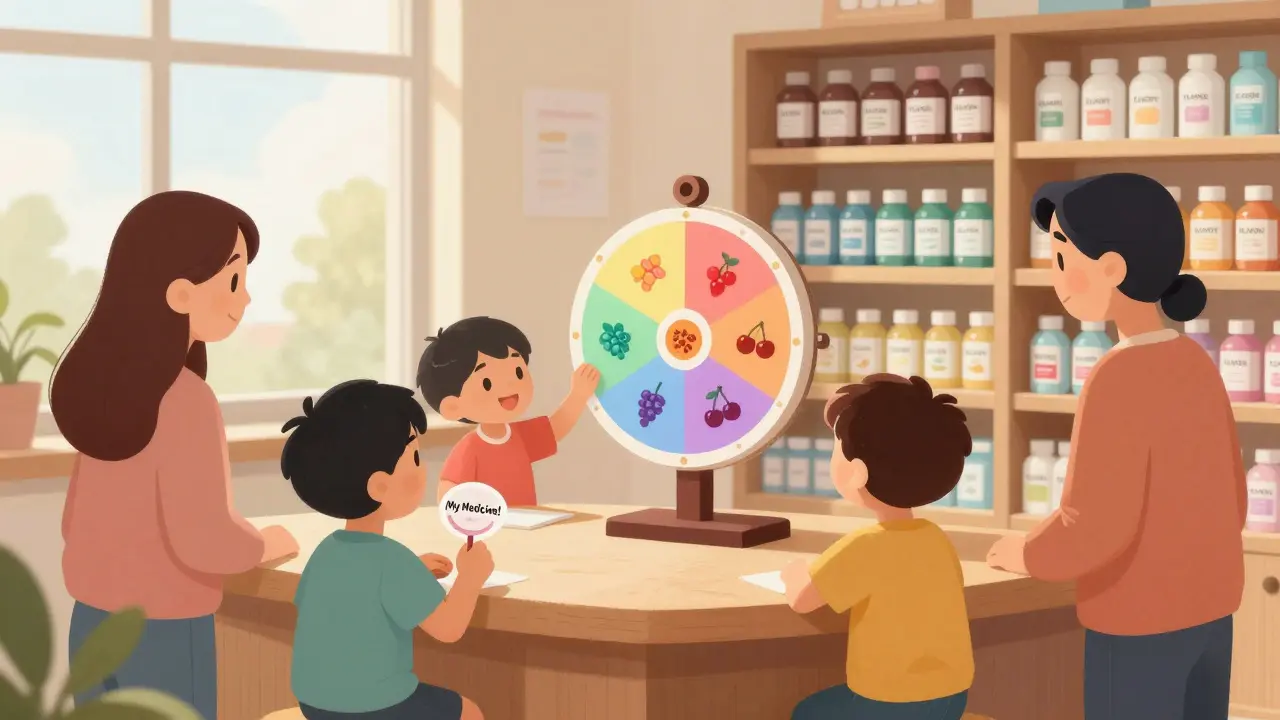
Cost, Accessibility, and Adoption
The service is affordable. At Intermountain Healthcare, it costs just $1.50 per prescription. That’s less than a cup of coffee. And it’s widely available. More than 1,200 community pharmacies across the U.S. now offer it, including major chains and independent pharmacies serving pediatric populations. The adoption is growing. In 2023, Intermountain rolled out FLAVORx across all their pharmacies. Pharmacists don’t need special training. The system is designed for everyday use. Databases guide them on which flavors work best with which drugs. Hotlines are available if they’re unsure. This isn’t a niche service anymore. It’s becoming part of standard pediatric care. As healthcare systems shift toward value-based reimbursement - where outcomes matter more than volume - improving adherence becomes a financial priority. Fewer hospital readmissions. Fewer missed school days. Fewer antibiotic-resistant infections. All of that starts with a child taking their medicine.Limitations and What’s Next
Flavoring isn’t perfect. Some medications still can’t be flavored due to chemical instability. A few kids develop strong preferences - like only accepting strawberry - which can make switching to a new medicine harder. And awareness is still low. Many parents don’t know the service exists until they’ve already struggled for weeks. The future is brighter. Researchers are working on next-generation taste-masking technologies beyond flavoring - like encapsulation and coating methods that block bitterness at the molecular level. But for now, flavoring remains the most accessible, proven, and cost-effective tool we have. It’s not about making medicine sweet. It’s about making medicine doable. When a child takes their medicine without a fight, everyone wins: the child gets better faster. The parent gets peace of mind. And the doctor knows the treatment will work.Can any liquid medication be flavored?
Most liquid medications can be flavored, but not all. Some drugs have chemical properties that react poorly with flavoring agents - for example, they might become too thick, separate, or lose effectiveness. Pharmacists use established guidelines and manufacturer recommendations to determine which medications are safe to flavor. If in doubt, they consult flavoring service providers like FLAVORx or contact the drug manufacturer.
Are flavored medications safe for kids with allergies?
Yes, modern flavoring services use dye-free, sugar-free, and allergen-free formulations. They’re designed to avoid common allergens like nuts, dairy, gluten, and artificial dyes. Always confirm with the pharmacist that the specific flavoring agent used is safe for your child’s known allergies. Most pharmacies keep detailed ingredient lists on file.
How long does it take to flavor a prescription?
It typically takes just one to two minutes. Pharmacists add the flavoring agent directly to the liquid medication, shake it gently, and it’s ready. The process doesn’t delay pickup, and it’s often done while the prescription is being filled. Many pharmacies offer it as a standard add-on option at checkout.
Is there a difference between manufacturer-flavored and pharmacy-flavored medicine?
Yes. Manufacturer-flavored medicines often use a single, standardized flavor - like grape or cherry - that may not suit every child. Pharmacy-flavored medications let parents and kids choose from multiple options, including bubblegum or watermelon, which are more appealing to younger children. Pharmacy flavoring also allows customization when the original flavor is too bitter or causes discomfort.
Do insurance plans cover the cost of flavoring?
No, flavoring services are typically an out-of-pocket fee, usually around $1.50 per prescription. It’s not covered by insurance because it’s considered a convenience service, not a medical necessity. However, many parents find the cost well worth it due to the dramatic improvement in adherence and reduction in stress during medication time.
Can flavoring help with over-the-counter medicines too?
Yes, many pharmacies will flavor OTC liquid medications like children’s acetaminophen, ibuprofen, or antihistamines - especially if they’re prescribed for ongoing use. Even if it’s not a prescription, asking your pharmacist can make a big difference in whether your child takes it willingly.
Simon Critchley
February 7, 2026 AT 05:39Let’s be real-this isn’t rocket science. Flavoring meds? It’s like putting whipped cream on broccoli and calling it a win. But hey, if bubblegum turns a screaming toddler into a cooperative little angel, who am I to judge? The math is simple: no compliance = no cure. And if a $1.50 flavor shot saves a mom from crying in the kitchen at 2 a.m., then we’re all winning. 🙌
Chelsea Cook
February 8, 2026 AT 04:00Oh honey, I’ve been there. My kid once hid an entire dose of amoxicillin under the couch cushion like it was a treasure. Then we tried strawberry flavoring. He asked for it by name. Like it was a treat. I cried. Not because I’m emotional-because I realized how much power we gave up by assuming kids just ‘should’ take it. This isn’t candy. It’s dignity.
Elan Ricarte
February 8, 2026 AT 14:18Let me tell you what’s really going on here-Big Pharma doesn’t want you to know this. Why? Because if every kid’s meds tasted like cotton candy, parents would stop buying the ‘pre-flavored’ crap that’s full of sugar and dyes. This is a grassroots pharmacy revolution. The big boys are terrified. They’re already lobbying to make flavoring ‘non-essential.’ Don’t be fooled. This is about control. And if you’re not outraged, you’re part of the problem.
MANI V
February 9, 2026 AT 00:09India has been doing this for decades. Our pharmacists flavor everything-antibiotics, syrups, even bitter herbal tonics. We use natural extracts: mango, cardamom, rose. No chemicals. No nonsense. And guess what? Kids take it without a fuss. Why are Americans so obsessed with bubblegum? We’ve been doing it right for generations. Maybe you should stop reinventing the wheel and just ask someone who actually knows how to handle medicine.
John McDonald
February 9, 2026 AT 13:52This is one of those rare things that actually works. No hype. No fluff. Just a pharmacist shaking a bottle and suddenly, a whole family stops dreading bedtime. I’ve seen it. My niece went from hiding pills to asking if she could have her ‘pink medicine’ today. It’s not magic. It’s common sense. And yet, so many places still don’t offer it. Shame.
Camille Hall
February 9, 2026 AT 21:26My son’s pediatrician never mentioned flavoring. We found out by accident-his pharmacist asked him what flavor he wanted. He picked ‘blue raspberry.’ Now he says, ‘I’m a medicine superhero.’ I wish I’d known sooner. This isn’t a luxury. It’s basic care. Why isn’t this taught in med school? Why isn’t it standard? Someone needs to make a documentary.
Ryan Vargas
February 10, 2026 AT 00:06It is fascinating how the epistemological framework of pharmaceutical compliance is being reconfigured through the phenomenological lens of gustatory preference. One must interrogate the ontological assumption that ‘taste’ is a mere aesthetic overlay rather than a constitutive variable in therapeutic efficacy. The data presented-while statistically significant-fails to account for the socio-linguistic conditioning of flavor preference across developmental stages. Moreover, the commodification of ‘bubblegum’ as a pharmacological tool raises ethical questions about the normalization of infantilization in medical practice. Are we treating children-or training them to equate medicine with candy? The slippery slope is real. And yes, I’ve read all 17 peer-reviewed papers on this.
Jessica Klaar
February 11, 2026 AT 04:38I’m a nurse in rural Kentucky. We started offering flavoring six months ago. The change? Night and day. One little girl, 4 years old, had been on three rounds of antibiotics because she wouldn’t take them. We let her pick watermelon. She took the whole dose. Smiled. Said, ‘That’s better than juice.’ We cried. Not because it’s emotional-because it’s what care should look like. Simple. Human. No grand gestures. Just a bottle and a choice.
Kathryn Lenn
February 11, 2026 AT 06:30Oh wow. So now we’re bribing kids with candy-flavored poison? Brilliant. Next they’ll be putting glitter in vaccines. This is exactly how we got into this mess-treating medicine like a game. Kids need discipline, not dessert. And who’s to say that ‘bubblegum’ won’t make them crave sugar later? Or worse-condition them to expect everything to taste like a carnival? This isn’t compassion. It’s coddling. And it’s going to backfire. Mark my words.
Ritteka Goyal
February 12, 2026 AT 12:14so i live in india and we have this thing called 'flavoring' but we use like mango and rose and even masala!! why do americans only do bubblegum and strawberry?? its so boring!! and also why is it 1.50 dollars?? in india we do it for like 10 rupees!! and its better!! you guys are so behind!! also my cousin had a medicine that tasted like chai and he loved it!! why dont you try this??
John Sonnenberg
February 12, 2026 AT 19:06They’re telling you this is simple. But it’s not. It’s a trap. Flavoring? It’s step one. Next, they’ll be adding toys to prescriptions. Then, they’ll require a ‘fun experience’ before you can get insulin. They’re normalizing the idea that medicine must be entertaining. What happens when your child turns 12 and says, ‘I won’t take my asthma inhaler unless it’s chocolate-flavored’? What happens when they refuse a life-saving drug because it’s ‘too bitter’? This isn’t progress. It’s surrender.
Joshua Smith
February 14, 2026 AT 02:35Just wanted to say-this is the kind of thing that makes me proud of pharmacists. Not flashy. Not viral. Just quietly solving a real problem every day. My daughter’s first time on antibiotics? She cried. We tried everything. Then the pharmacist asked her what flavor she wanted. She picked grape. Took it like a champ. No drama. No tears. Just… a bottle, a choice, and a whole lot of peace. Thank you to every pharmacist who does this.