
Have you ever opened your pill bottle and stared at a tablet that looked completely different from the last one? Maybe it’s white instead of pink. Round instead of oval. No marking where there used to be a letter. You pause. You wonder: Is this the same medicine? You almost don’t take it.
You’re not alone. Millions of people in the U.S. switch to generic drugs every year to save money. But what they don’t tell you is that the pill you get today might not look anything like the one you got last month. And that’s not a mistake - it’s the law.
Why Do Generic Pills Look Different?
Generic drugs are chemically identical to brand-name versions. They contain the same active ingredient, same strength, same dose, same way of working in your body. The FDA requires this. But they’re not allowed to look the same.
This rule comes from the Hatch-Waxman Act of 1984. It’s not about safety or effectiveness - it’s about trademarks. Brand-name drug companies own the look of their pills. If a generic version looked exactly like Lipitor’s pink oval tablet, the brand could sue. So the FDA says: Same medicine, different appearance.
That means one company’s generic atorvastatin might be a white round pill. Another’s could be pale yellow and oblong. A third might be blue and scored. All of them work the same. But they don’t look the same.
What Changes? Color, Shape, Size, Marks
Generic manufacturers can change four things without affecting how the drug works:
- Color: A pill can be white, blue, yellow, or even green. No standard exists. One manufacturer might use Pantone 14-0948 TCX (a soft beige), another might use Pantone 19-4052 TCX (a deep blue).
- Shape: Round, oval, caplet, oblong, even diamond-shaped - all are allowed. The shape doesn’t change how the drug is absorbed.
- Size: Pills can range from 3mm to 20mm in diameter. Your old pill might have been 12mm. The new one is 16mm. It’s still the same dose.
- Marks: Letters, numbers, or lines embossed on the pill are used for identification. One version might say “ATV 20,” another might say “114.” Neither is wrong.
These differences come from the inactive ingredients - dyes, fillers, binders - that give the pill its look and texture. They don’t affect how the medicine works. But they affect how you feel about it.
When Appearance Changes, People Stop Taking Their Medicine
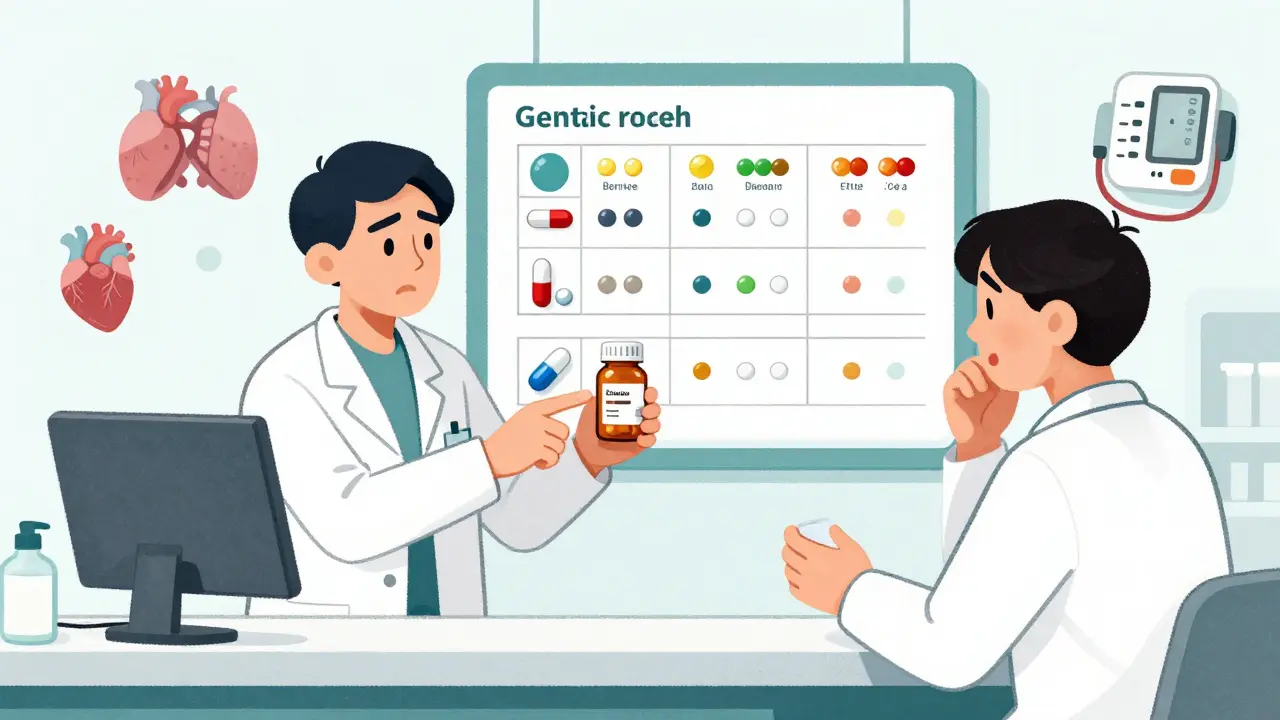
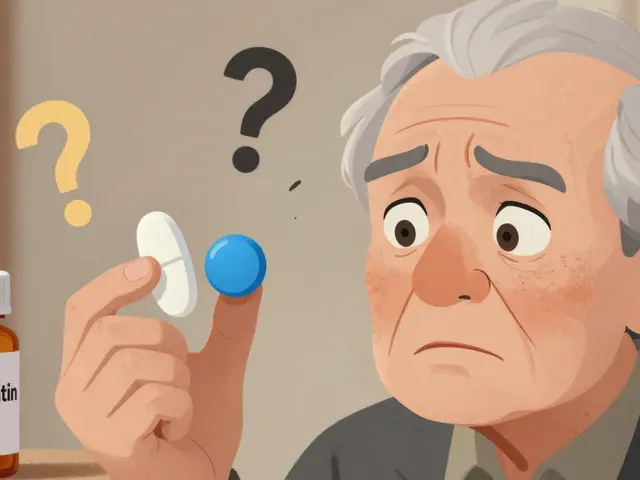
Here’s the problem: your brain trusts what it sees. If your blood pressure pill has always been a white oval, and suddenly it’s a blue round one, your mind says: This isn’t right.
Research from Brigham and Women’s Hospital and Harvard Medical School tracked 38,507 patients taking heart medications. When their pills changed color or shape, 34% more patients stopped taking them compared to when the pills stayed the same. That’s not a small number. That’s 1 in 3 people who thought their medicine had changed - and chose not to risk it.
Another study found that 32.7% of patients refilling chronic meds saw a visual change - not because of a new brand, but because their pharmacy switched to a different generic manufacturer. You didn’t change pharmacies. Your doctor didn’t change the prescription. But the pill in your hand did.
Older adults are hit hardest. A 2022 survey by AARP found that 37% of adults over 65 had trouble recognizing their meds after a change, compared to just 22% of younger adults. For someone taking five or six pills a day, mixing up colors and shapes can lead to skipped doses - or worse, taking the wrong pill.
Real Stories: Fear, Confusion, and Missed Doses
On Reddit, a user named MedSafety42 wrote: “My blood pressure med changed from white oval to blue round last refill. I almost didn’t take it. I thought it was a different drug. Scared me half to death.”
Another person on Drugs.com said: “I take metformin and levothyroxine. When my metformin turned from white oval to round pink, I accidentally took the thyroid pill twice. I didn’t realize until I felt my heart racing.”
These aren’t rare cases. Healthgrades data shows that 28.4% of patients were “very concerned” when their pill changed appearance. 14.7% admitted skipping doses because they didn’t trust the new look.
Pharmacists hear this every day. The American Pharmacists Association found that 18.3% of generic refills trigger complaints - and 67% of those complaints come from people over 65.
Why Doesn’t the FDA Fix This?
The FDA says: “Differences in taste or appearance do not affect the drug’s safety or effectiveness.” And technically, they’re right. Bioequivalence tests prove the drug works the same.
But they’re also starting to listen. In 2016, they released guidance titled “Size, Shape, and Other Physical Attributes of Generic Tablets and Capsules.” In 2023, they allocated $4.7 million to study how appearance affects patient outcomes. They’re now working on Visual Medication Equivalence Standards - a possible future where high-risk drugs (like blood thinners or thyroid meds) have consistent looks across generics.
So why hasn’t it changed yet? Because of the law. Trademark protection still wins. The 2022 court case Takeda Pharmaceuticals v. Zydus Worldwide ruled that brand companies can legally protect the look of their pills - even if that means confusing patients.
Meanwhile, the European Medicines Agency took a different path. They require generic manufacturers to match the appearance of the brand-name pill when possible. The result? An 18.3% drop in appearance-related errors across the EU.
What You Can Do: Protect Yourself
You can’t control which generic manufacturer your pharmacy uses. But you can control how you respond.
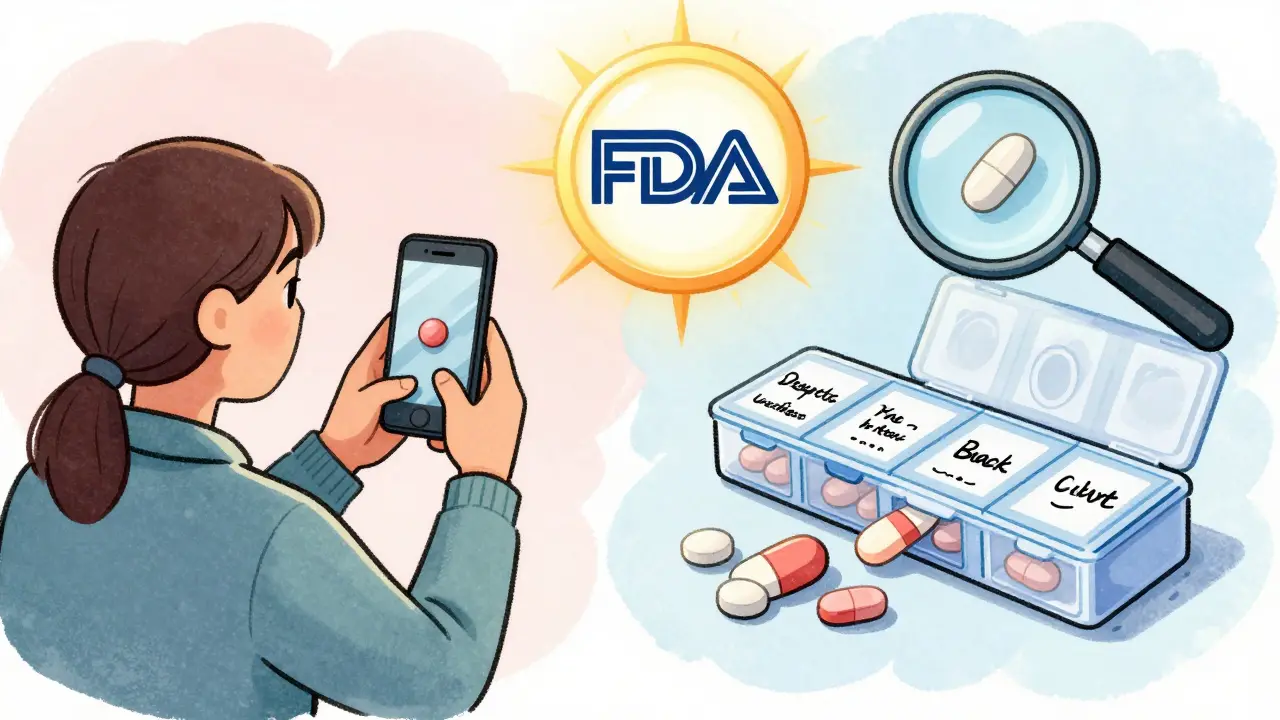
- Ask your pharmacist: When you pick up a refill, ask: “Is this the same pill I got last time?” They can show you the difference and confirm it’s the same drug.
- Take a photo: Snap a picture of each pill the first time you get it. Save it on your phone. When the next refill looks different, compare the photo. You’ll know it’s the same medicine.
- Use a pill organizer: Fill it weekly. Label each compartment with the drug name and time of day. Don’t rely on color alone.
- Keep a written list: Write down the name, dose, color, shape, and markings of every pill you take. Update it every time it changes.
- Request the same manufacturer: Some insurers let you choose a specific generic brand. Ask your pharmacist or insurance if you can stick with one manufacturer - even if it costs a few dollars more.
A Johns Hopkins study found that patients who kept photos of their pills reduced medication errors by 27%. That’s not magic. That’s awareness.
What’s Coming Next?
By 2028, Evaluate Pharma predicts that 75% of new generic approvals for high-risk drugs will include voluntary appearance standardization. That means fewer surprises. Fewer fears. Fewer missed doses.
But until then, the system remains broken - not because generics are unsafe, but because we treat pills like products, not medicine. And patients are paying the price.
You deserve to know what’s in your hand. You deserve to trust your pills. And you don’t need to guess whether that new blue tablet is the same as the old white one.
Take a photo. Ask a question. Keep a list. Your health depends on it.
Linda Caldwell
December 15, 2025 AT 18:32Do it.
Sam Clark
December 16, 2025 AT 09:51Raven C
December 18, 2025 AT 00:55Salome Perez
December 18, 2025 AT 02:29And yes-pharmacists are overworked, but they’re also your best ally. Ask them. Show them your phone. They’ll thank you.
Also, if you’re on thyroid meds? Never, ever skip a dose because you’re scared. That’s worse than any color change.
Evelyn Vélez Mejía
December 19, 2025 AT 10:05Nishant Desae
December 19, 2025 AT 20:31Jessica Salgado
December 21, 2025 AT 15:29And then I found out it was the same.
It’s not just about confusion-it’s about trauma. Every time the pill changes, my body goes into fight-or-flight. I don’t care if it’s ‘bioequivalent.’ My brain doesn’t know that. And neither does the system that lets this keep happening.
Naomi Lopez
December 22, 2025 AT 05:51