
Pharmacies in the U.S. make most of their money from generic drugs-even though those drugs cost pennies and make up just a quarter of total drug spending. It sounds backwards, but it’s how the system works. For every $100 spent on a brand-name drug, the pharmacy might earn $3 in profit. For a $5 generic, they can make $32. That’s not a typo. It’s the brutal, counterintuitive math behind pharmacy economics today.
Why Generics Are the Real Profit Engine
Generic drugs account for about 90% of all prescriptions filled in the U.S. But they only make up 25% of total drug spending. Why? Because brand-name drugs are priced at $500, $1,000, even $5,000 a month. Generics? Often $5 to $20. So pharmacies dispense tons of generics, but they don’t make much off the price tag itself. What they make is on the margin.
Here’s the breakdown: the average gross margin on a generic drug is 42.7%. That means if a generic costs $4 to source, the pharmacy might sell it for $5.75 and pocket $1.75. On a brand drug that costs $500, the gross margin is only 3.5%. That’s $17.50 profit. So even though the brand drug brings in 100 times more revenue, the generic brings in 10 times more profit.
And it gets worse for pharmacies. After rent, staff, utilities, insurance, and software, the net profit on a typical prescription is barely 2%. That’s why they rely on volume. One pharmacy might fill 300 prescriptions a day. If 270 of them are generics, those are the ones keeping the lights on.
Who’s Really Making the Money?
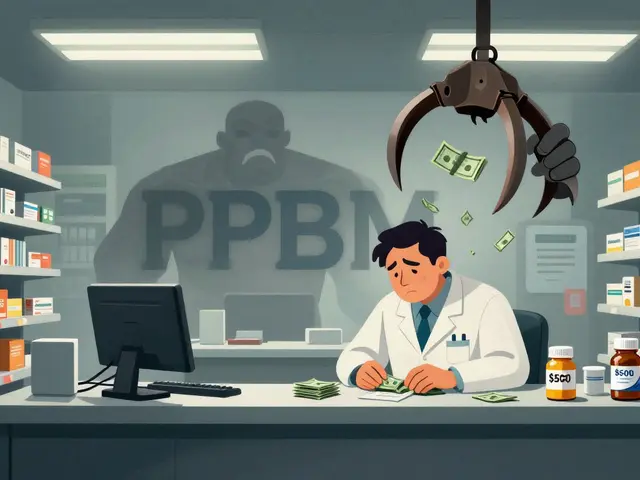
The pharmacy isn’t the only player. Pharmacy Benefit Managers (PBMs)-companies like CVS Caremark, Express Scripts, and OptumRx-control about 80% of prescription transactions. They negotiate prices between drugmakers and pharmacies. But here’s the twist: they often charge health plans more than they pay pharmacies. That gap? That’s called “spread pricing.” The PBM keeps it. And for generics, they make up to four times more than they do on brand drugs.
Wholesalers? They make eleven times more on generics. Pharmacies? Twelve times more. The manufacturer makes more on brand drugs, sure-but they’re not the ones filling prescriptions. The pharmacy is. And if the pharmacy can’t make money, it closes.
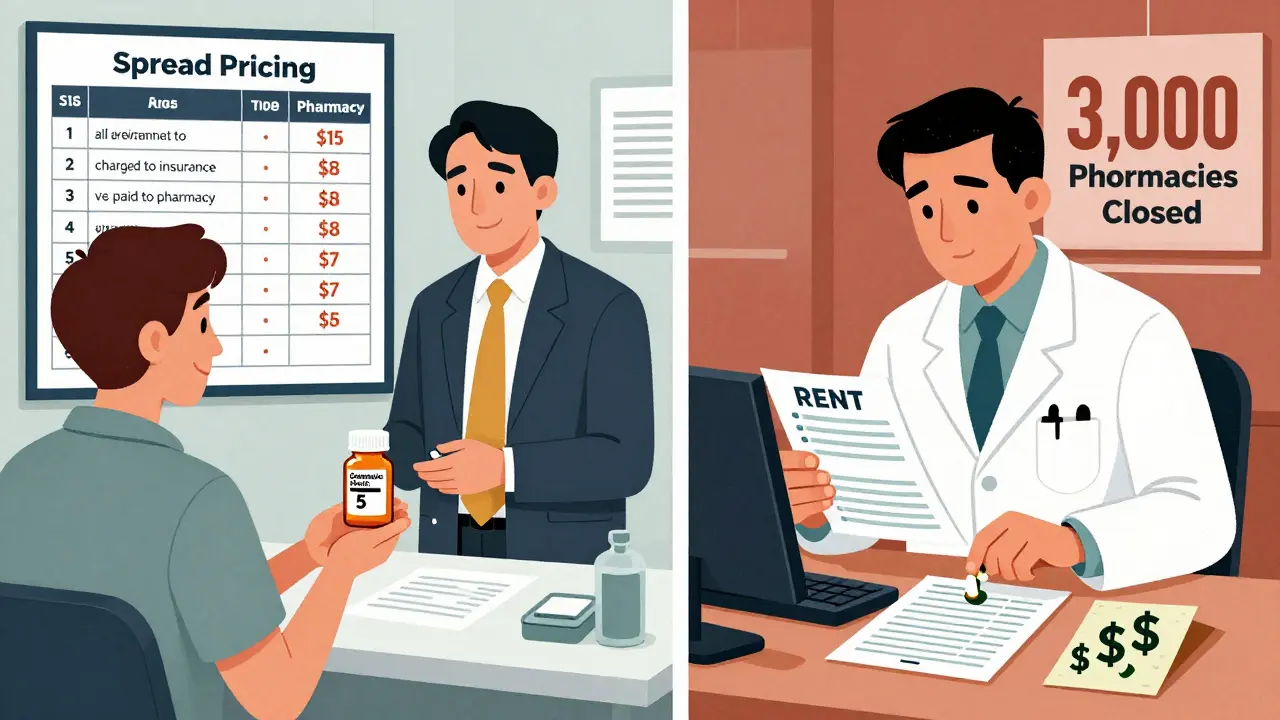
That’s why you see independent pharmacies disappearing. Between 2018 and 2023, about 3,000 shut down. Many owners say they’re being squeezed by PBMs. One owner in Ohio told Pharmacy Times his net profit on generics dropped from 8-10% five years ago to just 2% today. Meanwhile, his rent and payroll went up 35%.
The PBM Problem: Clawbacks and Hidden Fees
It’s not just low reimbursement. It’s the tricks. One common one: clawbacks. A pharmacy gets paid $10 for a generic by a PBM. Later, the PBM says, “Wait-we paid you too much.” They demand $3 back. Sometimes the pharmacy has to pay out of pocket. Another: spread pricing. The PBM tells the insurance plan they’re paying $15 for a generic. They actually pay the pharmacy $8. They keep the $7. No transparency. No notice.
And it’s getting worse. When there are multiple generic manufacturers, prices stay low. But when only one company makes a generic-called a “single-source” generic-prices can spike. In some cases, the generic is now more expensive than the brand. SureCost’s 2024 report found this happening with older drugs like doxycycline and metformin. Why? Because competition vanished. And with no competition, the manufacturer can raise prices. The PBM doesn’t care. The pharmacy gets stuck.
How Some Pharmacies Are Fighting Back
Not all pharmacies are giving up. Some are changing how they do business.
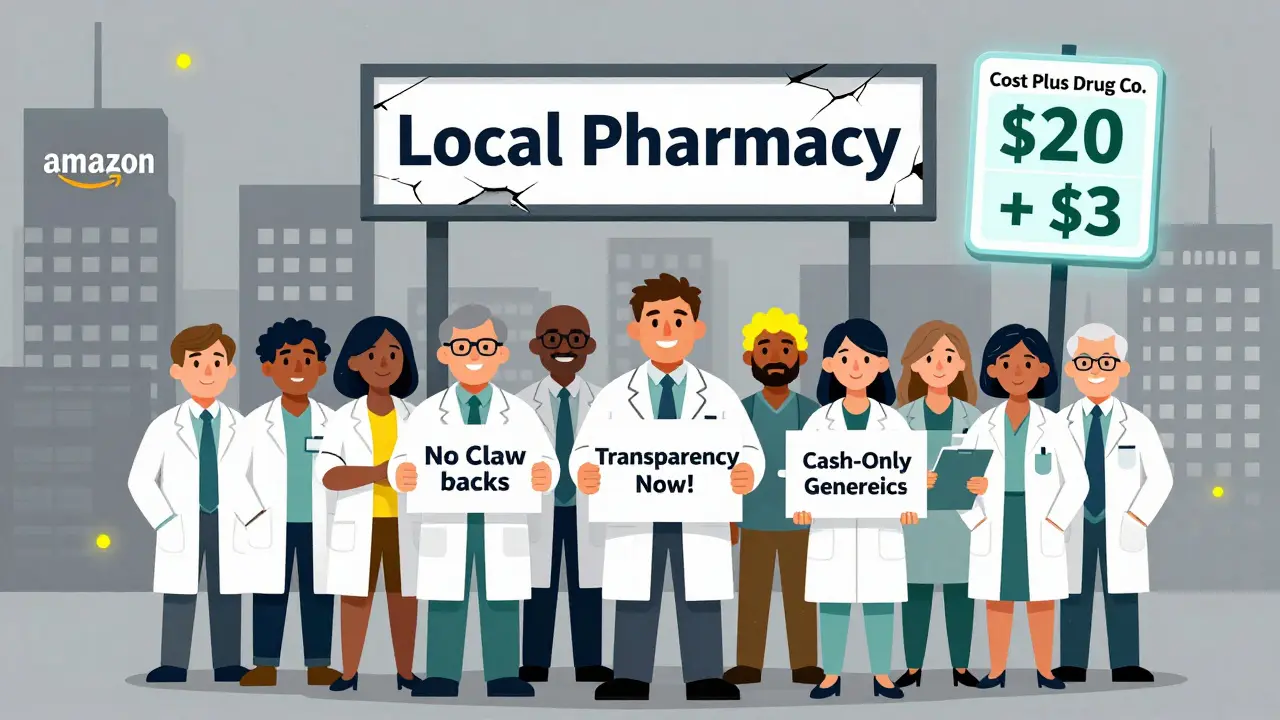
- Some are dropping out of PBM networks entirely and going cash-only for generics. Mark Cuban’s Cost Plus Drug Company charges $20 for a generic plus a $3 dispensing fee. No middleman. No spread. No clawback. They’ve processed over a million prescriptions since 2023.
- Others are partnering directly with employers or unions. That cuts out the PBM and lets pharmacies set fair prices.
- Many are adding services: medication therapy management, diabetes coaching, vaccine clinics. These aren’t reimbursed by PBMs, but they bring in steady income.
- Some states-California, Texas, Illinois-have passed laws forcing PBMs to disclose how much they’re charging and how much they’re paying pharmacies.
These aren’t magic fixes. But they’re working. Pharmacies using direct contracting report 3-5% higher net margins. Those offering medication management services are seeing net profits climb to 4-6%.
What’s Next? The 2026 Shift
The Inflation Reduction Act starts letting Medicare negotiate drug prices in 2026. That won’t directly hit generics-most aren’t eligible. But if brand-name prices drop, insurers might push harder on generic reimbursements. That could make things worse.
At the same time, the FTC is cracking down on PBM practices. They held a workshop in 2023 specifically on pharmacy reimbursement. And they’ve sued generic manufacturers for price-fixing. That could mean more competition-or more regulation.
Amazon Pharmacy is now offering generics at $5 with full cost breakdowns. Walmart and Kroger are doing similar. These big retailers have the scale to absorb low margins. Independent pharmacies? They don’t.
The Bottom Line
Generics aren’t profitable because they’re expensive. They’re profitable because they’re cheap-and pharmacies can mark them up without the PBM stealing the difference. But that system is breaking. PBMs are consolidating. Manufacturers are merging. Independent pharmacies are closing. And the people who need these drugs the most? They’re the ones paying the price-in hidden fees, clawbacks, and disappearing local pharmacies.
The future of pharmacy profit isn’t in selling more drugs. It’s in transparency, direct relationships, and services that actually help patients. The old model-rely on generics, hope the PBM doesn’t take it all-isn’t sustainable anymore.
Why do pharmacies make more profit on cheap generics than expensive brand drugs?
Pharmacies make higher percentage margins on generics because their cost is low. A $4 generic sold for $5.75 gives a 42.7% gross margin. A $500 brand drug sold for $517.50 only gives a 3.5% margin. Even though the brand drug brings in more revenue, the generic brings in more profit per prescription. Pharmacies rely on volume-and generics are dispensed 90% of the time.
What are clawbacks and spread pricing?
Clawbacks happen when a Pharmacy Benefit Manager (PBM) pays a pharmacy for a generic drug, then later demands money back because they say they overpaid. Spread pricing is when the PBM charges the insurance plan one price for a drug but pays the pharmacy a lower amount, keeping the difference as profit. Both practices reduce pharmacy revenue and are often hidden from patients and pharmacists.
Why are independent pharmacies closing?
Independent pharmacies face shrinking margins on generics due to PBM reimbursement cuts, rising overhead, and lack of negotiating power. Between 2018 and 2023, about 3,000 closed. Chains and mail-order pharmacies have better deals with PBMs and lower operating costs. Independent owners often spend 15-20 hours a week just fighting reimbursement issues.
Can pharmacies make money without PBMs?
Yes. Some pharmacies now bypass PBMs entirely by offering cash-pay generics at transparent prices-like Mark Cuban’s Cost Plus Drug Company, which charges $20 plus a $3 fee. Others contract directly with employers or unions. These models eliminate spread pricing and clawbacks, allowing pharmacies to keep 80-90% of the revenue instead of 20-30%.
Are generic drug prices going to keep rising?
They already have-in cases where only one manufacturer makes the generic. Competition keeps prices low. When competition disappears, prices spike. Between 2012 and 2015, over 100 mergers in generic manufacturing reduced competition. Now, some generics cost more than the original brand. The FDA and FTC are watching, but without more manufacturers entering the market, prices will stay volatile.
Solomon Ahonsi
February 3, 2026 AT 15:35This whole system is a scam. Pharmacies act like they’re saints saving lives while PBMs bleed them dry and nobody says shit. I fill prescriptions for my grandma and I swear half the time the pharmacy looks like they’re about to cry when they hand me the bill. $5 for a pill and they act like they’re doing me a favor. Bullshit.
George Firican
February 3, 2026 AT 22:17It’s a perverse inversion of value economics-where the cheapest things become the most profitable precisely because they’re invisible. The system rewards volume over value, efficiency over ethics, and opacity over accountability. Generics aren’t profitable because they’re cheap-they’re profitable because the architecture of healthcare has been engineered to extract surplus from the mundane, the routine, the overlooked. We treat medicine like a commodity, not a right, and now we’re reaping the moral decay of that choice.
Matt W
February 5, 2026 AT 16:44I work in a small town pharmacy and this hits home. We lost 3 employees last year because we couldn’t afford the raises. We’re running on fumes. I’ve seen pharmacists cry over clawbacks. It’s not just business-it’s people losing their livelihoods because some corporate guy in a suit thinks $7 is ‘profit’ on a $5 pill.
Anthony Massirman
February 7, 2026 AT 06:12Generics are the real MVPs. PBMs are the villains. End of story.
Eli Kiseop
February 7, 2026 AT 11:21so why dont they just stop working with pbms if its so bad
Ellie Norris
February 7, 2026 AT 23:29Wow this is eye opening! I had no idea about clawbacks-sounds so sketchy. I always thought pharmacies made more off brand names, guess I was wrong. Thanks for explaining it so clearly, even though I keep misspelling ‘reimbursement’ 😅
Marc Durocher
February 8, 2026 AT 23:24Let me get this straight-pharmacies are the ones on the front lines, busting their asses, and the real money’s going to middlemen who don’t even touch the pills? That’s like paying a pizza delivery guy $1 and the broker gets $20. And we wonder why people hate healthcare.
larry keenan
February 10, 2026 AT 02:51The structural inefficiencies within the pharmaceutical supply chain are exacerbated by the vertical integration of pharmacy benefit managers, resulting in a misalignment of incentives between provider reimbursement models and patient-centric care delivery. Margin compression at the retail level is a direct consequence of non-transparent pricing mechanisms and regulatory arbitrage.
Nick Flake
February 10, 2026 AT 06:31THEY’RE MAKING $32 ON A $5 PILLLLLL 😭💔 THIS ISN’T HEALTHCARE-IT’S A CASINO WHERE THE HOUSE ALWAYS WINS AND THE PATIENTS ARE THE CHIPS. 🎰💊
Akhona Myeki
February 11, 2026 AT 23:07It is a disgrace that American pharmaceutical capitalism has descended into this level of predatory absurdity. In South Africa, we do not tolerate such brazen exploitation of the sick. This is not a market-it is a criminal syndicate disguised as a healthcare system.
Chinmoy Kumar
February 12, 2026 AT 02:55really interesting stuff i never thought about it this way. i live in india and here generics are cheap but at least the prices are fair. i hope us can fix this. maybe more people need to go cash only like mark cuban did. i think its a good idea
Brett MacDonald
February 13, 2026 AT 01:17so like… the pbms are just taking the difference and calling it profit? sounds like a ponzi scheme but with pills. i mean… why even have pharmacies if the real profit is in the middleman? just let the manufacturers sell direct.
Sandeep Kumar
February 14, 2026 AT 08:30Independent pharmacies are relics. The market evolved. PBMs optimize efficiency. If you can’t compete with Walmart’s $5 generics then you don’t deserve to exist. This isn’t charity-it’s capitalism. Get better or get out.