
Mirtazapine Weight Gain Calculator
How It Works
Based on clinical data, this calculator estimates potential weight gain from mirtazapine. It considers factors like dose, activity level, and diet to provide a personalized risk assessment.
Your Weight Gain Estimate
Personalized Management Recommendations
If you’ve been prescribed mirtazapine for depression, you’ve probably heard about the weight gain. It’s not a rumor. It’s not a myth. It’s one of the most consistent, well-documented side effects of this drug-and for some people, it’s the reason they stop taking it. But here’s the thing: not everyone gains weight. And even when you do, it’s not always because you’re eating more. The science behind it is more complex than just ‘it makes you hungry.’
Why Mirtazapine Makes You Gain Weight
Mirtazapine doesn’t just make you hungry-it rewires how your body processes food. It’s a tetracyclic antidepressant, but its real power comes from how it blocks certain receptors in your brain and body. The biggest player? The histamine H1 receptor. Mirtazapine has one of the highest affinities for this receptor among all antidepressants. When it blocks H1, it doesn’t just make you sleepy (though that’s part of it). It also triggers a surge in appetite, especially for carbs and sweets. Studies show this effect kicks in within days, even before any noticeable weight change.
But it’s not just about hunger. Mirtazapine also blocks alpha-2 adrenergic receptors, which normally help keep your metabolism ticking. When those are blocked, your resting energy expenditure drops by about 5-7%. That means your body burns fewer calories just sitting there. Combine that with increased cravings, and you’ve got a perfect storm for weight gain.
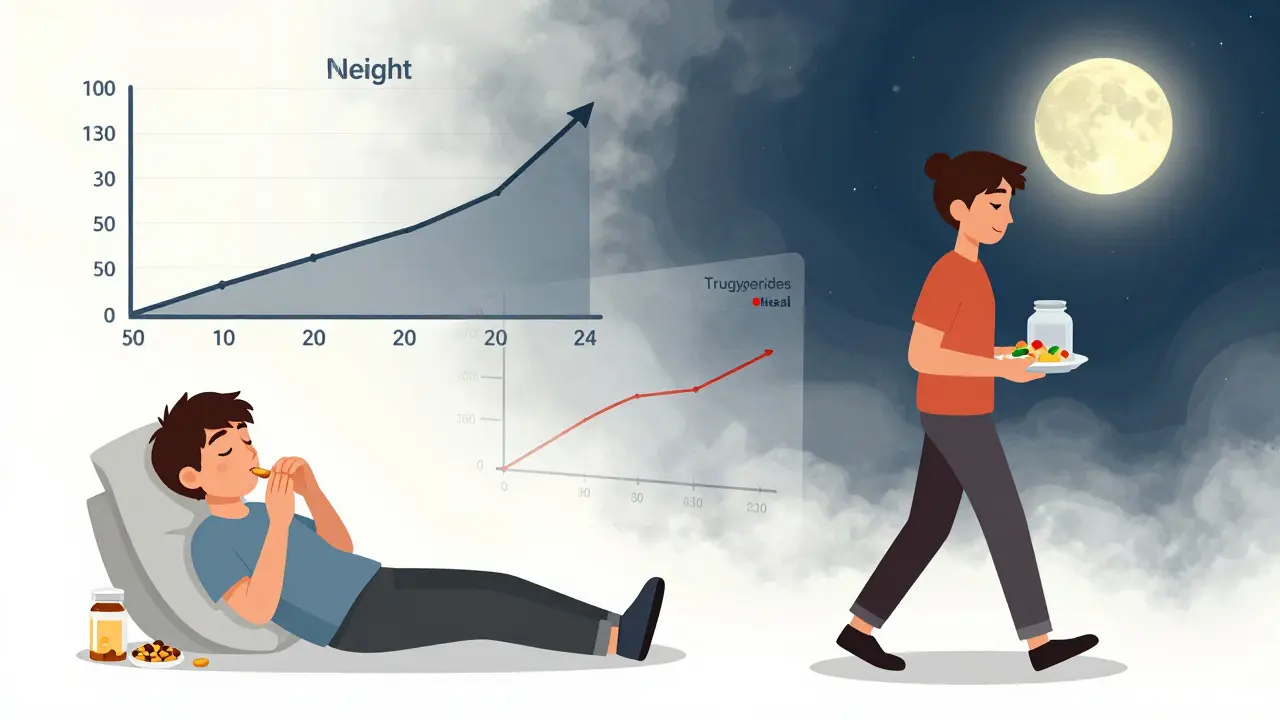
Here’s the kicker: mirtazapine also affects insulin. A 2019 study found that after just seven days of taking 30 mg daily, healthy volunteers had an 18.7% spike in insulin release during a glucose test. Your body starts storing more glucose as fat-even if you don’t eat more. And triglycerides? They rise too. One study saw a 4.4 mg/dL increase in fasting triglycerides, independent of weight gain. This isn’t just about pounds on the scale. It’s about metabolic shifts that can linger.
How Much Weight Do People Actually Gain?
People talk about gaining 30, 40, even 100 pounds on mirtazapine. Those stories get shared. They stick. But the data tells a different story.
On average, people gain about 8 pounds (3.6 kg) over six weeks. That’s the number from the Journal of Clinical Psychiatry in 2017. After 12 weeks, the average is closer to 3-5 pounds. Most weight gain happens in the first few months. After that, it tends to plateau.
Here’s where it gets interesting: not everyone gains weight. In fact, clinical trials show only about 25% of people gain 7% or more of their body weight. For a 150-pound person, that’s 10.5 pounds. But that still means 75% of people don’t hit that threshold. Some gain a few pounds. Some gain nothing. And a small number even lose weight.
Why the difference? Genetics, baseline metabolism, activity levels, and diet all play a role. One person might crave chips and cookies after starting mirtazapine. Another might just sleep more and eat the same. That’s why you’ll see wildly different experiences online.
How Mirtazapine Compares to Other Antidepressants
If you’re worried about weight gain, you’re not alone. But mirtazapine isn’t the worst offender-it’s actually second.
A major 2020 analysis in The Lancet Psychiatry looked at 21 antidepressants. Mirtazapine ranked second for weight gain, behind only paroxetine. It caused significantly more weight gain than sertraline, escitalopram, and fluoxetine. And then there’s bupropion. That one? It often leads to weight loss.
Compare this to the STAR*D trial from 2006. After 12 weeks:
- Mirtazapine: +3.5 kg (7.7 lbs)
- Citalopram: +1.8 kg (4.0 lbs)
- Venlafaxine: +0.5 kg (1.1 lbs)
That’s a clear pattern. If weight is a major concern, mirtazapine is not the first choice. But if you’ve tried other meds and they didn’t work-or made your insomnia worse-mirtazapine’s sedative effect can be a lifesaver. It’s not about being the ‘best’ antidepressant. It’s about being the right one for your body.
When Weight Gain Isn’t a Side Effect-It’s the Point
Here’s something most people don’t know: doctors sometimes prescribe mirtazapine for weight gain.
In cancer patients with cachexia (severe muscle and fat loss), mirtazapine is used off-label to boost appetite. A 2024 JAMA Oncology trial found that 30 mg daily increased protein intake by nearly 20 grams and fat intake by over 14 grams per day. Patients didn’t all gain weight-but they ate more. And that mattered. For someone struggling to get through chemo because they can’t keep food down, that’s huge.
Same goes for people with anorexia nervosa or severe depression with appetite loss. For them, mirtazapine isn’t a problem-it’s a tool. That’s why it’s still prescribed in 18% of oncology practices and 22% of geriatric psychiatry cases. The drug’s reputation as a ‘weight-gain pill’ isn’t wrong. It’s just incomplete.
How to Manage Weight Gain on Mirtazapine
If you’re on mirtazapine and want to avoid the scale creeping up, you’ve got options. It’s not about stopping the drug. It’s about working with it.
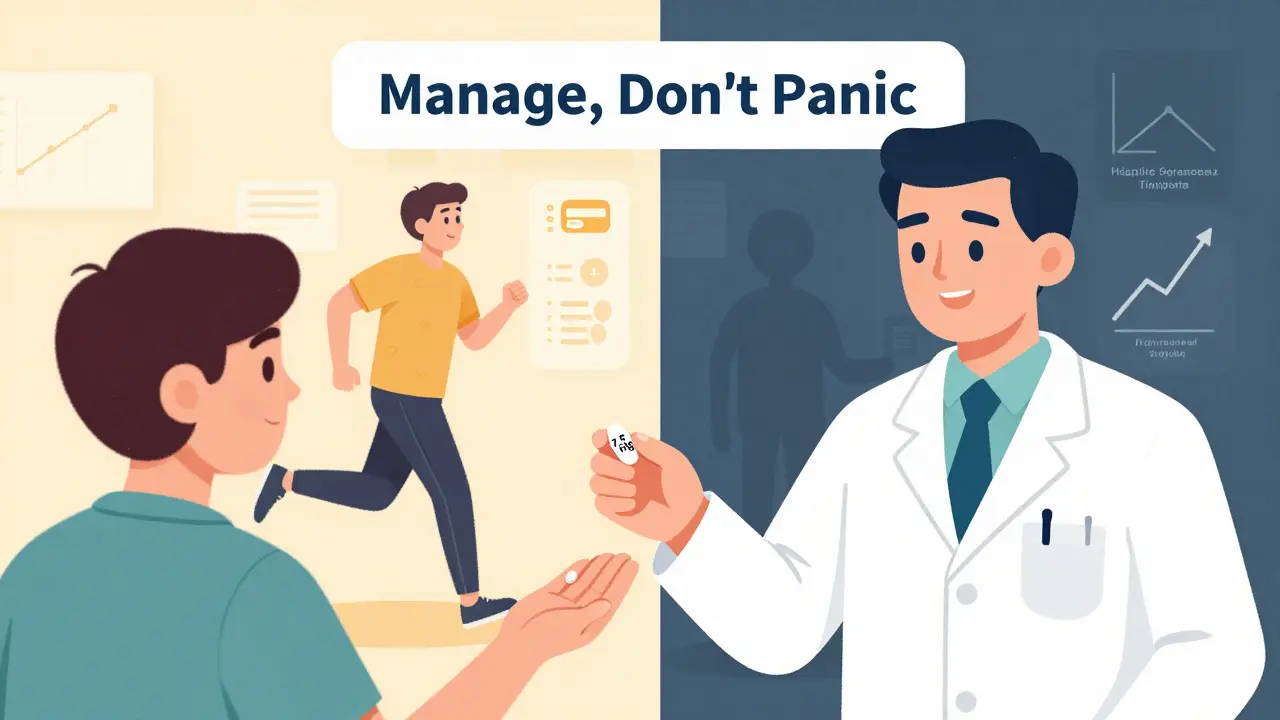
Start low, go slow. Most people start at 15 mg or 30 mg. But a 2017 study found that 7.5 mg produced 42% less weight gain than 30 mg over 12 weeks. If your depression isn’t severe, or if sleep is your main issue, starting lower might be enough. Talk to your doctor about titrating slowly.
Time your dose. Mirtazapine is usually taken at night because of its sedative effect. But here’s a tip: taking it later in the evening (after 9 p.m.) may reduce nighttime snacking. A 2019 study in Chronobiology International found that evening dosing reduced carbohydrate cravings compared to earlier doses. Sleepiness alone doesn’t explain it-your body’s internal clock affects hunger signals too.
Focus on protein. A 2022 pilot study gave people on mirtazapine a diet with 1.2-1.6 grams of protein per kilogram of body weight. The result? A 63% reduction in weight gain. Protein keeps you full longer and helps preserve muscle mass. Try eggs, chicken, tofu, Greek yogurt, or lentils at every meal.
Move, but don’t overdo it. You don’t need to run marathons. Just 150 minutes of walking per week helped stabilize weight in a small study. Exercise doesn’t burn off the extra calories from mirtazapine-but it helps regulate insulin and reduces stress-related eating.
Monitor your numbers. The American Psychiatric Association recommends baseline weight, BMI, waist circumference, and blood work (glucose, triglycerides, cholesterol) before starting. Then check monthly for the first three months. If your triglycerides climb or your fasting glucose goes up, it’s time to reassess-not panic.
What’s Next? New Approaches and Future Research
Pharmaceutical companies aren’t ignoring this. Merck has a patent pending for a new version of mirtazapine with 87% less H1 receptor binding. That could mean the same antidepressant effect-with far less hunger and weight gain.
Meanwhile, the National Institute of Mental Health is funding a trial combining low-dose naltrexone with mirtazapine. Naltrexone blocks the brain’s reward system for food. Early results? Patients gained 54% less weight over eight weeks without losing the antidepressant benefits.
But here’s the reality: mirtazapine isn’t going away. It’s too useful for too many people. For those with treatment-resistant depression, insomnia, or cancer-related appetite loss, it’s often the only thing that works. The goal isn’t to eliminate it. It’s to use it smarter.
Final Thoughts
Mirtazapine causes weight gain-not because you’re weak, not because you lack willpower, but because of hard science. It changes your appetite, your metabolism, and how your body stores energy. But it’s not inevitable. And it’s not permanent for everyone.
If you’re on this drug and worried about weight, don’t assume the worst. Talk to your doctor. Adjust the dose. Change your eating habits. Track your numbers. You might be surprised at how much control you actually have.
And if you’re considering mirtazapine? Ask your doctor: ‘What’s my risk of weight gain based on my current health?’ That’s the right question. Not ‘Will I gain weight?’-but ‘How can I manage it if I do?’
Does mirtazapine always cause weight gain?
No. About 25% of people gain 7% or more of their body weight. For many, the gain is minimal-under 5 pounds. Some gain nothing. Others even lose weight. Genetics, diet, activity level, and starting dose all influence the outcome.
Is weight gain worse at higher doses?
Not necessarily. Mirtazapine’s receptor binding doesn’t change much between 15 mg and 45 mg. But higher doses can increase sedation, which may lead to less activity and more snacking. Studies show 7.5 mg causes 42% less weight gain than 30 mg over 12 weeks, so starting low is often the best strategy.
Can I avoid weight gain by eating less?
It helps, but it’s not enough. Mirtazapine changes your metabolism directly-increasing insulin, lowering resting energy expenditure, and shifting your body toward storing fat. Even with strict calorie control, some weight gain may still occur. Combining diet changes with protein intake and regular movement is more effective than just cutting calories.
Does mirtazapine cause fat gain or just water weight?
It causes true fat gain. Studies using body composition scans show increases in fat mass, not just fluid retention. Triglycerides and HbA1c levels also rise, indicating metabolic changes that favor fat storage. This isn’t temporary bloating-it’s a shift in how your body handles energy.
Are there antidepressants that don’t cause weight gain?
Yes. Bupropion is the most consistent weight-neutral or weight-loss option. Sertraline and escitalopram cause minimal weight gain on average. Fluoxetine can cause initial weight loss. If weight is a major concern, these are better first-line options than mirtazapine-unless you have insomnia or appetite loss.
How long does it take to gain weight on mirtazapine?
Most weight gain happens in the first 6-12 weeks. After that, it tends to stabilize. A 2023 study found no significant weight change beyond 12 weeks in most patients. If you haven’t gained weight by three months, you likely won’t.
Can I switch off mirtazapine if I gain weight?
Yes-but don’t stop abruptly. Work with your doctor to taper slowly and transition to another antidepressant. Some people switch to bupropion or sertraline successfully. Others stay on mirtazapine but adjust their diet and activity level. The key is to treat the depression without worsening metabolic health.
Is mirtazapine safe for people with diabetes?
It requires caution. Mirtazapine increases insulin release and HbA1c levels. If you have prediabetes or type 2 diabetes, your doctor should monitor your blood sugar closely. In some cases, it may worsen glucose control. Alternatives like bupropion or sertraline are often preferred in diabetic patients.
Does mirtazapine affect cholesterol?
Yes. Studies show increases in triglycerides and decreases in HDL (the ‘good’ cholesterol). The triglyceride/HDL ratio-a marker for cardiovascular risk-rises even with minimal weight gain. Regular lipid panels are recommended, especially if you’re on mirtazapine long-term.
Can lifestyle changes reverse mirtazapine-related weight gain?
Yes, but not always completely. A protein-rich diet, regular movement, and evening dosing can reduce further gain and even lead to modest weight loss. However, some metabolic changes may persist. The goal isn’t always to lose the weight-it’s to prevent further gain and protect your long-term health.

Tommy Chapman
February 20, 2026 AT 19:24Amrit N
February 22, 2026 AT 12:22Caleb Sciannella
February 23, 2026 AT 12:37Courtney Hain
February 25, 2026 AT 06:50aine power
February 26, 2026 AT 08:37Robin bremer
February 27, 2026 AT 07:49Nina Catherine
February 28, 2026 AT 12:58Robert Shiu
March 2, 2026 AT 05:36Greg Scott
March 3, 2026 AT 14:14Ashley Paashuis
March 4, 2026 AT 05:08Oana Iordachescu
March 5, 2026 AT 04:14