
When you’re undergoing chemotherapy, the last thing you want is for your body to react badly to the very treatment meant to save you. But chemotherapy hypersensitivity reactions happen - and they can go from mild itching to cardiac arrest in minutes. Around 5% of people receiving chemo will have some kind of allergic response, and for some, it’s not just uncomfortable - it’s life-threatening.
What Does a Chemotherapy Allergic Reaction Feel Like?
It’s not always obvious. A reaction might start with something small: your eyes feel itchy, your lips tingle, or you get a strange metallic taste in your mouth. These aren’t just side effects - they’re early warning signs. By the time you feel flushed, break out in hives, or start wheezing, it’s already progressing. Symptoms show up in different systems:- Head and neck: Itchy eyes (32% of mild cases), nasal congestion, swelling around the eyes, or tongue swelling.
- Respiratory: Shortness of breath (45% of moderate cases), coughing, chest tightness, or wheezing - sounds like an asthma attack, but it’s not.
- Cardiovascular: Dizziness (27%), fainting (18%), rapid heartbeat (over 100 bpm in 35% of cases), or a sudden drop in blood pressure (systolic under 90 mmHg).
- Skin: Hives (48%), red rashes (65%), intense itching (72%), or flushing (58%).
- Gut: Nausea (35%), vomiting (28%), stomach cramps (42%), or diarrhea (19%).
- Nervous system: Anxiety, a terrifying feeling that something awful is about to happen (48% in anaphylaxis), or even seizures (rare, but possible).
- General: Fever (31%), chills (27%), sweating (29%), or cyanosis (blue lips or fingers).
Some symptoms overlap with regular chemo side effects - that’s why it’s so easy to miss. But here’s the key difference: allergic reactions come on fast, often within minutes of starting the infusion. And they get worse if you keep going.
Which Chemo Drugs Are Most Likely to Cause Reactions?
Not all chemo drugs are equal when it comes to triggering allergies. Some are far more likely to cause problems - especially after repeated doses.- Platinum drugs: Carboplatin is the biggest culprit. Most people don’t react on the first cycle, but by the sixth, risk jumps to 6.5%. After seven cycles? It’s 27%. In retreatment settings, it can hit 44%.
- Taxanes: Paclitaxel and docetaxel cause reactions in up to 20% of patients. That’s why premedication is standard.
- Oxaliplatin: Around 19% of patients react, but severe cases are rare (only 1.6%). Still, reactions often appear after six infusions.
- Monoclonal antibodies: Cetuximab, rituximab, trastuzumab - these are designed to target cancer cells, but they can also trigger strong immune responses.
- Others: L-asparaginase, bleomycin, cytarabine, procarbazine, and even liposomal doxorubicin have documented allergy risks.
Interestingly, carboplatin reactions don’t fade with time - they build up. Each dose adds to your risk. That’s why oncology teams track how many cycles you’ve had, not just whether you’ve reacted before.
When Do Reactions Happen?
Timing matters. Most reactions occur during the infusion or within one to two hours after. But some can show up a day or two later - delayed reactions are less common, but they happen. That’s why patients are told to call their care team if they develop hives, swelling, or trouble breathing even after leaving the clinic.The speed of onset depends on how the drug enters your body. IV chemo goes straight into your bloodstream, so reactions can be lightning-fast. Oral chemo? Slower, less likely to cause anaphylaxis.
And here’s the scary part: what starts as mild flushing or a slight rash can turn into bronchospasm or cardiac arrest in under 10 minutes. That’s why monitoring doesn’t stop when the drip ends.
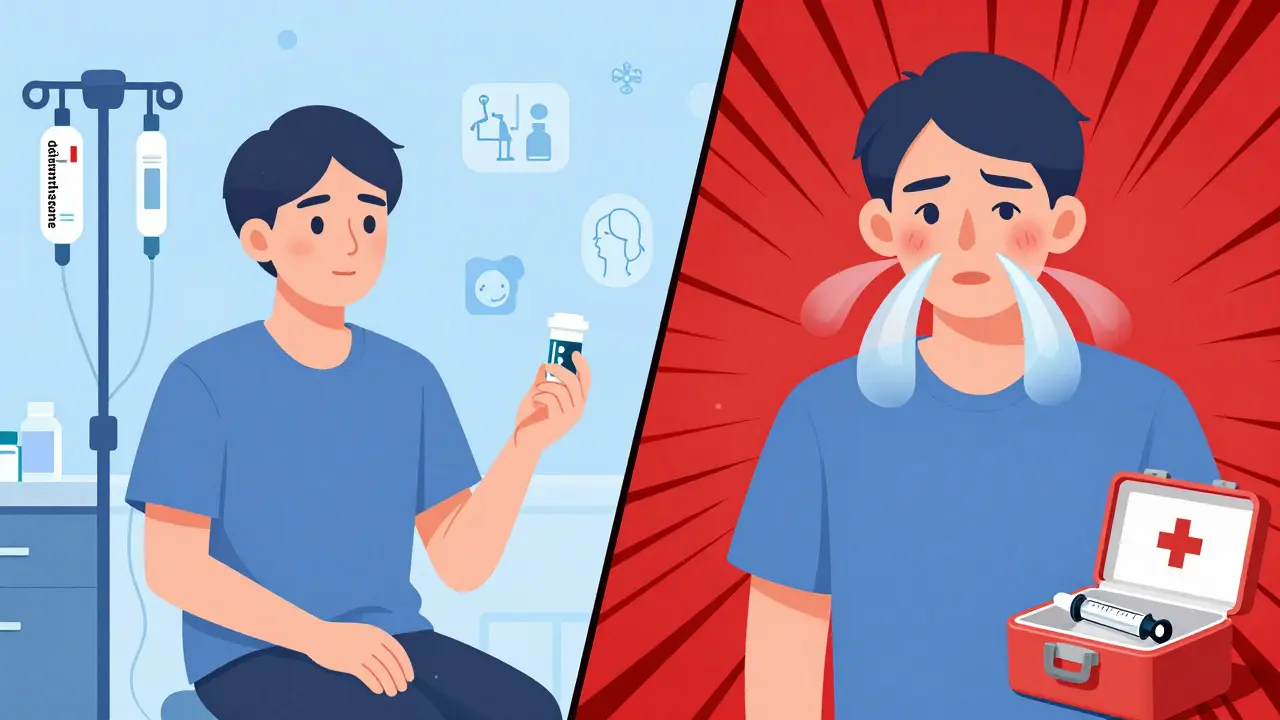
How Do Doctors Know It’s an Allergy - Not Just a Side Effect?
Not every reaction is allergic. Some are “infusion reactions” - caused by the body’s stress response to the drug, not an immune reaction. The difference? Allergic reactions involve IgE antibodies and mast cells releasing histamine. Infusion reactions are more about cytokine release.Doctors use a few tools to tell them apart:
- Clinical signs: If you have hives, low blood pressure, or trouble breathing during or right after the infusion - that’s anaphylaxis.
- Lab tests: Tryptase levels (above 11.4 ng/mL) spike after anaphylaxis. Eosinophils (a type of white blood cell) may rise. Basophil activation tests (measuring CD63/CD203c) can confirm drug-specific IgE.
- Timing and recurrence: If you reacted the same way twice - especially with the same drug - it’s likely an allergy.
They also rule out other causes: asthma attacks, septic shock, or even anxiety. Mistaking anaphylaxis for something else can be deadly. That’s why every chemo unit needs clear protocols.
What Happens When a Reaction Occurs?
There’s no one-size-fits-all response. Treatment depends on severity.Mild Reaction (Itching, Flushing, Minor Rash)
- Stop the infusion.
- Give diphenhydramine (Benadryl) 25-50 mg IV.
- Give dexamethasone 10-20 mg IV to reduce inflammation.
- Monitor vitals for 30 minutes.
- If symptoms resolve, restart infusion slowly.
Moderate Reaction (Facial Swelling, Wheezing, Mild Hypotension)
- Stop the infusion immediately.
- Give antihistamines and steroids.
- Start oxygen via nasal cannula (4-6 L/min).
- Keep patient lying flat with legs elevated.
- Reinfuse only after full recovery - and at half the original rate.
Severe Reaction (Anaphylaxis: Low BP, Bronchospasm, Loss of Consciousness)
- STOP THE INFUSION - now.
- Give epinephrine (0.3-0.5 mg of 1:1,000 solution) IM in the outer thigh. Repeat every 5-15 minutes if needed.
- Call for emergency help - this is a code blue situation.
- Start IV fluids (normal saline) to support blood pressure.
- Administer oxygen and prepare for intubation if airway is compromised.
- Give corticosteroids and antihistamines - but remember: epinephrine is the only thing that saves lives here.
Angioedema (deep swelling of the throat or tongue) is especially dangerous. It can block your airway before you even realize it. That’s why every chemo suite must have an emergency kit with epinephrine, airway tools, and IV access ready to go.
Can You Still Get Chemo After a Reaction?
Yes - but only under strict conditions. For many patients, stopping chemo isn’t an option. That’s where desensitization comes in.Desensitization slowly introduces tiny doses of the drug over 4 to 12 hours, under constant monitoring. The immune system gets used to it. It’s not risk-free - reactions can still happen - but it’s been successful for carboplatin, paclitaxel, and even monoclonal antibodies in patients with no alternatives.
For others, switching drugs is the answer. If you had a severe reaction to carboplatin, your oncologist might switch to cisplatin or oxaliplatin - though those have their own risks.
One thing is clear: if you’ve had a Grade 3 or 4 reaction, you won’t get that same drug again without a desensitization protocol. Permanent discontinuation is common for severe cases.
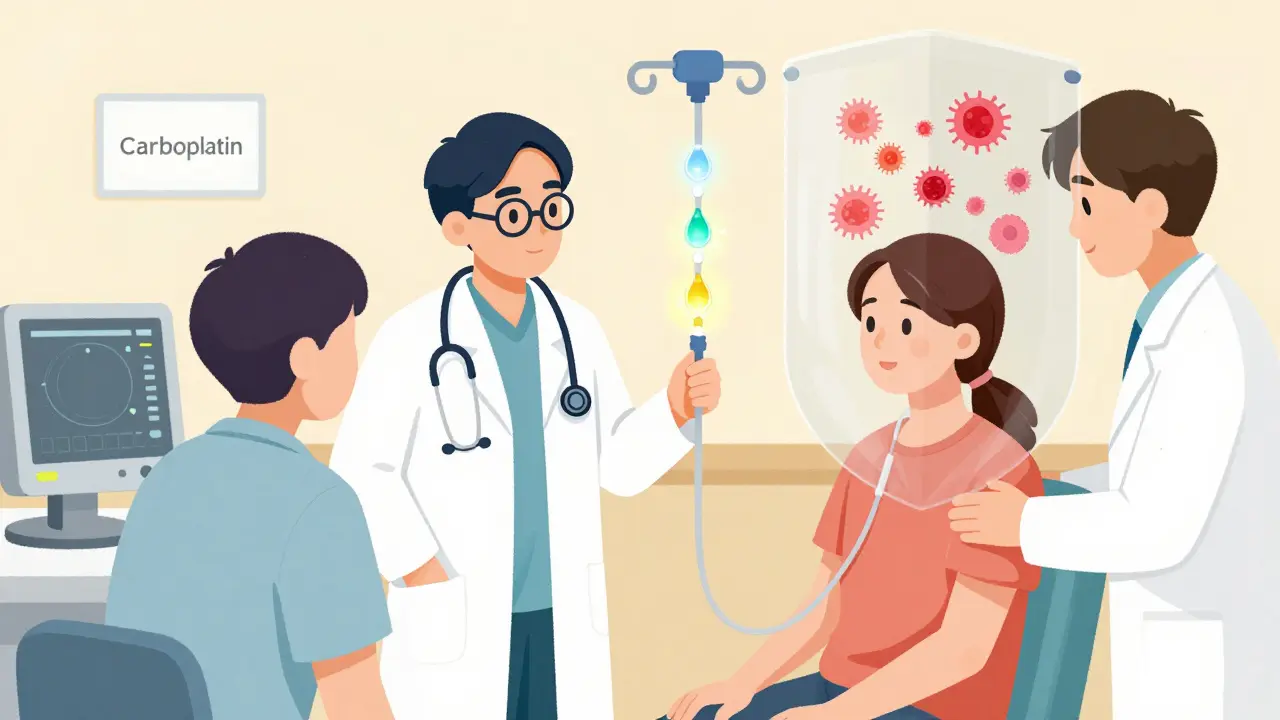
How Are Reactions Prevented?
Prevention is better than emergency response. For high-risk drugs, premedication is routine.For taxanes like paclitaxel, standard premeds include:
- Dexamethasone 20 mg IV - 12 and 6 hours before infusion
- Diphenhydramine 50 mg IV - 30 minutes before
- Famotidine 20 mg IV - 30 minutes before
This combo cuts reaction rates by up to 70%. Slower infusion rates also help. If you had a mild reaction last time, your next dose might be given over 90 minutes instead of 30.
And don’t forget the basics: tell your nurse if you’ve ever had an allergic reaction to any drug - even penicillin or contrast dye. Many chemo allergies are linked to cross-reactivity.
What Patients Need to Know
You’re not just a patient - you’re your own best advocate.- Know your drug names. Don’t just say “the blue one.” Know if it’s carboplatin, paclitaxel, or trastuzumab.
- Report ANY unusual feeling - even if you think it’s “nothing.” Tingling? Flushing? Buzzing in your ears? Say it.
- Don’t assume your reaction was “just nerves.” If you felt like you were going to pass out, you weren’t imagining it.
- Keep a written record of your reactions: date, drug, symptoms, treatment. Bring it to every appointment.
- Wear a medical alert bracelet if you’ve had a severe reaction.
It’s not about being “difficult.” It’s about survival. Nurses and doctors rely on your input. A single sentence - “I felt weird right after the drip started” - can prevent a catastrophe.
Final Thought: This Isn’t Rare - But It’s Manageable
Chemotherapy hypersensitivity isn’t something you can ignore. But it’s not a death sentence either. With early recognition, proper protocols, and patient awareness, most reactions can be handled safely - even when they’re severe.The system works when everyone plays their part: the oncologist choosing the right drug, the nurse watching for the first sign of trouble, and the patient speaking up before it’s too late.
Can chemotherapy hypersensitivity happen on the first treatment?
Yes, though it’s less common. Most reactions to platinum drugs like carboplatin occur after multiple doses, but drugs like L-asparaginase or monoclonal antibodies (e.g., cetuximab) can trigger severe reactions on the very first infusion. Always report any unusual symptoms, even if it’s your first time.
Is anaphylaxis during chemo common?
True anaphylaxis is rare - affecting less than 1% of chemo patients - but it’s one of the most dangerous complications in oncology. It’s not about frequency; it’s about speed. Without epinephrine, it can be fatal within minutes. That’s why every chemo unit must have emergency protocols ready.
Can I get desensitized to a chemo drug I’m allergic to?
Yes, desensitization is a proven method for patients who need to continue a drug they’ve reacted to. It involves giving tiny, gradually increasing doses over several hours under close monitoring. It’s been successfully used for carboplatin, paclitaxel, and even rituximab. But it’s only done in specialized centers with emergency support on standby.
Do I need to avoid all chemo if I had one allergic reaction?
No. Only the specific drug that caused the reaction is usually avoided. Many patients switch to another chemo agent - for example, moving from carboplatin to oxaliplatin. Your oncologist will choose alternatives based on your cancer type and treatment goals. Cross-reactivity between drugs is possible but not guaranteed.
Why do I need to report even mild symptoms?
Mild symptoms like itching or flushing can be the first sign of a reaction that could escalate rapidly. What seems like a small reaction today could become life-threatening on the next infusion. Early intervention - stopping the drip, giving antihistamines - can prevent a full-blown anaphylactic event. Your report saves lives.
Are there long-term risks after a chemo allergy?
Most patients recover fully after an acute reaction with proper treatment. However, if you’ve had a severe reaction, you’ll likely need to avoid that drug permanently. Some people develop sensitivities to other drugs later, especially if they’ve had multiple allergic reactions. Long-term monitoring is rare unless you’re on a drug with known cross-reactivity, like certain antibiotics or contrast dyes.
Janelle Moore
December 16, 2025 AT 23:33They’re hiding something. I read online that chemo reactions are caused by the heavy metals in the drugs binding to your DNA and triggering a government-approved immune collapse. They don’t want you to know they’re using you as a test subject for bioweapon research. That’s why they rush you out the door after treatment-so you can’t file a class-action lawsuit. I’ve got 17 screenshots.
Henry Marcus
December 17, 2025 AT 02:10Okay, but have you ever noticed how every single chemo drug sounds like a villain from a Marvel movie? Carboplatin? Sounds like a cursed artifact. Paclitaxel? Like a spell cast by a mad alchemist. And don’t get me started on ‘L-asparaginase’-that’s not a drug, that’s a cursed incantation whispered in a basement lab by someone who sold their soul for FDA approval. I swear, if I hear ‘monoclonal antibody’ one more time, I’m starting a cult that worships turmeric.
Carolyn Benson
December 18, 2025 AT 03:52It’s not about the drugs. It’s about the system. The entire oncology infrastructure is built on the illusion of control. They give you a flowchart, a pamphlet, a premedication schedule-but none of it addresses the existential terror of being a walking chemical experiment. You’re not ‘reacting’ to a drug. You’re reacting to the fact that your body has become a battleground for corporate patents and insurance codes. The hives? That’s your soul screaming. The wheezing? That’s capitalism in your lungs. And they wonder why people get anxious.
Chris porto
December 18, 2025 AT 11:51I’ve been through this twice. First with paclitaxel, then with carboplatin. The first time, I thought it was just nerves. Second time, I said something-just a whisper, ‘I feel tingly’-and they stopped it. Saved my life. I don’t know why more people don’t speak up. Maybe they’re scared. Or maybe they think it’s normal to feel like your skin is crawling off your bones. It’s not. Say something. Even if it’s small. Even if you’re not sure. It matters.
William Liu
December 19, 2025 AT 12:55This is such an important post. So many people don’t realize how fast these reactions can turn. I’m so glad the medical teams are getting better at catching them early. Keep spreading awareness-this could save someone’s life.
Aadil Munshi
December 19, 2025 AT 17:00Ah yes, the classic ‘it’s not an allergy, it’s an infusion reaction’ dodge. How quaint. You know what else is ‘not an allergy’? The fact that your insurance won’t cover the $20,000 epinephrine auto-injector you need after they gave you 12 cycles of carboplatin. The real hypersensitivity here is to profit margins. Funny how the same people who say ‘we’re here to save lives’ also say ‘we can’t afford to slow the drip.’
Frank Drewery
December 21, 2025 AT 10:03My sister had a reaction to trastuzumab on her third cycle. She was scared to say anything because she didn’t want to ‘be a burden.’ I told her: ‘If you feel weird, you’re not being a burden-you’re being a human.’ They stopped it, gave her Benadryl, and she’s still in remission. You’re not overreacting. You’re reacting right.
Danielle Stewart
December 22, 2025 AT 04:13As someone who’s been on the other side of the IV pole-nursing chemo patients for 14 years-I can tell you this: the most powerful tool in this entire process isn’t epinephrine. It’s not even the protocols. It’s the patient who says, ‘Something’s off.’ That one sentence? That’s the moment we stop the drip. That’s the moment we save a life. Thank you for writing this. Keep telling your story. We’re listening.
mary lizardo
December 23, 2025 AT 15:48While the clinical information presented is broadly accurate, the article exhibits a troubling lack of scholarly rigor. The use of percentages without cited sources from peer-reviewed journals (e.g., ‘48% of mild cases’) is statistically irresponsible. Furthermore, the colloquial tone undermines the gravity of the subject matter. One would expect such a critical medical topic to be presented with the precision of a Cochrane Review, not a blog post written by a wellness influencer. The omission of ICD-11 coding references is inexcusable.