
Caffeine-Medication Interaction Checker
Check your medication's interaction with caffeine
Select your medication to see potential risks and safety recommendations
Select a medication to see interaction information
Most people drink coffee without thinking twice. But if you're on medication, that morning cup could be quietly messing with your treatment-sometimes in dangerous ways. Caffeine doesn't just wake you up. It changes how your body processes drugs, making some less effective, others more powerful, and in some cases, life-threatening.
How Caffeine Interferes With Your Medications
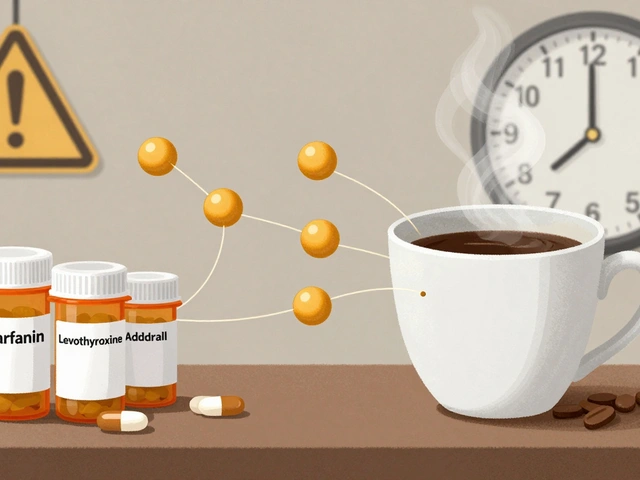
Caffeine is metabolized by an enzyme in your liver called CYP1A2. This same enzyme breaks down about 10-15% of all prescription drugs. When you drink coffee, caffeine competes for space on this enzyme, slowing down the breakdown of certain medications. That means those drugs stay in your system longer and at higher levels than intended.
But it’s not just about metabolism. Caffeine also blocks adenosine receptors in your brain and heart. Adenosine helps calm your nervous system and regulate heart rhythm. When caffeine blocks it, your heart races, your blood pressure spikes, and your body can’t respond properly to drugs that rely on adenosine to work-like those used in cardiac stress tests.
Warfarin and Other Blood Thinners: A Silent Risk
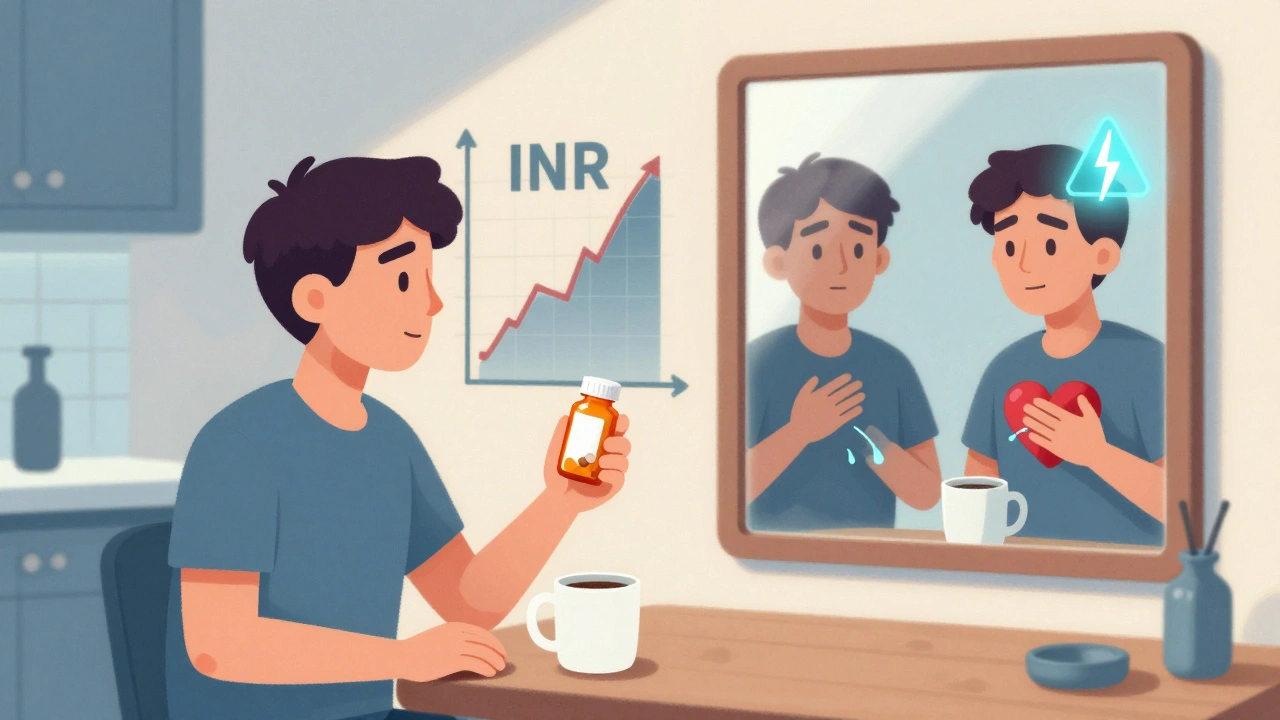
If you take warfarin (Coumadin), even small changes in caffeine intake can throw off your INR levels. INR measures how long it takes your blood to clot. Too high, and you risk dangerous bleeding. Too low, and you’re at risk for clots or stroke.
Studies show that drinking coffee with warfarin can increase INR by 15-25% within 24 hours. That’s enough to push someone from a safe range into danger. The American Heart Association recommends keeping caffeine under 200 mg per day (about two cups of coffee) and, more importantly, keeping your intake consistent. One day with three coffees and the next with none? That’s a recipe for unstable blood thinning.
Even newer anticoagulants like apixaban (Eliquis) are being studied for similar interactions. Early data from a 2025 NIH study suggests high caffeine intake (>400 mg daily) can raise apixaban levels by 10-15%, increasing bleeding risk.
Thyroid Medication: Coffee Can Block Absorption
Levothyroxine (Synthroid, Levoxyl) is one of the most commonly prescribed drugs in the U.S. But it’s also one of the most sensitive to food and drink. Coffee-yes, even decaf-can reduce its absorption by 25-57%.
A 2017 study of 98 patients found that those who drank coffee within an hour of taking their thyroid pill had significantly higher TSH levels, meaning their medication wasn’t working. One patient on Reddit shared: “My TSH jumped from 1.8 to 4.5 after years of stability. I didn’t realize my coffee was the culprit until I waited 60 minutes after my pill.”
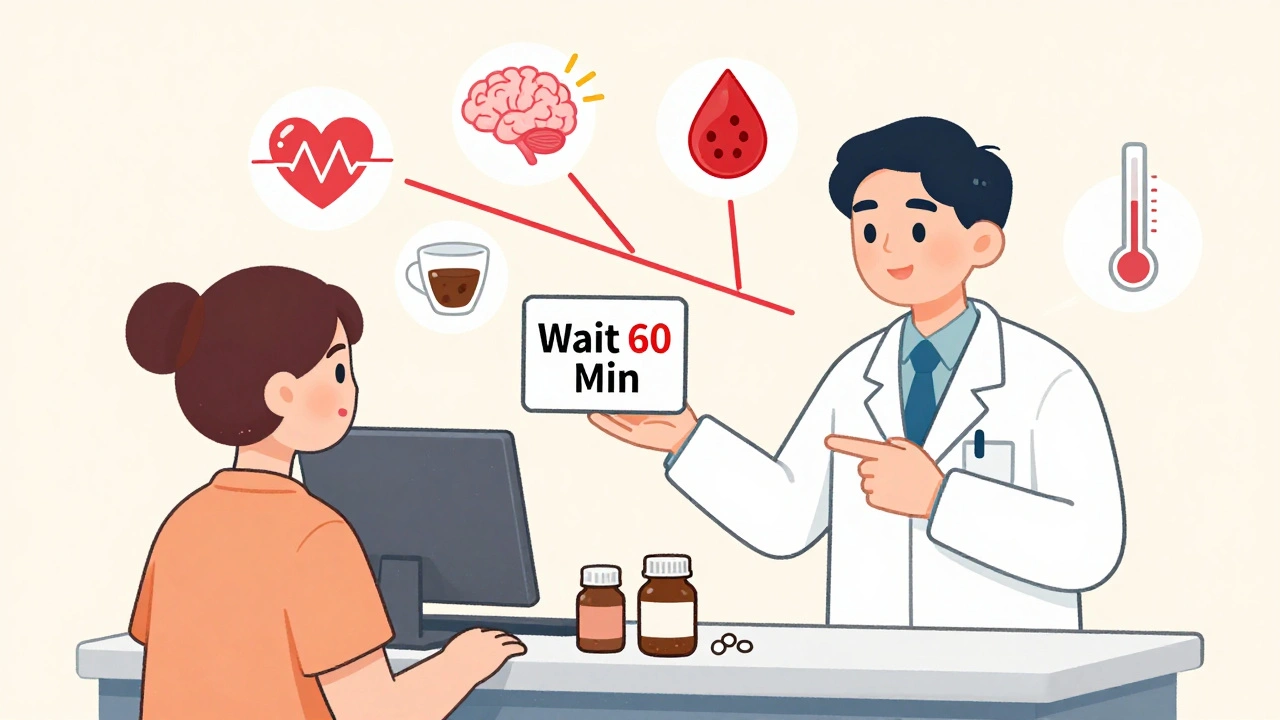
The Endocrine Society’s 2019 guidelines are clear: wait 30 to 60 minutes after taking levothyroxine before drinking coffee. And don’t assume decaf is safe-it still contains 2-15 mg of caffeine per cup. That’s enough to interfere if you’re sensitive.
Cardiac Stress Tests: One Cup Can Ruin Your Results
When you’re scheduled for a cardiac stress test, your doctor will tell you to avoid caffeine for 24 hours. Many people ignore this. Then they get inconclusive results and have to reschedule.
Why? Because caffeine blocks adenosine receptors. Stress tests use adenosine or dipyridamole to simulate exercise and check for blocked arteries. If caffeine is in your system, these drugs can’t do their job. Studies show caffeine can reduce their effectiveness by up to 50%.
One patient on HealthTap wrote: “I had one cup of coffee before my test. The results were unreadable. I had to come back in two weeks.” That’s two weeks of uncertainty, extra cost, and delay in diagnosis-all because of one cup.
Antidepressants: Caffeine Can Make You More Anxious-or Less Effective
Psychiatric medications have some of the most unpredictable interactions with caffeine. For people taking fluvoxamine (Luvox) or escitalopram (Lexapro), caffeine can reduce absorption by up to 33%. That means your antidepressant isn’t working as well.
On the flip side, caffeine can boost levels of tricyclic antidepressants like amitriptyline and imipramine by 20-40%. That’s not helpful-it’s risky. Higher drug levels mean more side effects: dry mouth, dizziness, heart rhythm changes, and worse anxiety.
Dr. Robert H. Shmerling from Harvard Health puts it plainly: “Drinking coffee-especially in large amounts-can affect how your body processes these drugs.”
Patients on Drugs.com report that 68% of those taking SSRIs with caffeine noticed increased anxiety. Another 42% felt their medication wasn’t working as well. If you’re on antidepressants and suddenly feel more jittery, restless, or emotionally flat, caffeine might be why.
Stimulants and ADHD Medications: Double the Jitters
Amphetamines like Adderall and methylphenidate (Ritalin) are stimulants. Caffeine is a stimulant. Combine them, and you’re doubling down on your nervous system’s alert signal.
University Hospitals’ 2025 clinical update found that taking caffeine with ADHD meds can spike heart rate by 20-35 beats per minute and raise systolic blood pressure by 15-25 mmHg within 45 minutes. One patient on PatientsLikeMe described: “I took my Adderall with morning coffee and couldn’t sleep for 12 hours. My heart felt like it was in my throat.”
This combo isn’t just uncomfortable-it’s dangerous. It raises the risk of arrhythmias, panic attacks, and even heart attack in people with underlying heart conditions. If you’re on stimulants, treat caffeine like a controlled substance. Limit it. Space it out. Or better yet, skip it.
Pseudoephedrine and Diabetes: A Hidden Danger
Many cold and flu meds contain pseudoephedrine, a decongestant that also acts as a stimulant. When paired with caffeine, it can cause a dangerous rise in blood sugar-especially for people with diabetes.
University Hospitals’ 2025 research found that diabetic patients who took pseudoephedrine with caffeine saw blood sugar spikes of 15-25 mg/dL and body temperature increases of 0.5-1.0°C. That’s not a minor fluctuation. That’s a signal your body is under stress, and your insulin or other diabetes meds may not be working properly.
Also, pseudoephedrine can raise blood pressure. Add caffeine, and you’re stacking two things that do the same thing. The result? Headaches, dizziness, chest tightness, or worse.
Seizure Medications: Caffeine Can Trigger Seizures
If you take carbamazepine, phenytoin, valproate, or other anti-seizure drugs, caffeine isn’t just a morning ritual-it’s a potential trigger.
Studies in Epilepsy & Behavior found that patients consuming caffeine regularly had 18-35% more seizures than those who avoided it. Caffeine lowers the seizure threshold, meaning your brain becomes more excitable and prone to misfires. Even small amounts matter.
Doctors often tell patients to cut back on soda, energy drinks, and coffee. But many don’t realize that tea, chocolate, and even some headache meds contain caffeine. If you have epilepsy, assume everything with caffeine is a risk-and talk to your neurologist about safe limits.
What You Should Do: A Simple Action Plan
Don’t panic. But do take action. Here’s how to stay safe:
- Know your meds. Check if your medication has a known caffeine interaction. If you’re unsure, ask your pharmacist. They’re trained to spot these.
- Separate your coffee from your pills. For thyroid meds: wait 60 minutes. For most others: wait at least one hour before or two hours after caffeine.
- Limit your intake. Stick to one cup of coffee a day if you’re on blood thinners, antidepressants, or stimulants. Avoid energy drinks entirely.
- Track your symptoms. Are you more anxious? Is your heart racing? Did your medication stop working? Write it down. Bring it to your doctor.
- Don’t assume decaf is safe. It still has caffeine. And if you’re on thyroid meds or seizure drugs, even 5 mg can matter.
When to Seek Help Immediately
Some reactions need emergency care. Call 999 or go to A&E if you experience:
- Heart rate over 120 beats per minute
- Systolic blood pressure above 180 mmHg
- Difficulty breathing or chest pain
- Confusion, vision changes, or loss of coordination
- Twitching, rigid muscles, or seizures
- Worsening depression or suicidal thoughts
These aren’t side effects you can “tough out.” They’re signs your body is overwhelmed by a drug interaction that could be fatal.
Why This Isn’t Just ‘Common Sense’
Doctors don’t always bring this up. Pharmacists don’t always warn you. And most patients assume caffeine is harmless. But the numbers don’t lie.
2.8% of all adverse drug events in adults over 50 are linked to caffeine. That’s 1 in 35 people. Among those over 65, it’s 4.2%. And it’s costing the U.S. healthcare system $1.2 billion a year in preventable ER visits, hospitalizations, and failed treatments.
More than 150 million Americans take both caffeine and prescription meds. That’s not a niche issue. It’s a public health blind spot. And it’s fixable-with awareness, timing, and simple changes.
Your coffee isn’t the enemy. But if you’re on medication, it’s not just a drink anymore. It’s part of your treatment plan.
Can I drink coffee if I take warfarin?
Yes-but you must be consistent. Limit caffeine to no more than 200 mg per day (about two cups of coffee), and drink the same amount every day. Sudden increases or decreases can cause your INR to swing dangerously. Avoid energy drinks, large amounts of tea, or chocolate. Always tell your doctor if you change your caffeine habits.
Does decaf coffee affect medications?
Yes, especially for thyroid medication and seizure drugs. Decaf coffee still contains 2-15 mg of caffeine per cup. That’s enough to reduce levothyroxine absorption by up to 25%. If you’re on levothyroxine, wait 60 minutes after taking your pill before drinking even decaf. For epilepsy, it’s safer to avoid all caffeine sources.
How long should I wait after taking my pill before drinking coffee?
It depends on the drug. For levothyroxine: wait 60 minutes. For most antidepressants, stimulants, or blood pressure meds: wait at least one hour before or two hours after. For cardiac stress tests: avoid caffeine for 24 hours. Always check with your pharmacist or doctor-timing varies by medication.
Can caffeine make my antidepressant stop working?
Yes, especially with SSRIs like fluvoxamine and escitalopram. Caffeine can reduce their absorption by up to 33%, making them less effective. You might feel more anxious, down, or tired-not because your depression is worsening, but because your medication isn’t being absorbed properly. Try cutting out coffee for a week and see if your mood improves.
Are energy drinks worse than coffee for medication interactions?
Much worse. A single energy drink can contain 150-300 mg of caffeine-sometimes more than three cups of coffee. Many also contain other stimulants like taurine or guarana, which can amplify interactions. If you’re on any medication, avoid energy drinks entirely. They’re not worth the risk.
What should I do if I accidentally drank coffee with my medication?
Don’t panic, but monitor yourself. If you’re on warfarin, check your INR at your next appointment. If you’re on ADHD meds or antidepressants, watch for increased anxiety, rapid heartbeat, or trouble sleeping. If you feel unwell, call your doctor. For future doses, separate your coffee and pills by at least one hour. Keep a log so you can spot patterns.
Bruno Janssen
December 12, 2025 AT 23:52Scott Butler
December 13, 2025 AT 05:55Tyrone Marshall
December 14, 2025 AT 13:01Emily Haworth
December 15, 2025 AT 00:49Tom Zerkoff
December 15, 2025 AT 22:47kevin moranga
December 17, 2025 AT 02:12Alvin Montanez
December 18, 2025 AT 00:06Lara Tobin
December 18, 2025 AT 11:58Keasha Trawick
December 20, 2025 AT 08:07Deborah Andrich
December 20, 2025 AT 23:58Tommy Watson
December 22, 2025 AT 06:13Donna Hammond
December 24, 2025 AT 04:09Richard Ayres
December 25, 2025 AT 18:52Sheldon Bird
December 26, 2025 AT 11:05Karen Mccullouch
December 26, 2025 AT 22:37