
When a doctor writes a prescription, they’re not just choosing a medicine-they’re making a decision that affects trust, cost, and outcomes. And when it comes to generic drugs, many doctors still have doubts. Not because they’re stubborn or out of touch, but because the information they’ve been given-over years of training and practice-has been incomplete, confusing, or contradictory.
Why Do Doctors Hesitate to Prescribe Generics?
It’s not about profit. Most doctors don’t get paid more for prescribing brand-name drugs. It’s about perception. A 2017 study of 134 physicians in Greece found that more than 25% believed generic medications were less effective or lower quality than their brand-name counterparts. That number hasn’t dropped much since. Even today, nearly one in four doctors still question whether generics work the same way. The biggest fear? Therapeutic failure. Doctors worry that switching from a brand-name drug like Lipitor to its generic version, atorvastatin, might cause a patient’s cholesterol to spike. Or that swapping out a brand-name thyroid med like Synthroid for levothyroxine could trigger fatigue, weight gain, or heart palpitations. These aren’t hypothetical concerns. In Reddit threads from practicing physicians, 62% reported at least one case where they believed a generic switch led to an adverse event-especially with narrow-therapeutic-index drugs like warfarin, lithium, or levothyroxine. And here’s the twist: the science says otherwise. The FDA requires generics to be bioequivalent-meaning they deliver 80% to 125% of the active ingredient compared to the brand. That’s a wide range, yes, but it’s backed by real-world data showing no meaningful difference in outcomes for most conditions. So why the disconnect?The Knowledge Gap
Many doctors don’t actually know how generics are regulated. A 2019 study in Family Practice found that only 43.7% of primary care physicians could correctly explain bioequivalence standards-even though 78.4% claimed they were familiar with them. That’s not ignorance; it’s a gap in ongoing education. Medical schools barely cover generics. Only 38.7% of U.S. medical schools include structured training on generic drugs in their curriculum, according to the AAMC. That means doctors graduate with outdated assumptions. They learned about brand-name drugs in textbooks. Generics? Mentioned in passing. Maybe as a footnote: “Cheaper alternative.” And when they start practicing, they’re not getting updates. Continuing medical education (CME) rarely touches on generics. In the same Greek study, 86.1% of doctors said they needed more training. But where do they turn? The drug reps? They’re pushing brands. Online? Search results are full of conflicting opinions. Patients bring in blogs claiming generics are “filler” or “made in China.”Who Thinks Differently? Age, Gender, and Experience Matter
Not all doctors see generics the same way. The data shows clear patterns. Male physicians are more skeptical than female ones. Doctors with over 10 years of experience are more resistant than those with 5-10 years. Specialists-like cardiologists and neurologists-are more hesitant than primary care doctors. Why? Experience doesn’t always mean wisdom. It can mean rigidity. These are the doctors who prescribed the brand-name version for years. They saw patients do well on it. Switching feels risky. Age matters too. A 2018 PLOS ONE study found statistically significant links between age and negative attitudes toward generics. Older doctors were more likely to believe generics caused more side effects, were less effective, or shouldn’t be substituted. The correlation was strong-p-values under 0.001. And yet, younger doctors aren’t immune. They’re just more likely to be influenced by cost pressures. Hospitals pushing for savings. Insurance companies requiring step therapy. Patients asking, “Can I get the cheaper one?” So they prescribe generics-not because they believe in them, but because they have to.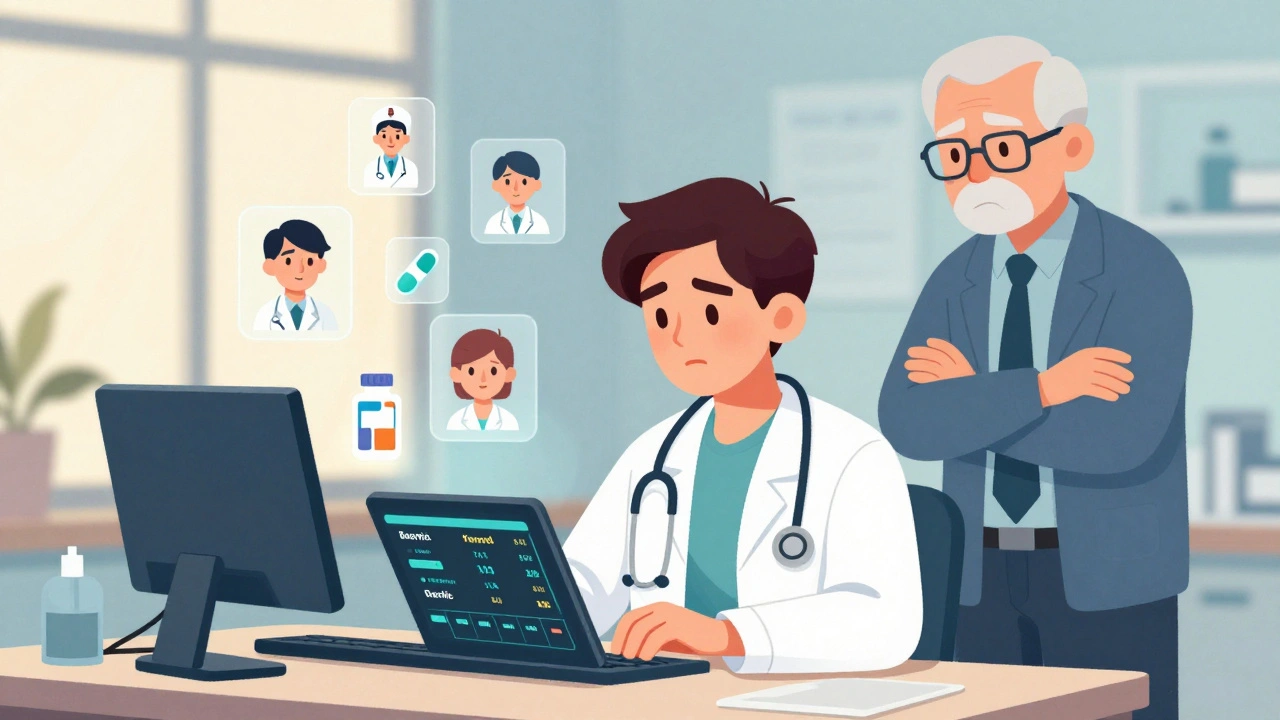
Pharmacists vs. Doctors: A Split in Trust
Here’s something surprising: pharmacists trust generics more than doctors do. A systematic review showed that 22.1% of pharmacists doubted therapeutic equivalence, compared to 28.7% of physicians. Why? Because pharmacists see the data daily. They fill the prescriptions. They monitor drug interactions. They know the manufacturer. They’ve watched patients switch without issue. But doctors don’t always listen. When a pharmacist suggests a generic substitution, the doctor might say, “I’d prefer to keep them on the brand.” And the patient walks out confused. “The pharmacist said it’s the same. But my doctor didn’t want me to switch.” That’s where mistrust begins. Patients get their information from providers-not labels or websites. Studies show 68.4% of people learn about generics from their doctor or pharmacist. If the doctor hesitates, the patient will too. And if the patient refuses the generic? The cycle continues. The brand stays on top. The cost stays high. And the system doesn’t change.The Real Cost of Skepticism
Generics make up 90.1% of all prescriptions in the U.S., but they account for only 22.7% of drug spending. That’s $528 billion in global sales-and billions in savings left on the table. In rural clinics, the impact is worse. A CDC study found that 41.7% of patients stopped taking their meds because they didn’t trust the generic. Some thought the pills looked different. Others believed the “cheaper” version was weaker. One woman told researchers she felt like she was being “given leftovers.” This isn’t just about money. It’s about health outcomes. Patients who discontinue meds because of mistrust end up in the ER. They get hospitalized. Their chronic conditions spiral. And the system pays more in the long run.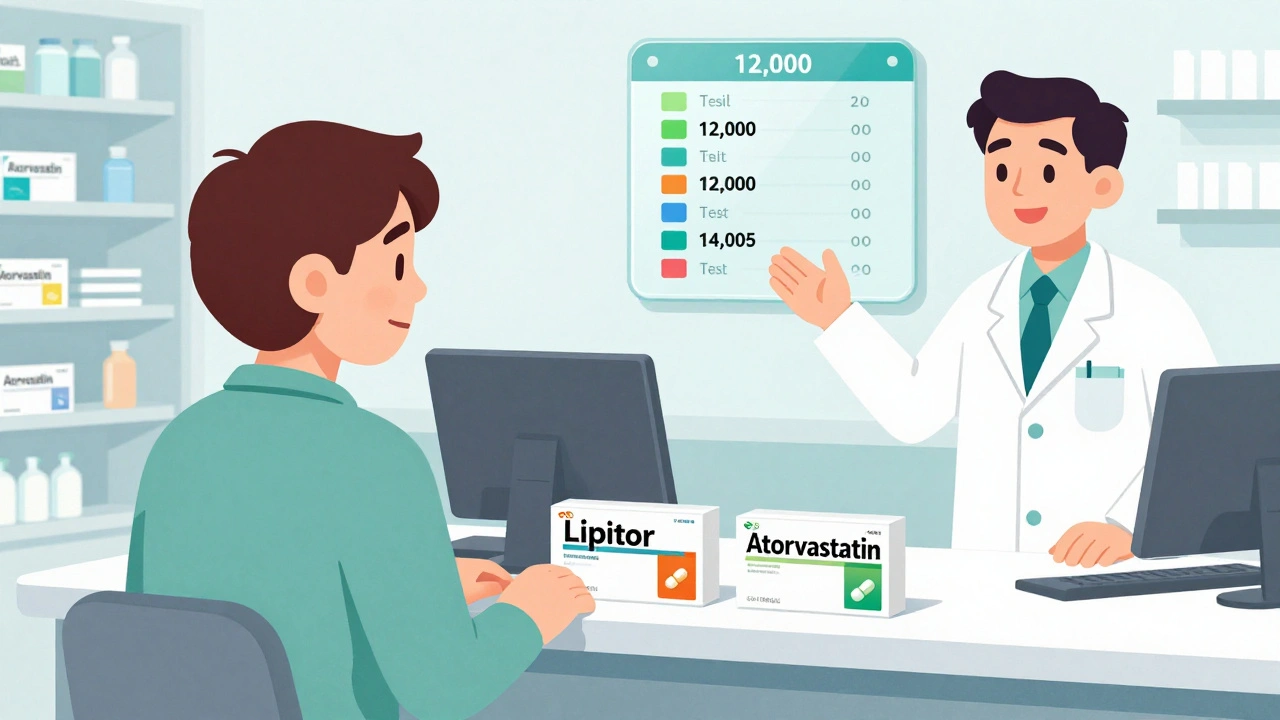
Katherine Chan
December 8, 2025 AT 20:27Honestly I used to be skeptical too until my dad switched from brand-name blood pressure med to generic and his numbers got even better
Turns out the filler doesn't matter, the active ingredient does
Doctors need to stop treating patients like they're dumb and start showing them the data
Also why are we still using chemical names? Just call it 'Zoloft Generic' like the AMA said
Olivia Portier
December 9, 2025 AT 09:55my gp just started prescribing generics and i was like wow this is way cheaper and i still feel fine
why are we still scared of this?? its not like the pills are made of glitter or something
also pharms are way more on it than docs tbh
Raja Herbal
December 10, 2025 AT 23:22Oh so now doctors are the problem because they don't know what a bioequivalence study is?
Meanwhile the same docs who think generics are 'filler' are the ones who still prescribe antibiotics like they're candy
And we wonder why people don't trust the system
Iris Carmen
December 11, 2025 AT 04:47my grandma refused her generic thyroid med for 2 years because it was a different color
she thought it was 'fake' or something
she finally took it after her pharmacist showed her the FDA page
and guess what? she didn't die
Rich Paul
December 12, 2025 AT 09:53Look, the bioequivalence range is 80-125% - that’s a 45% swing, folks
That’s not 'identical' - that’s statistically noisy
And for narrow therapeutic index drugs like warfarin or lithium? That’s not a bug, that’s a feature of regulatory compromise
Real clinicians know this
And yeah, pharmacists see more volume but they don’t manage complex polypharmacy
It’s not about trust - it’s about pharmacokinetic risk stratification
Also, the FDA doesn’t require bioavailability studies on every batch - just a few per manufacturer
So your 'generic' might be fine today and crap next month
And no, CME doesn’t fix this - we need real post-marketing surveillance dashboards, not feel-good workshops
Delaine Kiara
December 13, 2025 AT 05:46Okay but have you heard what happened to that guy in Ohio who switched to generic Adderall and ended up in the psych ward?
His mom posted the whole thing on TikTok - the pills looked like chalk, he said they made him feel like a zombie, and now he’s on disability
And the FDA says it’s 'bioequivalent'??
Meanwhile my cousin’s neurologist still won’t touch generics for epilepsy meds
And honestly? I get it
Because if your patient has a seizure because you cut corners on pills… you don’t just lose a patient
You lose your license
So yeah, I’m not mad at doctors for being scared
I’m mad at the system that makes them choose between cost and safety
Mona Schmidt
December 13, 2025 AT 07:29The data is clear: generics are safe, effective, and cost-saving - but the problem isn’t ignorance, it’s institutional inertia.
Medical schools don’t teach generics because they’re not profitable to teach - textbooks are brand-name-centric, and drug reps don’t fund generic education.
Meanwhile, the FDA’s GDUFA III is a step forward, but transparency must be proactive, not reactive.
Doctors need real-time, patient-level outcome data - not abstract percentages - to change behavior.
And yes, pronounceable generic names would help, but only if paired with clinician training.
The real barrier isn’t science - it’s trust in systems that have repeatedly failed to communicate clearly.
Until we treat generics like any other therapeutic class - not a budget hack - patients will continue to suffer from avoidable non-adherence.
This isn’t about marketing.
This is about equity.
And if we can’t fix this, we shouldn’t call ourselves a healthcare system.
Guylaine Lapointe
December 13, 2025 AT 13:53So doctors are the villains now? Funny how the same people who scream about 'Big Pharma' never mention that generics are mostly made by the same companies - just under a different label.
And let’s not pretend patients are innocent - they Google 'generic drug side effects' and come back with conspiracy theories.
Meanwhile, the real problem? Insurance companies forcing switches without clinician input.
So now doctors are blamed for doing what payers demand.
And yes, some doctors are old-fashioned - but so are patients.
And before you say 'education fixes everything' - tell that to the 40% of patients who refuse generics because the pill looks 'too small'.
Stop blaming doctors.
Start blaming the system that turned medicine into a spreadsheet.