
Pill Diary: Track Your Medications and Avoid Dangerous Interactions
When you’re taking multiple prescriptions, supplements, or over-the-counter drugs, a pill diary, a simple log of all medications you take, including doses, times, and reasons. Also known as a medication log, it’s not just a habit—it’s a safety net. Most people don’t realize how easy it is to mix drugs that shouldn’t be taken together. One study found that over 40% of adults on five or more medications had at least one dangerous interaction. A pill diary stops that before it happens.
It’s not just about writing down what you take. A good pill diary connects the dots between your meds and how you feel. Did your dizziness start after adding a new blood pressure pill? Did your constipation get worse when you began magnesium supplements? These patterns show up fast when you track them daily. It also helps your pharmacist spot duplicates or conflicts you might miss—especially if you use multiple pharmacies. And if you ever end up in the ER, a printed pill diary gives doctors the full picture in seconds. That’s why hospitals now recommend it for patients on complex regimens.
Related tools like medication reconciliation, the process of comparing your current meds with what’s been prescribed to catch errors and drug interactions, when two or more medications affect each other’s safety or effectiveness rely on accurate tracking. You can’t reconcile what you don’t record. And you can’t avoid interactions if you don’t know what you’re taking. The posts below show real cases: how magnesium blocks osteoporosis drugs, how generic switches need monitoring, how one pharmacy keeps your whole list in sync. These aren’t theoretical—they’re life-saving details that only show up when you write it down.
Whether you’re managing diabetes, depression, heart disease, or just a handful of daily pills, your pill diary is the one tool no one gives you but everyone needs. You don’t need an app. You don’t need fancy tech. Just a notebook, a pen, and five minutes a day. The results? Fewer hospital visits, clearer doctor visits, and peace of mind that you’re not accidentally hurting yourself. Below, you’ll find practical guides on tracking meds after a switch, avoiding dangerous combos, and using your diary to ask the right questions. No fluff. Just what works.
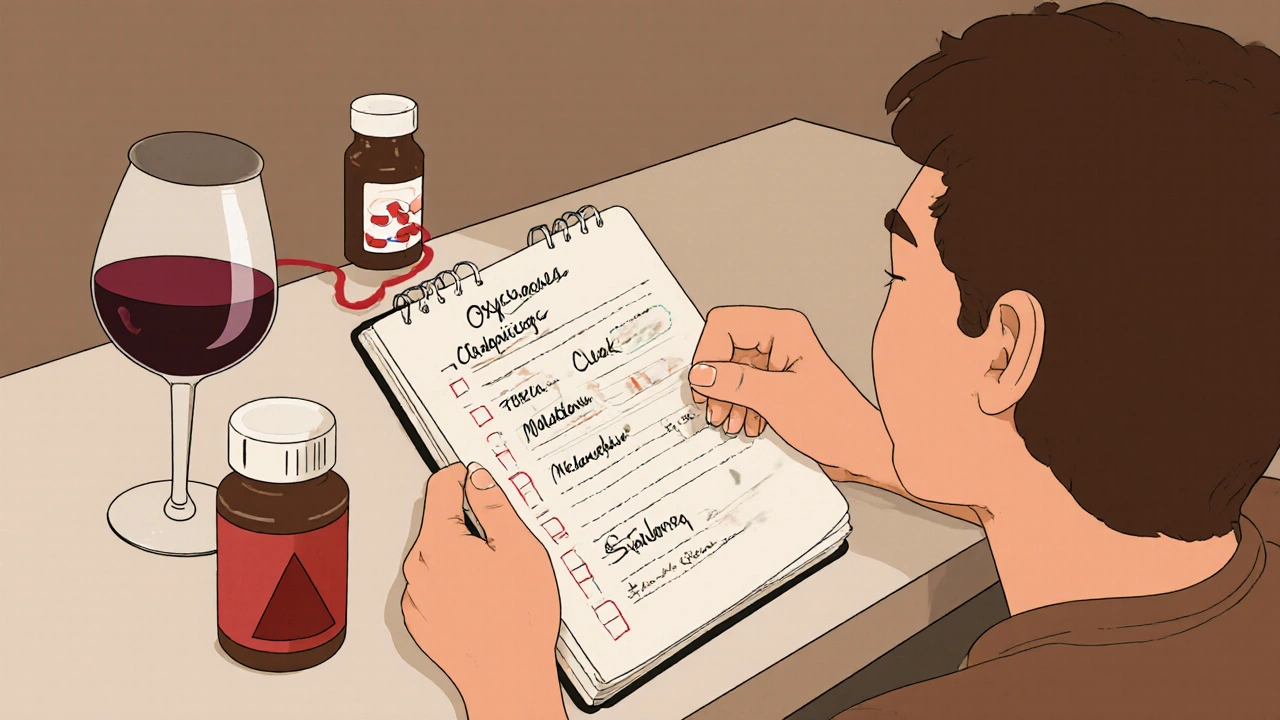
How to Use a Medication Log to Prevent Overdose Errors
Learn how to use a simple medication log to track what you take, when, and how you feel - and prevent accidental overdose from prescription drugs, alcohol, or dangerous combinations.
November 19 2025