
Malignant Hyperthermia: Causes, Triggers, and Emergency Response
When your body overheats uncontrollably during surgery, it’s not just a fever—it could be malignant hyperthermia, a genetic condition that causes a dangerous spike in body temperature when exposed to certain anesthetics. Also known as anesthesia-induced hypermetabolic crisis, it happens when muscles go into a sustained, energy-draining contraction, burning through oxygen and producing deadly heat. This isn’t common, but when it strikes, it can kill within minutes if not treated right.
Malignant hyperthermia usually shows up during or right after general anesthesia, especially with gases like halothane, a volatile anesthetic linked to triggering the condition or the muscle relaxant succinylcholine. It’s not an allergy—it’s a genetic flaw in how muscle cells handle calcium. People with this condition often don’t know they have it until they’re under anesthesia. That’s why family history matters. If someone in your family had a bad reaction during surgery, you should get tested. The condition runs in families, and it’s tied to mutations in the RYR1 gene, which controls calcium release in muscles.
The signs are hard to miss once you know them: muscles stiffen up, body temperature spikes above 104°F, heart races, breathing gets shallow, and urine turns dark from muscle breakdown. If you see this during surgery, time is everything. The only drug that stops it is dantrolene, a muscle relaxant that blocks calcium release and halts the runaway metabolic process. Hospitals that do surgery must have dantrolene on hand—every minute without it increases the risk of organ failure or death.
What makes malignant hyperthermia scary isn’t just how fast it happens—it’s how easily it can be missed. Doctors used to think it was just a bad reaction to anesthesia. Now we know it’s a medical emergency that needs a specific, immediate response. Even if you’ve had surgery before without issues, you could still be at risk. That’s why some centers now use a muscle biopsy test called the caffeine-halothane contracture test for high-risk patients.
There’s no cure, but you can manage it. If you’re diagnosed, wear a medical alert bracelet. Tell every doctor, dentist, and anesthesiologist before any procedure. Avoid known triggers. Bring your own dantrolene if you’re traveling for surgery. And know that modern anesthesia is safer than ever—many anesthetics like propofol or ketamine don’t trigger it at all.
Below are real-world stories and practical guides on how to spot dangerous drug reactions, manage medication risks, and protect yourself during medical procedures. You’ll find info on how to talk to your anesthesiologist, what to ask before surgery, and how to avoid other life-threatening interactions with common drugs—like benzodiazepines, herbal supplements, and even over-the-counter painkillers. This isn’t just about anesthesia. It’s about knowing your body’s limits and making sure no one overlooks them.
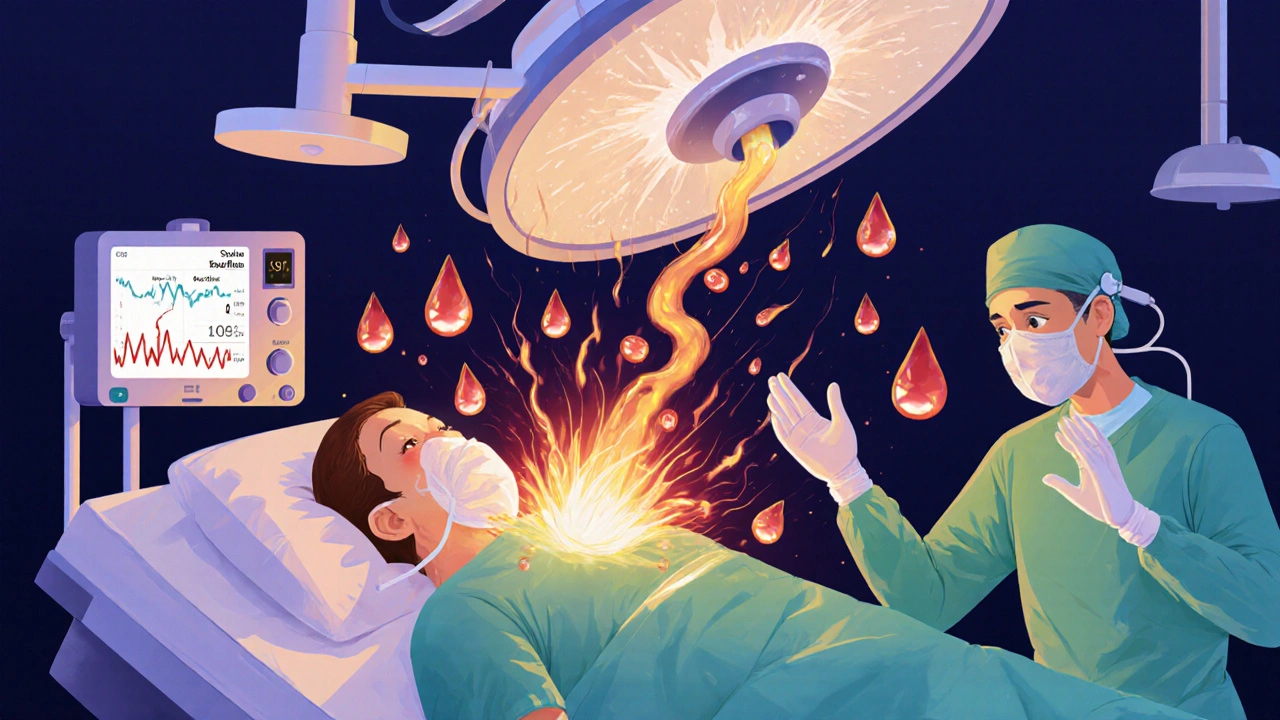
Malignant Hyperthermia and Anesthesia: What You Need to Know About This Life-Threatening Reaction
Malignant hyperthermia is a rare but deadly reaction to common anesthesia drugs. Learn the triggers, symptoms, and life-saving treatment with dantrolene-and why early recognition saves lives.
November 26 2025