
Clinical Trial Safety: What You Need to Know About Drug Testing and Patient Protection
When a new drug enters clinical trial safety, the system of rules, monitoring, and ethics designed to protect people taking part in medical research. It's not just about finding out if a drug works—it's about making sure no one gets hurt in the process. Every step, from the first tiny dose in a lab to thousands of volunteers, is watched closely. This isn't guesswork. It's a structured, regulated process built to catch problems before they spread.
One key part of clinical trial safety, the system of rules, monitoring, and ethics designed to protect people taking part in medical research. It's not just about finding out if a drug works—it's about making sure no one gets hurt in the process. is tracking adverse events, unexpected or harmful reactions to a drug during testing. These aren’t just side effects you read about on a pill bottle. They’re real-time signals—like a sudden drop in blood pressure, liver damage, or a severe allergic reaction—that tell researchers: stop, look, understand. Trials pause if the risk outweighs the benefit. That’s how FDA trial guidelines, the official standards set by the U.S. Food and Drug Administration to ensure ethical and safe human testing. keep drugs from reaching the public too soon.
Participants aren’t just guinea pigs. They’re protected by layers: informed consent forms that explain risks in plain language, independent review boards that approve every detail, and ongoing monitoring by doctors who check in weekly or even daily. Some trials even use remote sensors to track heart rate or oxygen levels at home. If something looks off, someone notices—fast. This is why drugs like those tested in glaucoma or benzodiazepine overdose studies don’t just appear overnight. They’ve been stress-tested in real people, under watchful eyes.
And it’s not just about the drug. It’s about how it’s given, who gets it, and what happens afterward. A participant protection, the ethical and procedural safeguards ensuring volunteers’ rights and well-being during medical research. system ensures no one is pressured into joining. No one is left alone after a reaction. No data is hidden. That’s why you’ll find posts here about herbal supplements and drug interactions, medication logs, and even lot-to-lot variability in biologics—because safety doesn’t end when the trial does. It’s built into every decision, every label, every warning.
What you’ll find below isn’t a list of clinical trials. It’s a collection of real-world stories that show how safety works—or fails—when medicine meets the human body. From how a child’s fever medicine is tested to why a nasal spray’s long-term use needs watching, these posts reveal the quiet, constant work behind every pill you take. You’re not just reading about drugs. You’re reading about the people who made sure they were safe to take.
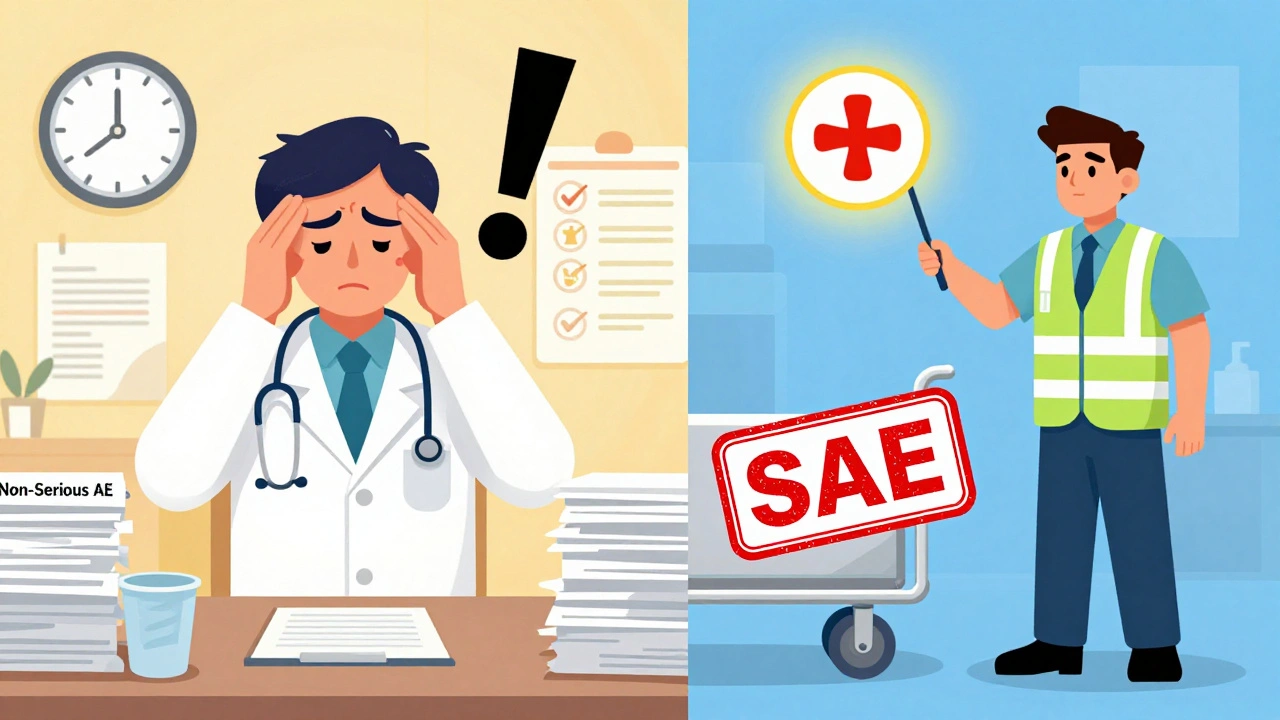
Serious vs Non-Serious Adverse Events: When to Report in Clinical Trials
Understand when to report serious vs non-serious adverse events in clinical trials. Learn the FDA and ICH criteria, reporting timelines, common mistakes, and how to avoid over-reporting that slows down safety monitoring.
December 5 2025