
Why Protein Matters More Than You Think During Weight Loss
Most people think weight loss is just about cutting calories. But if you’re only counting calories and ignoring protein, you’re losing muscle - not just fat. And that makes it harder to keep the weight off. Research shows that when people lose weight without enough protein, up to 40% of the weight lost comes from muscle. That’s not just a number - it’s your strength, your metabolism, and your long-term health going out the door.
Protein prioritization isn’t a new fad. It’s a science-backed strategy that’s now part of official guidelines from the American College of Sports Medicine and the European Society for Clinical Nutrition. The goal? Eat enough protein to keep your muscles intact while feeling fuller longer. And it works. People who follow this approach lose fat, keep muscle, and stick to their diets longer.
The Magic Number: How Much Protein Do You Actually Need?
The old recommendation of 0.8 grams of protein per kilogram of body weight (RDA) is designed to prevent deficiency - not optimize health or body composition. For weight loss, that’s not enough. Studies show you need at least 1.3 grams per kilogram just to stop muscle loss. The sweet spot? Between 1.6 and 2.2 grams per kilogram.
For example, if you weigh 70 kg (about 154 lbs), aim for 112 to 154 grams of protein daily. That sounds like a lot, but it’s doable. A chicken breast has about 30g. Two eggs have 12g. A cup of Greek yogurt? 17g. A scoop of whey? 25g. Spread across meals, it adds up fast.
Older adults (65+) need special attention. Muscle loss accelerates with age, and the PROT-AGE Study Group recommends 1.2 to 1.6 g/kg to fight sarcopenia. Even if you’re not lifting weights, your body still needs protein to hold onto muscle.
When You Eat Protein Matters Just as Much as How Much
It’s not just about hitting your daily total. How you spread it out makes a big difference. Your body can only use so much protein at once to build muscle. Research shows you need at least 2.5 to 3 grams of leucine per meal to trigger muscle protein synthesis. That’s about 30 to 40 grams of high-quality protein - think chicken, eggs, dairy, or whey.
That’s why eating 50g at dinner and 10g at breakfast won’t cut it. You need even distribution. Aim for 25-30g of protein per meal across 3 to 4 meals. This keeps your muscles fed all day. Skipping protein at breakfast? You’re missing a key window to fight anabolic resistance - the body’s tendency to stop building muscle as we age.
One woman on Reddit, who lost 42 lbs over six months, credited her success to eating 40g of protein at every meal. She didn’t count calories - she counted protein. And she kept 97% of her muscle.
How Protein Keeps You Full (Without Starving)
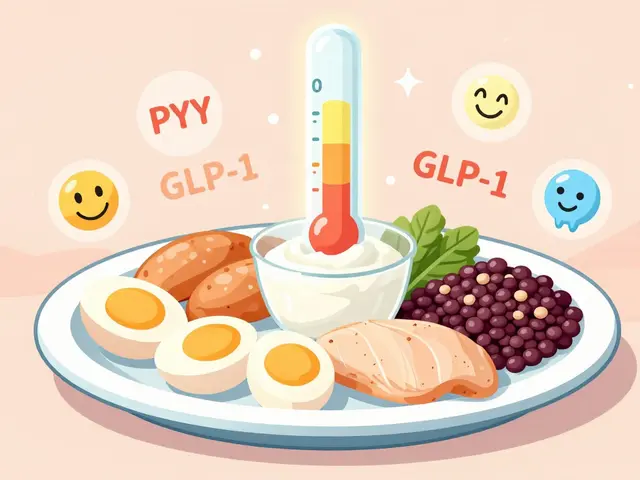
Ever feel hungrier after a carb-heavy meal? That’s because carbs spike insulin, then crash your blood sugar. Protein does the opposite. It triggers hormones like peptide YY and GLP-1 that tell your brain, “I’m done eating.” At the same time, it lowers ghrelin - the hunger hormone.
A Purdue University study found that protein meals increase satiety hormones by 20-25% and reduce ghrelin by 13% compared to meals high in carbs or fat. That means fewer cravings, less snacking, and easier calorie control.
This is why people on high-protein diets report better adherence. Abbott Nutrition’s survey of 1,200 weight loss patients showed 78% stuck with their protein-focused plan at 12 weeks - compared to just 56% on standard diets. The reason? Less hunger.

Animal vs. Plant Protein: The Real Difference
You can get protein from plants - beans, lentils, tofu, tempeh - but they’re not all equal. Animal proteins like eggs, dairy, and meat have a complete amino acid profile and higher leucine content. That makes them more effective at building muscle.
A 2023 study from Aarhus University found plant-based diets led to 15-20% lower muscle protein synthesis. That doesn’t mean plant-based eaters can’t succeed - they just need to be smarter. Combine different plant sources (rice + beans, hummus + whole grain pita) to get all essential amino acids. Or add a leucine boost - a tablespoon of hemp seeds or a scoop of pea protein isolate can help close the gap.
For most people, mixing both animal and plant proteins is the easiest path. A breakfast of eggs and oatmeal, a lunch of lentil soup with grilled chicken, and a dinner of salmon with quinoa gives you the best of both worlds.
What Happens If You Eat Too Much Protein?
Some worry that high protein harms kidneys or causes other issues. For healthy people, there’s no evidence of harm. The kidneys handle protein just fine - unless you already have kidney disease. The real risk? Overdoing it.
Intakes above 2.2 g/kg offer little extra muscle benefit. And above 2.5 g/kg, some people report digestive discomfort - bloating, gas, constipation. That’s often because they’re cutting out fiber. High-protein diets can be low in veggies, fruits, and whole grains. That’s a mistake. Aim for 25-30g of fiber daily. Drink plenty of water - at least 2 liters. And don’t forget movement. Protein helps muscle, but resistance training keeps it strong.
Harvard’s Dr. David Ludwig warns that replacing all carbs with protein might mean losing out on nutrient-rich plant foods. Balance matters. Don’t swap a salad for a steak. Swap a bag of chips for a hard-boiled egg.
Cost and Practicality: Can You Afford This?
Let’s be honest - protein can be expensive. Whey isolate costs about $0.31 per gram of protein. Chicken breast? $0.18. Canned tuna? Just $0.12. That’s the key: affordable options exist.
Batch-cook chicken thighs, hard-boil a dozen eggs on Sunday, buy frozen fish in bulk, keep a stash of cottage cheese and Greek yogurt. Use protein powders as a supplement, not a main source. A $20 bag of whey lasts a month if you use it 2-3 times a week.
One user on MyFitnessPal gave up after three months because he was spending $97 a week on chicken and protein powder. He switched to eggs, canned tuna, lentils, and dairy. His weekly cost dropped to $42 - and he kept losing fat.
Who Benefits Most - and Who Doesn’t?
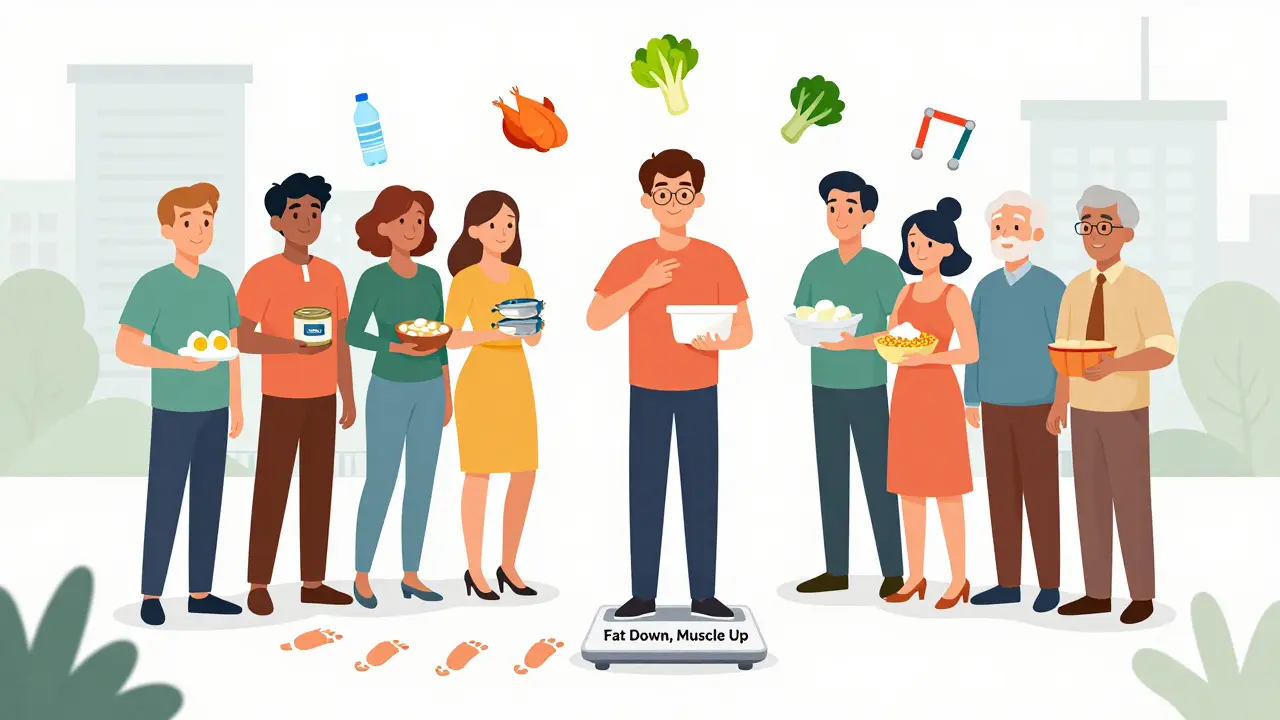
Protein prioritization shines for people who:
- Are losing weight and want to keep muscle
- Are over 65 and want to avoid frailty
- Do resistance training or stay active
- Struggle with hunger between meals
It’s less critical if you’re:
- Completely sedentary and not trying to lose weight
- Already eating 1.2+ g/kg daily without issues
- On a very low-calorie diet (under 1,000 kcal/day) - that’s a medical situation, not a diet
And here’s something surprising: protein helps you keep weight off longer. The National Weight Control Registry found 83% of people who kept off 30+ lbs for over a year intentionally prioritized protein. Their average intake? 1.5 g/kg. That’s not extreme - it’s smart.
What to Do Next: A Simple 7-Day Plan
Start small. Don’t overhaul everything. Pick one change and build from there.
- Calculate your protein goal: Multiply your weight in kg by 1.6 (or 1.8 if you’re active).
- Track your intake for 3 days using a free app like MyFitnessPal.
- Add one protein-rich meal - like Greek yogurt at breakfast or a hard-boiled egg as a snack.
- Redistribute protein: If you eat 50g at dinner and 10g at breakfast, shift 15g to breakfast.
- Swap one carb-heavy snack (crackers, cookies) for a protein one (cheese, edamame, turkey slices).
- Drink a glass of water with every meal.
- On day 7, review: Did you feel less hungry? Did you have more energy?
That’s it. No supplements needed. No extreme changes. Just smarter protein choices.
Common Mistakes (And How to Avoid Them)
- Mistake: Relying only on protein powder. Solution: Use it as a backup, not your main source.
- Mistake: Ignoring fiber. Solution: Eat veggies with every meal. Add chia seeds or flax to smoothies.
- Mistake: Eating all protein at dinner. Solution: Aim for 25-30g at breakfast, lunch, and dinner.
- Mistake: Thinking more is always better. Solution: Stick to 1.6-2.2 g/kg. Beyond that, you’re just spending more for no extra gain.
- Mistake: Not drinking enough water. Solution: Keep a bottle nearby. Aim for 2-3 liters daily.
These aren’t hard rules - they’re habits. And habits, not perfection, are what make long-term change possible.
How much protein should I eat to lose weight and keep muscle?
Aim for 1.6 to 2.2 grams of protein per kilogram of body weight. For example, if you weigh 70 kg, that’s 112-154 grams daily. This range is backed by multiple studies showing it preserves muscle during weight loss while helping control hunger.
Is plant-based protein enough for muscle preservation?
Yes, but you need to combine sources to get all essential amino acids. For example, pair beans with rice or lentils with whole grains. You may also need slightly more total protein - about 10-20% higher - or add a leucine-rich food like hemp seeds or a pea protein isolate to each meal to match the muscle-building effect of animal proteins.
Do I need protein powder to get enough protein?
No. Whole foods like eggs, chicken, fish, Greek yogurt, cottage cheese, tofu, and lentils provide plenty of protein. Protein powder is convenient - especially post-workout or if you’re rushed - but it’s not necessary. Use it to fill gaps, not replace meals.
Can high protein damage my kidneys?
No, not if your kidneys are healthy. The idea that protein harms kidneys is a myth. Studies show no harm in healthy people eating up to 2.5 g/kg daily. Only those with existing kidney disease should limit protein - and even then, only under medical supervision.
Why am I constipated since I started eating more protein?
You’re likely eating less fiber. High-protein diets often replace carbs - including whole grains, fruits, and veggies - which are your main fiber sources. Add vegetables to every meal, snack on apples or berries, and include chia seeds or flaxseed. Drink more water too. Constipation is common in the first week but fixes itself with fiber and hydration.
How long does it take to see results from protein prioritization?
You’ll feel less hungry within days. Muscle preservation shows up in 4-6 weeks - you’ll notice you’re not getting weaker, and your clothes fit differently. After 12 weeks, people typically lose 2-3 kg more fat and keep 1-2 kg more muscle compared to low-protein diets. Long-term, you’re more likely to keep the weight off.
Is protein prioritization worth the extra cost?
It costs about 18% more than a standard diet, but you can manage it. Use affordable sources like eggs, canned tuna, lentils, cottage cheese, and Greek yogurt. Buy in bulk, cook in batches, and use protein powder only when needed. The payoff? Less hunger, more energy, better body composition, and higher chance of keeping weight off long-term. For most people, it’s a smart investment.
Final Thought: Protein Isn’t the Only Thing - But It’s the Foundation
You don’t need to be perfect. You don’t need to eat 200g of protein a day. You just need to make it a habit - one meal at a time. Prioritize protein, and the rest follows: you’ll feel fuller, lose fat, keep your strength, and stay on track longer. That’s not magic. That’s biology. And it works - for people of all ages, budgets, and lifestyles.
Rory Corrigan
January 5, 2026 AT 08:17Stephen Craig
January 5, 2026 AT 19:41Connor Hale
January 6, 2026 AT 18:54Roshan Aryal
January 8, 2026 AT 09:45Jack Wernet
January 9, 2026 AT 09:37Charlotte N
January 9, 2026 AT 22:10Siobhan Goggin
January 10, 2026 AT 03:44Vikram Sujay
January 10, 2026 AT 16:17Jay Tejada
January 11, 2026 AT 06:20