Imagine a patient walking out of your pharmacy with a medication that looks right but is actually double the required dose. Despite all the barcode scanners and double-checks, that pill bottle is now in their hand. This is where the most powerful safety tool in the building comes into play: the person standing across the counter. Dispensing errors are a persistent reality in pharmacy, but patient counseling isn't just about explaining side effects-it's actually the final, most effective safety checkpoint in the entire process.
| Method | Detection Rate | Primary Strength | Estimated Cost per Rx |
|---|---|---|---|
| Barcode Scanning | ~53% | Speed & Accuracy | $1.35 |
| Pharmacist Double-Check | ~67% | Internal Review | $2.10 |
| Patient Counseling | ~83% | Human Verification | $0.87 |
The Human Firewall Against Medication Mistakes
When we talk about Patient Counseling is an interactive process where a pharmacist provides information, advice, and warnings to optimize therapy and prevent errors, it's easy to view it as a regulatory chore. However, the Institute for Safe Medication Practices (ISMP) refers to this as a "human firewall." Why? Because automated systems can't tell if a patient is confused about their dose or if the pill looks different from what they took last month.
The impact is measurable. Data from Pharmacy Times shows that roughly 83% of dispensing errors are caught during counseling before the patient even leaves the store. A quick 90-second session, if done right, can slash error rates by nearly half. This transforms the patient from a passive receiver of a product into an active partner in their own safety.
The 4-Step Framework for Catching Errors
You can't just ask, "Do you have any questions?" because most patients will simply say "no" and walk away. To actually catch a mistake, you need a structured approach. The APhA's framework suggests a specific sequence to ensure no stone is left unturned:
- Identity Verification (Approx. 27 seconds): Confirm the patient's identity using at least two identifiers to ensure the right drug is going to the right person.
- Purpose Confirmation (Approx. 43 seconds): Instead of saying "This is for your blood pressure," ask Open-Ended Questions like "What did your doctor tell you this medication is for?" This identifies over 3 times more errors than yes/no questions.
- Appearance and Administration Check (Approx. 52 seconds): Show the patient the medication. Ask, "Does this look like what you've taken before?" This simple step catches about 29% of look-alike errors, which is critical for high-alert drugs like insulin or opioids.
- Interaction and Allergy Review (Approx. 38 seconds): Cross-check the new prescription against the patient's known allergies and current medication list to spot potential contradictions.
Mastering the Teach-Back Method
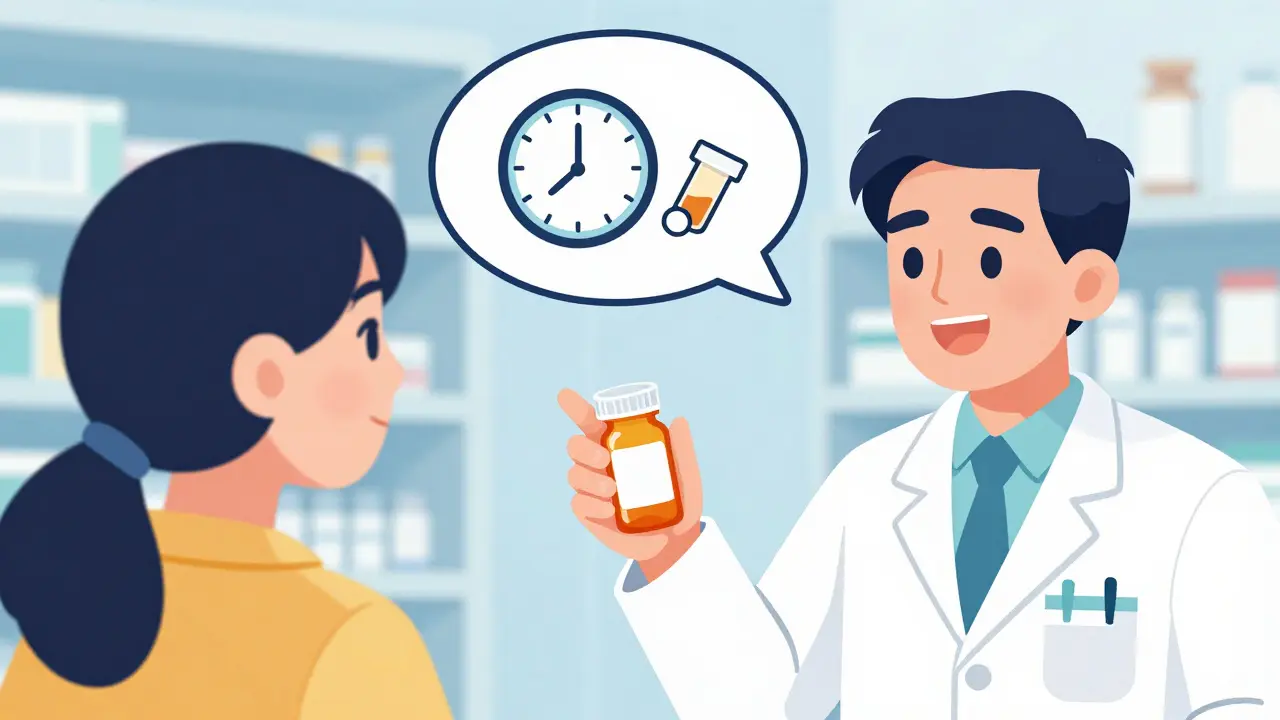
If you want to know if a patient truly understands their medication, don't ask them if they understand-ask them to explain it back to you. This is known as the Teach-Back Method, and it's a game-changer. According to APhA guidelines, this technique increases error detection rates by 68% compared to just talking at the patient.
For example, instead of saying "Take one tablet twice a day," ask "Just to make sure I explained this clearly, can you tell me how you're going to take this medication once you get home?" If the patient says "One pill every morning and night," but the label says "Every 12 hours," you've just caught a potential dosing error that could have led to a hospital visit.
Navigating the Time vs. Safety Trade-off
Let's be honest: the biggest hurdle is the clock. Many pharmacists feel the pressure to move the line faster. Research from the University of Arizona shows a scary trend: when pharmacists handle more than 14 prescriptions per hour, the error detection rate of counseling plummets from 83% down to 41%. Quality takes a backseat to quantity.
The ideal counseling session should last about 2.3 minutes. While that might seem like a lot when there are ten people waiting, the cost of a mistake is far higher. Interestingly, independent pharmacies that prioritize this structured approach have seen their malpractice insurance premiums drop by 19% because they simply have fewer claims.
To manage this, some pharmacies are utilizing Pharmacy Technicians to handle the preliminary identity and basic history checks, which can free up the pharmacist to focus on the high-risk clinical verification.
Prioritizing High-Risk Scenarios
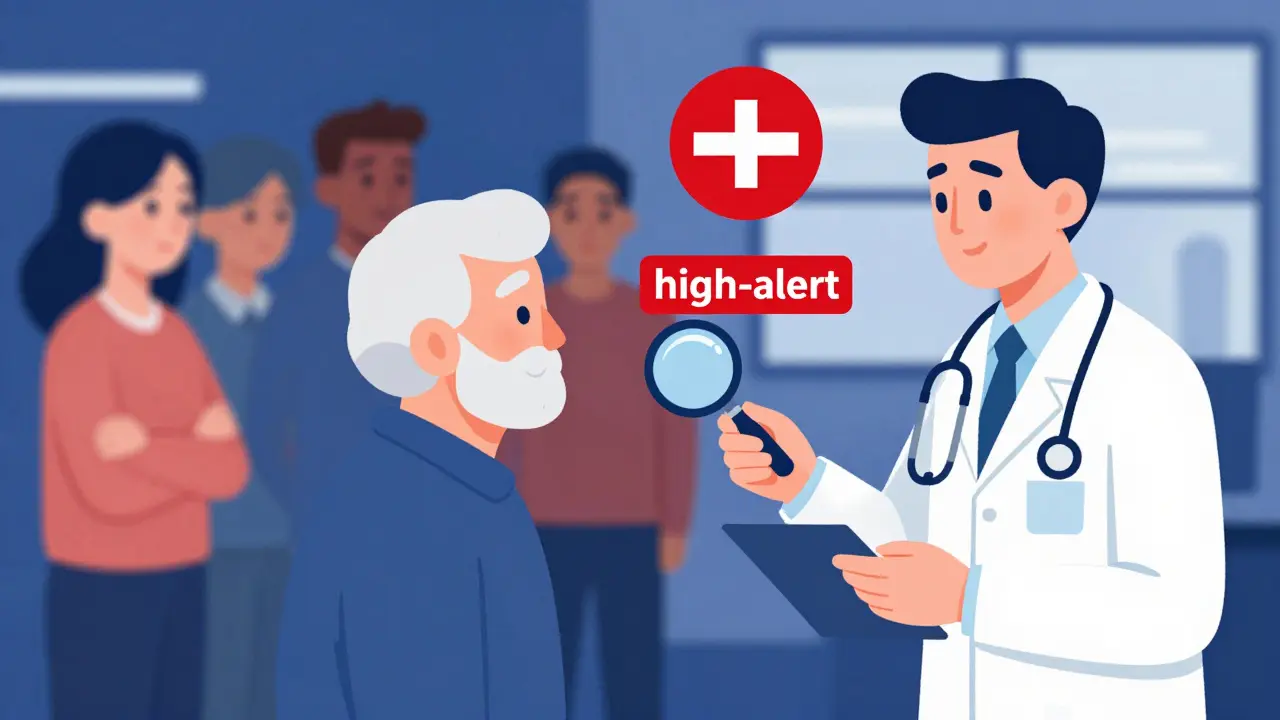
Not every prescription carries the same risk. While counseling is great for everyone, you should double down on "High-Alert" situations. The American Society of Consultant Pharmacists (ASCP) recommends focusing the most intense verification on three specific groups:
- Seniors (65+): Dosing errors in this group are nearly 4 times more likely to cause significant harm.
- Patients with Low Health Literacy: This group accounts for 42% of all undetected errors because they may not recognize when something is wrong.
- New High-Alert Meds: Any patient starting an opioid, anticoagulant, or narrow-therapeutic-index drug needs a rigorous teach-back session.
It's also worth noting that counseling is most effective for new prescriptions (91% detection rate) but much less effective for routine refills (only 33% detection rate). Patients often go on "autopilot" with refills, so the pharmacist must be more proactive in pointing out changes in pill color or shape.
Why is patient counseling more effective than barcode scanning?
Barcode scanning only verifies that the bottle matches the label. It cannot verify if the patient's clinical needs match the prescription or if the patient understands the dosage. Counseling provides a human check on the patient's expectations and the medication's physical appearance, catching errors that software misses.
What are open-ended questions and why do they work?
Open-ended questions are questions that cannot be answered with a simple "yes" or "no" (e.g., "What do you understand this medication is for?"). They force the patient to retrieve and articulate information, which reveals gaps in understanding or errors in the prescription that closed questions often hide.
How long should a safety-focused counseling session actually take?
Research suggests a minimum of 2.3 minutes per patient. Every additional 30 seconds of focused counseling has been shown to reduce error rates by roughly 12.7%.
Can pharmacy technicians help in this process?
Yes, in many regions, technicians can handle the first few steps of the process-such as identity verification and gathering a medication history-which increases the total effective counseling time by about 37%.
What is the risk of relying solely on patient counseling?
Counseling should be the "final net," not the only one. Because some patients decline counseling (about 18.7%) or may be too shy to speak up, it must be paired with robust internal checks like barcode scanning and pharmacist double-verification.
Next Steps for Pharmacy Teams
If you're looking to tighten your safety protocols, start by auditing your current session length. If your team is averaging under two minutes, you're likely missing a significant percentage of potential errors. Try implementing a "Medication Checkpoint" where you physically show the patient the pill and ask if it looks correct-this simple habit can prevent the most dangerous types of look-alike/sound-alike mistakes.
For those in high-volume environments, consider a tiered approach: perform a rapid screen for routine refills, but mandate a full 2.5-minute teach-back session for any new high-alert medication. This ensures that your most vulnerable patients get the most protection without grinding your workflow to a halt.