
Why You Can’t Just Toss Expired EpiPens, Inhalers, or Patches in the Trash
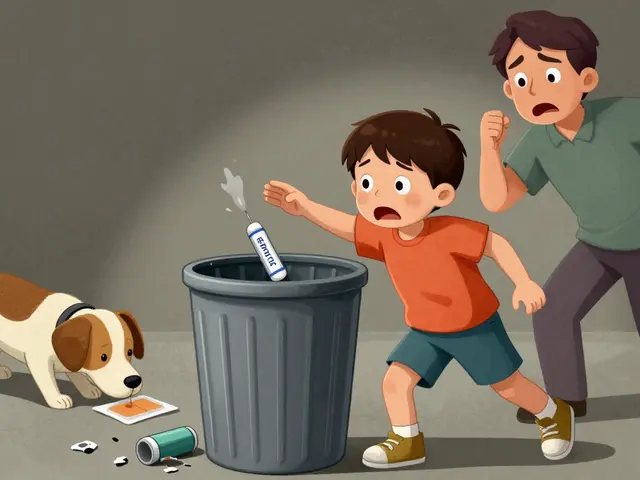
Throwing out an expired EpiPen, inhaler, or medicated patch in the regular trash isn’t just careless-it’s dangerous. These aren’t ordinary household items. EpiPens have needles. Inhalers are pressurized cans full of chemicals. Patches still stick to your skin with active drugs. If a kid finds one in the garbage, or a sanitation worker gets stuck by a needle, or a pet licks a patch, someone could end up in the ER-or worse.
The FDA says 12% of accidental poisonings in children involve improperly thrown away meds. That’s not a small number. And it’s not just about safety. Improper disposal pollutes waterways. The USGS found pharmaceuticals in 80% of tested rivers and streams. That’s because chemicals from patches and inhalers don’t just disappear-they leach into soil and groundwater.
How to Dispose of Expired EpiPens
EpiPens are classified as medical sharps by the FDA because of their built-in needle. That means they’re treated the same way as syringes or lancets. You can’t just toss them in a regular trash can, even if the needle is covered.
The safest and easiest way? Take it back to your doctor’s office or pharmacy when you pick up your new prescription. Most allergists and clinics have sharps containers on-site and will gladly take your expired EpiPen. One Reddit user wrote, “My allergist’s office has a sharps bin specifically for expired EpiPens-they took mine no questions asked.” That’s the gold standard.
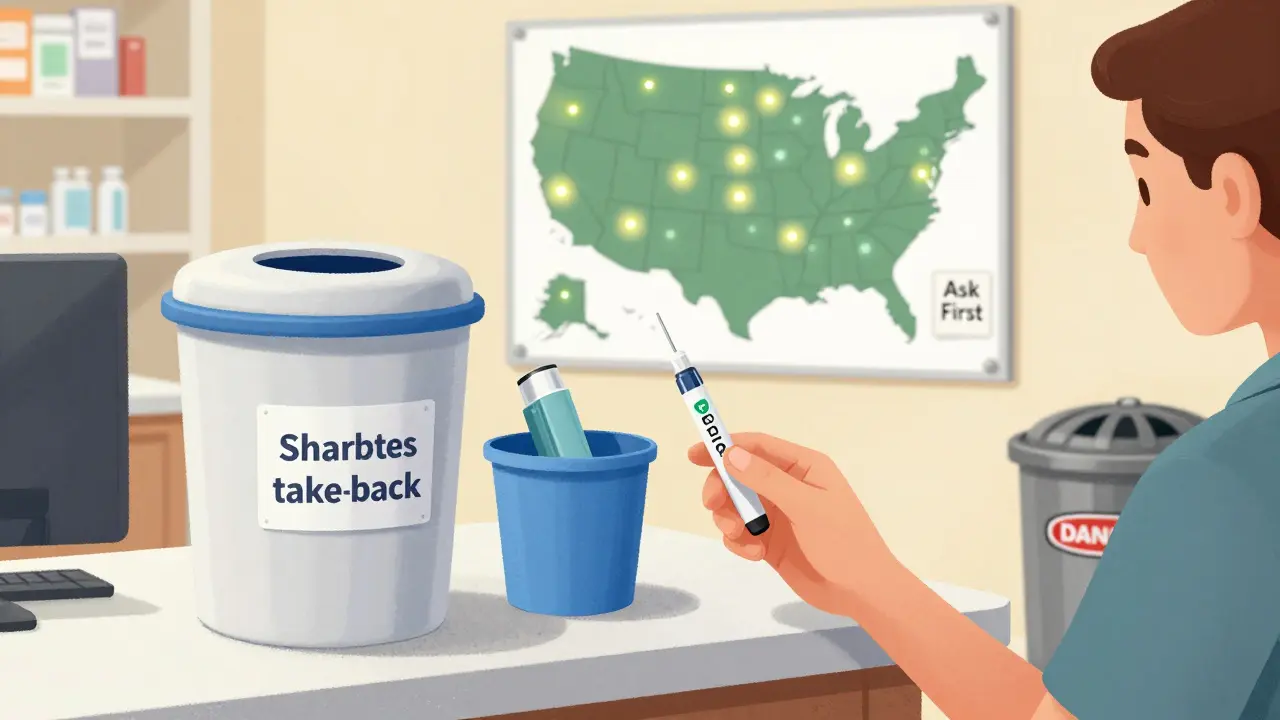
If your provider doesn’t offer this, check for a DEA-registered drug take-back location near you. The DEA runs the National Take Back Initiative, with over 14,000 collection sites across the country. You can find one by visiting dea.gov/takeback and entering your zip code. Hospitals, police stations, and some pharmacies also host drop-off bins.
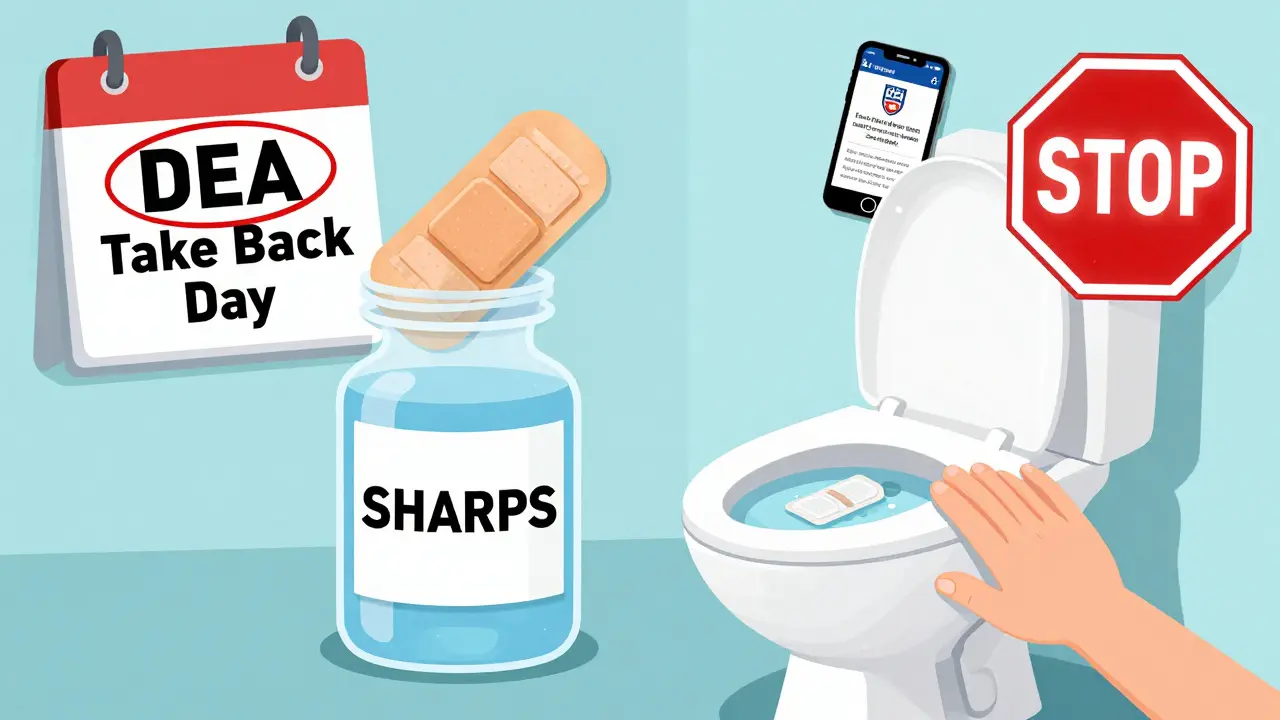
What if you can’t get to a drop-off right away? Store it safely at home. Put the EpiPen in a rigid, puncture-proof container-a plastic laundry detergent bottle works. Screw the lid on tight. Label it clearly: “SHARPS,” “BIOHAZARD,” and “DO NOT RECYCLE.” Keep it out of reach of kids and pets until you can drop it off. Never try to remove the needle or break it apart. That’s how accidents happen.
State rules vary. In California, you must use a certified sharps disposal program or mail-back service. In Texas, you can throw it in the trash if it’s in a labeled, sealed container. Always check your state’s health department website for local rules.
What to Do With Expired Inhalers
Inhalers are tricky. They’re not sharps, but they’re still hazardous. Most are pressurized canisters filled with propellants like hydrofluoroalkanes (HFAs). If you puncture one, throw it in a fire, or crush it, it can explode. Even when empty, the canister is still considered hazardous waste because of the chemicals inside.
The best option? Find a local drop-off for aerosols. Some cities, like New York City, have Household Special Waste Drop-Off Sites that accept inhalers. Others partner with pharmacies. Walgreens accepts them at select locations-but only about half of their stores do. CVS doesn’t take inhalers at all. Don’t assume your local pharmacy will help. Call ahead.
If no drop-off is available, check with your city’s waste management department. Many have special collection days for household hazardous waste. Some even let you mail them back through approved programs.
Never put inhalers in recycling bins. They’re not plastic bottles. The canister needs special handling. And never try to empty the canister yourself. Even if you think it’s empty, pressure can still build up.
Pro tip: Write the expiration date on the inhaler with a marker when you get it. Check it every month. If it’s expired, start looking for a disposal option right away. Don’t wait until you’re out of refills.
How to Dispose of Medicated Patches
Medicated patches-like fentanyl, nicotine, or nitroglycerin-are among the most dangerous items to throw away. Why? Even after you peel them off, they still hold up to 80% of their original drug dose. If a child finds one, licks it, or sticks it on their skin, it can be fatal.
The FDA has a specific “flush list” of medications that should be flushed down the toilet immediately if unused. Fentanyl patches are on that list. So are some opioid patches. If your patch is on the list, flush it. No waiting. No storing. Flush it now.
For patches not on the flush list, fold it in half with the sticky sides together. This traps the medication inside. Then throw it in the trash. Some experts, like Nationwide Children’s Hospital, recommend this method for all patches. Don’t just crumple it. Fold it. Seal it. Dispose of it.
Another option? Use a DisposeRx® packet. These are available at 3,900 CVS locations. You put the patch inside, add water, and it turns into a gel that locks in the drug. But here’s the catch: CVS says these packets are NOT recommended for patches. The gel might not fully seal the adhesive side. So unless you’re told otherwise by your pharmacist, stick to folding and throwing away.
For high-risk patches like fentanyl, don’t rely on folding alone. If you have one, flush it. It’s the only guaranteed way to prevent accidental exposure.
Use DEA Take Back Days-They’re Free and Easy
Every April and October, the DEA holds National Prescription Drug Take Back Day. On those days, you can walk into a police station, hospital, or pharmacy and drop off any expired or unused meds-EpiPens, inhalers, patches, pills-no questions asked.
In October 2022, over 985,000 pounds of medication were collected at 5,800 locations. That’s nearly half a million pounds of dangerous drugs removed from homes. These events are free, anonymous, and available in nearly every state.
Don’t wait for the next event. Most collection sites are only open on those two days. But many locations also have permanent drop boxes. Check the DEA website to see if your area has one. Rural areas are still lagging-only 37% of rural counties have permanent drop-off sites, compared to 89% in cities. But it’s getting better. More towns are adding bins every year.
What NOT to Do
- Don’t flush patches or pills unless they’re on the FDA’s flush list. Flushing the wrong meds pollutes water.
- Don’t pour pills down the sink. That’s just as bad as flushing.
- Don’t put sharps in cardboard boxes, soda cans, or yogurt containers. They’re not puncture-proof. Someone could get stuck.
- Don’t assume your pharmacy takes everything. Many only take pills. Call first.
- Don’t try to dismantle EpiPens or inhalers. Removing batteries or cutting open canisters is dangerous and illegal in some places.
How to Stay Prepared
Set a monthly reminder to check your medicine cabinet. Look for expired EpiPens, inhalers, and patches. Write the expiration date on the packaging when you first open it. Keep a small sharps container at home if you use EpiPens regularly. They cost $5-$15 at pharmacies and last for months.
Keep a list of nearby disposal locations. Save the DEA take-back locator link on your phone. Ask your pharmacist: “Do you take EpiPens or inhalers?” Most don’t know unless you ask.
Some states are starting to require drug makers to pay for disposal programs. California passed a law in 2024 forcing manufacturers to fund take-back systems. That means in the future, it’ll be easier and more widespread. But for now, you still have to take action.
Final Reminder: When in Doubt, Call
If you’re unsure how to dispose of something, don’t guess. Call your local pharmacy, hospital, or city waste department. They can tell you what’s allowed. The FDA, DEA, and EPA all agree: when it comes to medical waste, it’s better to be safe than sorry. One wrong move can hurt a child, a pet, or a worker. Take five minutes today to do it right.
Ian Long
January 8, 2026 AT 17:02Pooja Kumari
January 9, 2026 AT 14:29Jacob Paterson
January 10, 2026 AT 18:31Angela Stanton
January 11, 2026 AT 17:11Jerian Lewis
January 13, 2026 AT 09:42Kiruthiga Udayakumar
January 13, 2026 AT 21:43Patty Walters
January 13, 2026 AT 22:26Catherine Scutt
January 15, 2026 AT 12:00Darren McGuff
January 16, 2026 AT 10:04Johanna Baxter
January 17, 2026 AT 18:18Phil Kemling
January 19, 2026 AT 09:46Diana Stoyanova
January 20, 2026 AT 15:02Maggie Noe
January 22, 2026 AT 06:55Gregory Clayton
January 23, 2026 AT 04:46Drew Pearlman
January 23, 2026 AT 16:16