
The U.S. Food and Drug Administration (FDA) doesn’t just approve drugs and medical devices - it ensures they’re made the right way, every time. That’s where facility inspections come in. These aren’t surprise visits or paperwork checks. They’re rigorous, on-site evaluations that determine whether a manufacturing plant meets federal standards for safety, quality, and consistency. If you’ve ever taken a pill, used an inhaler, or received a vaccine, there’s a good chance it came from a facility that passed an FDA inspection. And if it didn’t? It never made it to market.
Why Inspections Matter More Than You Think
Think of an FDA inspection like a deep diagnostic for a factory. It’s not about whether the product works - that’s already been tested in labs and clinical trials. It’s about whether the factory can make that product the same way, every single batch, without contamination, errors, or hidden flaws. A single mistake in manufacturing can lead to recalls, hospitalizations, or even deaths. In 2023, the FDA issued over 1,800 warning letters based on inspection findings, mostly tied to poor documentation, uncontrolled changes, and data integrity issues. The system isn’t new. It started in 1938 with the Federal Food, Drug, and Cosmetic Act. But it’s evolved. Today, inspections are guided by risk. Not all facilities are treated the same. A plant making life-saving cancer drugs gets inspected every 6 to 12 months. A facility producing low-risk dietary supplements might go 4 or 5 years between visits. This risk-based model, refined in 2019, uses 12 specific factors: past violations, product type, complexity of manufacturing, and even how many complaints the facility has received.The Four Types of FDA Inspections
There’s no one-size-fits-all inspection. The FDA uses four distinct types, each with a different purpose:- Pre-approval inspections: Done before a new drug or device gets approved. The FDA needs to see the facility can actually produce what’s been described in the application. This isn’t a formality - it’s a gatekeeper. If the inspection fails, approval is delayed or denied.
- Routine surveillance inspections: These happen every 2 to 5 years, depending on risk. They’re the backbone of ongoing oversight. No notice is given, but they’re scheduled based on the facility’s risk profile.
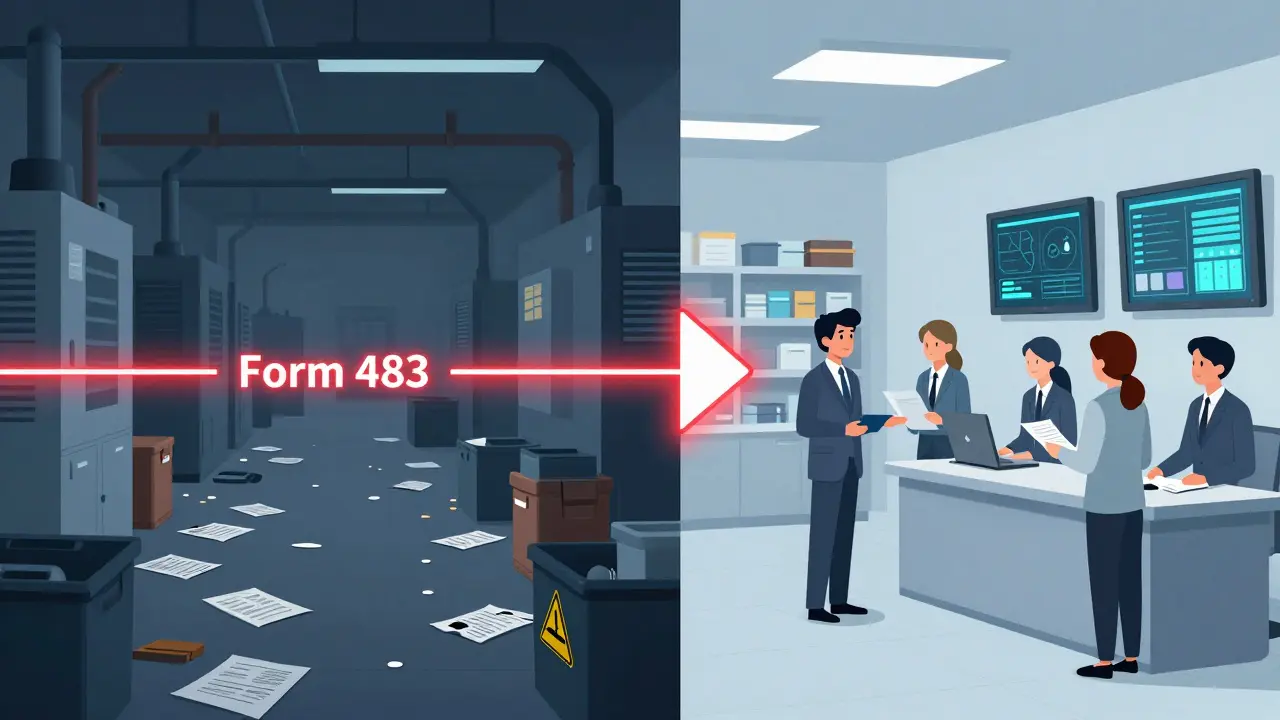
- Compliance follow-up inspections: If a facility got a Form 483 (more on that later) and promised to fix something, the FDA comes back to check. No second chances. If the fix wasn’t done right, penalties follow.
- For-cause inspections: Triggered by red flags - a spike in adverse events, a whistleblower tip, or a pattern of customer complaints. These can happen with zero notice. They’re urgent, targeted, and often lead to enforcement actions.
What Happens During an Inspection
An inspection doesn’t start with a knock on the door. It starts with paperwork - and preparation. When inspectors arrive, they show FDA Form 482, the official Notice of Inspection. This isn’t optional. It’s legally required. Then, they’re escorted by a designated facility rep - usually someone who knows the facility inside out. No wandering around alone. The inspection lasts 3 to 10 days, depending on size and complexity. Here’s what they look at:- Facility tour: Are floors clean? Are storage areas labeled? Are equipment areas properly segregated? Housekeeping matters. Dirty floors or cluttered walkways raise red flags - not because they’re unsightly, but because they suggest poor control.
- Records review: This is where most failures happen. Inspectors dig into deviation reports, equipment logs, validation records, training files, and batch production records. They don’t just check if records exist - they check if they’re complete, accurate, and tied to real events.
- Personnel interviews: Inspectors talk to staff - not just managers. They ask operators, QC technicians, and even cleaners. If three people give three different answers to the same question, that’s a problem.
- Sample collection: Sometimes, inspectors take samples of products or raw materials to test in their own labs. This is rare, but it happens.
The Top Reasons Facilities Fail
Based on thousands of inspections, there are clear patterns in why facilities fall short. And most of them aren’t about equipment failure - they’re about paperwork and people.- Inadequate deviation investigations (32% of observations): A batch fails a test. Someone says “it’s fine” and overrides it. No root cause. No documentation. No correction. That’s a major red flag.
- Incomplete training records (24%): Staff must be trained on procedures. Not just once - annually. And they must sign off. If the training log is missing or outdated, inspectors assume people aren’t trained at all.
- Insufficient validation documentation (15%): If you can’t prove your process works consistently, you can’t prove your product is safe. Validation isn’t a one-time project - it’s ongoing.
- Poor change control records (7%): Changing a machine, a supplier, or even a cleaning procedure requires approval and documentation. Skipping this is like driving without a license.
How to Get Ready - Real Strategies
You can’t fake readiness. But you can build it. A 2024 analysis of 2,450 inspection reports found that facilities with formal inspection readiness programs reduced observations by 63%. Here’s what works:- Quarterly mock inspections: Treat inspections like fire drills. Bring in an outside auditor every 3 months. Find problems before the FDA does.
- Dedicated inspection coordinator: One person, not five. One point of contact. One system. Facilities with this setup reported inspections that were 22% faster.
- “Runner” system for documents: When inspectors ask for a file, someone runs to get it - immediately. No searching. No delays. This keeps inspectors calm and focused.
- Updated facility diagrams: If your layout changed last week, update the diagram. Inspectors check floor plans. If the diagram shows a room that doesn’t exist anymore, they assume everything else is outdated too.
- Inspection readiness room: A dedicated space with printers, computers, phones, and organized documents. No one should be scrambling for files during an inspection.
The Future of FDA Inspections
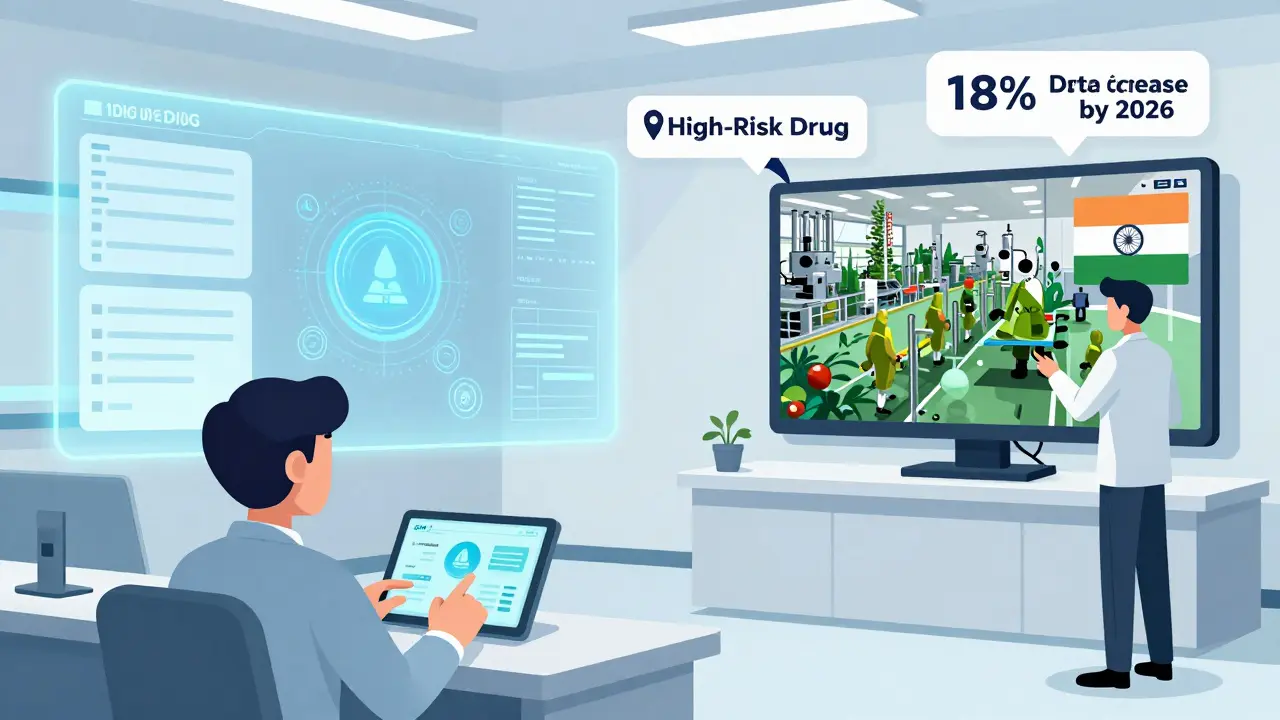
The FDA isn’t slowing down - it’s speeding up. In 2024, the agency announced a major push toward digital inspections. By late 2024, 12 pilot facilities will begin testing AI-assisted document review. The goal? Faster, smarter, more consistent reviews. Remote inspections are already happening. In 2022 and 2023, the FDA conducted virtual tours and document reviews at 147 facilities. For 78% of documentation checks, the results matched in-person inspections. That means the future won’t always require travel. But don’t think it’s easier. Remote inspections mean inspectors can dig deeper into digital records - and they’re trained to spot anomalies in electronic logs. The FDA also plans to increase inspections for high-risk products - especially those used by older adults - by 18% through 2026. Meanwhile, low-risk supplement manufacturers may see fewer visits. It’s all about focusing resources where the risk is highest.What Happens After the Inspection
Getting a Form 483 isn’t the end. It’s the beginning of a conversation. Your response to the Form 483 matters more than the inspection itself. The FDA expects a detailed, timely, and credible plan. Not: “We’ll fix it.” But: “We identified the root cause. We updated our SOPs. We retrained 12 staff members. We added a secondary review step. We verified the fix with three consecutive batches.” If you don’t respond, or if your response is vague, you’ll get a warning letter. That goes on public record. Investors, customers, and regulators see it. It can damage your reputation - and your bottom line. The FDA’s own survey found that 92% of inspected facilities said clear communication from inspectors made the biggest difference. The best inspections aren’t scary. They’re fair. They’re clear. They’re constructive.Final Thoughts
FDA inspections aren’t about catching people doing wrong. They’re about making sure no one ever has to find out they were wrong. Every inspection is a chance to improve - not just to pass. The best manufacturers don’t fear inspections. They prepare for them. They learn from them. And they use them to build better systems, better products, and better trust. Because in the end, it’s not about the FDA. It’s about the people who depend on what you make.How often does the FDA inspect manufacturing facilities?
The frequency depends on risk. High-risk facilities - like those making life-saving drugs or implantable devices - are inspected every 6 to 12 months. Medium-risk sites, such as those producing generic medications, are inspected every 2 to 3 years. Low-risk facilities, like some dietary supplement manufacturers, may go 3 to 5 years between inspections. The FDA uses a risk-based model with 12 factors to determine scheduling.
What is FDA Form 483?
FDA Form 483 is a written report issued at the end of an inspection that lists all objectionable conditions the inspector observed. It’s not a citation or a violation notice - it’s a notice of potential problems. Facilities must respond to every item on the form within 15 working days with a corrective action plan. Failure to respond adequately can lead to a warning letter or regulatory action.
Can the FDA inspect foreign facilities?
Yes. The FDA inspects about 1,000 foreign facilities each year, mostly in countries like India and China, which supply a large portion of active pharmaceutical ingredients and medical devices. The agency has inspectors stationed overseas and works with international regulators to coordinate inspections. Foreign facilities are subject to the same standards as U.S. sites.
What happens if a facility fails an inspection?
Failing an inspection doesn’t mean immediate shutdown. First, the facility gets a Form 483 and must respond with a corrective plan. If the response is inadequate or not completed, the FDA may issue a warning letter. Continued non-compliance can lead to import bans, product seizures, injunctions, or criminal charges. For new products, failure can block approval entirely.
How can a facility prepare for an FDA inspection?
Preparation starts months before. Key steps include: conducting quarterly mock inspections, maintaining up-to-date facility diagrams, training all staff annually on inspection protocols, designating a single inspection coordinator, and creating a dedicated inspection support room with instant access to records. The most successful facilities focus on data integrity, thorough documentation, and consistent procedures - not just checking boxes.
Are FDA inspections becoming more digital?
Yes. The FDA is expanding remote inspections and using AI-assisted tools to review electronic records. Pilots in 2023 showed virtual document reviews were as effective as in-person visits for 78% of tasks. By late 2024, the agency will begin testing AI systems to flag inconsistencies in electronic data. This doesn’t mean less scrutiny - it means deeper, faster analysis of digital records.
Martin Halpin
February 27, 2026 AT 05:12Look, I get the FDA’s whole ‘we’re keeping you safe’ spiel, but let’s be real - half these inspections are theater. I worked at a contract lab in Cork that got slammed for ‘inadequate deviation investigations’ because someone forgot to initial a log sheet. Meanwhile, the same facility was pumping out 30,000 vials a day with zero contamination. The real issue? The FDA’s auditors are overworked, underpaid, and trained to find faults, not solutions. They’re not inspectors - they’re compliance cops with clipboards. And don’t even get me started on how they treat foreign facilities. India’s pharma sector produces 40% of the world’s generic drugs and gets inspected like it’s a third-world sweatshop. Meanwhile, some U.S. plant that’s been running since 1987 with the same broken HVAC system gets a pass because they’ve got ‘historical compliance.’ Hypocritical nonsense.
Justin Ransburg
February 28, 2026 AT 16:59Thank you for this incredibly thorough breakdown. As someone who works in clinical manufacturing, I can say with confidence that the FDA’s risk-based approach has genuinely improved outcomes. The days of blanket inspections are over, and that’s a win. What’s often misunderstood is that these inspections aren’t punitive - they’re educational. I’ve seen facilities transform after a Form 483. One plant in Indiana went from 14 observations to zero in 18 months just by implementing quarterly mock audits and a dedicated inspection coordinator. That’s not luck - that’s discipline. The FDA doesn’t want to shut you down. They want you to be better. And when you are? Patients win.
Brandon Vasquez
March 1, 2026 AT 03:23Just wanted to say this post was really well put together. Clear, factual, no fluff. I’ve been through a few inspections myself and the part about the ‘runner system’ for documents? Game changer. We started doing that last year and it cut our inspection time by almost half. Also, the training numbers are spot on - 8 hours a year isn’t optional. It’s survival. Thanks for highlighting the human side of this - the operators, the QC techs, the cleaners. They’re the ones who keep the lights on.
Vikas Meshram
March 1, 2026 AT 23:05Actually, the FDA’s inspection protocol is fundamentally flawed. The emphasis on documentation over actual product quality is a systemic failure. In my experience working in Delhi’s API manufacturing sector, we had batches that passed all lab tests but failed inspections because a single signature was missing on a training log. This is bureaucratic insanity. The FDA should be measuring sterility, potency, and stability - not whether someone used a blue pen instead of black. Also, ‘data integrity’ is just a buzzword to justify digital surveillance. Paper records are more tamper-proof than digital systems that can be hacked remotely. The future of inspections is not AI - it’s common sense.
Ben Estella
March 3, 2026 AT 11:49Let’s cut the crap. The FDA is just another bloated government agency that loves to flex its power. They inspect foreign plants like they’re running a military operation but let U.S. companies slide. I’ve seen factories in Texas with mold in the ceiling and zero action. Meanwhile, some guy in Pune gets his facility shut down because his coffee mug was on the production floor. This isn’t safety - it’s nationalism dressed up as regulation. And don’t even get me started on the 483 form. It’s a checklist for harassment. If you’re not paying off some FDA auditor, you’re getting nailed. It’s corruption with a badge.
Jimmy Quilty
March 3, 2026 AT 20:40Ever wonder why the FDA is so obsessed with digital records? Because they’re working with Big Pharma to track every batch, every worker, every breath you take. The ‘AI-assisted inspections’? That’s just Phase 1 of the national pharmaceutical surveillance grid. They’re building a database to control access to medicine. You think your insulin or your blood pressure med is safe? Think again. Behind every Form 483 is a corporate deal. The ‘risk-based’ model? That’s code for ‘we’re only inspecting the small guys so the big ones can keep printing money.’ And the ‘mock inspections’? Those are just rehearsals for the coming mandatory biometric compliance scans. Wake up. This isn’t about safety - it’s about control.
Miranda Anderson
March 4, 2026 AT 23:04I’ve been on both sides of this - worked in pharma QA for 12 years, then switched to patient advocacy. What struck me most isn’t the technical stuff, but how much fear surrounds these inspections. Facilities treat them like court dates instead of opportunities to improve. I’ve seen teams panic over a missing signature while ignoring actual contamination risks. The best facilities I’ve known? They didn’t prep for inspectors - they built systems so good, they didn’t need to prep. Clean floors, trained staff, honest documentation. That’s it. The FDA’s job isn’t to catch people out - it’s to make sure no one ever has to be caught. And honestly? That’s kind of beautiful. We just need to stop turning it into a horror movie.
Gigi Valdez
March 5, 2026 AT 10:14One thing this post doesn’t mention enough: the quiet heroes. The QC technician who stays late to revalidate a process after hours. The maintenance guy who spots a leak nobody else noticed. The admin who keeps every training record perfectly filed. These aren’t the people who get praised - but they’re the ones who prevent disasters. The FDA’s framework is solid, but it only works because of the people who show up, day after day, even when no one’s watching. That’s the real story behind every inspection.