
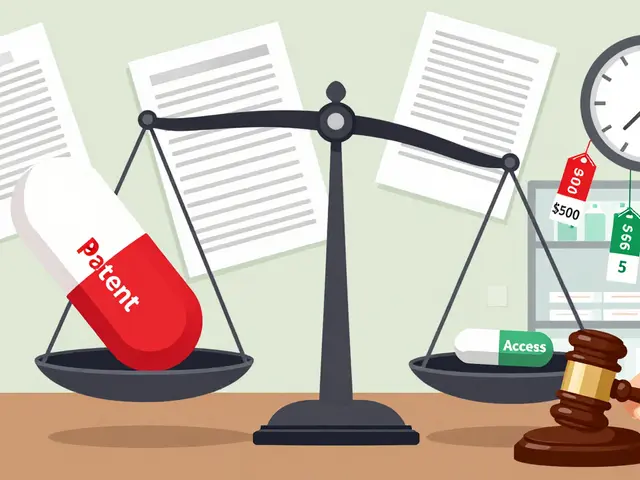
When you walk into a pharmacy and pick up a generic version of your prescription, you’re benefiting from decades of legal battles fought in courtrooms-not labs. Behind every cheap pill is a complex web of patents, lawsuits, and landmark decisions that decide who can sell what, when, and for how much. These aren’t abstract legal theories. They directly impact whether your insulin, heart medication, or cancer drug costs $5 or $500.
How Generic Drugs Break Patents: The Hatch-Waxman Act
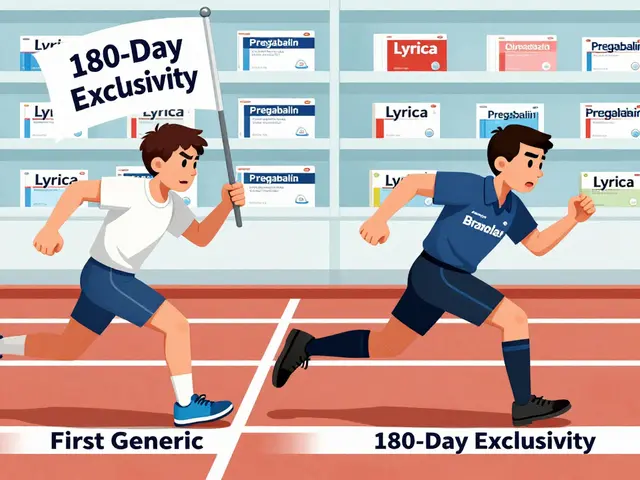
The foundation of modern generic drug competition is the Hatch-Waxman Act a 1984 U.S. law that balanced drug innovation with affordable access by creating a pathway for generic manufacturers to challenge brand-name patents. Before this law, generic companies had to run full clinical trials to prove their drugs worked-costing millions and taking years. Brand-name companies held a near-monopoly until their patents expired, often dragging out the process with legal tricks. The Hatch-Waxman Act changed everything. It let generic makers file an Abbreviated New Drug Application (ANDA), skipping expensive clinical trials if they could prove their drug was bioequivalent. But here’s the catch: they had to certify whether they believed the brand’s patents were invalid, unenforceable, or wouldn’t be infringed. That’s called a Paragraph IV certification. And when they do that? The brand company gets a 30-month clock to sue for infringement. That pause can delay a generic launch by years. This system created a legal battlefield. The goal? Let generics enter the market as soon as legally possible, without wiping out innovation. But over time, the rules got exploited. And the courts had to step in.Amgen v. Sanofi: The End of Overly Broad Biologic Patents
In 2023, the Supreme Court handed down a decision that sent shockwaves through the biotech world: Amgen v. Sanofi a landmark case where Amgen claimed a patent covering millions of possible antibodies but only provided 26 working examples. Amgen argued their patent covered any antibody that bound to a specific protein. Sanofi, a generic challenger, said that was absurd-no one could make all those antibodies based on Amgen’s description. The Court agreed with Sanofi. In a unanimous ruling, they said a patent can’t claim everything an inventor hasn’t actually made. If you want to patent a class of molecules, you have to give enough detail for someone else to reproduce them without endless experimentation. This wasn’t just about antibodies-it applied to any broad biological patent. The impact? Generic makers breathing easier. Before this, brand companies could lock up entire classes of drugs with vague patents. Now, if your patent reads like a wish list instead of a blueprint, it’s likely invalid. This decision alone could open the door for dozens of biosimilar drugs that were stuck in legal limbo.Allergan v. Teva: The Rule Against Patent Manipulation
Another major case, Allergan v. Teva a 2024 Federal Circuit ruling that blocked brand companies from using later-filed patents to block earlier-filed generics, tackled a sneaky tactic called “evergreening.” Some drug companies would file a new patent on a minor tweak-like a different salt form or coating-after the original patent was about to expire. Then they’d list it in the Orange Book the FDA’s official list of patents tied to brand-name drugs, used to trigger legal delays against generics to restart the 30-month clock. Teva had filed its generic version based on the original patent. Allergan tried to block it using a newer patent that had a later filing date but an earlier expiration. The court said no. You can’t use a later-filed patent to delay a generic that’s challenging an earlier one. This decision shut down a common loophole and gave generics a clearer path to market.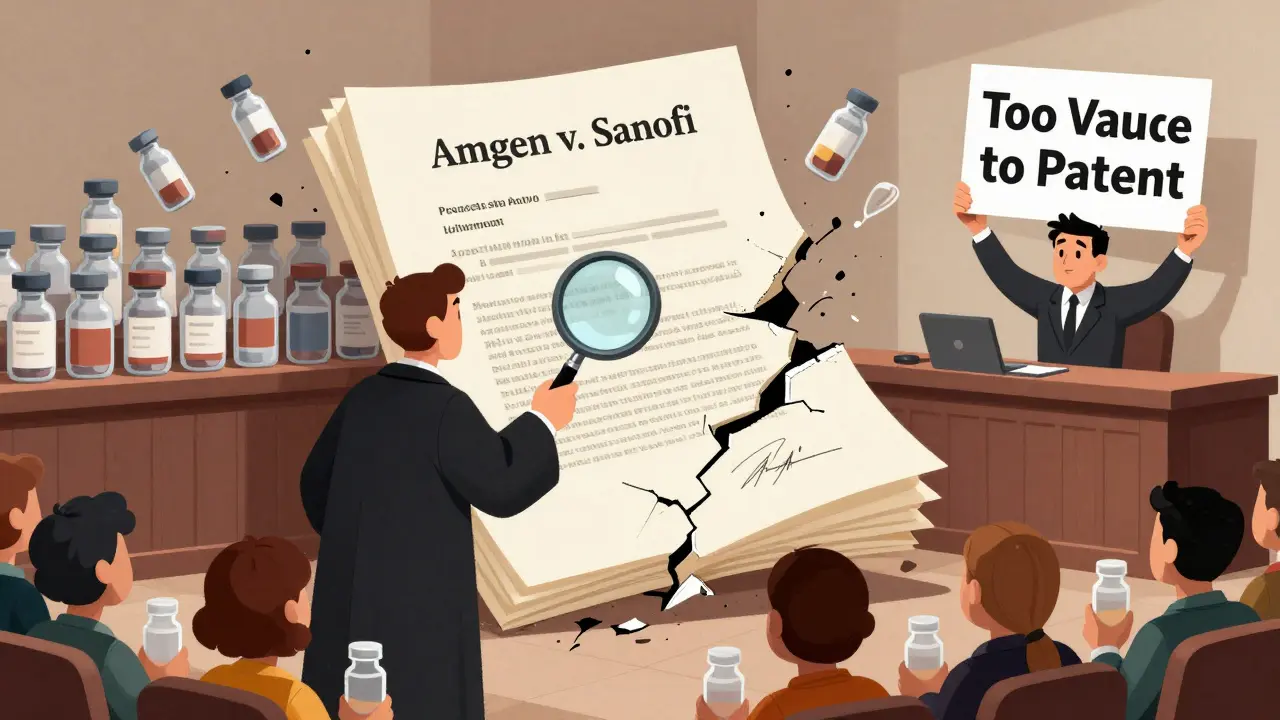
Amarin v. Hikma: When Marketing Becomes Infringement
Here’s a twist: sometimes, a generic drug doesn’t infringe the patent on paper-but its marketing does. In Amarin v. Hikma a 2024 case where Hikma’s generic label excluded an unapproved use, but its promotional materials suggested it anyway, Amarin sued not because Hikma made the wrong drug, but because its ads implied doctors could prescribe it for a use not approved by the FDA. The court ruled this was “induced infringement.” Even if the label was clean, the marketing crossed the line. This case changed how generics promote their products. Now, they have to be hyper-careful with every word in their ads, websites, and sales materials. Sixty-three percent of branded companies’ induced infringement claims succeeded in 2023, according to PTAB data. That’s a big risk.Why This Matters for Real People
These aren’t just lawyer fights. They’re about money. When a generic hits the market, prices drop by 80-85% within a year, according to the FTC. That’s why patent delays cost patients dearly. One Reddit user, ‘MedSavings43,’ shared how their insulin alternative was held up for 22 months due to litigation-costing them over $8,400 out of pocket. In 2024, the FDA reported that 85% of U.S. prescriptions are filled with generics. But patent battles are the biggest barrier to that number growing. Evaluate Pharma estimates $127 billion in generic sales are still tied up in unresolved lawsuits through 2026. Cardiovascular and cancer drugs are the most affected. Generic manufacturers say the Amgen decision helped, but made things harder too. Teva’s legal team now spends an extra $1.2 million per product just analyzing patents before filing. Brand companies, meanwhile, are pushing back with more Orange Book listings-even ones that might not belong there. The FDA’s 2025 proposed rule aims to fix that by requiring stricter proof that a patent actually relates to the drug.
What’s Next? The Future of Generic Patents
The legal landscape keeps shifting. Inter Partes Review (IPR) proceedings at the Patent Trial and Appeal Board (PTAB) are now used in 92% of generic cases. That’s a faster, cheaper way to challenge patents than district court. But it’s not foolproof. Some patents survive IPR only to be challenged again in court. Biosimilars-generic versions of biologic drugs-are the next frontier. They’re more complex than pills, and their patents are messier. By 2027, biosimilar cases could make up 31% of all generic patent disputes, up from 14% today. That means more Amgen-style cases, more legal uncertainty, and more pressure on courts to keep up with science. The Federal Circuit’s Chief Judge Moore put it best: the line between fair competition and patent abuse is getting thinner. Courts now have to balance innovation incentives with real-world access. And as drug prices keep rising, that balance is under more scrutiny than ever.What You Can Do
If you’re a patient, ask your pharmacist if a generic is available. If it’s not, ask why. Sometimes, it’s just a patent delay-not a lack of alternatives. If you’re a healthcare provider, push for generics when appropriate. And if you’re following this space, pay attention to the Orange Book. It’s not just a government list-it’s the battlefield map for drug prices. The system isn’t perfect. But landmark decisions like Amgen, Allergan, and Amarin have made it fairer. They’ve forced patent holders to prove their claims-not just claim them. And that’s good news for anyone who needs medicine to stay affordable.What is the Hatch-Waxman Act and how does it affect generic drugs?
The Hatch-Waxman Act of 1984 created a legal pathway for generic drug makers to bring cheaper versions to market without repeating expensive clinical trials. It lets them challenge brand patents through Paragraph IV certifications, which can trigger 30-month legal delays. The goal was to balance innovation with competition-letting generics enter faster while protecting valid patents.
What does the Orange Book have to do with generic drugs?
The Orange Book is the FDA’s official list of patents tied to brand-name drugs. Generic manufacturers must review it before filing their application. If they challenge a listed patent, it triggers a lawsuit that can delay their entry by up to 30 months. Brand companies sometimes list questionable patents here to block competition-a practice the FDA is now cracking down on.
Why did the Amgen v. Sanofi case matter so much?
Amgen tried to patent millions of possible antibodies based on just 26 examples. The Supreme Court said that’s not enough. A patent must enable others to make the invention without guessing. This ruling killed overly broad biologic patents and opened the door for more biosimilar drugs to enter the market, lowering costs for patients.
Can a generic drug company be sued even if their label is correct?
Yes. In Amarin v. Hikma, the court ruled that even if a generic’s label only includes approved uses, marketing materials that suggest off-label uses can count as induced patent infringement. This means generics must police every ad, website, and sales pitch-not just the label.
How long do generic patent lawsuits usually take?
The average Hatch-Waxman lawsuit lasts about 28.7 months, according to Rock Ridge Law’s 2024 analysis. But many end earlier through settlements or PTAB reviews. Inter Partes Reviews (IPRs) at the Patent Trial and Appeal Board are now used in 92% of cases and often resolve disputes faster than district court.
Are biosimilars treated the same as small-molecule generics?
No. Biosimilars are complex biological drugs, not simple chemical copies. Their patent disputes are more technical, often involving protein structures and manufacturing processes. The legal rules are still evolving, and courts are still figuring out how to apply traditional patent law to these advanced therapies.
What’s the biggest risk for generic drug makers today?
The biggest risk is patent thickets-dozens of overlapping patents covering minor variations of a drug. These make it hard to know which patents are real threats. Combined with aggressive litigation tactics and shifting court standards, the cost and uncertainty of entering the market have skyrocketed. Many small generic firms now can’t afford to challenge big pharma.
How do patent disputes affect drug prices?
Every month a generic is delayed costs patients more. Once a generic enters, prices drop 80-85% within a year. When patent litigation drags on for years, as it often does, those savings are postponed. The FTC estimates that improper patent listings alone cost U.S. consumers over $1 billion annually in higher drug prices.
Emily P
December 18, 2025 AT 10:58I never realized how much legal gymnastics go into making a $5 pill. The Hatch-Waxman Act sounds like a compromise that got slowly eaten alive by lawyers. It’s wild that a company can file a patent on something they haven’t even made yet and use it to block competitors for years.
And then there’s the Orange Book-why is it even allowed to list patents that are clearly junk? The FDA’s new rule might be the first real step toward fixing this.
It’s not just about money. It’s about people skipping doses because they can’t afford the brand version while the patent sits there like a wall.
Vicki Belcher
December 19, 2025 AT 06:49This is actually sooo important!! 🙌 I’ve been on insulin for 8 years and every time a generic gets delayed, I cry a little inside 💔
Thank you for explaining this in a way that makes sense. People need to know this isn’t about ‘business’-it’s about survival. 🌱❤️
Lynsey Tyson
December 20, 2025 AT 17:18It’s kind of sad how innovation got twisted into a weapon. The original idea of patents was to reward real progress, not to create legal traps. I get why big pharma does it-they’re under pressure to make returns-but at what cost?
Maybe we need a new system entirely. One where patents are reviewed by scientists AND patient advocates before they’re listed. Just a thought.
Edington Renwick
December 21, 2025 AT 13:03Oh please. You think this is bad? Wait till you hear how the EU is trying to copy this mess. Meanwhile, China’s just making generics and laughing all the way to the bank.
These ‘landmark decisions’? More like band-aids on a bullet wound. The whole system is rigged. And no one’s got the guts to say it out loud.
Meanwhile, my cousin’s kid needs a $12,000 cancer drug and the insurance won’t cover it because the ‘generic isn’t approved yet.’
Allison Pannabekcer
December 22, 2025 AT 10:42There’s a lot here, and I appreciate how thorough this is. But let’s not forget the people behind the numbers.
I used to work in a community pharmacy. I saw elderly patients split pills in half because they couldn’t afford the full dose. I saw diabetics choosing between insulin and groceries.
Every month a generic is blocked, someone suffers. The courts may be deciding patent law, but real lives are hanging in the balance.
Let’s not lose sight of that. We need more Amgen rulings, not more loopholes.
Sarah McQuillan
December 23, 2025 AT 16:21Ugh. Another ‘woke patent reform’ post. Let me guess-you think big pharma is evil and generics are saints?
Wake up. Without patents, no one would spend $2 billion developing a new drug. You want cheap pills? Fine. But then stop complaining when the next breakthrough cancer drug never gets made.
And FYI, India’s generic industry is built on stealing IP. So don’t act like this is some moral high ground.
Patents aren’t the problem. Your ignorance is.
Aboobakar Muhammedali
December 23, 2025 AT 20:32So many things happening at once
Amgen case changed everything for biologics
Orange Book is a joke
And now marketing can get you sued even if your label is clean
It’s like a maze with no exit
Why do we even have lawyers in pharma
Why not just let science decide
It’s not fair
People die waiting
And the companies just keep filing more patents
It’s not business
It’s war
Laura Hamill
December 24, 2025 AT 08:53THIS IS A GOVERNMENT COVER-UP. The FDA, big pharma, and the courts are all in cahoots.
Did you know the same people who write patent laws used to work for Pfizer?
And the Orange Book? It’s not even public. They hide the real reasons patents get listed.
They’re keeping insulin expensive on purpose. It’s not about innovation-it’s about control.
They want you dependent. That’s why they delay generics for 22 months.
Wake up. This is social engineering.
And don’t you dare say ‘trust the system’-I’ve seen the documents.
They’re laughing at us.
Dikshita Mehta
December 24, 2025 AT 19:29The Amgen v. Sanofi ruling was a game-changer for biosimilars. Before this, companies could patent entire protein families with vague descriptions. Now, they have to show actual enablement-meaning, if you can’t teach someone how to make it, you don’t own it.
This is standard patent law applied to biologics. It’s not radical. It’s just… fair.
Also, the FDA’s 2025 rule on Orange Book listings? Long overdue. Too many patents there are ‘junk’-minor formulation changes that don’t affect efficacy.
Real innovation deserves protection. But legal gaming? That’s just rent-seeking.
And yes, I’ve reviewed patent applications in my old job. The difference between a real invention and a loophole is usually one paragraph.
Chris Clark
December 24, 2025 AT 20:20Yo so i just found out my dad’s heart med is stuck in patent hell for 3 years
he’s been paying 400 a month for a pill that’s been made in india for 5 years
the company that makes it here? they’re owned by the same people who made the brand
so it’s not even a different company
they just rebranded it as ‘new’ and kept the price
and now i’m mad
why do we even have lawyers if they just make things worse
also i think the word ‘bioequivalent’ is a lie
my dad says the generic makes him feel weird
but the label says it’s the same
so who’s lying
Dorine Anthony
December 25, 2025 AT 00:48Just reading this made me pause. I didn’t know any of this. Thanks for laying it out so clearly.
It’s one of those things you don’t think about until it hits home.
Hope more people see this.
William Storrs
December 26, 2025 AT 10:35Look-this is the kind of info that changes lives. You didn’t just write a post. You gave people a weapon.
Now they can walk into their pharmacy and ask, ‘Why isn’t this generic here yet?’
They can call their reps. They can share this with friends. They can demand change.
That’s power. And you gave it to them.
Keep going. The system needs more people like you.
James Stearns
December 27, 2025 AT 16:17One must question the intellectual integrity of those who reduce complex legal and economic frameworks to emotionally charged soundbites. The Hatch-Waxman Act, while imperfect, represents a sophisticated equilibrium between incentivizing innovation and ensuring market access. To characterize patent litigation as mere ‘legal gaming’ is to misunderstand the very foundations of intellectual property law.
Furthermore, the notion that generic manufacturers are somehow ‘heroes’ ignores the fact that they benefit from the R&D investments of innovators. Without patent protection, there would be no first-mover advantage to incentivize the development of novel therapeutics in the first place.
This is not a moral issue. It is a policy one. And policy requires nuance, not outrage.
William Liu
December 28, 2025 AT 21:18Amgen v. Sanofi was the most important patent case in 20 years. Finally, someone said ‘no’ to patenting the air.
Aadil Munshi
December 28, 2025 AT 23:50Interesting how everyone acts like patents are the villain here. But let’s be real-no one complains when a tech company patents a new chip design. Or when Apple patents a button layout.
So why is pharma the only industry that gets villainized for protecting IP?
Because drugs are emotional. People are scared. And fear makes people irrational.
Patents aren’t the problem. The problem is that we treat medicine like a human right, not a product that requires massive investment.
Want cheap drugs? Tax the rich and fund R&D directly.
Don’t punish the innovators because society won’t pay for innovation.
It’s not a conspiracy.
It’s economics.