
Medication-Induced Anxiety Checker
Check if your anxiety might be medication-related
This tool helps determine if your anxiety symptoms are likely caused by a new medication based on timing patterns.
Medication Information
Medication Information
Enter your information above to see if your anxiety is likely medication-related.
It’s not just in your head. If you’ve started a new medication and suddenly feel jittery, your heart races, or you can’t stop worrying - even when nothing’s wrong - you might not be dealing with a mental health issue. You could be experiencing medication-induced anxiety. This isn’t rare. About 5-7% of all anxiety cases are directly tied to prescription drugs, and that number jumps higher when people take multiple medications at once. The good news? It’s often fixable. The key is knowing which drugs cause it, how it shows up, and what to do next.
Which Medications Can Trigger Anxiety?
Not all drugs affect everyone the same way. But some are far more likely to spark anxiety than others. Here are the most common culprits:
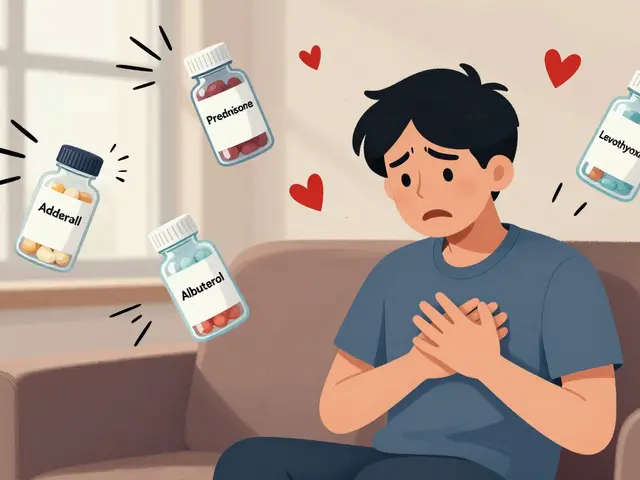
- Corticosteroids - Drugs like prednisone, methylprednisolone, and dexamethasone are often used for inflammation, asthma, or autoimmune conditions. At high doses or with long-term use, they can cause nervousness, insomnia, mood swings, and full-blown panic attacks. One patient on HealthUnlocked described having panic attacks after a short prednisone course - even though she’d never had anxiety before.
- ADHD stimulants - Medications like Adderall, Vyvanse, Ritalin, and Concerta boost brain activity to improve focus. But for some, that boost turns into overdrive. Restlessness, racing thoughts, and heart palpitations are common. A user on ADDitude Magazine reported that switching from Adderall to Vyvanse at a lower dose cut her anxiety by 70%.
- Asthma inhalers - Albuterol (Proventil) and salmeterol (Serevent) are lifesavers for breathing, but they can also mimic panic symptoms: trembling, fast heartbeat, sweating, and a feeling of doom. Many patients mistake these side effects for panic attacks.
- Thyroid meds - Levothyroxine (Synthroid) is meant to balance hormone levels. Too much, though, and your body goes into overdrive. Symptoms include sweating, shakiness, trouble sleeping, and constant worry. The American Thyroid Association recommends keeping TSH levels between 0.4 and 4.0 mIU/L to avoid this.
- Decongestants - Sudafed and similar products contain pseudoephedrine. It shrinks blood vessels to clear sinuses - but it also spikes adrenaline. That’s why people feel wired, jittery, or unable to sleep after taking it.
- Antibiotics and seizure drugs - Certain antibiotics (like fluoroquinolones) and anti-seizure meds (like gabapentin or topiramate) have been linked to anxiety, though less commonly. The mechanism isn’t always clear, but it’s documented enough that doctors now consider it.
- Anesthesia and sedatives - Even drugs meant to calm you can backfire. Withdrawal from benzodiazepines or reactions to anesthesia can trigger anxiety that lasts days or weeks.
Why Do These Drugs Cause Anxiety?
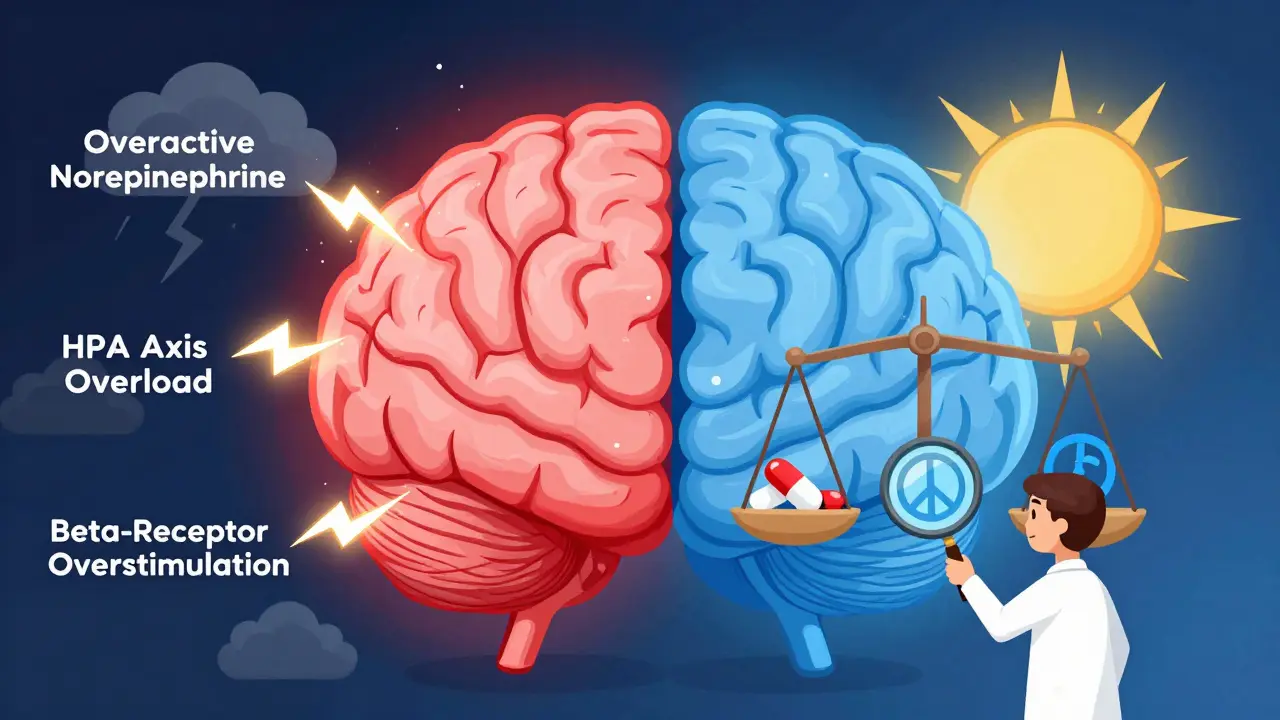
It’s not magic. It’s chemistry. These medications change how your brain and body work. Some boost neurotransmitters like norepinephrine and dopamine - the same chemicals your body releases when you’re scared or excited. Others disrupt the hypothalamic-pituitary-adrenal (HPA) axis, your body’s stress control center. Corticosteroids, for example, flood your system with cortisol-like signals, tricking your brain into thinking you’re under constant threat.
Stimulants for ADHD overactivate the sympathetic nervous system - the part that turns on your fight-or-flight response. That’s why you feel jittery, even if you’re sitting quietly. Asthma inhalers act on beta-receptors in your heart and lungs, causing your pulse to race. And thyroid meds? If your dose is too high, your metabolism goes into overdrive. Your body thinks it’s running from danger - even when you’re just watching TV.
The body doesn’t always distinguish between real stress and drug-induced stress. That’s why anxiety from medication can feel just as real - and just as terrifying - as anxiety from life events.
How to Tell If It’s the Drug - Not a Mental Health Problem
This is the hardest part. Anxiety is anxiety, whether it comes from stress, trauma, or a pill. But there’s a key difference: timing.
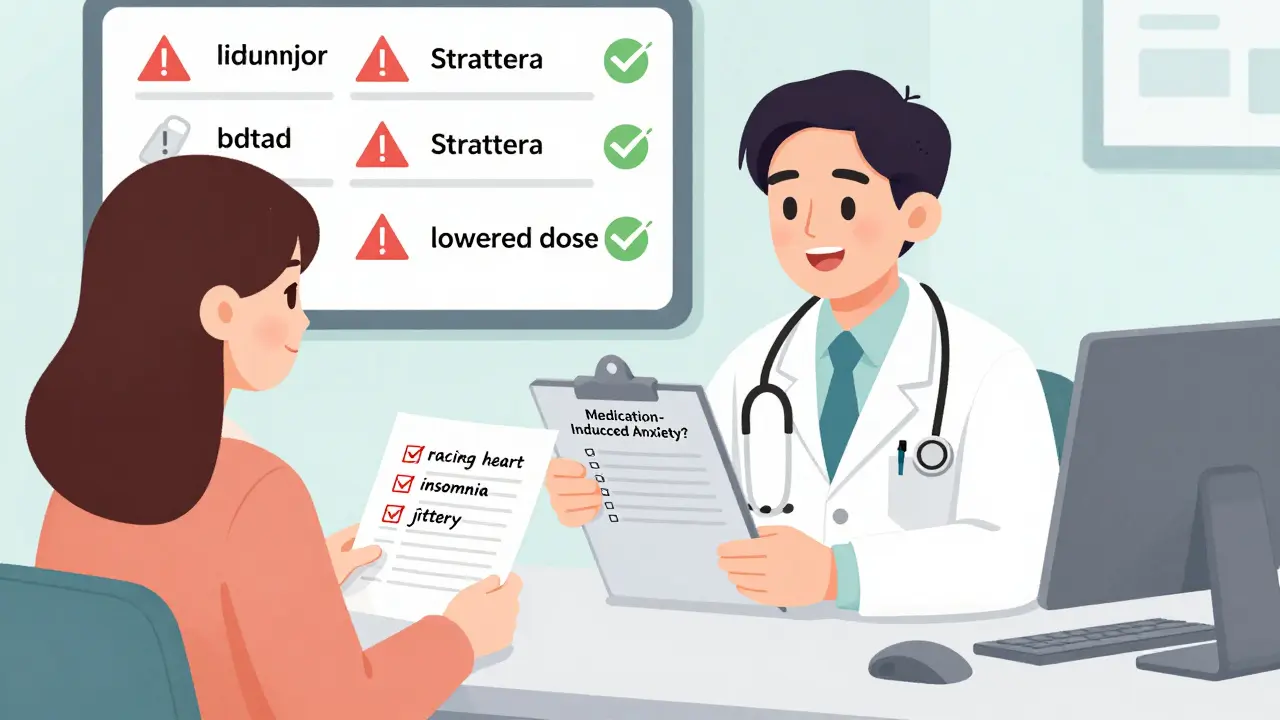
If your anxiety started within days or weeks of beginning a new medication - especially if you’ve never had anxiety before - the drug is likely the trigger. The DSM-IV (Diagnostic and Statistical Manual) requires that anxiety symptoms be present for at least six months to diagnose generalized anxiety disorder (GAD). But if those symptoms only appeared after starting a new drug, and they faded after stopping it? That’s substance-induced anxiety.
Doctors are trained to wait before diagnosing a primary anxiety disorder. For short-acting drugs like cocaine or caffeine, symptoms should clear in about a week. For longer-acting ones like steroids or thyroid meds, you may need 4-8 weeks off before you can be sure. If anxiety lingers after that? Then it might be independent. If it vanishes? The drug was the cause.
One patient, ‘MedReaction87,’ didn’t realize her prednisone was causing panic attacks until she showed her doctor a WebMD article. That kind of delay - three months on average, according to GoodRx - is all too common. Too many people are told they have an anxiety disorder when all they needed was a dosage tweak.
What to Do If You Think Your Medication Is Causing Anxiety
Don’t stop cold turkey. Don’t guess. Don’t ignore it. Here’s what actually works:
- Track your symptoms. Keep a simple log: Date, time, medication taken, dose, anxiety level (1-10), and any physical symptoms (racing heart, sweating, etc.). This helps your doctor see patterns. Did anxiety spike 30 minutes after taking your pill? That’s a clue.
- Talk to your prescriber. Bring your log. Mention the specific drug and when symptoms started. Ask: “Could this be a side effect?” Don’t assume they know. Many doctors don’t routinely ask about anxiety when prescribing stimulants or steroids.
- Ask about alternatives. For ADHD, non-stimulant options like Strattera often cause less anxiety. For asthma, switching from albuterol to a different inhaler might help. For thyroid meds, a small dose reduction can make a huge difference.
- Ask about tapering. Never quit steroids or benzodiazepines suddenly. That can make anxiety worse. A slow, controlled reduction - over days or weeks - is safer and often reduces withdrawal anxiety.
- Consider CBT. Cognitive Behavioral Therapy doesn’t replace medication changes - but it helps while you adjust. Studies show it works in 60-70% of cases to manage anxiety during transitions.
One woman on Reddit said her anxiety disappeared within two weeks after her doctor lowered her levothyroxine dose. Another found relief by switching from Adderall to Vyvanse. These aren’t rare stories. They’re common fixes - if you speak up.
How to Prevent It Before It Starts
Prevention beats treatment every time. If you have a history of anxiety - or even just mild nervousness - talk to your doctor before starting any new medication. Ask:
- “Can this cause anxiety?”
- “Is there a lower-dose version?”
- “Are there non-stimulant alternatives?”
- “Should I monitor for symptoms?”
For thyroid patients: Get TSH checked regularly. For ADHD: Start at the lowest dose and increase slowly. Research shows this prevents anxiety in 65% of cases. For steroids: Use the shortest course possible. Don’t take more than prescribed.
And if you’re on multiple meds? Ask for a medication review. Polypharmacy - taking five or more drugs - increases the risk of side effects. A pharmacist can help spot interactions you might miss.
What’s Next? Research and Better Guidelines
Science is catching up. A 2022 study found that people with certain genetic variations in the CYP2D6 enzyme process some drugs differently - making them more likely to develop anxiety as a side effect. That’s why two people can take the same pill and one feels fine while the other panics.
The National Institute of Mental Health has funded $2.3 million in research to understand why this happens. And the American Psychiatric Association is updating its diagnostic manual (DSM-6) to better separate medication-induced anxiety from primary anxiety disorders. That means future doctors will have clearer tools to spot the difference.
For now, the best tool you have is awareness. If you’re feeling anxious after starting a new drug, don’t blame yourself. Don’t assume it’s all in your head. Ask the right questions. Keep a log. Push for answers. Your body is giving you a signal - listen to it.
Can anxiety from medication go away on its own?
Yes - often. Medication-induced anxiety usually fades once the drug is cleared from your system or your dose is adjusted. For short-acting drugs like caffeine or albuterol, symptoms may disappear within hours or days. For longer-acting ones like steroids or thyroid meds, it can take 2-8 weeks. The key is stopping the trigger, not just treating the symptoms.
Is anxiety from medication the same as an anxiety disorder?
No. Medication-induced anxiety is a side effect, not a mental illness. It’s triggered by a substance and typically resolves when that substance is removed. A true anxiety disorder, like generalized anxiety disorder (GAD), exists independently - even when you’re not taking any drugs. Doctors use timing and symptom patterns to tell the difference.
What if my doctor says it’s ‘just stress’?
If your anxiety started right after a new medication and you’ve never had it before, it’s likely the drug. Bring a symptom log and specific research (like WebMD or Mayo Clinic info). Ask: ‘Can we try lowering the dose or switching?’ If they refuse, seek a second opinion. Many patients are misdiagnosed - and it’s not your fault.
Can I still take the medication if I have anxiety?
Sometimes, yes - if the benefits outweigh the side effects. For example, a life-saving steroid for severe asthma might still be worth it, even if it causes jitteriness. But you should still lower the dose, add CBT, or switch to a less stimulating version. Never stop without medical guidance. The goal is to find a balance - not to avoid all side effects, but to minimize them.
Are there natural ways to reduce medication-induced anxiety?
Deep breathing, light exercise, and good sleep can help calm your nervous system while you wait for the drug to clear. But they don’t fix the root cause. If the medication is triggering it, no amount of yoga will stop it. The real fix is adjusting the drug - not masking the symptom. Natural remedies can support recovery, but they’re not substitutes for medical changes.
Sean Bechtelheimer
March 24, 2026 AT 11:17Blessing Ogboso
March 26, 2026 AT 11:08Namrata Goyal
March 26, 2026 AT 23:09Donna Fogelsong
March 27, 2026 AT 17:24Caroline Dennis
March 28, 2026 AT 20:07Kenneth Jones
March 30, 2026 AT 10:58Seth Eugenne
March 30, 2026 AT 17:37Jefferson Moratin
April 1, 2026 AT 02:09Zola Parker
April 2, 2026 AT 01:48florence matthews
April 3, 2026 AT 21:17Mihir Patel
April 5, 2026 AT 14:38Brandon Shatley
April 7, 2026 AT 01:37Kevin Y.
April 8, 2026 AT 07:10rebecca klady
April 8, 2026 AT 07:22Raphael Schwartz
April 9, 2026 AT 04:28