
SAE Criteria: What You Need to Know About Serious Adverse Events in Medications
When a medication causes harm that’s serious enough to change your life, it’s not just a side effect—it’s a serious adverse event, a medically significant reaction to a drug that requires hospitalization, leads to disability, or threatens life. Also known as SAE, these events trigger mandatory reporting by doctors, pharmacies, and drug makers to protect public health. Not every bad reaction counts. SAE criteria exist to separate the dangerous from the annoying—like a rash that fades versus a liver failure that doesn’t.
What makes an event "serious" under SAE criteria? It’s not about how common it is, but how severe. If a drug causes you to be hospitalized, triggers a birth defect, leads to permanent damage, or causes death, it meets the threshold. These rules aren’t just paperwork—they’re the backbone of drug safety systems like the FDA’s MedWatch program. Think of SAE criteria as the alarm system for drugs that go wrong. They’re why we know that certain antibiotics can cause tendon ruptures, or why some blood thinners increase bleeding risk in older adults. Without these standards, dangerous patterns would stay hidden for years.
SAE criteria also connect directly to how we use medications every day. If you’re on multiple drugs, your risk of a serious interaction goes up. That’s why herbal supplements like St. John’s wort or magnesium supplements can become dangerous when mixed with prescriptions—they don’t just cause nausea, they can trigger events that meet SAE criteria. Even something as simple as a fever medicine for kids can cross into serious territory if dosed wrong. The same goes for benzodiazepine overdose, malignant hyperthermia during anesthesia, or skin atrophy from long-term steroid creams. Each of these has been flagged under SAE criteria because real people experienced real harm.
And it’s not just about what happens to you—it’s about what gets reported. When a patient has a reaction that meets SAE criteria, that data flows into global databases. That’s how we learn that certain biologics have lot-to-lot variability that might increase risk, or why digital therapeutics need to be monitored for hidden interactions. The posts below cover exactly these kinds of cases: real conditions, real drugs, and real safety failures that were only caught because someone noticed a pattern under SAE criteria.
What you’ll find here aren’t abstract guidelines—they’re stories of what went wrong, how it was found, and how it’s being fixed. From glaucoma treatments that worsen eye pressure to metformin helping PCOS but needing careful tracking, every article ties back to the same question: when does a side effect become a danger? This collection gives you the tools to recognize those moments—and protect yourself before it’s too late.
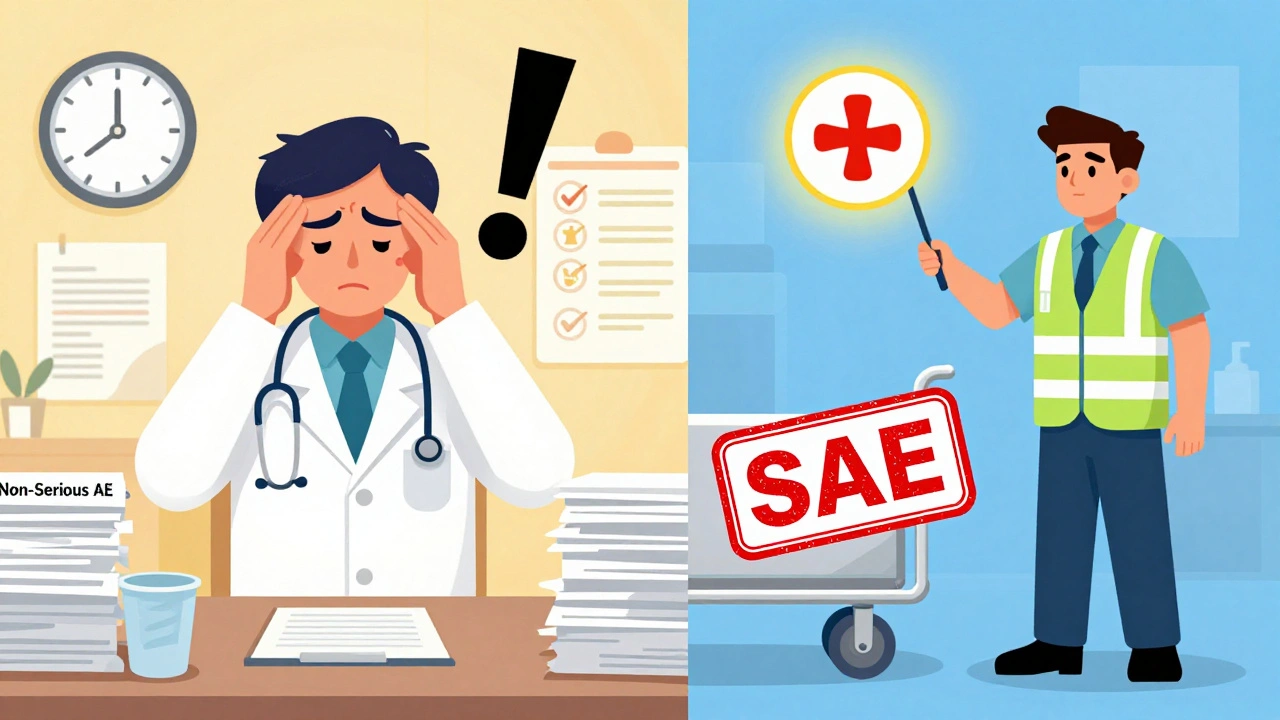
Serious vs Non-Serious Adverse Events: When to Report in Clinical Trials
Understand when to report serious vs non-serious adverse events in clinical trials. Learn the FDA and ICH criteria, reporting timelines, common mistakes, and how to avoid over-reporting that slows down safety monitoring.
December 5 2025