
Pediatric Fever Treatment: Safe Ways to Reduce Fever in Kids
When a child has a pediatric fever treatment, the approach to lowering a child’s temperature using safe, evidence-based methods. Also known as fever management in children, it’s not about rushing to bring the number down—it’s about keeping the kid comfortable and watching for signs that something more serious might be going on. Fever isn’t a disease. It’s the body’s way of fighting infection. Most of the time, it’s harmless. But for parents, seeing a child hot, flushed, and fussy feels urgent. The goal isn’t to get the thermometer to 98.6. It’s to help them feel better.
Two medications are the backbone of antipyretics for children, drugs like acetaminophen and ibuprofen used to reduce fever in kids. Acetaminophen works for most kids, even infants over 2 months. Ibuprofen kicks in faster and lasts longer, but it’s only for kids 6 months and up. Dosing matters. Too little won’t help. Too much can hurt. Always check weight-based charts, not age. Never give aspirin. It can trigger a rare but deadly condition called Reye’s syndrome.
What about children fever, elevated body temperature in infants and young children, often caused by viral infections. A fever of 102°F isn’t more dangerous than 100.5°F if the child is drinking, peeing, and responding normally. A baby under 3 months with any fever over 100.4°F needs a doctor right away—no waiting. For older kids, watch behavior more than numbers. If they’re lethargic, refusing fluids, or have a rash that doesn’t fade when you press on it, that’s the red flag, not the temperature.
Don’t bundle them up. Don’t use alcohol rubs. Don’t give cold baths. These tricks don’t help and can make things worse. A lukewarm sponge bath is fine if they’re uncomfortable, but the real relief comes from the right dose of medicine. Keep them hydrated. Offer water, breast milk, or oral rehydration solutions. Dehydration turns a mild fever into a bigger problem.
Most fevers in kids come from viruses—colds, flu, ear infections. Antibiotics won’t touch them. That’s why so many parents feel confused. They expect a pill to fix it fast. But often, the best treatment is time, fluids, and patience. Still, knowing when to call the doctor saves lives. If the fever lasts more than 3 days, comes with vomiting and stiff neck, or if your gut says something’s off—trust it.
Below, you’ll find real posts that break down exactly what works, what doesn’t, and how to avoid common mistakes. From how to dose ibuprofen correctly to why a fever doesn’t always mean an infection, these aren’t theory pieces. They’re what doctors and parents actually use. You’ll walk away knowing what to do when your child runs a fever—and what to ignore.
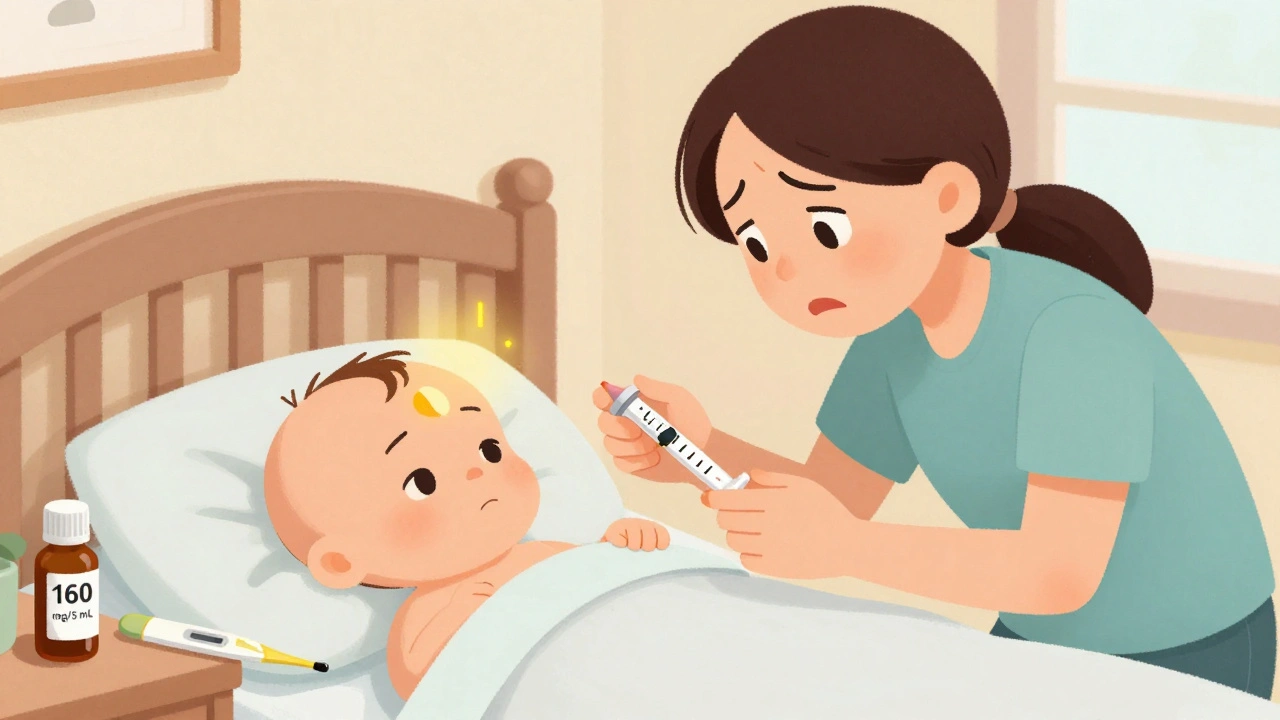
Fever Medication for Kids: Acetaminophen vs. Ibuprofen Safety Guide
Learn the key differences between acetaminophen and ibuprofen for kids under two, including dosing, safety, effectiveness, and when to call a doctor. Make smarter choices for fever and pain relief.
December 2 2025