
Liquid Antibiotics Storage: How to Keep Them Effective and Safe
When you pick up a bottle of liquid antibiotics, a liquid form of medicine used to treat bacterial infections, often prescribed for children or people who have trouble swallowing pills. Also known as suspension antibiotics, it's not like pills—you can't just toss it in a drawer and forget it. These medicines are sensitive. Heat, light, and even time can break them down, making them useless—or worse, unsafe.
Most liquid antibiotics need to be kept in the refrigerator, a cool, dark place that slows bacterial growth and preserves chemical stability, but not all. Some, like amoxicillin clavulanate, are stable at room temperature for up to two weeks after mixing. Others, like cefdinir, must stay cold from day one. Always check the label or ask your pharmacist. If you leave it out too long, the medicine won’t kill the infection, and your body might end up fighting a stronger version of the bacteria. That’s how antibiotic resistance starts.
Don’t forget about medication safety, the practice of using drugs correctly to avoid harm, errors, or dangerous interactions. Mixing liquid antibiotics with juice? That’s fine for taste—but never mix them with hot liquids. Heat destroys the active ingredients. And never save leftover liquid antibiotics for next time. Even if it looks fine, the potency drops fast. A bottle that’s two weeks old might as well be water. Also, keep it out of reach of kids. A teaspoon of forgotten amoxicillin can cause serious side effects in a toddler.
Storing antibiotics right isn’t just about following instructions—it’s about protecting your health and the health of others. When these medicines fail because of bad storage, infections don’t just linger—they spread. And you might end up needing stronger drugs, longer treatments, or even hospital care. That’s why simple habits matter: write the start date on the bottle, keep it in the back of the fridge where it’s coldest, and toss it after the expiration date—even if it’s still half full.
Below, you’ll find real advice from people who’ve been there—how to track what you’re taking, avoid dangerous mix-ups, and make sure every dose counts. These aren’t theory pages. These are the fixes that actually work in real life.
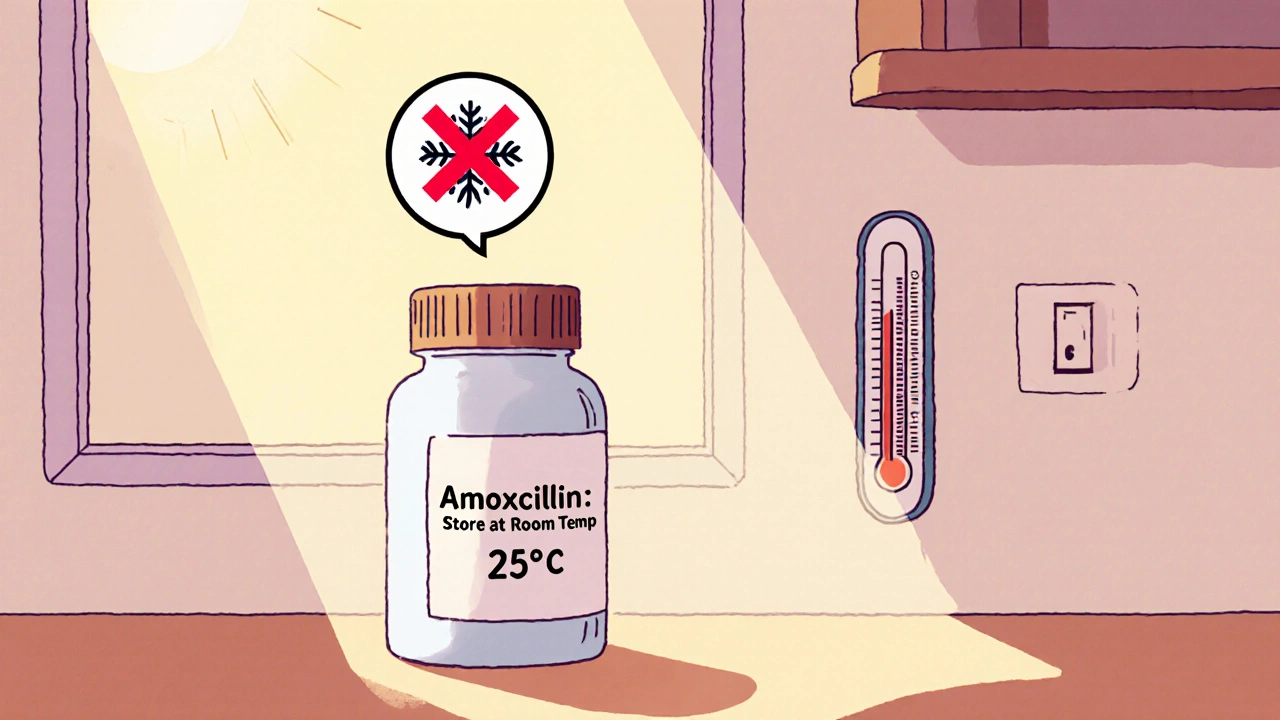
How to Store Liquid Antibiotics and Reconstituted Suspensions Correctly
Learn how to properly store liquid antibiotics and reconstituted suspensions to ensure they remain effective. Discover temperature rules, shelf life, storage mistakes, and safe disposal methods.
November 20 2025