
Doctor Attitudes: How Provider Mindsets Shape Your Care and Treatment Outcomes
Doctor attitudes, the underlying beliefs and biases healthcare providers hold about patients, conditions, and treatments. Also known as clinician bias, these unspoken assumptions directly influence whether you get the right test, the right medication, or even the right amount of time during your visit. It’s not about malice—it’s about habits formed over years of training, workload pressure, and systemic shortcuts. A doctor who thinks chronic pain is "all in the head" might skip imaging or dismiss opioid therapy outright, even when guidelines support it. Another might overprescribe benzodiazepines because they see it as the fastest fix for anxiety, ignoring long-term risks.
These attitudes show up in subtle ways. A patient with opioid therapy needs might be labeled "drug-seeking" instead of being assessed for legitimate chronic pain. Someone with PCOS might be told to just lose weight, while their insulin resistance and ovulation issues go untreated. Even something as simple as medication adherence gets affected—doctors who don’t trust patients to track their own pills won’t offer tools like medication logs, even when those logs prevent deadly overdoses. And when it comes to herbal supplements, many providers still shrug off interactions, assuming patients won’t mention them. But St. John’s wort can wreck your antidepressants, and garlic can thin your blood dangerously when mixed with anticoagulants.
Clinical decision-making, the process doctors use to choose treatments based on evidence, experience, and patient context is never purely scientific. It’s filtered through personal experience, institutional norms, and sometimes, outdated training. That’s why two doctors might handle glaucoma differently—one pushes eye drops immediately, another waits for vision loss. One might order FeNO testing to measure airway inflammation in asthma, while another relies only on symptoms. The difference isn’t always about expertise—it’s about attitude. And when it comes to drug interactions, a doctor who doesn’t ask about supplements won’t catch the one that blocks your osteoporosis meds or reduces your thyroid treatment by 60%.
These aren’t abstract ideas. They’re daily realities that change whether you get better, stay sick, or end up in the ER. The posts below show exactly how these attitudes play out—in opioid prescriptions, antibiotic storage, allergy prevention, and even how doctors respond to pet dander or norovirus outbreaks. You’ll see how provider beliefs shape guidelines, delay care, or open doors to safer alternatives. This isn’t about blaming doctors. It’s about understanding how their mindset affects you—and what you can do to get the care you actually need.
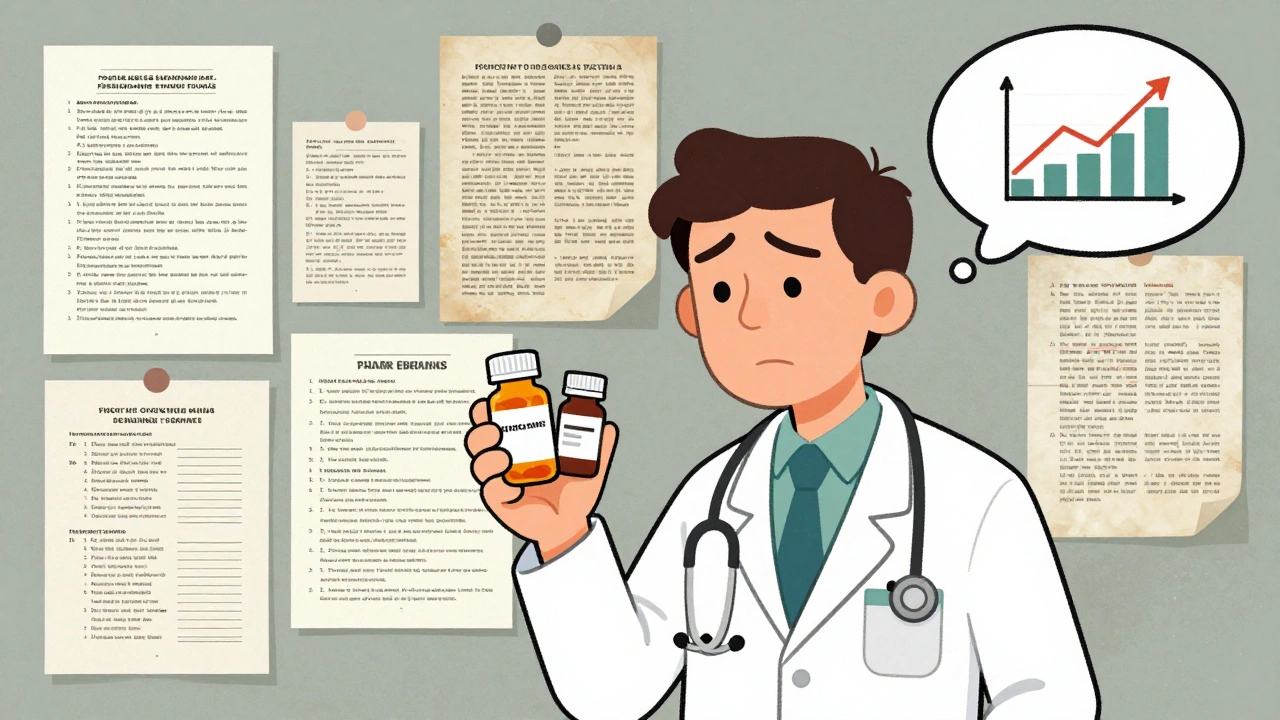
Doctor Attitudes Toward Generic Drugs: What Providers Really Think
Doctors often hesitate to prescribe generic drugs due to misconceptions about quality and effectiveness. Research shows education, real-world data, and peer influence can shift attitudes and improve patient outcomes.
December 8 2025