
Lithium-NSAID Interaction Calculator
Lithium Level Interaction Calculator
This tool estimates how NSAIDs may increase your lithium levels based on your current level and the NSAID you're taking.
Result
When you're taking lithium for bipolar disorder, your body is already running a tight ship. Lithium has a very narrow window between helping and harming you. A little too much, and you could end up in the hospital with tremors, confusion, or even kidney damage. Now imagine adding a common painkiller like ibuprofen or naproxen into the mix. What seems like a simple fix for a headache or sore back could be setting off a silent alarm in your kidneys - one that many doctors still miss.
Why This Interaction Is So Dangerous
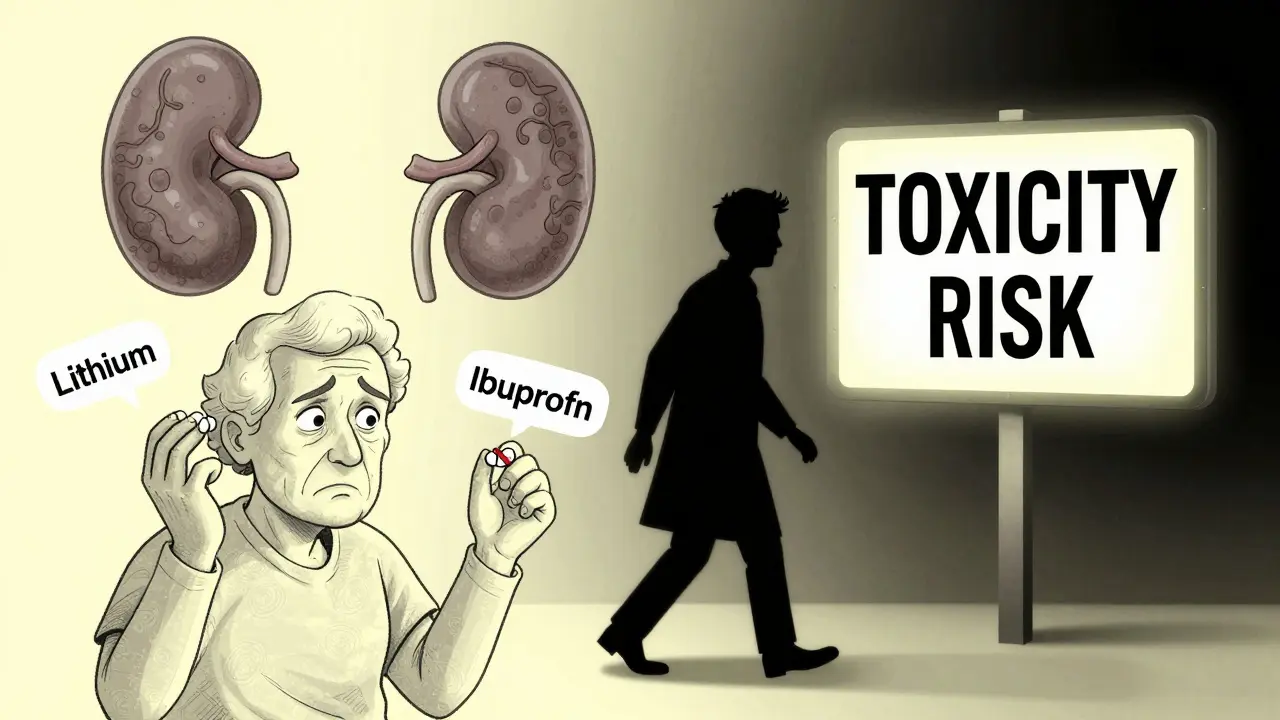
Lithium doesn't get broken down by your liver. It goes straight through your kidneys and gets flushed out in your urine. That’s why your blood levels need to be checked regularly. But NSAIDs - the class of drugs that includes ibuprofen, naproxen, and diclofenac - interfere with how your kidneys handle lithium. They block enzymes called COX-2, which are needed to make prostaglandins. These prostaglandins help keep blood flowing to your kidneys. When they’re suppressed, your kidneys slow down, and lithium doesn’t get cleared as efficiently.That’s not just a minor bump in levels. Studies show NSAIDs can raise lithium concentrations by 25% to 60%. That’s enough to push someone from a safe level of 0.6 mmol/L into the toxic range of 1.5 mmol/L or higher - sometimes within just two days of starting the NSAID. And it’s not just about feeling unwell. This isn’t a temporary side effect. The damage can be permanent.
Who’s Most at Risk?
It’s not just about taking both drugs at the same time. The real danger hits when you’re older, dehydrated, or already have reduced kidney function. If your eGFR (a measure of kidney filtering ability) is below 60 mL/min/1.73 m², you’re already in the danger zone. Add an NSAID, and your risk of acute kidney injury jumps by more than three times.People over 65 are especially vulnerable. One study found that over half of all lithium-related kidney injuries in older adults were linked to NSAID use. And here’s the kicker: many of these patients weren’t even told about the risk. A 2023 study showed that only 58% of primary care doctors knew NSAIDs were high-risk for lithium users. That means someone might walk into their GP’s office for a sprained ankle, get a prescription for ibuprofen, and leave without ever hearing a word about their mood medication.
Not All NSAIDs Are the Same
You might think, “I’ll just pick a safer one.” But that’s not as simple as it sounds. Some NSAIDs are far worse than others when mixed with lithium.- Indomethacin - increases lithium levels by 40-60%
- Piroxicam - increases by 25-35%
- Ibuprofen - increases by 20-30%
- Naproxen - increases by 20-30%
- Celecoxib - increases by 10-15% (still risky if kidneys are already weak)
- Aspirin - minimal effect (under 10%)
Even celecoxib - often marketed as “gentler on the stomach” - still raises lithium levels enough to be dangerous. And if you’re elderly or have diabetes, hypertension, or heart failure, that 10-15% increase can be enough to trigger toxicity.
What About Acetaminophen?
If you need pain relief while on lithium, acetaminophen (Tylenol) is your safest bet. It doesn’t interfere with kidney blood flow or lithium clearance. Studies show it causes less than a 5% change in lithium levels - essentially no interaction. The Canadian Network for Mood and Anxiety Treatments (CANMAT) recommends it as the first-line option for pain in lithium users.But even acetaminophen isn’t risk-free. Don’t go over 3,000 mg per day. Liver damage is real, especially if you drink alcohol or have existing liver issues. Still, compared to NSAIDs, it’s the clear winner.
What About Opioids?
Opioids like tramadol or codeine are sometimes used as a second option. They don’t directly affect lithium clearance the way NSAIDs do. But they can cause dehydration - and dehydration makes lithium toxicity worse. If you’re on opioids, drink plenty of water. And start with the lowest possible dose. Tramadol should begin at 25 mg daily, with slow increases only if needed.The Real-World Cost of Ignoring This Risk
This isn’t just theoretical. In 2022, a case series in the Journal of Clinical Psychiatry tracked 17 patients hospitalized for lithium toxicity. Fourteen of them - 82% - had taken an NSAID. Six of them suffered permanent kidney damage. That’s not rare. At the American Society of Nephrology’s 2023 meeting, data from 478 clinics showed that nearly 40% of lithium-related kidney injuries were tied to NSAIDs.And the financial cost? In the U.S. alone, hospitalizations from this interaction cost over $48 million annually. Each hospital stay averages nearly $18,500. That’s money spent because the warning was ignored - not because it wasn’t known.
What Should You Do?
If you’re on lithium and need pain relief:- Use acetaminophen first. Stick to 3,000 mg max per day.
- Avoid NSAIDs unless absolutely necessary. If you must take one, use the lowest dose for the shortest time - no longer than 3 to 5 days.
- Drink water. Aim for at least 2.5 to 3 liters a day. Dehydration makes everything worse.
- Get your lithium level checked. If you start an NSAID, get a blood test within 48-72 hours. Your doctor should lower your lithium dose by 25-50% as a precaution.
- Don’t assume your doctor knows. Many don’t. Bring up the interaction yourself. Say: “I’m on lithium. Is this safe?”
And if you’ve been taking an NSAID while on lithium without knowing the risk - stop it now. Don’t wait for symptoms. Get your lithium level checked. Symptoms like hand tremors, nausea, dizziness, or confusion don’t always show up until it’s too late.
The Bigger Picture
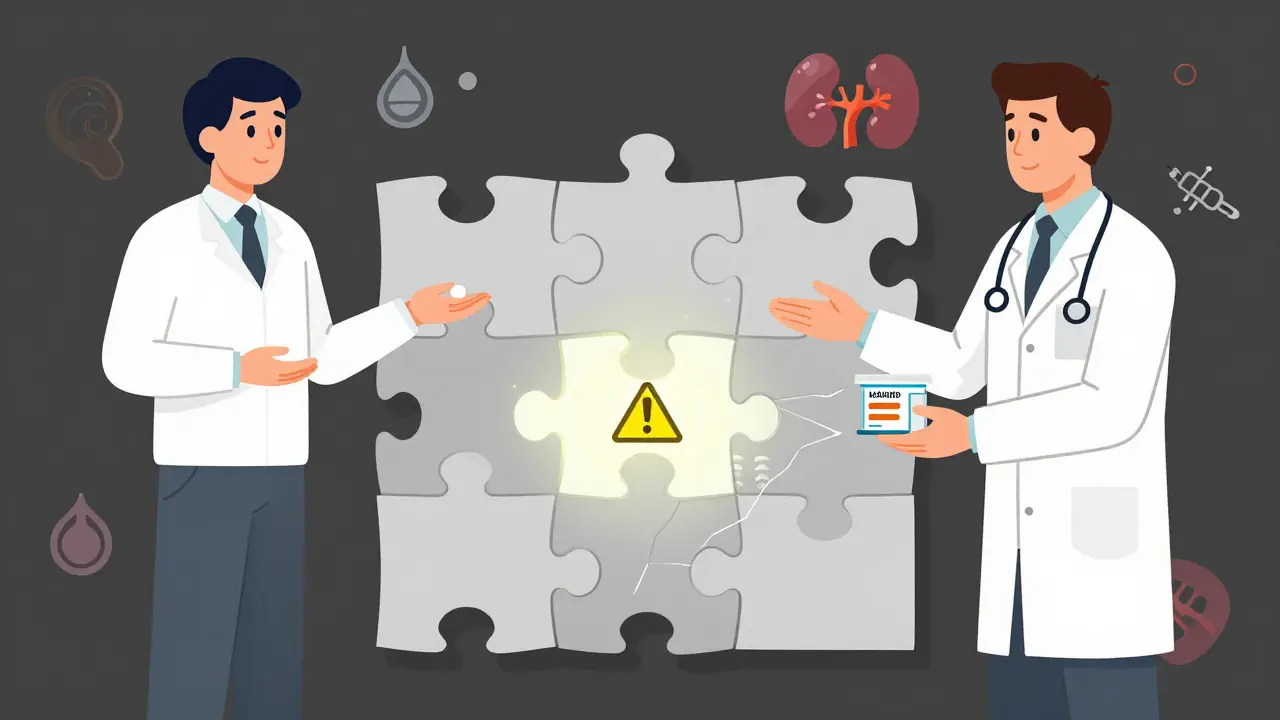
This isn’t just about one drug interaction. It’s about how fragmented healthcare is. A psychiatrist prescribes lithium. A primary care doctor prescribes ibuprofen. A physical therapist recommends naproxen. No one talks to each other. And the patient? They’re left in the middle, unaware that they’re playing Russian roulette with their kidneys.Some hospitals are trying to fix this. Kaiser Permanente cut co-prescribing of lithium and NSAIDs from 32% to under 12% by adding hard alerts in their electronic system. But the Veterans Health Administration barely moved the needle - only a 15% drop. Why? Because alerts can be ignored. Education needs to stick.
What’s Next?
Researchers are working on new solutions. A 2023 clinical trial tested a synthetic prostaglandin analog that kept kidney blood flow normal during NSAID use - and it reduced lithium level spikes by 87%. That’s promising. But it’s still experimental.In the meantime, the message is clear: lithium and NSAIDs don’t mix. Not safely. Not reliably. Not even for a few days. The risk isn’t small. It’s predictable. It’s avoidable. And too many people are paying the price with their kidneys - and sometimes their lives.
If you’re on lithium, your pain management plan needs to be as carefully monitored as your mood. Don’t let a simple painkiller become your next emergency.
Can I take ibuprofen if I’m on lithium?
No, you should avoid ibuprofen while taking lithium. Ibuprofen can increase lithium levels in your blood by 20-30%, which can lead to serious toxicity. Even short-term use is risky. If you need pain relief, use acetaminophen instead. If you must take ibuprofen, get your lithium level checked within 48-72 hours and expect your doctor to lower your lithium dose.
How long does the lithium-NSAID interaction last?
The interaction doesn’t end when you stop taking the NSAID. Because NSAIDs affect kidney function for 7-10 days after the last dose, lithium levels can remain elevated during that time. Even after you’ve stopped the painkiller, you should keep monitoring for symptoms of toxicity and get your lithium level rechecked before returning to your normal dose.
What are the signs of lithium toxicity?
Early signs include hand tremors, frequent urination, nausea, vomiting, diarrhea, dizziness, and muscle weakness. As toxicity worsens, you may experience confusion, slurred speech, seizures, or loss of coordination. If you notice any of these symptoms - especially after starting a new medication - stop the NSAID immediately and contact your doctor. Lithium toxicity can become life-threatening quickly.
Is celecoxib safer than other NSAIDs for lithium users?
Celecoxib is less likely to cause stomach issues, but it still raises lithium levels by 10-15%. That’s enough to be dangerous, especially if you’re older or have reduced kidney function. It’s not a safe alternative - just a slightly less dangerous one. Acetaminophen remains the only recommended option for regular pain relief.
Can I take NSAIDs occasionally if I’m on lithium?
Occasional use doesn’t eliminate the risk. Even a single dose of an NSAID can trigger a dangerous rise in lithium levels. If you must take one - for example, after surgery or a severe injury - do so only under direct medical supervision. Get your lithium level tested before and after, stay well-hydrated, and expect your lithium dose to be reduced. Never take NSAIDs casually while on lithium.
Should I switch from lithium to another mood stabilizer to avoid this risk?
Lithium is still the most effective medication for preventing suicide and long-term mood episodes in bipolar disorder. Alternatives like valproate or lamotrigine don’t carry the same kidney risk, but they’re not as effective for everyone. Switching shouldn’t be done lightly. Talk to your psychiatrist about your pain management needs first. Often, safer pain relief options can be used without changing your mood medication.
Crystel Ann
January 15, 2026 AT 12:28Just got prescribed ibuprofen for my back pain and had a panic attack reading this. I’m on lithium and had no idea. Thanks for the heads-up.
Jan Hess
January 17, 2026 AT 00:30Acetaminophen is the way to go. I’ve been using it for years while on lithium and never had an issue. Just don’t go over the limit and you’re golden. Stay hydrated too, that’s the real MVP.
Nilesh Khedekar
January 18, 2026 AT 02:16Interesting how the system fails people like this… doctors don’t talk, patients don’t know, and the pills just keep coming. I’ve seen this happen to my uncle-he ended up in dialysis because no one warned him about naproxen. This isn’t negligence, it’s systemic abandonment.
Niki Van den Bossche
January 18, 2026 AT 03:42Let’s not pretend this is just about pharmacology-it’s about the commodification of care. We’ve turned human bodies into data points in a broken algorithm where a $0.50 NSAID is easier to prescribe than a 15-minute conversation. The real toxicity isn’t lithium-it’s the indifference built into the architecture of primary care. Celecoxib? Please. It’s just the pharmaceutical industry’s velvet glove on a steel fist.
Amy Ehinger
January 18, 2026 AT 05:14I’ve been on lithium for 12 years and never knew NSAIDs were this dangerous. I used to pop Advil like candy after workouts. Now I’m terrified every time I get a headache. I called my psychiatrist today and she was shocked I hadn’t been warned. She lowered my dose and gave me a printed handout. I wish every patient got this kind of care. Also, Tylenol works fine for me-no tremors, no nausea. Just don’t drink alcohol with it, folks.
Nat Young
January 19, 2026 AT 05:17So let me get this straight-you’re telling me the entire medical establishment is asleep at the wheel because one drug interaction has a 25-60% risk? That’s not incompetence, that’s malpractice on an industrial scale. And now we’re supposed to trust acetaminophen? Liver failure kills too, you know. Maybe the real problem is lithium itself. Why are we still using a 70-year-old drug that requires a nuclear reactor to monitor? Let’s just switch to whatever the new trendy SSRI is and call it a day.
Jami Reynolds
January 20, 2026 AT 17:00Did you know that the VA’s alert system only reduced co-prescribing by 15%? That’s because the system is designed to be ignored. Doctors click through warnings like ads. This isn’t a medical issue-it’s a behavioral one. We’ve trained clinicians to treat alerts as noise, not red flags. Until we make these warnings irreversible, mandatory, and tied to credentialing, nothing changes. And yes, I’ve seen patients die because someone clicked ‘OK’ too fast.
Haley Graves
January 21, 2026 AT 03:21If you’re on lithium and you’re thinking of taking anything for pain-stop. Don’t Google it. Don’t ask your cousin who’s a nurse. Call your prescriber. Right now. And if they say ‘it’s fine’-get a second opinion. Your kidneys don’t have a reset button. This isn’t a suggestion. It’s a survival protocol.
RUTH DE OLIVEIRA ALVES
January 22, 2026 AT 22:53The clinical data presented here is both comprehensive and alarming. The documented elevation of serum lithium concentrations by nonsteroidal anti-inflammatory agents, particularly indomethacin and piroxicam, is well-substantiated in peer-reviewed nephrology literature. The recommendation to utilize acetaminophen as first-line analgesia aligns with current CANMAT guidelines and represents a paradigm of evidence-based pharmacotherapy. It is imperative that primary care providers undergo mandatory continuing education on psychopharmacologic interactions, particularly in geriatric populations where polypharmacy is prevalent and renal clearance is diminished. The financial burden of avoidable hospitalizations-over $48 million annually in the United States-is not merely an economic metric, but a moral indictment of our fragmented care delivery model.
Sarah Mailloux
January 24, 2026 AT 17:24My mom’s on lithium and she’s 72. She takes Tylenol for her arthritis and drinks a gallon of water a day. She also has a little card in her wallet that says ‘LITHIUM USER-NO NSAIDS’. She gave one to her doctor too. Smart move. I told her if she ever feels weird after taking something, she should go to the ER and say ‘I think my lithium is too high’. No shame. Better safe than sorry.
Diane Hendriks
January 24, 2026 AT 17:39This is exactly why America’s healthcare system is collapsing. We let corporate pharmacies and lazy doctors push pills like candy while ignoring the real solution: discipline. If you can’t manage your pain without drugs, maybe you shouldn’t be on lithium. Or maybe you need to stop being so weak. This country has turned every minor discomfort into a crisis. Acetaminophen? Please. Just endure. Build resilience. Stop medicating every ache. This isn’t medicine-it’s weakness dressed up as care.
Dan Mack
January 25, 2026 AT 22:38They don’t want you to know this but NSAIDs aren’t the real problem. The real danger is the lithium itself-it’s a heavy metal that slowly poisons your organs over time. The NSAIDs are just the excuse they use to keep you dependent. The FDA knows. The pharmaceutical companies know. That’s why they push acetaminophen-it’s cheaper than monitoring you properly. And don’t get me started on how they silence doctors who speak up. This is a cover-up. Your kidneys are dying slowly and they’re selling you Tylenol to make you feel better while the damage accumulates. Wake up.