
MedWatch Eligibility Checker
Is Your Experience Reportable to FDA MedWatch?
This tool helps you determine if your situation meets the criteria for reporting to FDA MedWatch. The FDA tracks adverse events to protect public health and improve product safety.
Every year, millions of people take prescription drugs, over-the-counter medicines, or use medical devices like glucose monitors or insulin pumps. Most of the time, they work as expected. But sometimes, something goes wrong. A medication causes a severe rash. A device fails during use. A patient ends up in the hospital because of an unexpected reaction. When that happens, FDA MedWatch is the official way to tell the U.S. Food and Drug Administration - and your report could help prevent others from going through the same thing.
What Is FDA MedWatch?
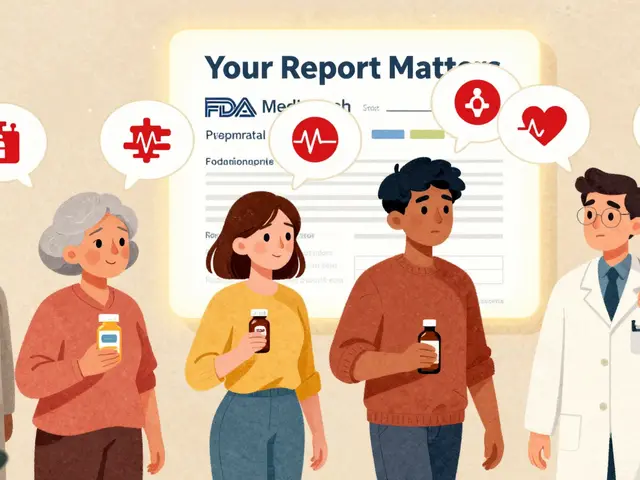
FDA MedWatch is the agency’s main system for collecting reports about harmful side effects, product failures, and safety issues with medical products. It’s not just for doctors. Anyone - patients, caregivers, pharmacists, nurses - can file a report. The FDA uses this data to spot patterns that clinical trials might have missed. A drug that seems safe in 5,000 people during testing might cause serious problems in 1 in 10,000. Without reports from real-world use, those dangers stay hidden.
MedWatch covers a wide range of products: prescription and OTC drugs, biologics like blood products and gene therapies, medical devices (think pacemakers, hearing aids, home test kits), combination products like prefilled syringes, even CBD oils and certain cosmetics. It does not cover vaccines (those go to VAERS) or animal drugs (those go to CVM). Tobacco products are also excluded.
The system works in two ways: voluntary reports from the public and healthcare providers, and mandatory reports from manufacturers, hospitals, and distributors. By law, companies must report serious problems within 10 to 30 days. But the public doesn’t have to wait - you can report anytime.
When Should You Report?
You don’t need to be sure something was caused by a product. If you suspect it, report it. The FDA doesn’t expect you to prove causation - they’ll investigate. But there are clear signs your report matters:
- The event led to hospitalization
- It was life-threatening
- It caused permanent disability
- It resulted in death
- It required medical or surgical intervention to prevent one of the above
For example: A 68-year-old takes a new blood pressure pill and develops severe swelling in their legs and difficulty breathing two days later. They’re rushed to the ER. That’s a reportable event. Or a diabetic uses a new glucose meter that gives consistently wrong readings, leading to a dangerous low blood sugar episode. Even if the device didn’t break, the inaccurate result is a safety issue.
Don’t wait for others to report. One report might seem small. But if 50 people report the same reaction, the FDA sees a pattern. That’s how recalls, label changes, or safety warnings get triggered.
How to File a Report
There are two forms - one for consumers, one for professionals. Both are free and available online or by mail.
For Patients and Consumers: Form FDA 3500B
This is the simplest version. It’s designed for people without medical training. You’ll need:
- Your name and contact info (optional - you can report anonymously)
- The name of the product (drug, device, etc.)
- The brand and generic name if you know it
- When you started using it
- When the problem started
- A description of what happened
- What you did after (did you stop using it? Go to the doctor?)
- Your age and gender
You can fill it out online at www.fda.gov/medwatch, download and print the PDF, or call 1-800-FDA-1088 to request a paper form. The online version has big buttons, clear fields, and a simple layout. You don’t need to create an account.
For Healthcare Professionals: Form FDA 3500
If you’re a doctor, nurse, pharmacist, or other provider, use Form FDA 3500. It asks for more detail:
- Your license number and profession
- Product details (including lot numbers for devices or drugs)
- Timeline of the event
- Patient’s medical history relevant to the reaction
- Whether you reported it to the manufacturer
- Any lab results or clinical notes that support the report
Most professionals finish this in 10-15 minutes. The system lets you attach documents like lab reports or discharge summaries. You can submit electronically or by fax.
What If the Form Is Too Confusing?
Many patients say the forms use terms they don’t understand - like “event abated” or “dose frequency.” You’re not alone. In a 2019 FDA study, 62% of consumers needed help understanding at least three words on the form.
Here’s what to do:
- Take the form to your doctor. They can help fill it out using your medical records. The FDA says: “Your health care provider can provide clinical information based on your medical record that can help FDA evaluate your report.”
- Call 1-800-FDA-1088. A live representative can walk you through the form over the phone.
- Use the MedWatch website’s glossary. It’s linked on every form page and explains terms like “adverse event” or “serious injury.”
You don’t need to be a medical expert to report. Just give the facts: what happened, when, and how it affected you.
What Happens After You Submit?
You’ll get an email or letter confirming your report was received. That’s it. The FDA doesn’t call you back. That doesn’t mean your report didn’t matter.
Here’s what happens behind the scenes:
- Reports are entered into a database with over 1.2 million entries per year.
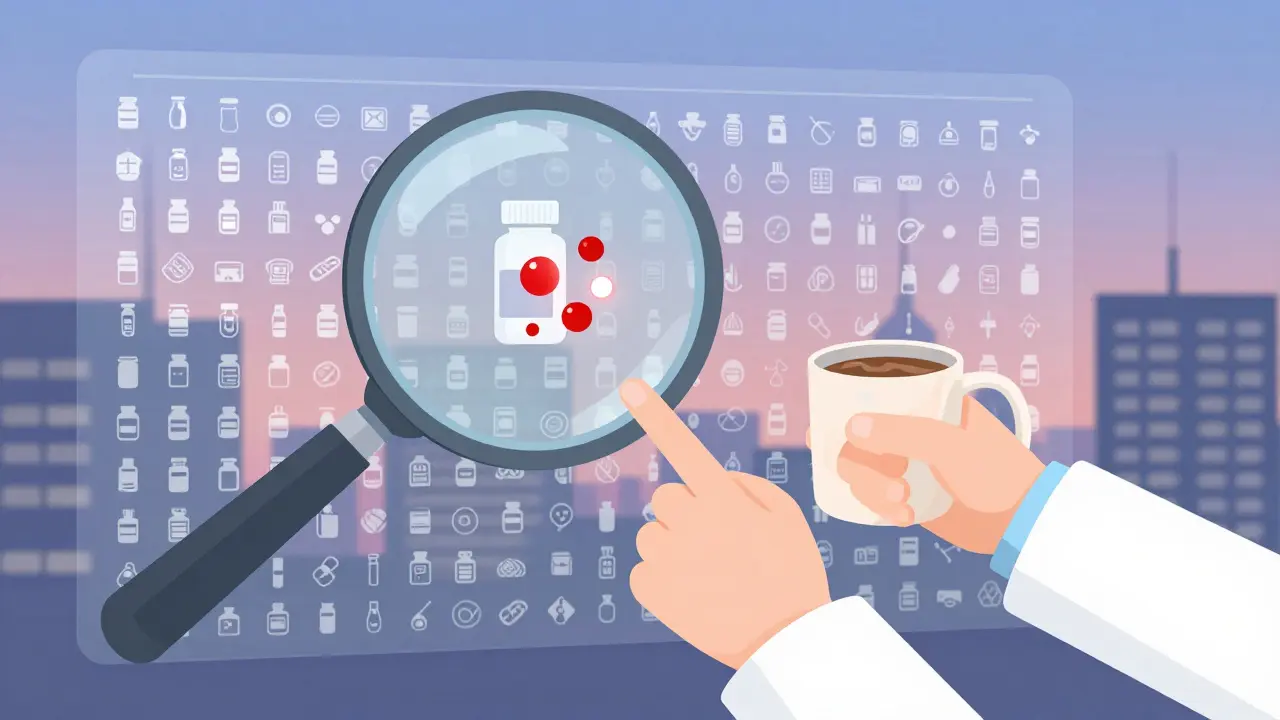
- Analysts look for clusters - the same reaction linked to the same product.
- If a pattern emerges, the FDA investigates further - reviewing clinical data, contacting manufacturers, checking other reports.
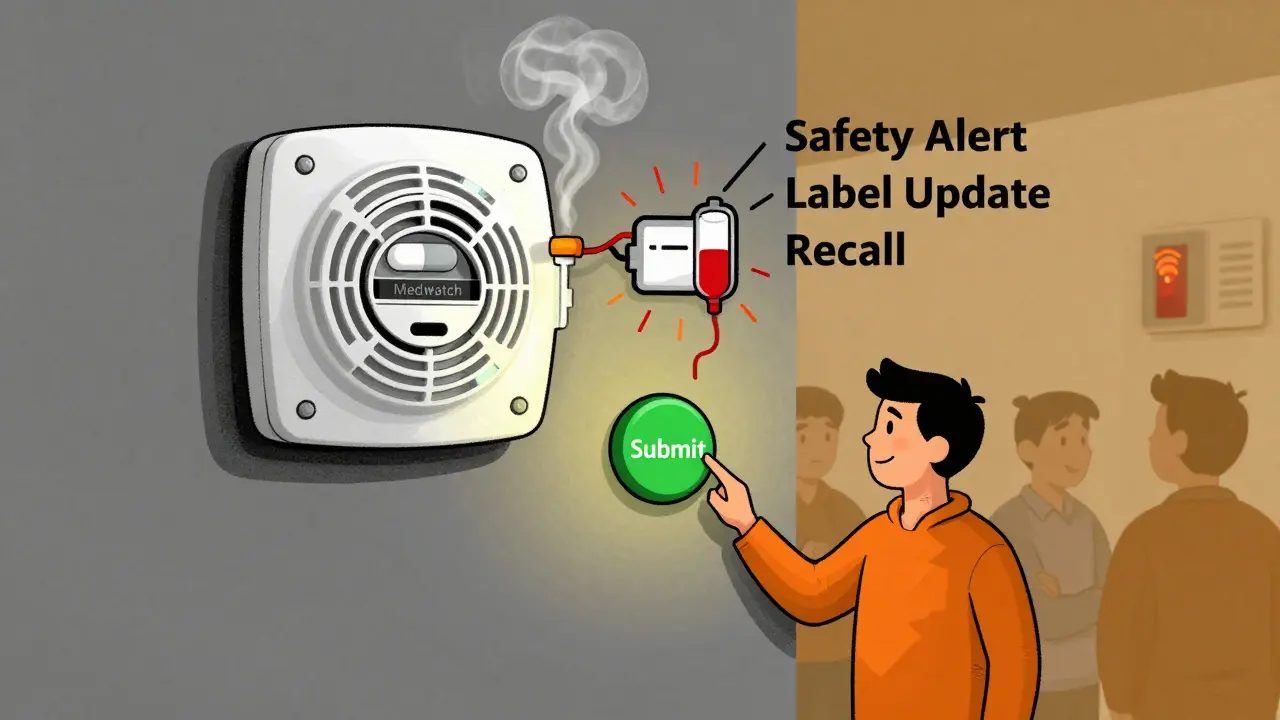
- If the risk is confirmed, they may issue a safety alert, update the product label, require new warnings, or even recall the product.
Between 2018 and 2023, over 200 drug labels were updated based on MedWatch reports. One example: A blood thinner called rivaroxaban had reports of unusual bleeding in elderly patients. After reviewing hundreds of reports, the FDA added a stronger warning about kidney problems in older adults.
Your report might be the one that triggers the change.
Why So Few People Report
Experts estimate that only 1% to 10% of all adverse events are reported. That’s a huge gap. Why?
- People don’t know about MedWatch.
- They think it’s the doctor’s job.
- They assume it’s not serious enough.
- They’re afraid of getting in trouble.
None of those are true. The FDA doesn’t punish patients. Reporting doesn’t affect your care. And even if you’re not sure, it’s better to report and let experts decide.
Think of it like a smoke detector. You don’t wait until the house is on fire to test it. You test it regularly. Every report is a test - a way to catch danger before it spreads.
What You Can’t Do
MedWatch isn’t for:
- Complaining about cost or customer service
- Reporting side effects from vaccines (use VAERS)
- Reporting animal drug reactions (use CVM)
- Reporting food contamination (use FSIS)
- Getting medical advice or emergency help
If you’re having a medical emergency, call 911 or go to the ER. MedWatch is for reporting after the fact - not for urgent care.
How to Stay Informed
Once you’ve reported, you can stay updated. The FDA sends out weekly safety alerts via email or RSS. You can sign up at MedWatch’s “What’s New” page. You’ll get notified if your drug gets a new warning, is recalled, or has labeling changes.
You can also search past reports. Type a drug name into the MedWatch database and see what others have reported. It’s not a guarantee of risk - but it’s real-world data you won’t find on the drug label.
Final Thoughts
FDA MedWatch isn’t perfect. It’s slow. It’s confusing for some. And it relies on people to speak up. But it’s the only system that gives the public a direct line to the agency responsible for keeping medical products safe.
Reporting doesn’t take much time. It doesn’t cost anything. And you don’t need to be an expert. If you or someone you care about had a bad reaction, your report matters. It might not change things tomorrow. But it could save someone’s life next year.
Don’t wait. If it felt wrong, report it.
Can I report a side effect anonymously?
Yes. You can file a MedWatch report without giving your name or contact details. The FDA accepts anonymous reports. However, if you leave your information, they may be able to follow up if they need more details - which can make your report more useful.
Do I need to tell my doctor before reporting?
No. You don’t need permission from your doctor to report. But if you’re unsure whether the reaction is serious or how to describe it, talking to your provider can help you fill out the form more accurately. The FDA says your doctor is not required to report on your behalf - the choice is yours.
How long does it take for the FDA to act on a report?
There’s no set timeline. The FDA reviews reports continuously. Some reports lead to quick actions - like a warning letter or label update - within weeks. Others may take months or years, especially if the issue is rare or complex. A single report rarely triggers action. It’s the pattern - dozens or hundreds of similar reports - that gets attention.
What if I report the same issue twice?
It’s okay to report more than once. If you’re reporting for a different person, or if new information comes up (like a follow-up doctor’s visit), submit another report. The FDA’s system can link related reports together. Multiple reports on the same product help build a stronger case for review.
Can I report a problem with a dietary supplement?
Yes. Dietary supplements - including vitamins, herbs, and CBD products - are covered by MedWatch. If you had a serious reaction like liver damage, heart palpitations, or an allergic reaction after taking a supplement, report it. The FDA tracks these reports to identify unsafe ingredients and take action against products that violate safety standards.
Is MedWatch the same as VAERS?
No. MedWatch is for drugs, medical devices, and other FDA-regulated products. VAERS (Vaccine Adverse Event Reporting System) is only for vaccines. If you had a reaction to a flu shot, COVID vaccine, or HPV vaccine, use VAERS. If you had a reaction to a painkiller, insulin pump, or blood pressure medication, use MedWatch.
Next Steps
If you’ve experienced a side effect:
- Write down what happened - date, product, symptoms, duration.
- Check if it’s serious: Did it cause hospitalization, disability, or threaten your life?
- Go to www.fda.gov/medwatch and click “Report a Problem.”
- Choose Form FDA 3500B (for consumers) or 3500 (if you’re a professional).
- Fill it out. If you’re stuck, call 1-800-FDA-1088.
- Submit. Then forget about it - because the system is working even if you don’t hear back.
If you’re a healthcare provider: Make reporting part of your routine. When a patient tells you about a reaction, ask: “Have you reported this to the FDA?” If not, help them do it. You’re not just treating one person - you’re helping protect thousands.
Donny Airlangga
January 7, 2026 AT 18:17I had a bad reaction to a new blood pressure med last year-swelling, dizziness, almost ended up in the ER. I didn’t know where to report it until I found MedWatch. Took me 12 minutes online. No account needed. Just told them what happened. Didn’t hear back, but I felt like I did something right.
Don’t wait for someone else to speak up. Your story matters-even if it’s just one.
Molly Silvernale
January 8, 2026 AT 11:41MedWatch isn’t just a form-it’s a quiet rebellion against the assumption that ‘if it’s legal, it’s safe.’ We’ve been trained to trust the system, but the system was built by people who didn’t live in our skin, didn’t feel our side effects, didn’t count our silent suffering as data.
Every report is a stitch in the fabric of accountability. A whisper that becomes a roar when 50 others echo it. The FDA doesn’t need your permission to care-they need your truth.
And if you’re scared? Good. Fear means you still care. And care? That’s the only thing that changes systems.
Ken Porter
January 10, 2026 AT 07:48Why is this even a thing? If you’re dumb enough to get hurt by a drug, maybe you shouldn’t be taking it. Stop blaming the FDA-blame your doctor or your pharmacy for not warning you. And don’t bother reporting some minor rash. We got real problems to fix.
Annette Robinson
January 11, 2026 AT 17:38Just wanted to say-thank you for writing this. I’m a nurse, and I’ve seen too many patients think reporting is pointless or that it’ll get them in trouble. I hand out the MedWatch link after every discharge now. One woman told me she’d never reported her husband’s reaction to chemo because she thought it was ‘just bad luck.’
She filed last week. We don’t know if it’ll change anything. But now she feels like she didn’t give up on him.
You’re not just reporting. You’re honoring someone’s pain.
Luke Crump
January 12, 2026 AT 19:03Oh wow, the FDA wants us to report? Like, as if they actually care? They’re the same people who approved OxyContin and let Big Pharma bury the truth for decades. Now they want us to be their unpaid investigators? How cute.
Report all you want. I’ll be over here, watching the next billion-dollar drug kill another grandma while the FDA publishes a ‘cautionary update’ in a footnote.
System’s rigged. Your report won’t fix it. But hey, at least you can feel good about being a good little citizen.
Aubrey Mallory
January 13, 2026 AT 10:37Ken, you’re not helping. People don’t report because they’re dumb-they’re scared, overwhelmed, or told it’s not their job. This isn’t about blame. It’s about access. If you think this system is perfect, you’ve never tried filling out a 3500B form at 2 a.m. after your mom’s allergic reaction.
Instead of mocking, maybe help someone who doesn’t know where to start. That’s what real patriotism looks like.
Evan Smith
January 14, 2026 AT 05:00Wait so I can report my dog’s flea pill making him twitch? Lol. I did that. They wrote back: ‘Not covered.’
So… supplements count? But vet meds don’t? What’s the logic here? I’m confused. And also… I just wanted to know if my dog’s gonna be okay.
Maybe make a ‘what counts’ infographic? I’d share it.
Lois Li
January 15, 2026 AT 15:19I reported a bad reaction to a CBD gummy last year-hives, chest tightness, panic attack. I didn’t know if it was the CBD or the filler, so I just wrote what happened. Got an auto-reply saying ‘thank you.’
Three months later, I saw a warning on the brand’s site. No big fanfare. No news story. But I saw it.
It’s slow. It’s quiet. But sometimes, it works.
Just report. Even if you think no one’s listening. Someone is.
christy lianto
January 15, 2026 AT 18:02I’m a single mom. My daughter had a seizure after a new asthma inhaler. We didn’t know what to do. Called 911. Survived. Then I spent 45 minutes on MedWatch because no one told me how to do it.
Now I tell every parent I meet: ‘If something feels wrong after a med or device-report it. Even if you’re tired. Even if you’re scared. Even if you think you’re not smart enough.
You’re the expert on your body. And your voice? It’s the only one that matters when the system looks away.’