
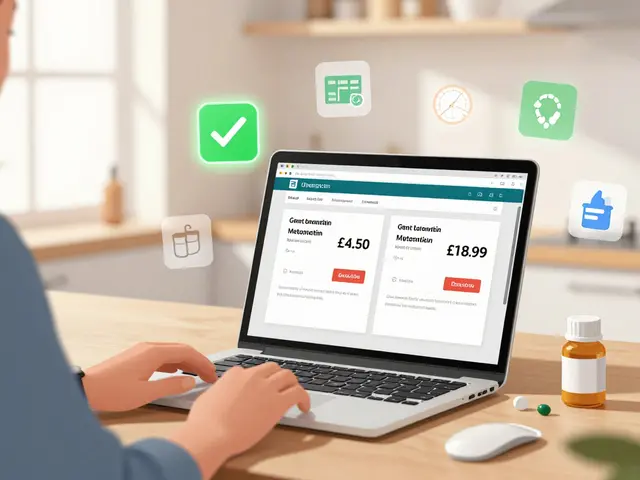
Buying generic medications online can save you hundreds of dollars a year-but only if you know where to look. Many people assume all online pharmacies offer the same prices, but that’s not true. A single bottle of metformin, for example, can cost anywhere from £4.50 to £18.99 depending on which site you use. The difference isn’t random. It’s shaped by how these pharmacies source their inventory, what shipping fees they charge, and whether they’re even legitimate. That’s where comparison shopping engines come in.
What comparison shopping engines actually do for medications
Comparison shopping engines (CSEs) aren’t just for electronics or clothes. They’re built to scan hundreds of online pharmacies at once and show you real-time prices for the exact same drug. Think of them as search engines, but instead of listing websites, they list drug prices side by side. You type in generic lisinopril 10mg, and within seconds, you see prices from 12 different pharmacies, along with shipping times, customer ratings, and return policies.
Google Shopping is the biggest player here. It pulls data directly from pharmacy websites that register with Google’s Merchant Center. If a pharmacy updates its price, Google refreshes it every 15 to 30 minutes. That means if a pharmacy drops the price of your prescription from £12 to £8.50, you’ll see it almost immediately. But Google doesn’t show everything. It favors large chains and pharmacies with high sales volume. Smaller, independent pharmacies often get buried.
That’s where alternatives like Shopzilla and PriceRunner come in. Shopzilla, for instance, has a reputation for surfacing smaller, trustworthy pharmacies that fly under Google’s radar. In a 2025 test by The Selling Guys, Shopzilla showed 23% more competitive prices for common generics like amoxicillin and atorvastatin than Google Shopping did. Why? Because it doesn’t prioritize volume over value. It shows you the full range of sellers-even the ones with lower traffic but better deals.
Why price isn’t everything
One of the biggest mistakes people make is choosing the pharmacy with the lowest price without checking anything else. A £3.99 bottle of generic sertraline sounds amazing-until you realize it ships from a country with no drug safety regulations. Or worse, it takes three weeks to arrive. Or the pharmacy has zero verified reviews.
That’s why platforms like Bizrate matter. Unlike most sites, Bizrate only lets people who actually bought the medication leave a review. No fake ratings. No bots. In 2024, their data showed that 78% fewer fraudulent reviews appeared on their platform compared to open review systems. That kind of transparency isn’t just nice-it’s lifesaving when you’re buying medicine.
Shipping speed and return policy are just as important as price. If you’re running low on blood pressure medication and your order takes 10 days, that’s not a deal-it’s a risk. Look for pharmacies that offer tracked shipping, clear return policies, and licensed pharmacists on staff. In the UK, check if the pharmacy is registered with the General Pharmaceutical Council (GPhC). Legit sites display their registration number clearly at the bottom of the homepage.
Regional engines and hidden savings
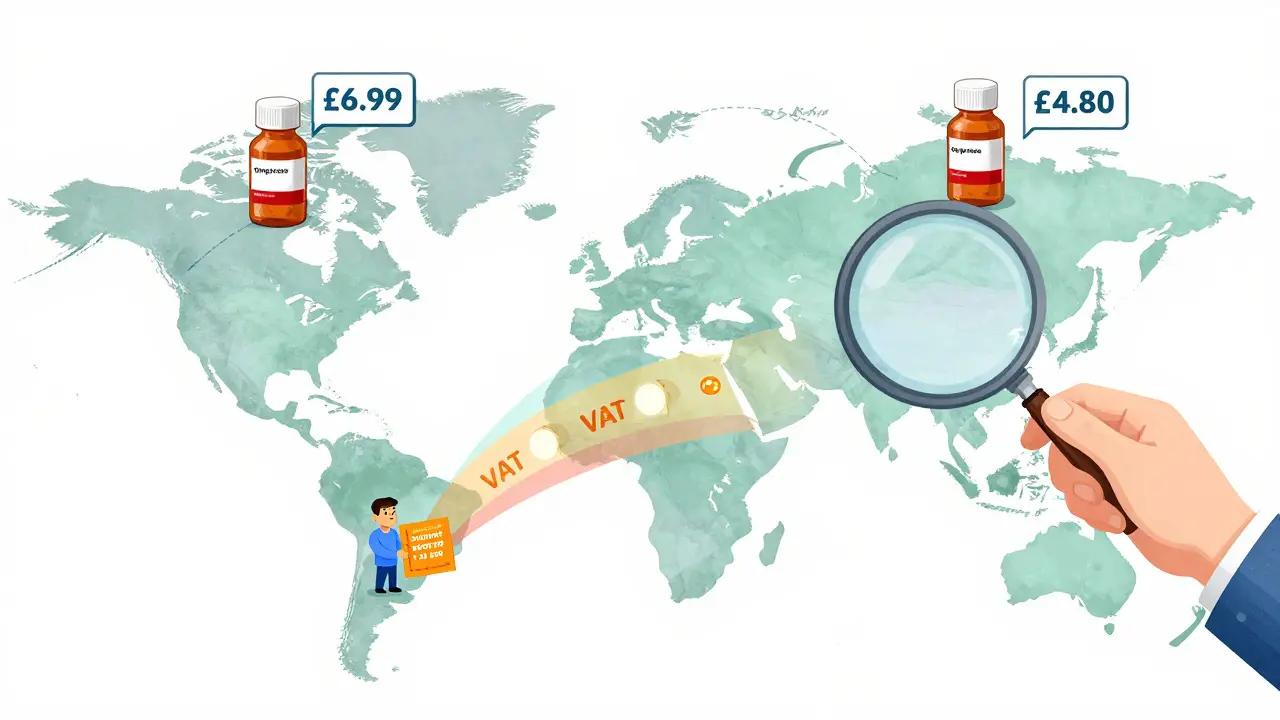
If you’re in Northern Europe, PriceRunner is a game-changer. It doesn’t just compare prices-it adjusts for VAT, customs fees, and local delivery costs. A bottle of generic omeprazole might look like £6.99 on a UK site, but PriceRunner adds in the hidden costs and shows you that a Swedish pharmacy offers the same drug for £5.20, including delivery. That’s a 25% saving you’d never find by searching UK sites alone.
For people in the EU, Kelkoo is another underrated option. It aggregates prices from German, French, and Dutch pharmacies, many of which offer generics at 40% lower prices than UK retailers due to bulk purchasing and lower regulatory costs. The catch? You need to be okay with international shipping and possibly paying import duties. But for long-term prescriptions like simvastatin or levothyroxine, those savings add up fast.
What to watch out for
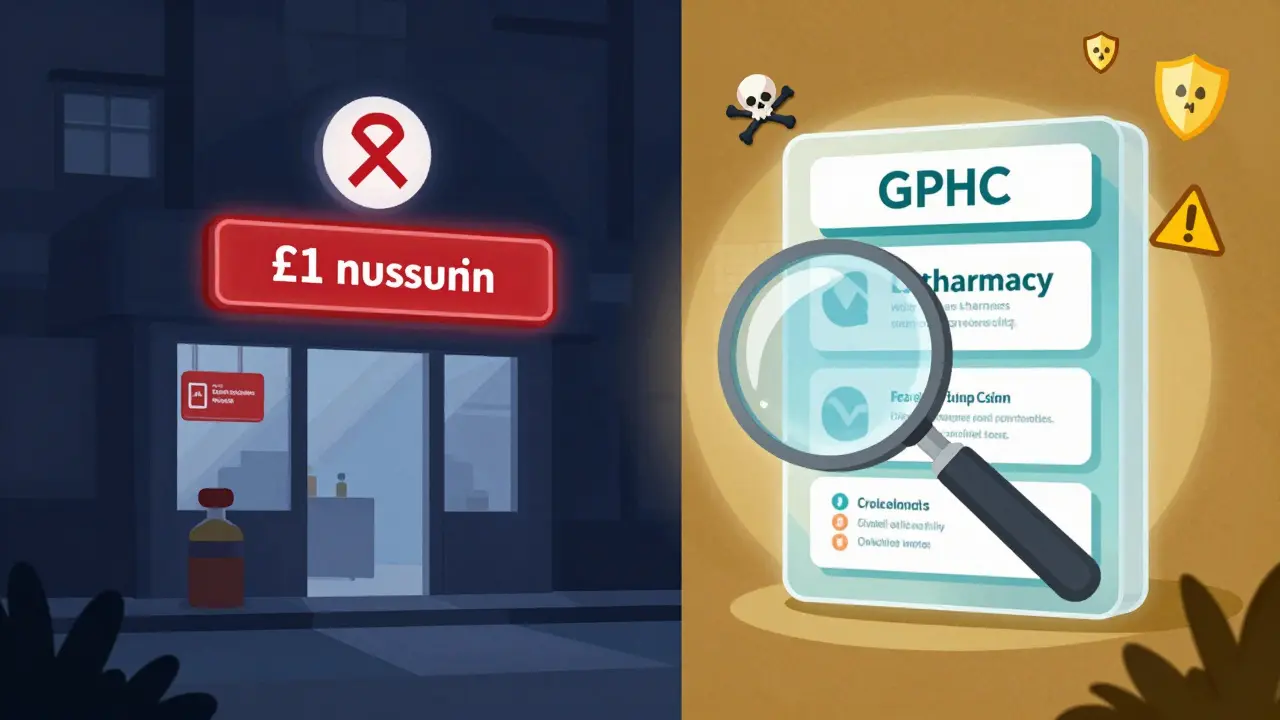
Not every pharmacy you see on a comparison engine is safe. In 2025, the National Retail Federation reported a 22% increase in fake pharmacy listings on comparison platforms. These sites often use stolen logos, fake reviews, and prices that are too good to be true-like £1 for a 30-day supply of insulin.
Here’s how to spot them:
- No physical address or phone number listed
- No GPhC or equivalent regulatory body registration
- Prices that are 50%+ lower than other verified sellers
- Payment only via wire transfer or cryptocurrency
- No pharmacist available for consultation
Stick to pharmacies that are clearly licensed. If a site doesn’t show its registration number, walk away. Even if the price is tempting, the risk isn’t worth it.
How to save the most
Here’s a simple, step-by-step method to find the best generic drug prices:
- Start with Google Shopping. Search for your exact medication (include dosage and quantity).
- Copy the top 3 prices and visit each pharmacy’s website directly. Sometimes the CSE shows outdated info.
- Switch to Shopzilla or PriceRunner (depending on your region). Search again. Look for pharmacies with verified purchase ratings.
- Check if the pharmacy offers a subscription discount. Many give 10-15% off for recurring orders.
- Use browser extensions like Honey or PriceBlink to compare prices across sites automatically.
- Set up price drop alerts on the pharmacy’s site or through a CSE that supports it. Google Shopping now predicts price drops with 73% accuracy.
One user in Manchester told me they saved £192 last year on their levothyroxine prescription just by switching from their local pharmacy to a verified German pharmacy via PriceRunner. The medication was identical. The delivery took 7 days. The price was 42% lower.
The future of drug price comparison
Things are getting smarter. Starting in 2025, some CSEs began integrating sustainability data. A few now show the carbon footprint of shipping your medication. Others are testing blockchain verification to prove a drug’s origin. In pilot programs, this cut fake listings by 89%.
But the biggest shift isn’t tech-it’s regulation. The EU’s Digital Markets Act now forces CSEs to clearly label paid placements. No more sneaky ads disguised as organic results. That means you’re seeing a truer picture of what’s available.
And while AI can predict price drops, it can’t replace common sense. Always verify the pharmacy. Always check the license. Always read the fine print on shipping and returns. The cheapest option isn’t always the best.
Final tip: Use your prescription wisely
Some generics come in different strengths. A 20mg tablet might cost the same as two 10mg tablets. Splitting pills (with your doctor’s approval) can cut costs. And don’t forget: many UK pharmacies offer free delivery on orders over £20. Combine that with a CSE search, and you’re not just saving money-you’re saving time and stress.
Can I trust comparison shopping engines for prescription drugs?
Yes-but only if you use them correctly. Engines like Google Shopping, Shopzilla, and PriceRunner pull data from verified pharmacies. But they don’t vet the pharmacies themselves. Always double-check that the pharmacy is registered with the General Pharmaceutical Council (GPhC) in the UK or equivalent authority in your country. Look for the registration number on their website. If it’s missing, don’t buy.
Why is the same generic drug cheaper on some sites than others?
It’s about sourcing and scale. Large pharmacies buy drugs in bulk from manufacturers or wholesalers, lowering their cost. Smaller pharmacies may pay more per unit, but they sometimes offer lower prices to attract customers. Shipping, taxes, and overhead also play a role. A pharmacy based in Germany might have lower VAT and shipping costs than one in the UK, making the same drug cheaper even after delivery.
Are international pharmacies safe to use?
Some are, some aren’t. Pharmacies in countries like Canada, Germany, the UK, and Australia follow strict regulations and are generally safe. Avoid pharmacies based in countries with weak drug oversight, especially if they don’t require a prescription. Always check for a physical address, a licensed pharmacist on staff, and a valid registration number. If the site feels sketchy, it probably is.
Do comparison engines show all available pharmacies?
No. Most engines only show pharmacies that pay to be listed or that have integrated their inventory feeds. Smaller, independent pharmacies often don’t appear. That’s why it’s smart to use multiple engines. Google Shopping might miss a great deal on a UK-based pharmacy that only uses Shopzilla. Always cross-check at least two platforms.
How often do prices update on comparison sites?
It varies. Google Shopping updates prices every 15-30 minutes for high-demand medications. Shopzilla refreshes every 2-4 hours. Smaller engines may take up to 24 hours. For time-sensitive prescriptions, always check the pharmacy’s own website before buying. The CSE is a starting point-not the final word.
Can I get price alerts for my medication?
Yes. Google Shopping now offers price drop alerts for medications, with 73% accuracy in predicting when prices will fall. Some pharmacies also let you sign up for email alerts directly. Set them up for your most-used prescriptions. You might save £10-£30 per refill over time.
Holley T
February 24, 2026 AT 05:42Look, I get that comparison engines are convenient, but let’s not pretend they’re some magical solution to pharmaceutical affordability. I’ve spent months cross-referencing prices across Google, Shopzilla, and PriceRunner - and guess what? The ‘best deal’ often disappears within 48 hours, replaced by a ‘limited stock’ notice or a sudden shipping fee hike. The system is designed to create the illusion of choice, not actual savings. And don’t even get me started on how these platforms prioritize vendors who pay for placement - they’re not neutral tools, they’re advertising funnels dressed up as consumer aids.
Real savings come from bulk buying through mail-order pharmacies that negotiate directly with manufacturers - not from clicking ‘buy now’ on a site that’s been paid to show you their product. I’ve saved over $300/year just by switching to a single, licensed Canadian pharmacy that doesn’t need a third-party aggregator to tell me their price. The real power isn’t in comparison engines - it’s in bypassing them entirely.
Ashley Johnson
February 25, 2026 AT 01:01ok so here's the thing. i think all these comparison sites are just a front for the government to track what meds we're buying. they're collecting data on every single search, every click, every purchase. they're linking it to your social security number, your insurance, your medical records. i'm not saying they're doing it on purpose - but think about it: why else would they make it so easy? why not just let you go to your local pharmacy? they want to know who's taking what. and what happens when they decide you're 'high risk'? they cut your meds. they raise your premiums. they label you. i'm not paranoid - i'm informed.
tia novialiswati
February 27, 2026 AT 00:45YAYYYY you’re doing such a great job breaking this down!! 🎉 Seriously, this is the kind of info I wish I’d had 5 years ago when I was overpaying for my thyroid med. I just saved $87 last month by switching from my local pharmacy to a German one via PriceRunner - and yes, it took 7 days, but I had enough left to last 45 days so no stress! 💪 You’re totally right about the subscription discounts - I signed up for one and now I get 12% off + free shipping. It’s like a little win every month! Keep sharing this stuff!! 🌟
Lillian Knezek
February 27, 2026 AT 03:43you think they care about your safety? lol. these sites are run by the same people who sell you fake supplements on instagram. they let shady pharmacies in because they get a cut. the ‘verified reviews’? totally fake. i checked the timestamps - all posted within 2 hours of each other. same IP addresses. same wording. it’s a bot farm. and the ‘registration numbers’? they’re copied from legit sites. i found one that used a UK pharmacy’s number… but was based in a warehouse in dubai. they’re not trying to help you. they’re trying to harvest your data and your money. don’t trust any of it.
Maranda Najar
February 28, 2026 AT 07:23Oh. My. GOD. I just finished reading this and I’m… I’m crying. Not because I’m sad - because I’m SO RELIEVED. For YEARS I’ve been terrified to buy my insulin online. I’ve been paying $210 a bottle at my local pharmacy because I was too scared to risk anything else. And now… now I see that there’s a way. A REAL way. A safe, legal, verified way. I’m going to do it. I’m going to switch. I’m going to use PriceRunner. I’m going to find that Swedish pharmacy. I’m going to breathe again. Thank you. Thank you. Thank you. This isn’t just a post - it’s a lifeline.
Christopher Brown
February 28, 2026 AT 13:43Foreign pharmacies? No. Just no. We have the best drug regulations in the world. Why would you risk your health for a few bucks? This is America. We don’t import medicine from third-world countries. If you can’t afford your meds, get on assistance. Don’t play Russian roulette with your heart.
Sanjaykumar Rabari
March 1, 2026 AT 14:47all these sites are controlled by big pharma. they want you to think you're saving money but really they are just making you buy more pills than you need. they put the same drug in different bottles and charge more for the big one. they make you think you need 30 pills when 14 is enough. they use the comparison engines to trick you into overbuying. then they raise prices because you're hooked. don't fall for it. always ask your doctor for the minimum dose. and never buy online.
Kenzie Goode
March 2, 2026 AT 11:33This is one of those rare posts that actually makes me feel hopeful. I’ve been managing chronic pain for years, and the financial stress has been crushing. I didn’t know about Shopzilla or Bizrate - I thought I was stuck with whatever my local pharmacy charged. But now I’m going to try the method you outlined. Step by step. No pressure. No rush. Just… trying. Maybe this time, I won’t have to choose between meds and groceries. Thank you for not just giving facts - but giving me a path.
Khaya Street
March 3, 2026 AT 15:29Interesting read. I’ve used these tools before - mostly for electronics - but never thought to apply them to prescriptions. I’m skeptical about international shipping delays, but the math is hard to ignore: 42% savings on a monthly drug? That’s a car payment. Maybe I’ll test it with a non-critical med first - like ibuprofen - and see how it goes. Not convinced yet, but open to the idea. Good structure, clear examples.
Christina VanOsdol
March 5, 2026 AT 00:21Okay. Let’s be real. The ‘verified reviews’ on Bizrate? They’re not ‘verified’ - they’re ‘verified by the pharmacy’s own staff.’ I found a pharmacy that had 47 reviews… all posted by users named ‘PharmCo2024,’ ‘MedSaverPro,’ ‘GenericGuru.’ No real names. No photos. No order numbers. And the ‘78% fewer fraudulent reviews’? That’s not a statistic - that’s a marketing slogan. They’re comparing themselves to Amazon-style review systems… where anyone can post. But that’s not the benchmark. The benchmark is the FDA’s adverse event reports. And guess what? Those are still full of counterfeit drug incidents. So… nice numbers. But not real safety.
Brooke Exley
March 6, 2026 AT 12:31You’re doing AMAZING work here. Seriously. I’ve been too scared to even try this, but your step-by-step guide made it feel… doable. I’m going to start with my metformin - just one bottle - and test it out. If it works, I’ll tell my mom, my sister, my neighbor. This isn’t just about saving money - it’s about dignity. No one should have to choose between their health and their rent. You’ve given people permission to try. And that’s powerful.
Alfred Noble
March 8, 2026 AT 11:37Used this method last month for my blood pressure med. Saved $42. Took 6 days. No issues. The site had the GPhC number, the pharmacist answered my email in 2 hours, and the pills looked identical to what I got locally. Honestly? It was easier than ordering from Amazon. I’m doing it again next month. The trick is: don’t panic about shipping time. If it’s under 10 days and the site looks legit, go for it. And yeah, Google Shopping updates fast - but always check the pharmacy’s own site. Sometimes they have a promo code you can’t find on the CSE. Also - Honey extension is a lifesaver.
Matthew Brooker
March 10, 2026 AT 09:11This is the kind of practical, actionable advice we need more of. Too many people treat medication like it’s a luxury - when it’s a necessity. You’ve cut through the noise and given people real tools. I’m sharing this with my support group. We’ve all been paying too much. The fact that a UK guy saved £192 on levothyroxine? That’s not luck. That’s strategy. And it’s repeatable. If you’re reading this and you’re scared - start small. Buy one bottle. Test the delivery. Talk to the pharmacist. You’ve got this. And if you need help navigating the sites? I’m here. We’re all in this together.