
Ryanodine Receptor: What It Is and How It Affects Muscle and Heart Function
When your muscles contract—whether you’re lifting a bag, running, or even blinking—it’s thanks to a tiny molecular switch called the ryanodine receptor, a calcium release channel found in muscle cells that triggers contraction by flooding the cell with calcium ions. Also known as RyR, it’s the key link between nerve signals and physical movement. Without it, your heart couldn’t beat steadily, your lungs couldn’t expand, and your arms couldn’t lift anything. It’s not just important—it’s essential.
This receptor works in three main types: RyR1 in skeletal muscle, RyR2 in the heart, and RyR3 in the brain and some other tissues. RyR2 is the most studied because problems here can cause life-threatening heart rhythms. When the ryanodine receptor leaks or misfires, calcium pours out at the wrong time, leading to arrhythmias, muscle weakness, or even sudden cardiac arrest. Conditions like catecholaminergic polymorphic ventricular tachycardia (CPVT) and malignant hyperthermia are directly tied to faulty ryanodine receptors. And while you might never hear the name, if you’ve ever known someone with unexplained fainting during exercise or a reaction to anesthesia, it could be linked to this channel.
The ryanodine receptor doesn’t work alone. It’s part of a team that includes calcium pumps, buffers, and signaling proteins that keep the system balanced. Drugs that target it are rare, but research is growing. Scientists are testing compounds that stabilize the channel to prevent leaks—especially for heart failure patients. Meanwhile, athletes and people with inherited muscle disorders are being tested for RyR mutations. Even your diet plays a role: magnesium and antioxidants can help reduce oxidative stress on the receptor, keeping it functioning longer.
In the posts below, you’ll find real-world connections to how the ryanodine receptor shows up in medicine. From drug interactions that affect calcium flow, to how certain anesthetics trigger dangerous reactions, to why some supplements might impact heart rhythm, these articles tie directly to what happens at the molecular level. You won’t find abstract theory here—you’ll find what matters when your body’s internal switches go wrong.
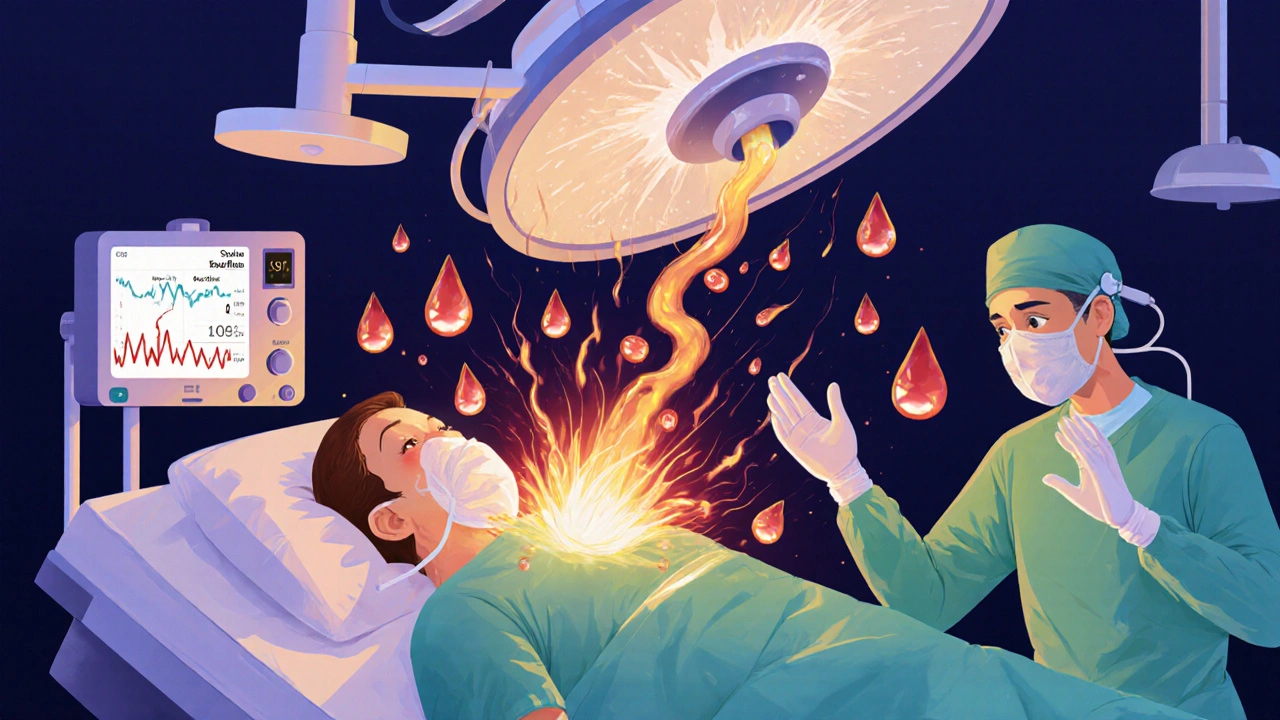
Malignant Hyperthermia and Anesthesia: What You Need to Know About This Life-Threatening Reaction
Malignant hyperthermia is a rare but deadly reaction to common anesthesia drugs. Learn the triggers, symptoms, and life-saving treatment with dantrolene-and why early recognition saves lives.
November 26 2025