
Non-Serious Adverse Events: What They Are and Why They Matter
When you start a new medication, your body might react — sometimes in ways that feel odd, annoying, or even worrying. These are called non-serious adverse events, mild, temporary reactions to medication that don’t threaten life or cause lasting harm. Also known as mild side effects, they’re common, often expected, and usually fade as your body adjusts. Think of them like a headache after starting a new blood pressure pill, or a little nausea after taking antibiotics. They’re not fun, but they’re not emergencies either.
It’s easy to confuse these with serious adverse events, life-threatening reactions like anaphylaxis, liver failure, or severe bleeding. But the difference matters. Serious events need immediate action — call 911, go to the ER. Non-serious ones? They need tracking, not panic. Many people stop taking their meds because they mistake a runny nose or mild dizziness for a dangerous reaction. That’s dangerous in its own way. Skipping your pills can make your real condition worse.
What you’re seeing in these posts? Real-world examples of how medication side effects, the full range of bodily responses to drugs, both helpful and unwanted show up in daily life. From drug safety, the practice of using medicines without causing avoidable harm tips on how to tell if that rash is just a side effect or something worse, to how medication monitoring, tracking how your body responds over time to catch patterns early helps you stay in control. You’ll find advice on when to ignore a symptom, when to call your doctor, and how to keep a log that actually helps — not just fills space.
Most people don’t realize that even small, "non-serious" reactions can add up. A dry mouth from a daily pill might lead to bad sleep. A little dizziness might make you trip. These aren’t just inconveniences — they’re clues. The best way to manage your health isn’t to avoid every tiny side effect. It’s to understand them, track them, and talk about them with your doctor — so you can keep taking what you need without fear.
Below, you’ll find real cases from people managing everything from antibiotics to asthma meds. No fluff. No scare tactics. Just clear, practical info on what’s normal, what’s not, and what to do next.
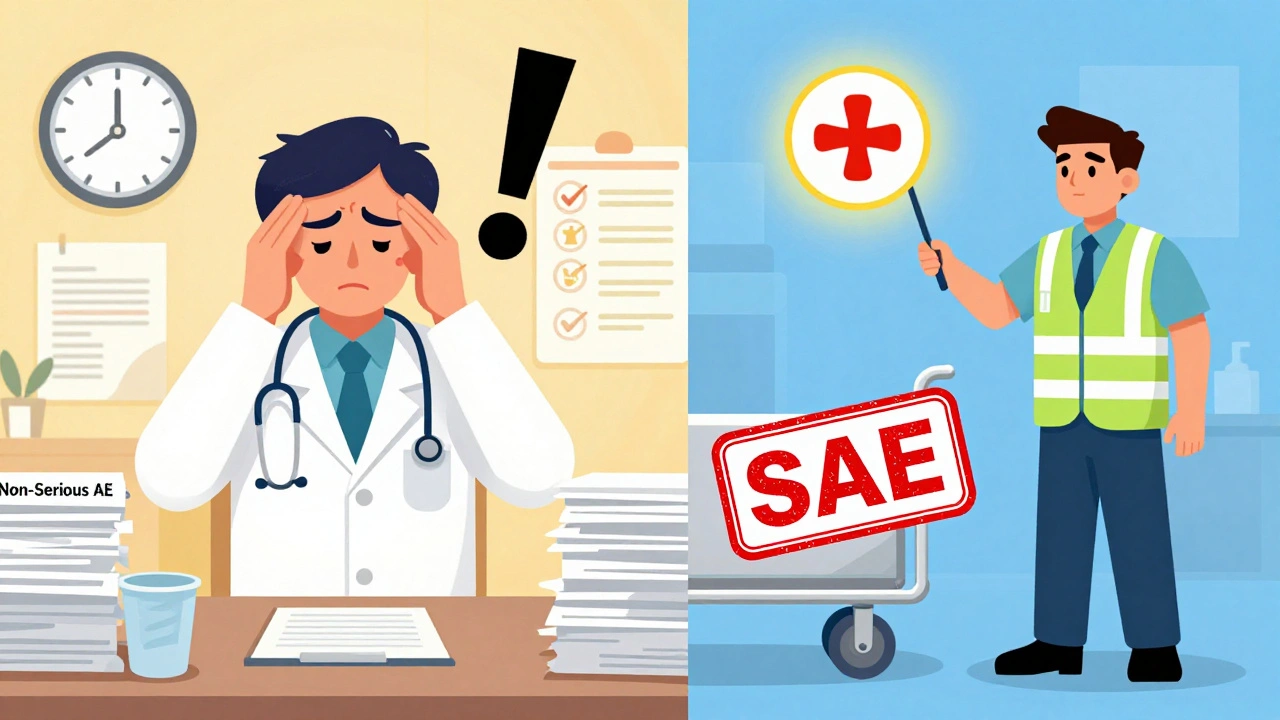
Serious vs Non-Serious Adverse Events: When to Report in Clinical Trials
Understand when to report serious vs non-serious adverse events in clinical trials. Learn the FDA and ICH criteria, reporting timelines, common mistakes, and how to avoid over-reporting that slows down safety monitoring.
December 5 2025