
GI bleed workup: What doctors do when you're bleeding inside your gut
When you're losing blood through your digestive system, it's called a GI bleed workup, a series of medical steps to find and stop bleeding in the gastrointestinal tract. This isn't just about spotting blood in stool or vomit—it's about figuring out where it's coming from, how bad it is, and what to do next. A gastrointestinal bleeding, uncontrolled loss of blood from the esophagus, stomach, or intestines can be silent at first, then turn life-threatening fast. That’s why doctors don’t wait. They move quickly through a set of proven steps to keep you stable and find the source.
The first thing they check is your hemoglobin, the protein in red blood cells that carries oxygen. A drop tells them how much blood you’ve lost. Then they look at your blood pressure and heart rate—low pressure and fast heartbeat are red flags. If you’re pale, dizzy, or passing dark, tarry stools, that’s a sign of upper GI bleeding, maybe from an ulcer or swollen vein. Bright red blood? That points to the lower tract, like the colon. But you can’t always tell just by looking. That’s where endoscopy, a camera on a flexible tube used to view the inside of the digestive tract comes in. It’s the gold standard. Done within 24 hours, it finds ulcers, tumors, or inflamed veins and can even stop the bleeding right then with clips, heat, or injections.
Not every case needs surgery. Many stop on their own with fluids, blood transfusion, a procedure to replace lost blood with donor blood, and meds to reduce acid or tighten blood vessels. But if you’re still dropping hemoglobin, or if the bleeding comes back, they’ll go back in—maybe with a second endoscopy or a CT scan to look for sources deeper in the bowel. The goal isn’t just to stop the bleed—it’s to stop it from coming back. That means finding the root cause: a pill that’s eating your stomach lining, liver disease causing swollen veins, or a tumor hiding in plain sight.
What you’ll find in the posts below aren’t just definitions—they’re real stories, real choices, and real science. From how a simple blood test changes everything, to why some people need three endoscopies before the bleeding stops, to what happens when you ignore early signs. These aren’t textbook theories. They’re what happens when your body gives you a warning—and what you need to know to respond before it’s too late.
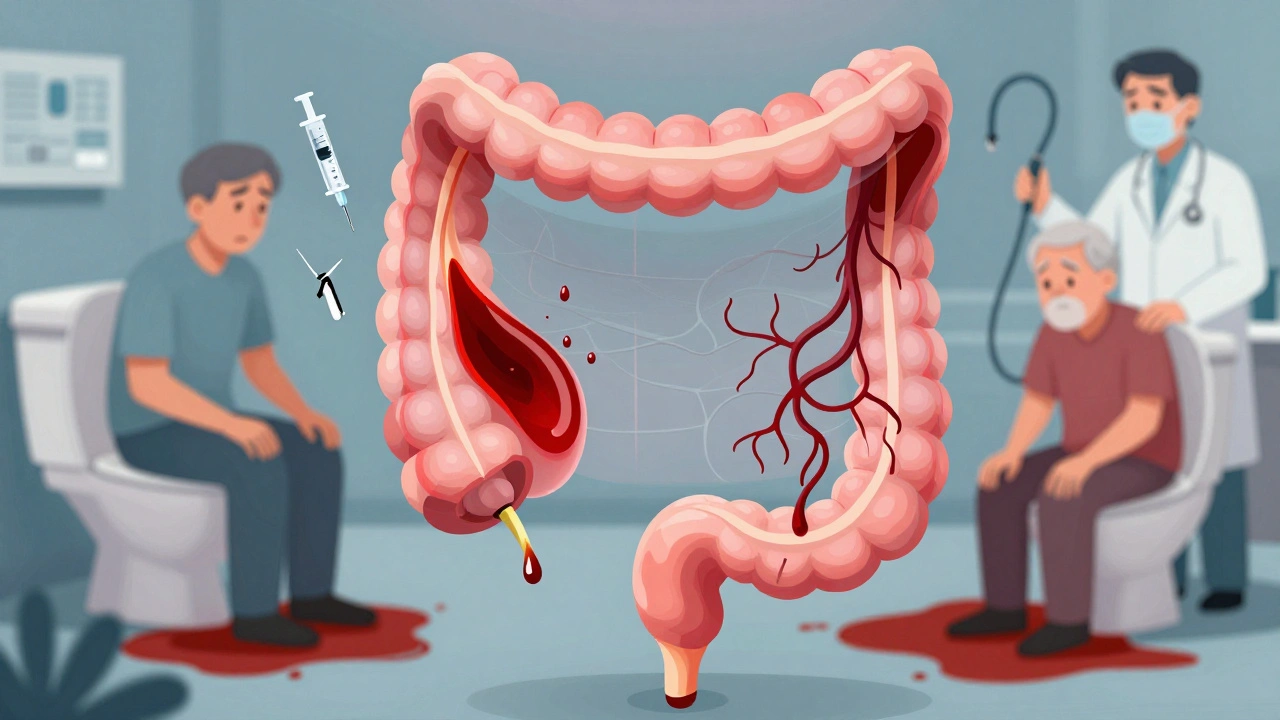
Lower GI Bleeding: Diverticula, Angiodysplasia, and How Doctors Diagnose It
Lower GI bleeding is often caused by diverticula or angiodysplasia, especially in older adults. Learn how doctors diagnose and treat these common but serious causes of rectal bleeding, and what to expect after diagnosis.
December 1 2025