
Diverticula Bleeding: Causes, Risks, and What to Do When It Happens
When diverticula bleeding, a type of gastrointestinal bleeding caused by small pouches in the colon wall. Also known as diverticular hemorrhage, it’s one of the most common reasons for sudden, painless rectal bleeding in older adults. Unlike diverticulitis—which involves infection and pain—diverticula bleeding happens when a small blood vessel near a diverticulum bursts. It’s not caused by spicy food or nuts, as many believe. It’s a structural issue tied to aging, low-fiber diets, and long-term pressure in the colon.
This isn’t rare. About 1 in 4 people over 60 have diverticula, and roughly 15% of them will bleed at least once. Most cases stop on their own, but some need hospital care. You won’t feel pain with this kind of bleeding, which is why people often ignore it until they see bright red blood in the toilet or on the toilet paper. That’s a red flag. It’s not the same as hemorrhoids. It’s coming from deeper in the colon. If you’re on blood thinners like warfarin or aspirin, your risk goes up. And if you’ve had one episode, you’re more likely to have another.
What you’ll find in the posts below isn’t just theory—it’s real-world guidance. You’ll see how diverticulosis, the presence of diverticula without inflammation shows up in medical records, how gastrointestinal bleeding, a broad category that includes bleeding from the stomach, intestines, or colon is diagnosed with colonoscopies or CT scans, and how colon health, the overall condition of the large intestine and its ability to function without disease can be maintained after an episode. You’ll also find practical tips on what to eat, when to call your doctor, and how to avoid repeating the problem.
There’s no magic cure. But knowing what triggers it, how to spot it early, and what treatments actually work makes a huge difference. You don’t need to live in fear. You just need to be informed. The posts here give you exactly that—clear, no-fluff advice from real medical sources, written for people who want to understand their bodies without wading through jargon.
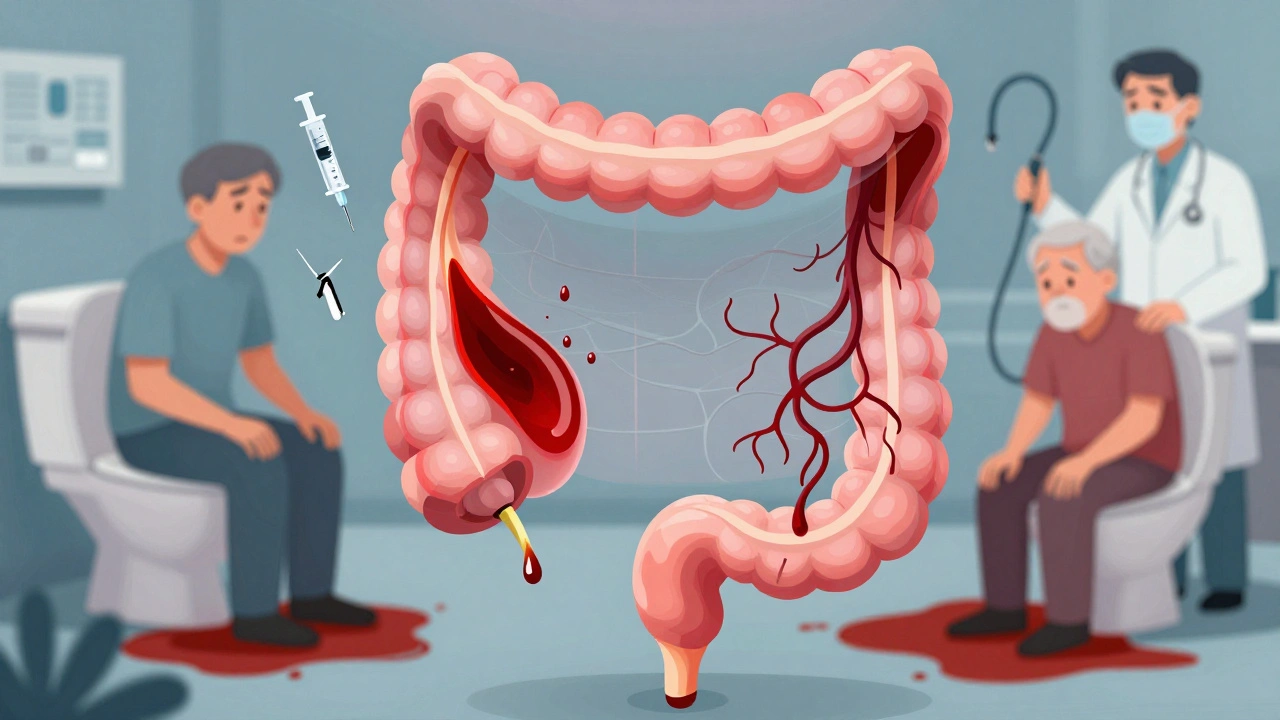
Lower GI Bleeding: Diverticula, Angiodysplasia, and How Doctors Diagnose It
Lower GI bleeding is often caused by diverticula or angiodysplasia, especially in older adults. Learn how doctors diagnose and treat these common but serious causes of rectal bleeding, and what to expect after diagnosis.
December 1 2025