
Dantrolene: What It Is, How It Works, and Why It Matters for Muscle Spasms and MH
When your muscles lock up uncontrollably — whether from a spinal injury, cerebral palsy, or a rare genetic reaction to anesthesia — dantrolene, a direct-acting skeletal muscle relaxant that works at the muscle fiber level, not the brain or spine. It's one of the few drugs that stops muscle contractions without sedating you. Unlike other muscle relaxants that target nerves, dantrolene blocks calcium release inside muscle cells, which is why it’s the only drug that can save your life during malignant hyperthermia, a sudden, deadly spike in body temperature triggered by certain anesthetics in genetically susceptible people.
Dantrolene isn’t for everyday back pain. It’s reserved for serious cases: chronic muscle spasticity from stroke or MS, or emergencies like malignant hyperthermia, a medical crisis where body temperature can hit 110°F in minutes. That’s why hospitals keep it on hand — not as a backup, but as a must-have. If you’ve ever had a reaction to anesthesia that left you sweating, stiff, and confused, you might be at risk. Testing for this condition is rare, but if you’ve had a family member die unexpectedly during surgery, ask about it. Dantrolene is the only thing that stops this process in its tracks.
It’s not without risks. Liver damage is rare but serious, and doctors monitor liver enzymes before and during long-term use. You might feel weak, dizzy, or tired — especially at first. That’s because dantrolene doesn’t just calm bad spasms; it slows down all muscle activity. That’s why it’s not used casually. But for people with severe spasticity from cerebral palsy or spinal cord injuries, it can mean the difference between being stuck in a wheelchair and moving with less pain. And in the OR, it’s the difference between life and death.
What you’ll find in these posts isn’t just theory. You’ll see real stories about how dantrolene is used — from managing chronic stiffness to surviving an MH crisis. You’ll learn how it compares to other muscle relaxants, why it’s not a first-line treatment, and what to do if you’re prescribed it long-term. There’s also guidance on spotting early signs of liver stress, how to handle missed doses, and why you should never stop it cold turkey. This isn’t a drug you take and forget. It’s one you manage — carefully, with awareness, and with the right support.
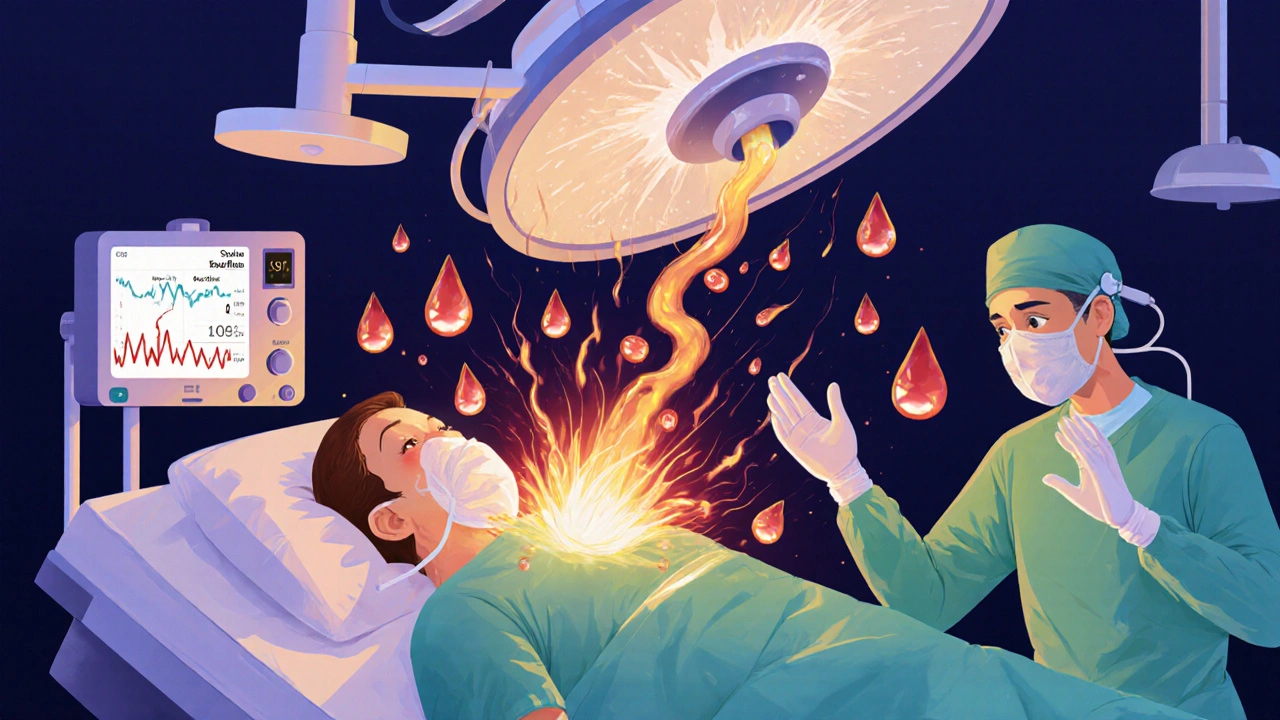
Malignant Hyperthermia and Anesthesia: What You Need to Know About This Life-Threatening Reaction
Malignant hyperthermia is a rare but deadly reaction to common anesthesia drugs. Learn the triggers, symptoms, and life-saving treatment with dantrolene-and why early recognition saves lives.
November 26 2025