
Antibiotic Shelf Life: How Long Do Your Prescriptions Really Last?
When you pick up an antibiotic prescription, the expiration date on the bottle isn’t just a suggestion—it’s a hard limit set by the manufacturer based on real testing. But here’s the thing: antibiotic shelf life, the period during which an antibiotic remains safe and effective under proper storage conditions. Also known as drug stability, it’s not always what you think. Many people toss out antibiotics the day after the date passes, while others keep them for years, hoping they’ll work in a pinch. The truth? Some antibiotics lose potency fast. Others? They can stay effective for years beyond the label—if stored right.
Medication storage, how you keep your drugs at home, directly impacts how long they last. Heat, moisture, and light are the enemies. Keep antibiotics in a cool, dry place—not the bathroom cabinet where steam rises every morning. A bedroom drawer or kitchen cabinet away from the stove works better. Liquid antibiotics? Those are the most fragile. Once mixed, many only last 7 to 14 days, even if the bottle says 100 days. Pills and capsules? More stable. But if they’re cracked, discolored, or smell weird, don’t take them. No matter the date.
Antibiotic expiration, the date by which the manufacturer guarantees full potency and safety. That date is based on testing done under ideal conditions. Real life? Not ideal. If you left your amoxicillin in a hot car or a damp basement, it could break down faster. And here’s the risk: under-dosed antibiotics don’t kill bacteria—they train them to fight back. That’s how resistant superbugs start. Even if an old pill doesn’t hurt you, it might not help either. And if you’re treating an infection, that’s worse than doing nothing.
Some antibiotics, like tetracycline, can actually become toxic when degraded. Others, like penicillin, just turn weak. The FDA’s Shelf Life Extension Program found that many solid-dose antibiotics kept under perfect conditions stayed potent for over a decade. But that’s in a government lab, not your medicine cabinet. Don’t gamble. If you’re unsure, ask your pharmacist. They can tell you if your drug is still good—or if it’s time to get a new prescription.
Don’t rely on internet myths. No, putting antibiotics in the freezer extends their life. No, a pill that looks fine is safe to use after five years. And no, you shouldn’t save leftover antibiotics for next time. Infections change. Doses change. What worked last year might not work now—and could make things worse.
Below, you’ll find real, practical guides from people who’ve been there—how to track your meds, what to do with expired pills, how to spot a failing antibiotic, and why your pharmacist is your best ally when it comes to safety. No fluff. Just what you need to know to keep your antibiotics working—and your body protected.
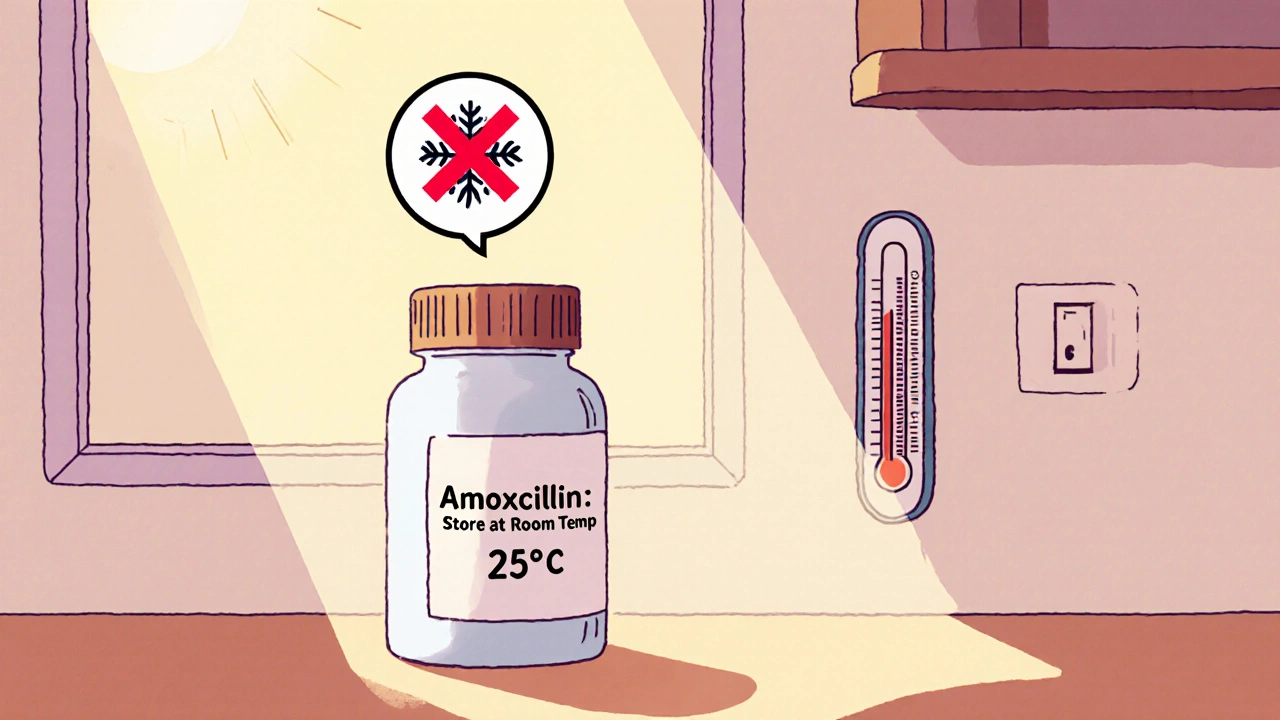
How to Store Liquid Antibiotics and Reconstituted Suspensions Correctly
Learn how to properly store liquid antibiotics and reconstituted suspensions to ensure they remain effective. Discover temperature rules, shelf life, storage mistakes, and safe disposal methods.
November 20 2025