
Antibiotic-Associated Diarrhea: Causes, Risks, and How to Manage It
When you take an antibiotic-associated diarrhea, a digestive issue triggered by antibiotics that disrupt the natural balance of gut bacteria. Also known as antibiotic-induced diarrhea, it’s one of the most common side effects of these drugs—happening in up to 30% of people who use them. It’s not just an inconvenience. For some, it’s a warning sign of something more serious, like a C. diff infection, a dangerous bacterial overgrowth caused by antibiotic use that leads to severe diarrhea, fever, and even colon damage. Most people think it’s just a tummy upset and wait it out. But knowing the difference between mild discomfort and a real threat can change everything.
Antibiotics don’t just kill bad bacteria—they wipe out the good ones too. Your gut relies on a balance of microbes to digest food, absorb nutrients, and keep harmful bugs in check. When that balance breaks, water rushes into your intestines, causing loose stools. This isn’t random. Certain antibiotics like clindamycin, amoxicillin, and ciprofloxacin are more likely to trigger it. And if you’ve had it before, you’re more likely to get it again. It’s not just about the drug, either. Age matters. People over 65 are at higher risk. So are those with weakened immune systems or recent hospital stays. Even your diet plays a role. Eating processed foods while on antibiotics makes things worse. Eating fiber-rich foods, staying hydrated, and avoiding sugar can help your gut recover faster.
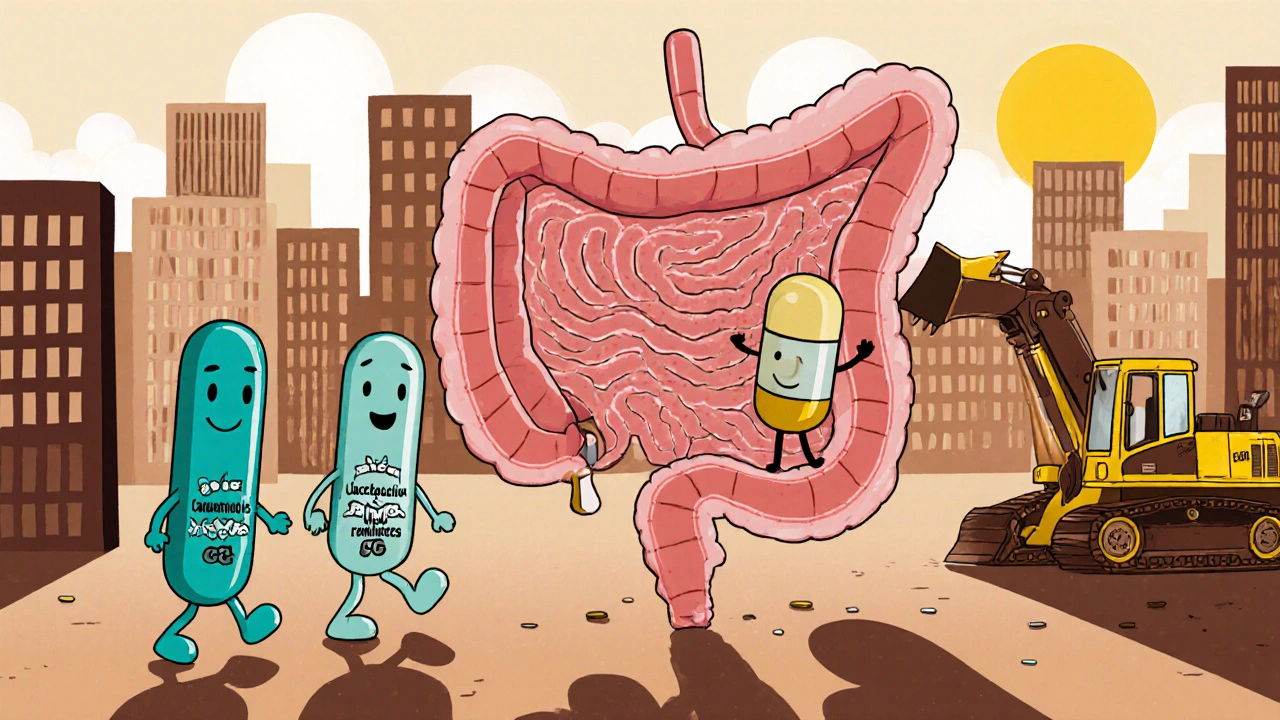
Many turn to probiotics for antibiotics, live bacteria supplements meant to restore gut balance after antibiotic use. But not all probiotics are created equal. Some studies show specific strains like Saccharomyces boulardii and Lactobacillus rhamnosus GG reduce diarrhea risk by up to 50%. Others? They do nothing. The key is choosing ones backed by real research—not just marketing claims. And timing matters. Taking probiotics at least two hours after your antibiotic dose gives them a better shot at surviving. Don’t just pop them with your pill. Space them out.
What you won’t find in most guides is this: stopping your antibiotic isn’t always the answer. If your infection is serious, stopping could make things worse. The goal isn’t to avoid antibiotics—it’s to manage the fallout. That means knowing when to call your doctor. If you have watery diarrhea more than three times a day for two days straight, fever, blood in stool, or severe belly pain, don’t wait. C. diff doesn’t always announce itself gently. It can sneak up fast.
What you’ll find in the posts below are real, practical stories and facts about how antibiotics affect your gut, how to spot trouble early, and what actually works to protect yourself. You’ll learn how to store liquid antibiotics properly so they don’t lose strength, how to track your meds to avoid dangerous mix-ups, and why some people who think they’re allergic to penicillin aren’t allergic at all. This isn’t theory. It’s what people are dealing with every day—and how to handle it without panic or guesswork.
Probiotics and Gut Health: What the Science Says About Digestive Supplements
Probiotics can help with antibiotic-associated diarrhea and infectious diarrhea in children, but not all strains work for every condition. Learn what the science says, which strains matter, and how to choose a reliable supplement.
November 24 2025