
Antibiotic Allergy: What It Is, How It Happens, and What to Do
When your body overreacts to an antibiotic allergy, an immune system response to a medication that’s normally harmless. Also known as drug allergy to antibiotics, it’s not just a stomach upset or a mild rash—it’s your body treating a common medicine like a dangerous invader. This isn’t the same as a side effect. Side effects are predictable and common, like nausea from amoxicillin. An allergy? That’s your immune system sounding the alarm—sometimes dangerously so.
Most antibiotic allergies involve penicillin, a widely used class of antibiotics including amoxicillin and ampicillin. But other types like sulfa drugs, cephalosporins, and even tetracycline can trigger reactions too. The symptoms? It could be a skin rash, hives, itching, swelling of the lips or tongue, or in rare but serious cases, trouble breathing or a drop in blood pressure. If you’ve ever had any of these after taking an antibiotic, you need to know the difference between a true allergy and something less dangerous.
Here’s the thing: many people think they’re allergic to penicillin because they had a rash as a kid—but 9 out of 10 of them aren’t truly allergic. Skin tests and careful challenges can clear that up. That matters because avoiding penicillin unnecessarily means doctors reach for broader-spectrum drugs, which can lead to more side effects, higher costs, and even antibiotic resistance. If you’ve been labeled allergic, it’s worth getting it checked.
And if you are allergic? You need to tell every doctor, pharmacist, and dentist. Wear a medical alert bracelet. Keep a written list of what you’re allergic to and what alternatives are safe. Some people can take other antibiotics safely, like azithromycin or clindamycin, depending on the type of reaction. But never guess. Always ask.
Antibiotic allergies don’t just affect you when you’re sick—they shape how you’re treated for everything from a sinus infection to a tooth abscess. That’s why understanding your own history matters. The posts below cover everything from how to recognize a real allergic reaction, to how to manage it safely, how to avoid dangerous mix-ups with other meds, and what to do if you’ve been mislabeled. You’ll find real advice on tracking reactions, storing meds properly, and working with your pharmacist to stay safe. No fluff. Just what you need to protect yourself.
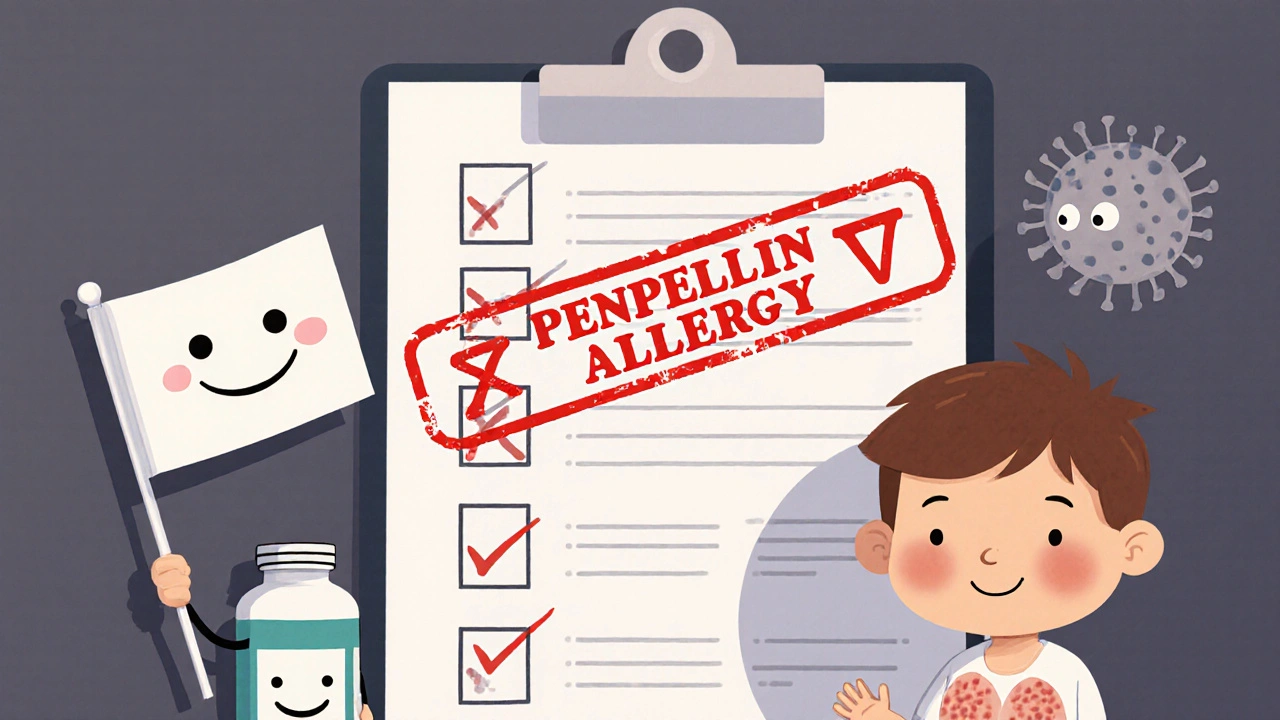
Penicillin Allergies vs Side Effects: How to Tell Them Apart and Why It Matters
Most people who think they're allergic to penicillin aren't. Learn how to tell the difference between a true allergy and a side effect-and why getting tested could save your life.
November 14 2025