
Anesthesia Reaction: What It Is, How It Happens, and What to Watch For
When you go under anesthesia reaction, an unexpected and potentially dangerous response to drugs used to induce unconsciousness during surgery. Also known as anesthetic hypersensitivity, it’s not just nausea or dizziness—it’s your body reacting as if the drug is a threat. Most people get through anesthesia just fine, but for a small number, something goes wrong—sometimes badly.
Not all anesthesia reactions are allergies. A true allergic reaction to anesthesia, an immune system overreaction to a drug component, often causing hives, swelling, or low blood pressure. Also known as anaphylaxis, it can be life-threatening and requires immediate treatment. More common are side effects like low blood pressure or slow breathing, which doctors expect and manage. Then there are drug interactions, when anesthesia mixes dangerously with other medications you’re taking, like blood thinners or antidepressants. Also known as medication conflicts, these can amplify risks without anyone realizing it. That’s why your anesthesiologist asks about every pill, supplement, and herbal remedy—even if it seems harmless.
Some reactions happen because of your genes. A rare condition called malignant hyperthermia can turn anesthesia into a medical emergency, causing your muscles to lock up and your body temperature to spike. It’s rare, but if you or a family member had a bad reaction during surgery before, it’s critical to tell your doctor. Others react to muscle relaxants or latex in equipment—not the anesthesia itself. Even the preservatives in some drugs can trigger symptoms.
What you can do? Keep a list of every medication you take, including what happened when you took them. If you’ve ever had unexplained swelling, trouble breathing, or a rash after surgery, write it down. Bring that list to every appointment. Don’t assume your surgeon knows your history—many don’t. The more you share, the less likely you are to get caught off guard.
Below, you’ll find real cases and science-backed insights on how anesthesia reactions show up, what tests can catch them before surgery, and which drugs are most likely to cause trouble. You’ll also learn how to talk to your doctor so you’re not just a patient—you’re an informed partner in your care.
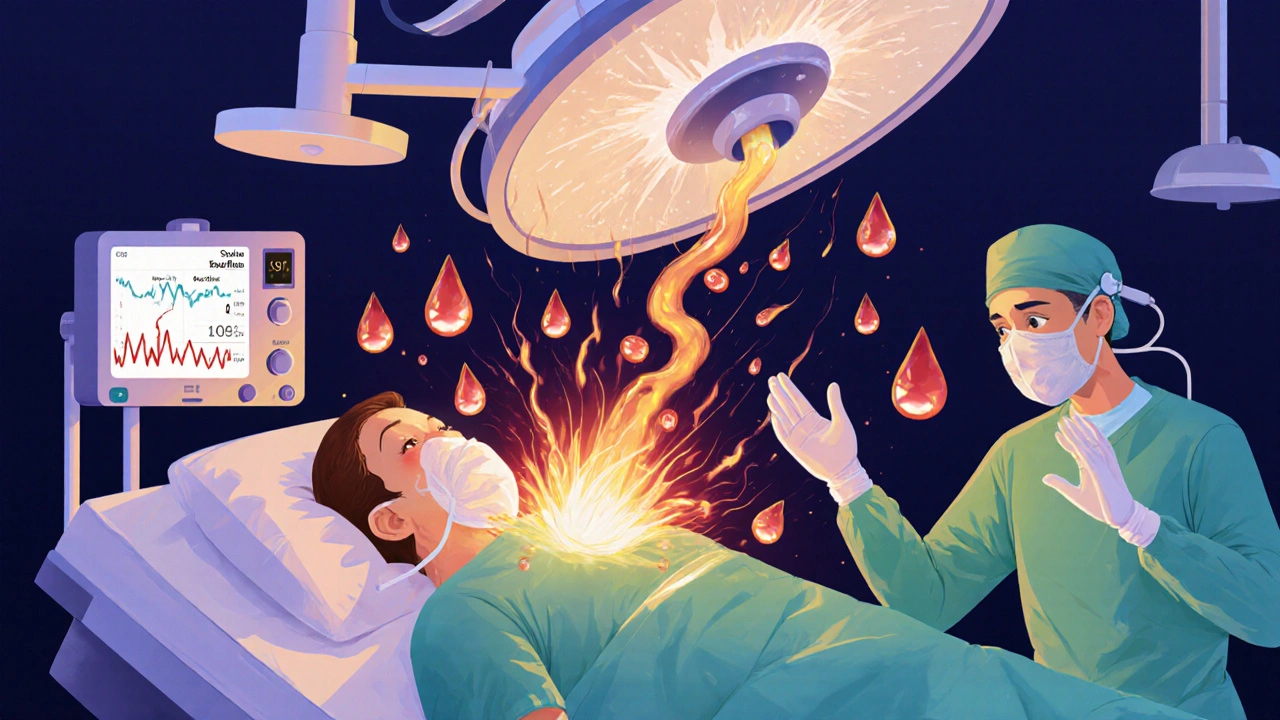
Malignant Hyperthermia and Anesthesia: What You Need to Know About This Life-Threatening Reaction
Malignant hyperthermia is a rare but deadly reaction to common anesthesia drugs. Learn the triggers, symptoms, and life-saving treatment with dantrolene-and why early recognition saves lives.
November 26 2025