
Amoxicillin Storage: How to Keep Your Antibiotic Effective and Safe
When you pick up amoxicillin, a common penicillin-based antibiotic used to treat bacterial infections like ear infections, pneumonia, and strep throat. It's one of the most prescribed drugs in the world, but its power fades if stored wrong. Many people don’t realize that even a few days of improper storage can make amoxicillin less effective—or worse, unsafe. Unlike some pills you can toss in a drawer, amoxicillin needs attention to temperature, moisture, and light. It’s not just about keeping it out of reach of kids—it’s about keeping it working.
Amoxicillin comes in two main forms: capsules/tablets and liquid suspension. The capsules and tablets, are stable at room temperature and can last for years if kept dry. Store them in their original bottle, away from the bathroom or kitchen sink, where humidity builds up. Moisture is the enemy—it causes pills to break down, clump, or even grow mold. If your bottle feels damp or the pills look different, don’t take them. The liquid form, is a different story. Once mixed by the pharmacy, it must be refrigerated and used within 14 days. Leaving it on the counter for even a few hours can let bacteria grow in the suspension. You might not see it, but it’s there. And taking spoiled liquid amoxicillin won’t just fail to treat your infection—it could make you sick.
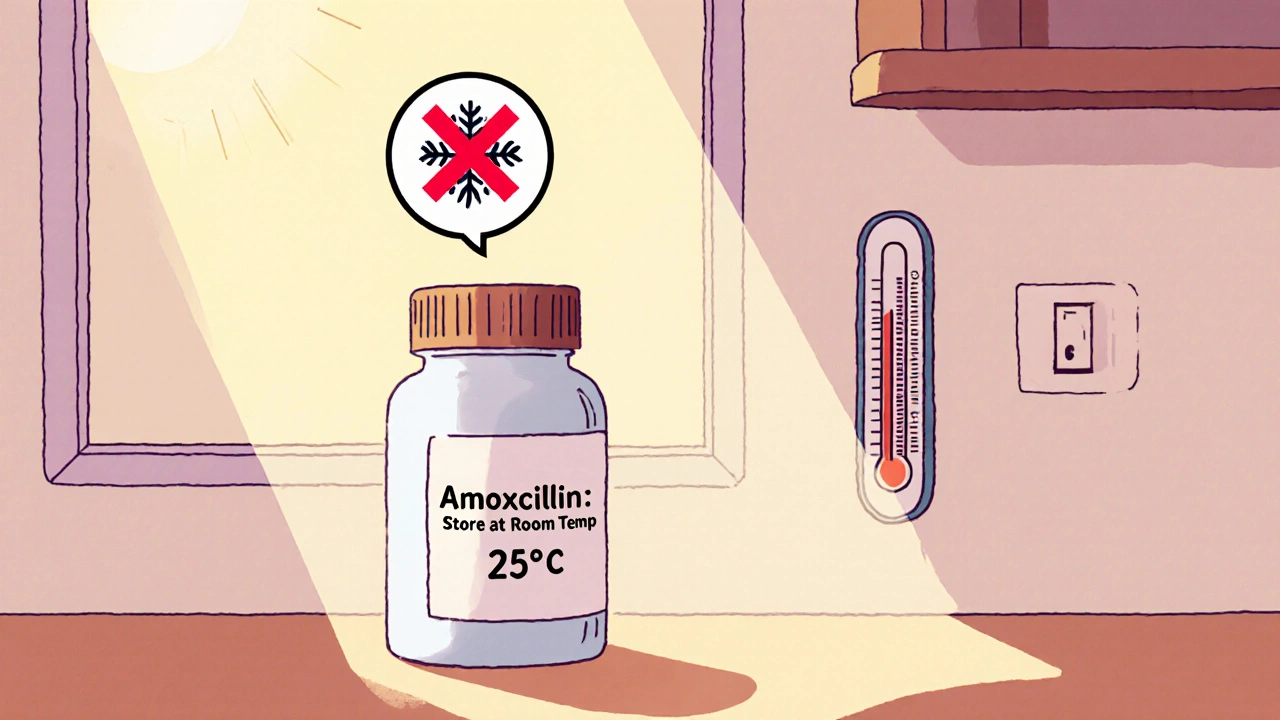
Temperature matters more than you think. Don’t leave amoxicillin in a hot car, on a windowsill, or near a radiator. Heat above 77°F (25°C) breaks down the active ingredient faster. If you’re traveling, carry the liquid in a cooler bag. For the pills, a bedroom drawer is better than a gym bag in summer. Also, never freeze amoxicillin—freezing can change how the drug dissolves in your body. And while you’re at it, check the expiration date. Even if it looks fine, expired amoxicillin doesn’t kill bacteria the way it should. That means your infection might not clear, and you risk developing drug-resistant bugs.
People often confuse side effects with storage problems. If you feel nauseous after taking amoxicillin, it might be the drug itself—not because it went bad. But if the liquid smells sour, looks cloudy, or has chunks in it, that’s a storage failure. Same with pills that crumble when you touch them. These aren’t just inconvenient—they’re dangerous. Always return unused liquid to the pharmacy after 14 days. Don’t keep it for "next time." Bacteria don’t wait, and neither should your medicine.
Below, you’ll find real-world advice from people who’ve dealt with this exact issue—how to track when you mixed your liquid, what to do if you forgot to refrigerate it, and how to tell if your pills are still good. These aren’t guesses. They’re based on pharmacy practices, FDA guidelines, and patient experiences. Whether you’re caring for a child, managing a chronic infection, or just trying to avoid wasting money on useless pills, the next few posts will give you what you need to get it right.
How to Store Liquid Antibiotics and Reconstituted Suspensions Correctly
Learn how to properly store liquid antibiotics and reconstituted suspensions to ensure they remain effective. Discover temperature rules, shelf life, storage mistakes, and safe disposal methods.
November 20 2025