
After a heart attack, life doesn’t stop-it changes. The next few months are about healing, learning, and rebuilding. It’s not about going back to exactly how things were before. It’s about building a stronger, safer version of your life. And the key? Three things: medications, diet, and activity. Get these right, and you give your heart the best chance to recover-and stay healthy for years to come.
Medications: Your Heart’s New Safety Net
You’ll leave the hospital on a list of new medicines. Some you’ve heard of-like aspirin or statins. Others might be unfamiliar. But here’s the truth: you must take them every day, exactly as prescribed. Skipping doses, even once, increases your risk of another heart attack.
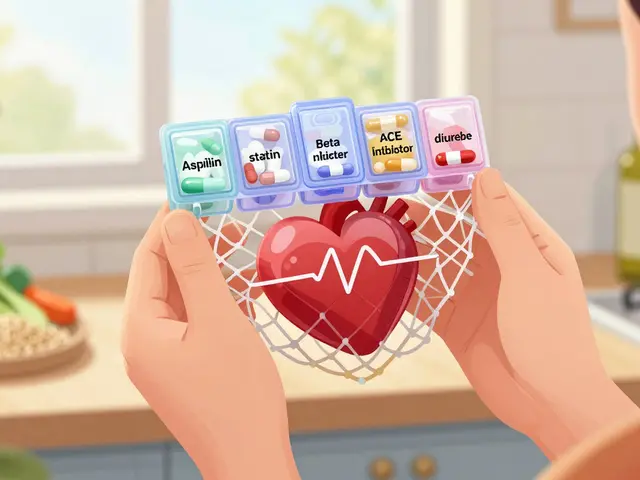
These aren’t optional. They’re your body’s repair crew. Aspirin stops blood clots. Statins lower bad cholesterol and help stabilize plaque in your arteries. Beta-blockers slow your heart rate and lower blood pressure, giving your heart time to heal. ACE inhibitors or ARBs reduce strain on your heart muscle. Diuretics help flush out extra fluid so your heart doesn’t have to work so hard.
Your pharmacist will walk you through each one-what it does, when to take it, and what side effects to watch for. Keep a written list. Carry it in your wallet. Update it every time your doctor changes something. If you forget why you’re taking a pill, ask. There’s no such thing as a silly question. The NHS recommends patients always know their medication list by heart-literally.
Some people stop taking meds because they feel fine. That’s dangerous. Feeling better doesn’t mean your heart is healed. It just means the medicine is working. Think of it like wearing a seatbelt. You don’t stop because the road feels smooth.
Diet: Food as Medicine
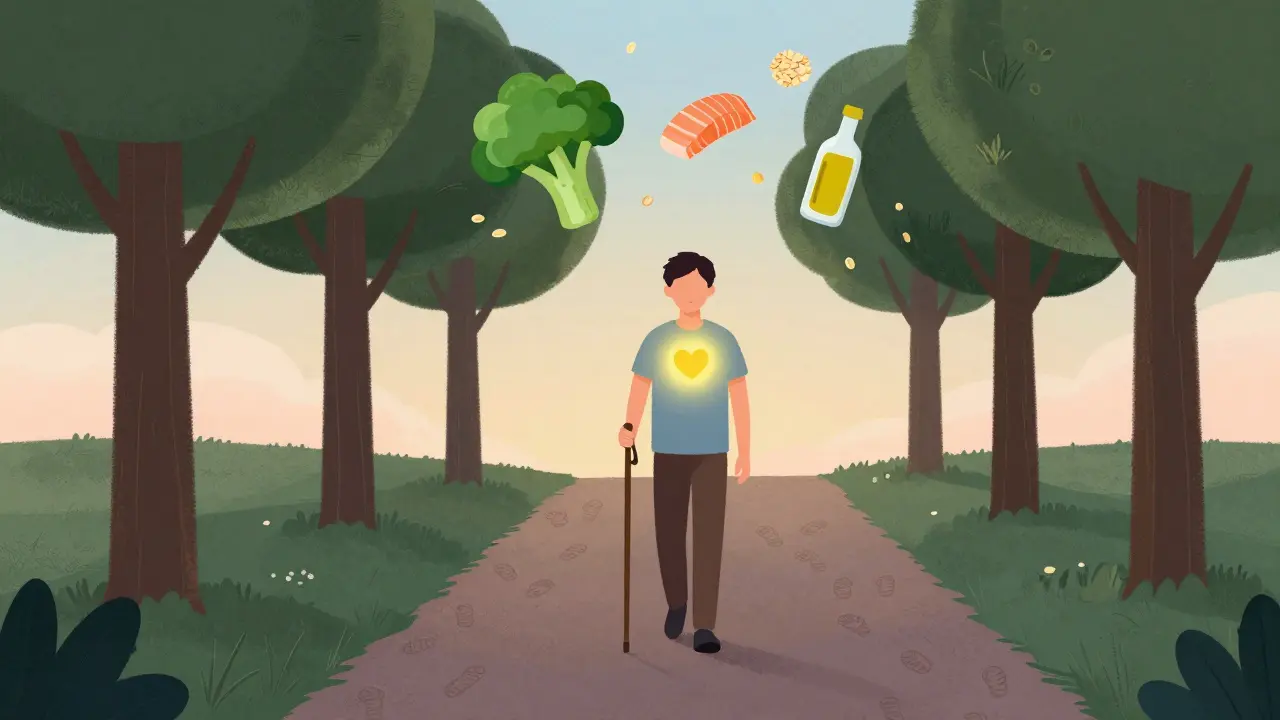
Your plate is now part of your treatment plan. A heart-healthy diet isn’t about deprivation. It’s about smart swaps and long-term habits.
Start by cutting back on salt. Too much sodium raises blood pressure, and your heart can’t afford that extra strain. Avoid processed foods-soups, sauces, ready meals, and snacks. These are salt bombs. Cook from scratch when you can. Use herbs, garlic, lemon, and black pepper for flavor instead.
Fat matters too. Swap butter for olive oil. Choose lean meats like chicken or fish. Eat fatty fish like salmon, mackerel, or sardines at least twice a week. They’re rich in omega-3s, which help reduce inflammation and lower triglycerides.
Fill half your plate with vegetables and fruits. They’re packed with fiber, antioxidants, and nutrients that protect your arteries. Whole grains like oats, brown rice, and quinoa help keep cholesterol in check. Avoid sugary drinks, pastries, and white bread-they spike blood sugar and promote fat buildup around your heart.
A dietitian will help you build a plan that fits your taste, culture, and lifestyle. Maybe you love curry? There are heart-healthy versions. Maybe you miss pasta? Whole grain pasta with tomato sauce and lentils works just fine. The goal isn’t perfection-it’s progress. One meal at a time.
Activity: Moving Back to Life
It’s normal to feel tired after a heart attack. Your heart muscle was damaged. It needs rest. But too much rest? That’s just as risky. Inactivity weakens your heart and muscles, making recovery slower.
Start small. In the first week at home, walk around the house. Go up and down the stairs once or twice. That’s enough. The NHS says light activity helps circulation and prevents blood clots. Don’t push yourself. If you’re out of breath, stop. Rest. Try again later.
Over the next few weeks, slowly increase your steps. Walk to the end of your street. Then two streets. Then a park. Aim for 10-15 minutes a day, five days a week. You don’t need to run. You don’t need a gym. Walking is powerful.
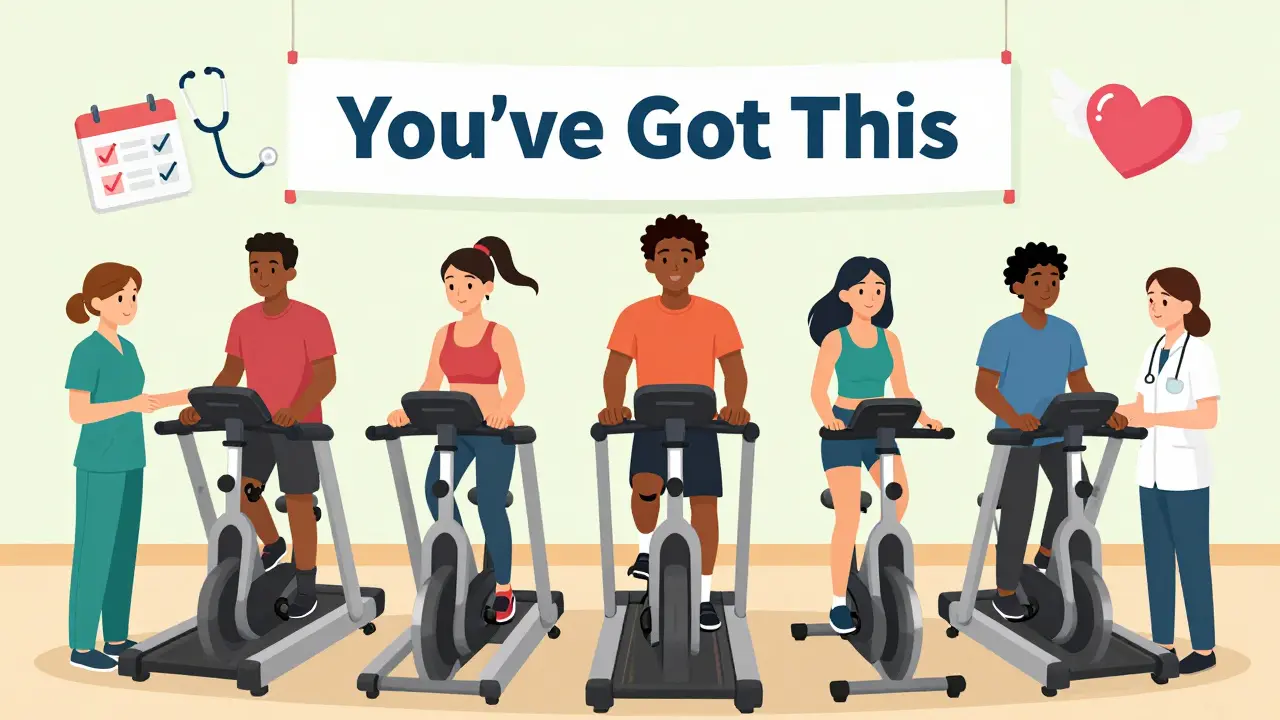
Cardiac rehabilitation is your best tool. These programs are supervised by nurses, physiotherapists, and exercise specialists. You’ll do monitored walks, light cycling, or arm exercises. Your heart rate and blood pressure are watched closely. You’ll learn how hard you can safely push. Most people attend three times a week for 6-12 weeks.
When you’re ready, you can add swimming or stationary biking. These are low-impact and gentle on the heart. Avoid heavy lifting, pushing heavy objects, or sudden bursts of activity. If you feel chest pain, dizziness, or extreme shortness of breath-stop. Call your doctor.
Cardiac Rehabilitation: Your Recovery Team
Cardiac rehab isn’t just exercise. It’s your full recovery package. You’ll get education on your medications, nutrition, stress management, and how to spot warning signs of another heart problem. You’ll talk to others who’ve been through it. You’ll learn breathing techniques. You’ll get help with anxiety or low mood-common after a heart attack.
Studies show people who complete cardiac rehab are 25% less likely to have another heart attack or die from heart disease. The NHS calls it one of the two most important parts of recovery. And yet, many skip it. Don’t be one of them. Your doctor will refer you. If they don’t, ask. It’s covered by the NHS.
Follow-Up and Long-Term Health
You’ll have a check-up four to six weeks after leaving the hospital. Your doctor will check your progress, adjust meds if needed, and review your rehab plan. After that, regular visits every 3-6 months are standard.
Long-term, your goal is to keep your blood pressure, cholesterol, and weight in a healthy range. Keep moving. Eat well. Take your pills. Don’t smoke. Limit alcohol. Manage stress. These aren’t one-time fixes-they’re daily choices.
Some risk factors can’t be changed-age, family history. But the ones you can control? You’ve got power over those. And that’s where your recovery truly begins.
When to Call for Help
You’re learning what’s normal and what’s not. Feeling tired? Normal. Sudden chest pain? Not normal. Here’s what to watch for:
- Chest pain or pressure that lasts more than a few minutes
- Shortness of breath that doesn’t improve with rest
- Dizziness, fainting, or irregular heartbeat
- Swelling in your legs, ankles, or belly
- Sudden weight gain (more than 2kg in 2 days)
If any of these happen, call your doctor or NHS 111. Don’t wait. Don’t assume it’s just fatigue. Your heart is still healing.
How long does it take to recover from a heart attack?
Recovery varies. Most people need two weeks to three months to return to normal daily activities. But full healing can take six months or longer. It depends on how much damage the heart took, your age, and how well you follow your recovery plan. The NHS advises not to rush-take it step by step.
Can I drive after a heart attack?
You’ll need to stop driving for at least four weeks. If you drive a car, you can usually resume after this period if you’re feeling well and have no ongoing symptoms. For heavy goods vehicles or passenger-carrying vehicles, you must notify the DVLA and may need a medical assessment. Always check with your doctor before getting behind the wheel.
Do I need to take these medications forever?
For most people, yes. These medicines don’t cure heart disease-they manage it. Stopping them increases your risk of another heart attack, stroke, or heart failure. Your doctor may adjust doses over time, but rarely stops them entirely unless there’s a major change in your health. Never stop without talking to your cardiologist.
Is it safe to have sex after a heart attack?
Yes, for most people. Sexual activity is similar to climbing two flights of stairs in terms of heart strain. If you can walk 10 minutes without chest pain or breathlessness, you’re likely ready. Talk to your doctor if you’re unsure. Anxiety about sex is common-don’t be afraid to bring it up.
What if I can’t afford my medications?
In the UK, prescription charges are capped, and many people are exempt-like those over 60, under 16, or with certain medical conditions. If you’re struggling, ask your pharmacist about the NHS Prescription Prepayment Certificate (PPC). It can save you money if you need multiple prescriptions. Never skip doses because of cost-there are always solutions.
What Comes Next?
You’re not alone in this. Thousands of people in the UK recover from heart attacks every year and go on to live full, active lives. It’s not about being perfect. It’s about showing up-every day. Taking your pills. Choosing the salad over the fry-up. Walking instead of sitting. Talking to your team when you’re scared or confused.
Your heart is resilient. Give it the right tools, and it will surprise you.
Marie-Pier D.
January 23, 2026 AT 16:02I was diagnosed last year and I cried for three days straight 😭 But then I started walking my dog every morning-just 10 minutes at first-and now we do 30! I still take my meds like they’re holy water 💊❤️
Alexandra Enns
January 24, 2026 AT 09:45Umm excuse me but this is all basic NHS propaganda. In Canada we don’t need all this hand-holding. My uncle had a heart attack in '98 and he just drank whiskey and smoked until he died at 72. So much for your ‘science’ 🤷♀️
asa MNG
January 26, 2026 AT 07:28bro i took my statins for 2 weeks then stopped cuz i felt fine 😅 now i just eat keto and do 50 pushups a day. my heart is a tank 🤘
Sushrita Chakraborty
January 27, 2026 AT 07:18While the article presents a commendable framework for post-cardiac recovery, I must emphasize the importance of adhering strictly to clinical guidelines as endorsed by the American Heart Association and the British Cardiovascular Society. Dietary modifications must be individualized, and pharmacological adherence remains non-negotiable.
Furthermore, the cultural inclusivity of dietary recommendations-such as adapting traditional Indian spices like turmeric and fenugreek into heart-healthy meals-should be explicitly encouraged, as these possess documented anti-inflammatory properties.
One must also acknowledge the psychological burden of cardiac events; thus, mindfulness practices rooted in Ayurvedic traditions may offer synergistic benefits.
Josh McEvoy
January 27, 2026 AT 14:16cardiac rehab is kinda sus tbh… i went once and the lady there asked if i ‘felt safe’ 😭 like… bro i just had a heart attack not a bad breakup
but… i guess the walking helped? 🤷♂️
Heather McCubbin
January 27, 2026 AT 18:32Everyone talks about meds and diet like it’s a checklist but nobody talks about the loneliness. You sit there eating your quinoa and taking your pills and you realize everyone else is out there living and you’re just… waiting to die again. I don’t need a pamphlet. I need someone to say it’s okay to be scared.
Sawyer Vitela
January 28, 2026 AT 11:28Medications: mandatory. Diet: non-negotiable. Activity: essential. Rehab: proven. Skip any one and you’re gambling with your life. No nuance needed.
Shanta Blank
January 29, 2026 AT 21:02Let me tell you about the time I tried to make a heart-healthy lasagna with lentils and zucchini noodles and my husband cried because it tasted like sadness wrapped in cilantro 🤡 I still took my statins though. I’m a warrior. And also, I’m still mad about the lasagna.
Tiffany Wagner
January 31, 2026 AT 16:05I just started walking around my block and I didn't die so that's a win I guess
Chloe Hadland
January 31, 2026 AT 19:02Thank you for saying this. I’ve been too scared to even try rehab. But reading your comment… maybe I can start with just one lap around the yard tomorrow