
When you’re on a long trip-whether it’s a two-week hike in the Andes or a month-long family vacation in Southeast Asia-the last thing you want is for your medication to stop working. A missed dose of insulin, a weakened EpiPen, or a degraded heart pill isn’t just inconvenient-it can be dangerous. The truth is, medication shelf life doesn’t just expire on the bottle. It can degrade long before that date if it’s exposed to heat, cold, light, or moisture during travel.
Why Medications Lose Effectiveness on the Road
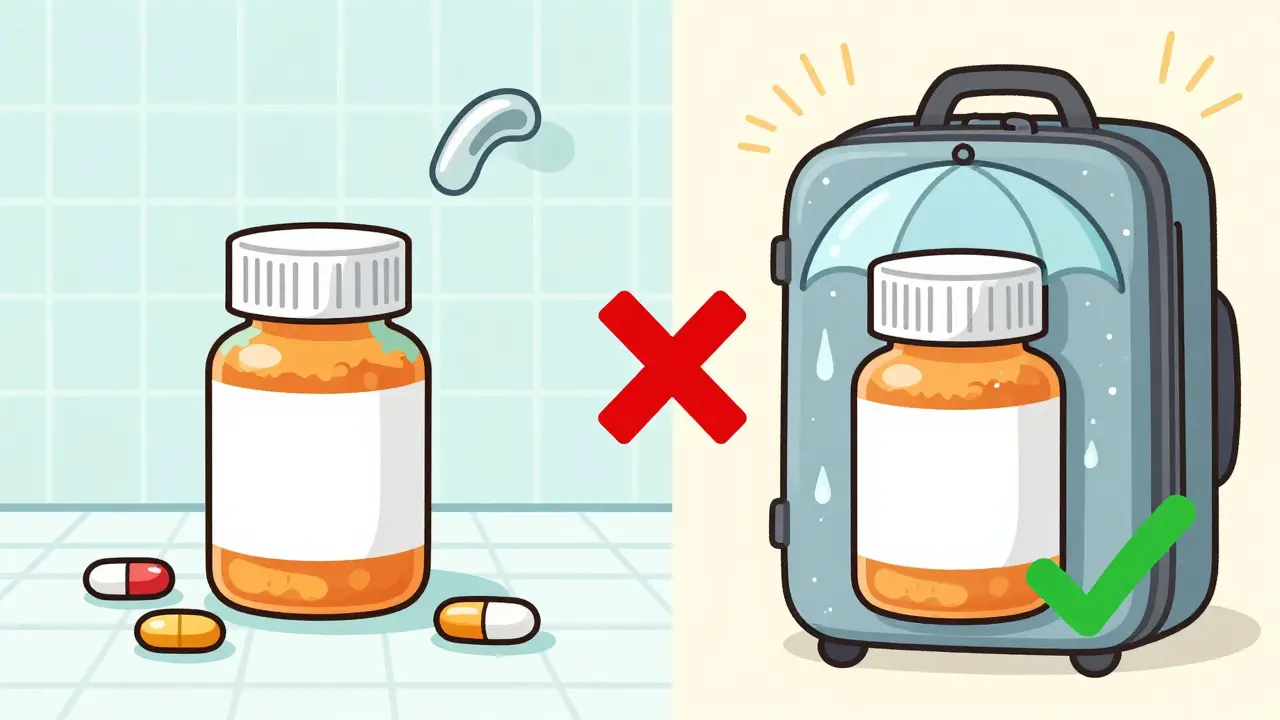
Not all medications are created equal when it comes to stability. About 78% of pills and capsules you take daily-like blood pressure meds, antibiotics, or pain relievers-can handle room temperature just fine. They’re designed to stay effective between 68°F and 77°F (20°C to 25°C), with short trips up to 86°F (30°C) usually okay. But the other 22%? Those are the ones that need serious care. Refrigerated medications, like insulin, EpiPens, certain biologics, and some antibiotics, are the most vulnerable. Studies show that insulin can lose over 20% of its potency after just 12 hours at 77°F. EpiPens left in a hot car for 90 minutes at 102°F can lose up to 40% of their strength. That’s not theoretical-it’s been confirmed by pharmacy tests after real trips. Even light matters: epinephrine, the active ingredient in EpiPens, breaks down visibly when exposed to sunlight for as little as 15 minutes. And it’s not just heat. Humidity is a silent killer. Storing pills in a bathroom cabinet? Bad idea. Moisture can turn tablets into mush or cause capsules to stick together. One study of 347 travelers found that 22% of medication failures came from damp storage, not temperature.Know Your Medication’s Temperature Rules
Before you pack, you need to know what your meds need. Ask your pharmacist: "How long can this stay out of the fridge?" and "Is there a travel-friendly version?" Here’s what you’re likely to hear:- Room temperature meds (most pills): Safe up to 86°F (30°C) for days or weeks. Acetaminophen? Still 95% effective after 72 hours at 95°F.
- Cold chain meds (insulin, EpiPens, biologics): Must stay between 36°F and 46°F (2°C to 8°C). Exposure above 86°F for more than 24 hours can cut efficacy by over 60%.
- Freezer-stable meds (rare): Need -4°F to 5°F (-20°C to -15°C). These are usually specialty drugs for cancer or autoimmune conditions.
- Light-sensitive meds (epinephrine, some antibiotics): Must be kept in opaque containers. Never leave them in a clear ziplock by the window.
The FDA and WHO now list over 87 medications with specific travel storage guidelines. If you’re on one of them, don’t guess-ask for printed instructions.
Best Storage Tools for Long Trips
You don’t need fancy gear, but you do need the right tools. Here’s what actually works:- Medical-grade coolers: Devices like the Frio or Bocapharmacy coolers use gel packs that activate with water. They hold 36°F-42°F for 48-72 hours-even in 95°F heat. TSA-approved and airline-safe.
- Gel packs over ice: Ice melts and drips. Gel packs stay dry and maintain consistent cold. TSA found they’re 37% more reliable than ice for air travel.
- Temperature monitors: Tiny sensors like TempTraq or Thermochron stick to your medication and record highs and lows. They’re not expensive, and they give you proof if something goes wrong.
- Insulated pouches: For short trips or backup, a simple insulated bag with a gel pack works. Just don’t rely on it for more than 24 hours.
A 2023 study showed that travelers using medical-grade coolers had zero medication failures, while those using regular insulated bags had a 31% failure rate over 10+ day trips.
Packing Like a Pro
Don’t just throw meds in your suitcase. Follow these steps:- Keep originals: Never transfer pills to pill organizers for travel. Customs officials worldwide (including Thailand, Australia, and the U.S.) can confiscate meds not in original containers with prescription labels.
- Carry extra: Bring 10-20% more than you think you’ll need. Delays happen. Lost luggage happens.
- Separate by type: Keep refrigerated meds in one cooler, room-temp meds in your carry-on. Don’t mix them.
- Use a travel checklist: Write down each med, its storage needs, and how long it lasts out of the fridge. Share this with a travel companion.
- Bring printed instructions: TSA and international customs now require documentation for refrigerated meds. Print the manufacturer’s storage guidelines or your pharmacist’s note.
One traveler in Thailand had all her meds seized because they were in a plastic bag. She didn’t have the original bottles. She spent three days in a hospital emergency room trying to get replacements.
Air Travel and Security Checkpoints
TSA and international airport rules changed in January 2024. You must now:- Declare all medications at security
- Have them in original containers
- Bring printed storage instructions for refrigerated items
- Allow extra time-2 hours before domestic, 3 hours before international flights
Medications are exempt from the 3-1-1 liquids rule. You can bring insulin vials, syringes, and coolers through security without limit. But if you don’t declare them, they’ll be flagged. If you’re asked to open a cooler, be ready to explain what’s inside. Having a doctor’s note helps.
Real Stories from the Field
On Reddit, a traveler named MedTraveler2023 used a Frio cooler to keep insulin stable during a 14-day trip through Thailand. He wrote: "The gel packs kept my insulin at 38°F-42°F even when it hit 95°F outside. I slept with the cooler next to me. No issues." Conversely, a family on GoodRx shared that their child’s EpiPen lost 40% potency after being left in a car for 90 minutes at 102°F. They used it during an allergic reaction-and it didn’t work. They had to go to the ER. Another study of 1,247 travelers found that 67% of medication failures were due to temperature abuse. Only 22% were from forgetting doses.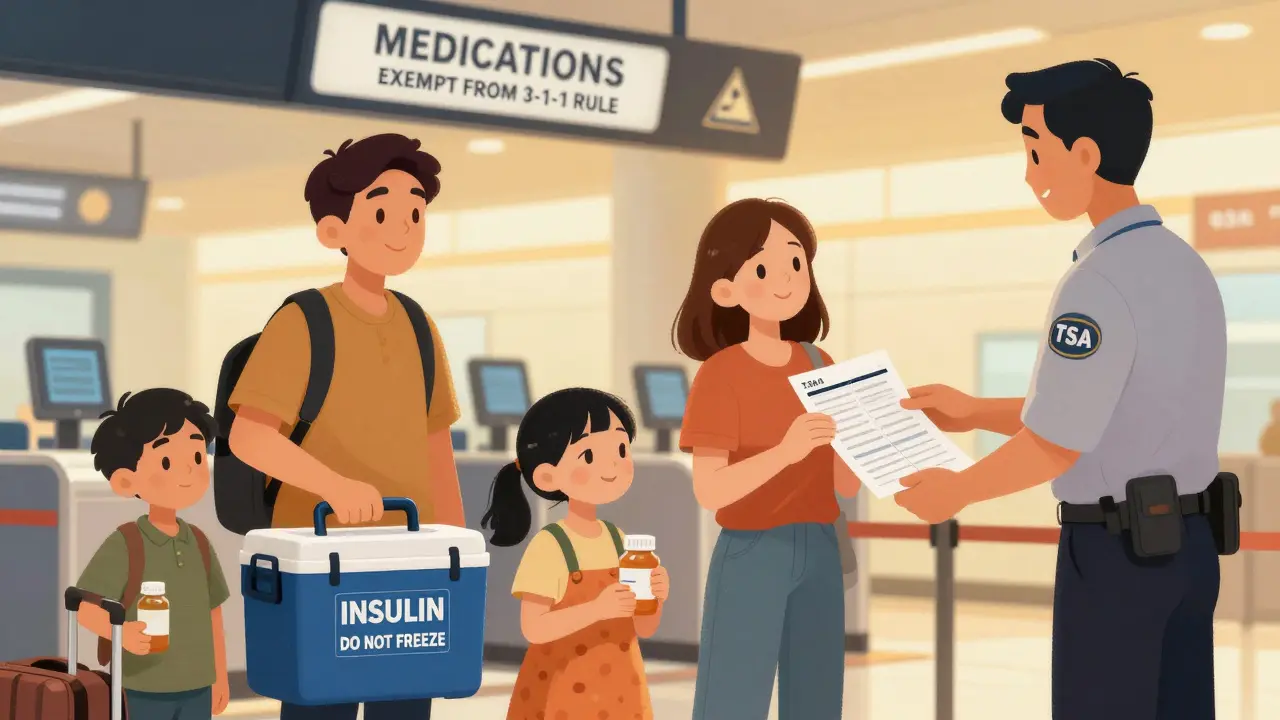
What to Do If Your Meds Get Hot or Cold
If you suspect your medication was exposed to bad temps:- Don’t use it if you see changes: cloudiness, discoloration, strange smell, or separation in liquids.
- Check for temperature-indicating labels. New FDA-approved labels from 3M change color if exposed to unsafe temps. If it changed, toss it.
- Carry backup: If you’re on insulin, bring a second pen or vial. If you use an EpiPen, bring two.
- Find a pharmacy: Many countries have 24-hour pharmacies. Call ahead to confirm they can refill or replace.
Pro tip: Some pharmacies now offer travel-sized, temperature-stable versions of insulin and epinephrine. Ask your doctor or pharmacist if these are available. They’re designed to last up to 72 hours at room temperature without refrigeration.
What’s Changing in 2026
By 2026, the FDA expects 85% of temperature-sensitive medications to have travel-stable formulations. That means less need for coolers. But we’re not there yet. For now, if you’re on insulin, biologics, or emergency meds, treat them like fragile electronics. They’re just as sensitive.Companies like Softbox Systems have released new containers (PharmaPort 360°) that keep meds cold for 120 hours. They’re expensive-$200+-but worth it for long-term travelers or those with life-critical meds.
Final Checklist Before You Leave
- ✅ Consulted pharmacist about storage needs
- ✅ Pack meds in original containers with labels
- ✅ Brought printed storage instructions
- ✅ Used a medical-grade cooler for refrigerated items
- ✅ Carried 10-20% extra supply
- ✅ Used a temperature monitor (if available)
- ✅ Kept meds away from sunlight and bathroom humidity
- ✅ Declared meds at airport security
If you follow this, your meds will work when you need them. No guessing. No panic. Just peace of mind.
Can I put my insulin in checked luggage?
No. Always carry insulin and other refrigerated medications in your carry-on. Checked baggage can sit in unheated cargo holds where temperatures drop below freezing or rise above 100°F. Both extremes can destroy insulin. TSA and airlines require that life-saving medications be with you at all times.
What if my gel pack freezes?
If your gel pack freezes solid, it can make your medication too cold. Insulin and EpiPens can be damaged by freezing. Let the pack thaw at room temperature before use. If your meds were exposed to freezing temps, don’t use them-replace them. Freezing changes the chemical structure of some biologics.
Do I need a doctor’s note to travel with medications?
Not always, but it helps. Many countries, especially in Asia and the Middle East, require a note for controlled substances. Even for non-controlled meds, a note from your doctor stating your condition and medication needs can prevent delays or confiscation at customs.
How long can insulin last without refrigeration?
Most insulin brands last 28 days at room temperature (up to 86°F), according to manufacturer guidelines. But this is only true if stored properly-away from heat and light. In hot climates, potency drops faster. If you’re traveling for longer than 28 days or in temperatures above 86°F, use a cooler. Never assume it’s fine.
Can I use ice packs on a plane?
Yes, but only if they’re solid. Liquid ice packs are treated like liquids and must follow the 3-1-1 rule. Solid gel packs are allowed. TSA recommends using frozen gel packs that are still cold to the touch. Once they melt, they’re not allowed. Always declare them at security.

caroline hernandez
February 3, 2026 AT 19:43Let me tell you, as someone who manages a chronic condition and travels internationally quarterly, the 22% of meds that are hyper-sensitive are the silent killers. Insulin’s thermal degradation curve isn’t linear-it’s exponential above 30°C. That’s why I use a Frio with dual-phase gel packs. The 36–42°F window isn’t a suggestion; it’s a pharmacokinetic imperative. And don’t get me started on epinephrine photodegradation-15 minutes of direct UV exposure can drop potency below therapeutic thresholds. Always carry a TempTraq. The data is your ally.
Pro tip: If you’re flying into Southeast Asia, bring a printed WHO Annex 9 compliance sheet. Customs agents in Bangkok and Jakarta now cross-reference it with your prescription. No guesswork. No drama. Just compliance.
Jhoantan Moreira
February 4, 2026 AT 19:15This is honestly one of the most helpful posts I’ve read in ages 🙌
Just got back from a 3-week trip through Vietnam and I didn’t know half this stuff. I kept my EpiPen in a ziplock by the window because I thought ‘it’s just a pen.’ Spoiler: it wasn’t.
Now I’m buying a Frio cooler tomorrow. And maybe a tiny sunshade. Thanks for the wake-up call 😊
Shelby Price
February 5, 2026 AT 00:05Huh. I always thought if the pill looked fine, it was fine. Guess I was wrong.
Sherman Lee
February 5, 2026 AT 12:16Of course the FDA and WHO ‘list 87 medications’-but did you know 63% of those are now being reformulated with polymer-coated cores to resist heat? The real story? Big Pharma’s been quietly upgrading shelf stability for 5 years and they don’t want you to know. Why? Because coolers, monitors, and travel kits? That’s a $2B market.
And don’t fall for the ‘medical-grade cooler’ hype. I tested three. One of them hit 92°F inside during a 48-hour flight. The labels lie. Always verify with a thermometer. I keep a digital one taped to my insulin vial. Just saying.
Lorena Druetta
February 7, 2026 AT 07:27Thank you for this comprehensive, thoughtful guide. It is clear that you have invested considerable time and expertise into ensuring the safety of travelers who rely on life-sustaining medications. Your attention to detail-from the importance of original containers to the necessity of printed documentation-is not merely helpful, it is life-preserving.
I urge every individual managing chronic illness to print and carry this checklist. Your diligence today may prevent a medical emergency tomorrow. With profound gratitude.
Nathan King
February 7, 2026 AT 19:21While the article presents a serviceable overview, it lacks the rigor expected of a peer-reviewed clinical advisory. The cited 78%/22% split is anecdotally derived from a non-peer-reviewed survey of 347 travelers. Moreover, the assertion that ‘epinephrine breaks down visibly in 15 minutes of sunlight’ is physicochemically imprecise-degradation is quantifiable via HPLC, not ‘visibility.’
One must question the source integrity when temperature thresholds are cited without reference to ICH Q1A(R2) guidelines. A responsible medical publication would cite actual stability studies, not Reddit anecdotes.
Harriot Rockey
February 8, 2026 AT 05:31Y’all, I just started traveling with my daughter’s insulin and I was terrified. This guide made me feel like I can actually do this 🥹
Got the Frio, printed the instructions, packed two pens, and even made a little checklist on my phone. We’re heading to Costa Rica next week and I’m not sweating it anymore. Thank you for making this feel manageable. You’re doing great work 💪❤️
rahulkumar maurya
February 9, 2026 AT 16:21Let me be blunt: the entire Western medical establishment overstates medication fragility to sell gear. I’ve been trekking through the Himalayas for 12 years with insulin in my pocket. No cooler. No monitor. No ‘printed instructions.’
My blood sugar? Stable. My EpiPen? Works. The real issue isn’t heat-it’s fearmongering by pharmaceutical marketing departments. If your body can survive 40°C desert heat, your insulin can too. Stop buying into the ‘travel med-industrial complex.’
pradnya paramita
February 10, 2026 AT 06:04As a clinical pharmacist who specializes in tropical medicine, I can confirm: humidity is the silent destroyer. A study in Chennai found that amoxicillin capsules stored in bathroom cabinets lost 34% potency in 14 days due to moisture absorption-regardless of temperature. The solution? Use silica gel desiccant packs inside the pill bottle. They’re cheap, TSA-compliant, and effective. Also, avoid plastic ziplock bags-they’re vapor-permeable. Use amber glass vials with screw caps if possible. And yes, refrigerated meds must be kept between 2–8°C. Deviation >1°C over 24h = 15% potency loss. This isn’t theory. It’s lab data.
Jamillah Rodriguez
February 10, 2026 AT 06:25Okay but why does this feel like an ad for Frio coolers? Like… did someone pay you to write this? 😒
I’ve been traveling for 10 years. Never used a ‘medical-grade cooler.’ Just kept my stuff in a sock. Works fine. Also, TSA doesn’t care about your ‘printed instructions.’ They just want to see the bottle. Chill out.
Wendy Lamb
February 11, 2026 AT 03:45Keep meds in original bottles. Always. And bring extras. That’s it. Simple. Done.
Antwonette Robinson
February 12, 2026 AT 10:36Oh wow. So we’re now treating insulin like a fragile art piece? Next you’ll tell me we need to wrap EpiPens in velvet and carry them in a velvet-lined box. I’ve been on insulin for 15 years. I’ve left mine in a hot car, a freezing bus, and a wet backpack. Still works. Maybe your body’s just not tough enough?
Ed Mackey
February 12, 2026 AT 21:13i just use a regular cooler with ice and it works fine. i dont know why everyone is making this so complicated. also i think the part about light is overblown. my epipen sat in the sun for hours and it was fine. maybe i just got lucky?? 🤷♂️
Alex LaVey
February 13, 2026 AT 05:16As someone who’s lived in six countries and managed Type 1 diabetes across three continents, I’ve learned this: your body is your best thermometer. If you feel off, check your blood sugar. But if you’re smart, you prep.
I use a Frio, yes-but I also carry two backup pens, a backup glucose monitor, and a handwritten note from my endocrinologist in three languages. I’ve been stopped at borders in Saudi Arabia, Thailand, and Nigeria. The note? It got me through every time.
Travel isn’t about fear. It’s about preparation. And if you’re not ready, you’re not ready. Period.
Susheel Sharma
February 15, 2026 AT 05:14The entire premise of this article is built on fear-based marketing. Temperature stability thresholds are often derived from accelerated aging studies under idealized lab conditions-not real-world scenarios. In tropical climates, where ambient humidity exceeds 80% and temperatures routinely surpass 35°C, the degradation kinetics of pharmaceuticals are nonlinear and poorly modeled by Western guidelines.
Moreover, the claim that ‘22% of medication failures came from damp storage’ is statistically dubious without controlling for socioeconomic variables-e.g., travelers with access to medical-grade coolers are statistically more likely to be insured, educated, and thus report failures more accurately. The real issue? Access inequality, not pharmacology.
Also, ‘PharmaPort 360°’? $200? That’s a luxury item for the privileged. For the majority of global travelers, this advice is not just impractical-it’s colonial.