
Sleep Apnea Alternative: Effective Non-CPAP Solutions That Work
When you have sleep apnea, a condition where breathing repeatedly stops and starts during sleep, often due to blocked airways. It’s not just about snoring—it’s about oxygen drops, fractured sleep, and daytime exhaustion that doesn’t go away. Many people are told to use a CPAP machine, but if it feels uncomfortable, noisy, or impossible to stick with, you’re not alone. There are real, science-backed sleep apnea alternative options that work without masks and hoses.
One of the most common alternatives is oral appliance therapy, a custom-fitted mouthpiece that holds your jaw forward to keep your airway open. It’s FDA-cleared, covered by many insurance plans, and used daily by people who can’t tolerate CPAP. Unlike one-size-fits-all snoring strips, these devices are made specifically for your mouth and adjusted over time. Another option is positional therapy, which helps if your apnea only happens when you sleep on your back. Simple tools like a tennis ball sewn into the back of your pajama shirt or wearable alarms can train you to sleep on your side—no machine needed.
Then there’s the root cause: weight. Losing even 10% of your body weight can cut sleep apnea severity in half for many people. It’s not a quick fix, but it’s the most durable solution—if you can stick with it. Cutting alcohol and sedatives before bed also helps, because they relax throat muscles and make blockages worse. For some, nasal strips or saline sprays improve airflow enough to reduce events. And if you’ve got chronic nasal congestion from allergies, treating that with something like Rhinocort, a corticosteroid nasal spray that reduces inflammation and opens airways, might be the missing piece.
Not every alternative works for everyone. Severe sleep apnea still often needs CPAP or surgery. But for mild to moderate cases, especially if you’re tired of fighting your machine, these options give you real control. You don’t have to accept discomfort as the only price for better sleep. The posts below cover exactly what works, what doesn’t, and how to talk to your doctor about switching from CPAP to something that fits your life—without risking your health.
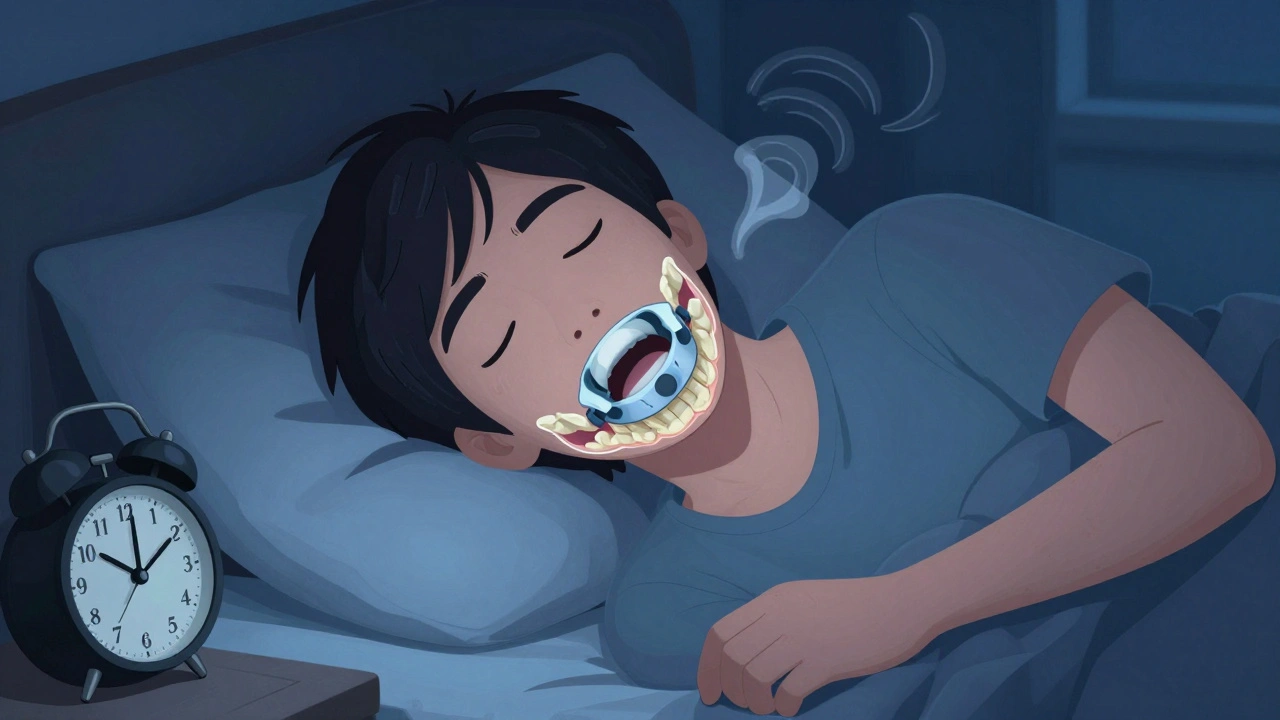
Oral Appliance Therapy for Snoring: How Mandibular Advancement Devices Work and Who They Help
Oral appliance therapy with mandibular advancement devices offers a non-invasive, effective solution for snoring and mild sleep apnea. Learn how they work, who benefits most, and what to expect before and after use.
December 6 2025