
Serious Adverse Events: What They Are and How to Spot Them Early
When a medication causes harm that’s severe enough to require hospitalization, disable you, or even kill you, that’s a serious adverse event, a harmful and unintended reaction to a drug that goes beyond common side effects. Also known as adverse drug reaction, it’s not just a rash or dizziness—it’s the kind of reaction that changes your life in minutes or hours. These aren’t rare oddities. They happen every day, often because people don’t know the warning signs or assume all side effects are harmless.
Many benzodiazepine overdose, a dangerous drop in breathing caused by sedatives like diazepam or alprazolam, especially when mixed with alcohol or opioids are misclassified as simple sleepiness. But they’re serious adverse events—and without quick oxygen and monitoring, they can be fatal. Same with malignant hyperthermia, a rare but deadly spike in body temperature triggered by certain anesthetics. It doesn’t show up as a fever you can treat with Tylenol—it’s a full-body meltdown that needs dantrolene, fast. Then there’s herbal supplements, like St. John’s wort or ginkgo, which can silently interfere with blood thinners, antidepressants, or transplant drugs, turning a stable condition into a crisis.
These aren’t random accidents. They’re predictable if you know what to watch for. A sudden drop in blood pressure after starting a new drug? A rash that spreads fast? Unexplained bruising or bleeding? These aren’t "just side effects"—they’re red flags. And the risk doesn’t stop at prescription pills. Even common OTC meds like acetaminophen can cause liver failure if taken with alcohol or other painkillers. That’s why keeping a medication log isn’t just smart—it’s lifesaving. It helps you and your doctor spot patterns before things go wrong.
Some people think serious adverse events only happen to the elderly or those on dozens of pills. But they can strike anyone—even kids on fever medicine, or infants exposed to peanuts too early without proper guidance. The difference between a mild reaction and a life-threatening one often comes down to timing, recognition, and knowing when to act. That’s why posts here cover everything from how to tell a true penicillin allergy from a side effect, to why magnesium can block osteoporosis drugs, to how to store liquid antibiotics so they don’t turn dangerous. These aren’t theoretical risks. They’re real, documented, and preventable—with the right knowledge.
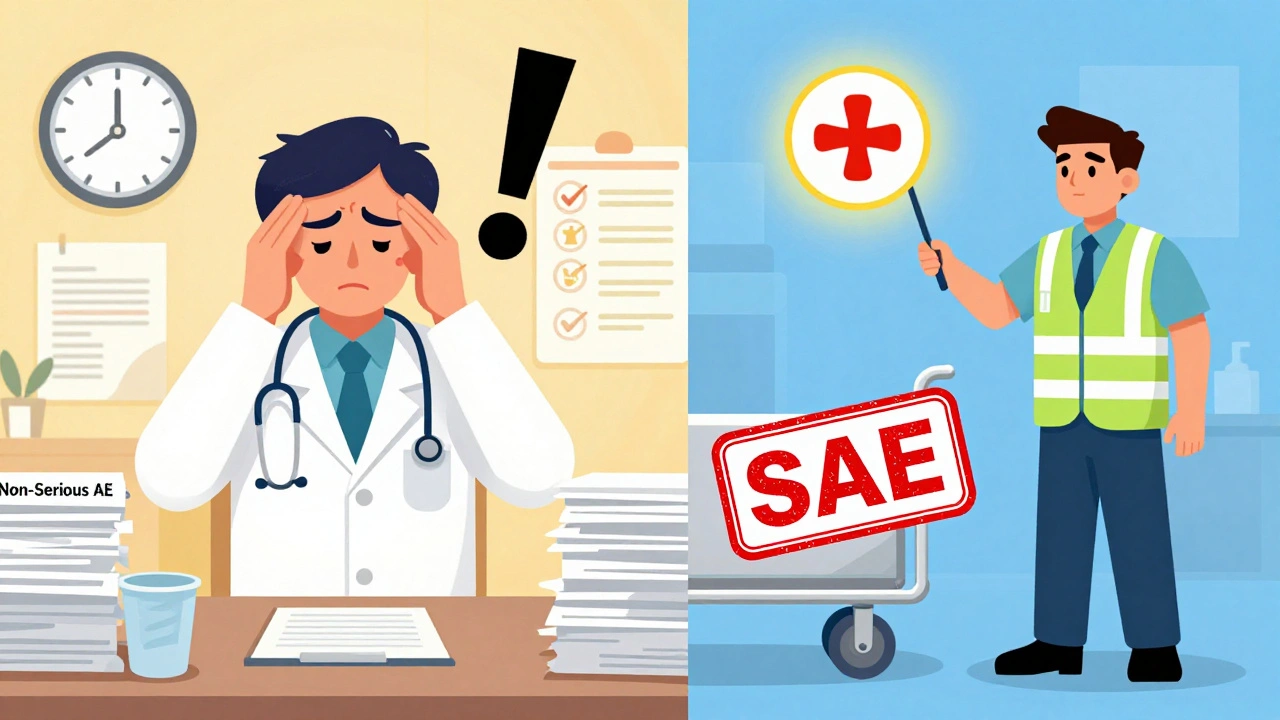
Serious vs Non-Serious Adverse Events: When to Report in Clinical Trials
Understand when to report serious vs non-serious adverse events in clinical trials. Learn the FDA and ICH criteria, reporting timelines, common mistakes, and how to avoid over-reporting that slows down safety monitoring.
December 5 2025