
Penicillin Skin Test: What It Is, Who Needs It, and What to Expect
When you hear penicillin skin test, a medical procedure used to determine if someone has a true allergy to penicillin antibiotics. Also known as penicillin allergy testing, it’s one of the most reliable ways to tell if your body reacts dangerously to this common class of drugs. Many people say they’re allergic to penicillin because they had a rash or stomach upset as a kid—but less than 1 in 10 actually have a real IgE-mediated allergy. That means most people could safely take penicillin or related antibiotics like amoxicillin, even if they’ve been told to avoid them for years.
The penicillin skin test, a diagnostic tool involving small injections of penicillin derivatives under the skin is simple and quick. A tiny amount of penicillin and its major and minor antigenic determinants is placed on your arm or back, then the skin is gently pricked. If you’re allergic, a red, itchy bump shows up within 15 to 20 minutes. If not, you may get a deeper injection (intradermal) for confirmation. No needles, no long wait, no hospital stay. It’s done in an allergist’s office or clinic with emergency equipment on hand, just in case.
Why does this matter? If you’re wrongly labeled allergic, you might get broader-spectrum antibiotics like vancomycin or clindamycin instead. Those drugs cost more, can cause worse side effects like C. diff infections, and sometimes don’t work as well. For someone with an infection like strep throat or a skin abscess, penicillin is still the gold standard. Avoiding it unnecessarily puts your health at risk and drives up medical costs.
People who had a reaction years ago, especially kids, often outgrow their allergy. Even those who had a mild rash as a child can usually tolerate penicillin now. That’s why retesting is so important. If you’ve been told you’re allergic but never had a true anaphylactic reaction—like trouble breathing, swelling of the throat, or a drop in blood pressure—it’s worth getting tested. And if you’re facing surgery, an infection, or need antibiotics long-term, knowing your real allergy status changes everything.
The penicillin allergy, a potentially life-threatening immune response to penicillin antibiotics is serious when real. But it’s also overdiagnosed. The drug allergy testing, a process used to identify true hypersensitivity reactions to medications process isn’t perfect, but it’s the best tool we have. And unlike blood tests, which often give false positives, the skin test has a high negative predictive value—meaning if it’s negative, you’re very likely safe.
What you’ll find below are real, practical posts that connect to this topic. Some explain how to track medication reactions using a pill diary. Others show how to avoid dangerous drug interactions when switching antibiotics. One details how to store liquid antibiotics properly after reconstitution. Another talks about managing side effects from other medications, like corticosteroids or antihistamines, that might be used during testing. These aren’t theoretical guides—they’re written by people who’ve been there, and they give you the tools to ask the right questions, spot red flags, and take control of your own care.
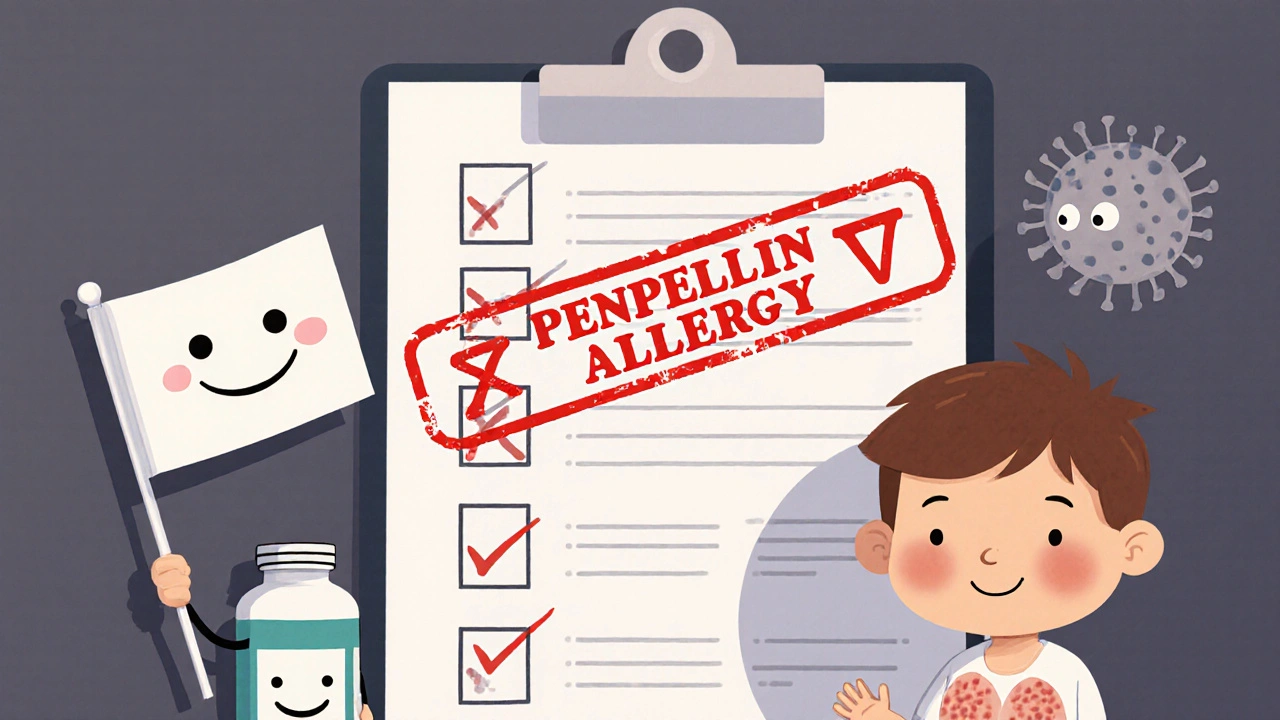
Penicillin Allergies vs Side Effects: How to Tell Them Apart and Why It Matters
Most people who think they're allergic to penicillin aren't. Learn how to tell the difference between a true allergy and a side effect-and why getting tested could save your life.
November 14 2025