
Kids Fever Medication Safety: What Parents Need to Know
When your child has a fever, the instinct is to reach for medicine—but kids fever medication safety, the practice of giving fever-reducing drugs to children with correct dosing, timing, and awareness of risks. Also known as pediatric fever management, it’s not just about lowering temperature—it’s about avoiding harm. Too much acetaminophen can damage the liver. Too much ibuprofen can hurt the kidneys. Mixing them without knowing why can lead to overdose. And many parents don’t realize that a fever itself isn’t the enemy—it’s the body fighting infection.
Two main drugs are used for kids’ fevers: acetaminophen, a common pain and fever reducer that’s safe when dosed by weight, not age, and ibuprofen, an anti-inflammatory that works longer and may be better for high fevers or swelling. But both require precision. A teaspoon too much, a dose too close together, or using adult pills because you’re out of children’s liquid can turn a simple fever into an emergency. The FDA and AAP warn that over 70,000 kids end up in emergency rooms each year from accidental medication errors—most of them preventable.
It’s not just about the dose. You also need to know what’s in combination products. Cold and flu syrups often contain acetaminophen too. Giving those along with Tylenol? That’s doubling up. And don’t assume natural means safe—some herbal teas or home remedies can interfere with meds or cause allergic reactions. Even the way you measure matters: a kitchen spoon isn’t accurate. Always use the dropper or cup that comes with the bottle.
When should you worry? If your child is under 3 months with a fever of 100.4°F or higher, call a doctor immediately. For older kids, watch for signs like trouble breathing, stiff neck, rash, extreme sleepiness, or refusal to drink. A fever that lasts more than 3 days without improvement needs attention too. And if your child has asthma, liver disease, or kidney issues, some fever meds may not be safe at all.
What you’ll find here are real, practical answers from posts written by medical professionals who’ve seen the mistakes happen. You’ll learn how to read a child’s weight-based dosing chart, how to space out acetaminophen and ibuprofen safely, what to do if you accidentally give the wrong dose, and how to keep track of meds so you don’t repeat them. No fluff. No guesswork. Just what works—and what could put your child at risk.
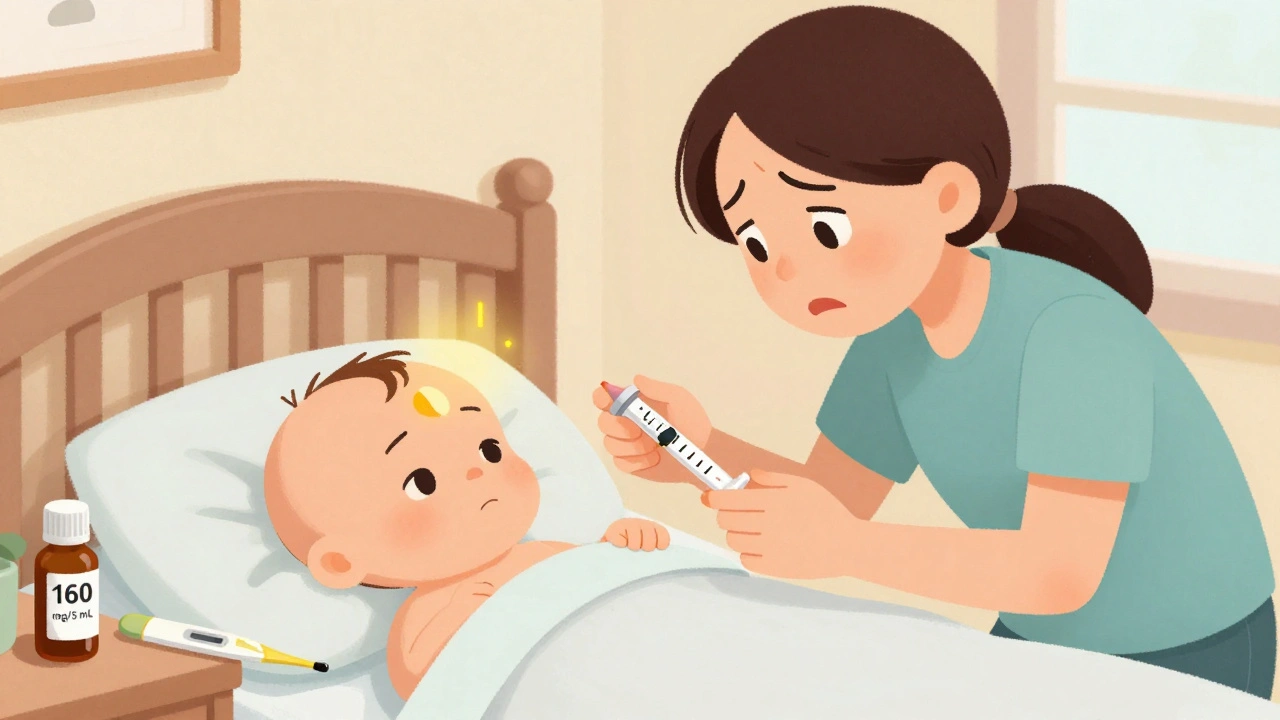
Fever Medication for Kids: Acetaminophen vs. Ibuprofen Safety Guide
Learn the key differences between acetaminophen and ibuprofen for kids under two, including dosing, safety, effectiveness, and when to call a doctor. Make smarter choices for fever and pain relief.
December 2 2025