
FDA Biosimilars: What They Are, How They Work, and What You Need to Know
When you hear FDA biosimilars, approved versions of complex biologic drugs that match the original in safety, purity, and potency. Also known as biologic generics, they are not cheap copies—they’re scientifically proven alternatives designed to work just like the brand-name drugs they copy. Unlike regular generics, which are simple chemical copies, biosimilars are made from living cells, making them far more complex. The FDA requires them to undergo rigorous testing to prove they produce the same clinical outcomes, with no meaningful difference in safety or effectiveness.
This matters because biologic drugs—used for conditions like rheumatoid arthritis, Crohn’s disease, and cancer—can cost over $10,000 a year. Biosimilars cut those prices by 15% to 35%, sometimes more. That’s not just savings for patients; it’s access. Many people delay or skip treatment because of cost. With biosimilars, more people get the drugs they need. The FDA doesn’t approve them lightly. They look at thousands of data points: protein structure, how the drug behaves in the body, immune responses, and real-world outcomes from clinical trials. If a biosimilar doesn’t match the original in every key way, it doesn’t get approved.
Some people worry switching from a brand-name biologic to a biosimilar might cause problems. But studies show that’s rarely true. In fact, the FDA has tracked millions of prescriptions and found no increase in side effects or treatment failures when patients switch. The real risk? Not knowing what you’re on. If your doctor switches you to a biosimilar, ask for the exact name. Some biosimilars have names that end in -fi, -mab, or -derm—those aren’t random. They’re coded to show which drug they copy. And if you’re on one, keep using the same pharmacy. That way, your pharmacist can spot mix-ups before they happen.
You’ll also find biosimilars in the same places as the originals: hospitals, clinics, and mail-order pharmacies. But not all biologics have biosimilars yet. The first one hit the market in 2015, and since then, dozens more have followed. The FDA keeps a public list of approved biosimilars, and you can check it anytime. It’s not just about saving money—it’s about making sure you’re getting a treatment that’s been tested as hard as the original.
What you won’t find in this collection are vague claims or marketing fluff. Instead, you’ll see real-world advice from posts that cover how to track medication effectiveness after a switch, how to avoid dangerous interactions with biologics, and how to use a medication log to catch problems early. You’ll learn how TNF inhibitors work for autoimmune diseases, why timing matters with steroids like Calcort, and how to safely manage multiple prescriptions. These aren’t theoretical discussions. They’re practical tools for people who take these drugs—or help someone who does.
If you’re on a biologic—or thinking about switching—know this: biosimilars aren’t a compromise. They’re a smart, safe, and approved option. And the more you understand how they work, the better you can protect your health.
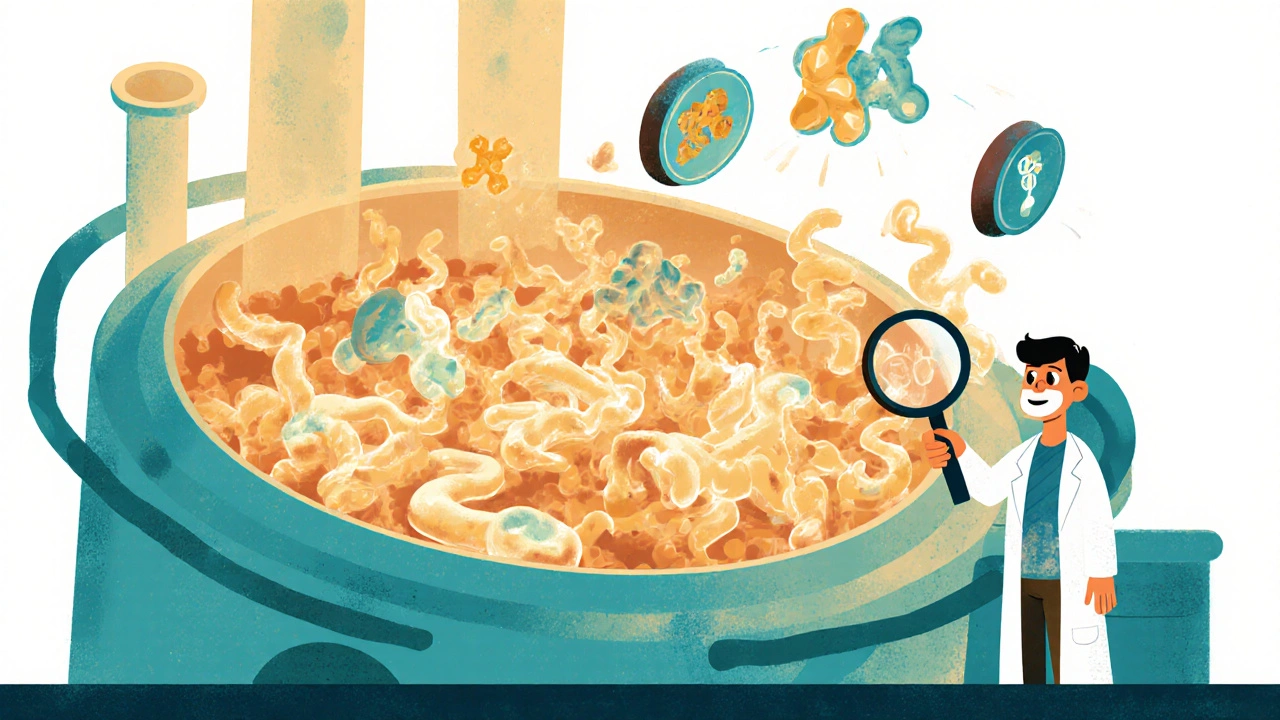
Lot-to-Lot Variability in Biologics and Biosimilars: What You Need to Know
Lot-to-lot variability is natural in biologics and biosimilars due to their complex manufacturing. Learn how regulators ensure safety despite molecular differences, why biosimilars aren't generics, and what this means for patients and labs.
November 23 2025