
Penicillin Allergy: What It Is, Symptoms, and Safe Alternatives
When someone says they have a penicillin allergy, a harmful immune response to penicillin-class antibiotics that can range from mild rash to life-threatening anaphylaxis. Also known as beta-lactam allergy, it's one of the most commonly reported drug allergies in the U.S. But here’s the catch: up to 90% of people who believe they’re allergic to penicillin aren’t. They might’ve had a rash as a kid, got told it was an allergy, and never got tested again. Years later, they’re avoiding a whole class of safe, effective antibiotics — not because they’re truly allergic, but because no one ever checked.
True penicillin allergy, an immune system overreaction triggered by penicillin or related drugs like amoxicillin. Also known as amoxicillin reaction, it usually shows up within an hour of taking the drug. Symptoms can be mild — hives, itching, swelling — or severe: trouble breathing, drop in blood pressure, swelling of the throat. That’s anaphylaxis, a medical emergency that needs immediate treatment with epinephrine. But if you only got a stomachache or a mild rash years ago, it’s likely not a true allergy. Many people confuse side effects with allergies. Diarrhea from amoxicillin? That’s not an allergy. A headache after taking penicillin? Also not an allergy. True allergies involve your immune system, not just your gut.
Why does this matter? Because avoiding penicillin unnecessarily pushes doctors toward broader-spectrum antibiotics — drugs that are more expensive, harder on your gut, and contribute to antibiotic resistance. If you’ve been labeled allergic, you might be missing out on the safest, cheapest, and most effective treatment for infections like strep throat, ear infections, or pneumonia. The good news? You can get tested. A simple skin test or oral challenge, done under medical supervision, can confirm whether you’re truly allergic. And if you’re not? You can safely go back to using penicillin-class drugs.
For those who truly are allergic, there are plenty of alternatives. Drugs like clindamycin, a non-penicillin antibiotic often used for skin and respiratory infections in penicillin-allergic patients, or azithromycin, a macrolide antibiotic that works well for respiratory and soft tissue infections, are common choices. But even these have trade-offs. Some cause more diarrhea. Others are less effective against certain bacteria. The key is knowing your real risk — not just your label.
Many of the posts below help you understand how to track reactions, avoid dangerous drug combinations, and make smarter choices when antibiotics are needed. You’ll find guides on how to use a medication log to catch unexpected side effects, how to store antibiotics properly so they work as intended, and how to spot when a generic switch might change how your body responds. You’ll also see how to manage other allergies — like pet dander or skin reactions from steroids — because knowing how your body reacts to one trigger helps you understand others.
If you’ve been told you’re allergic to penicillin, don’t just accept it. Ask for a test. Ask for a second opinion. Your next infection might depend on it.
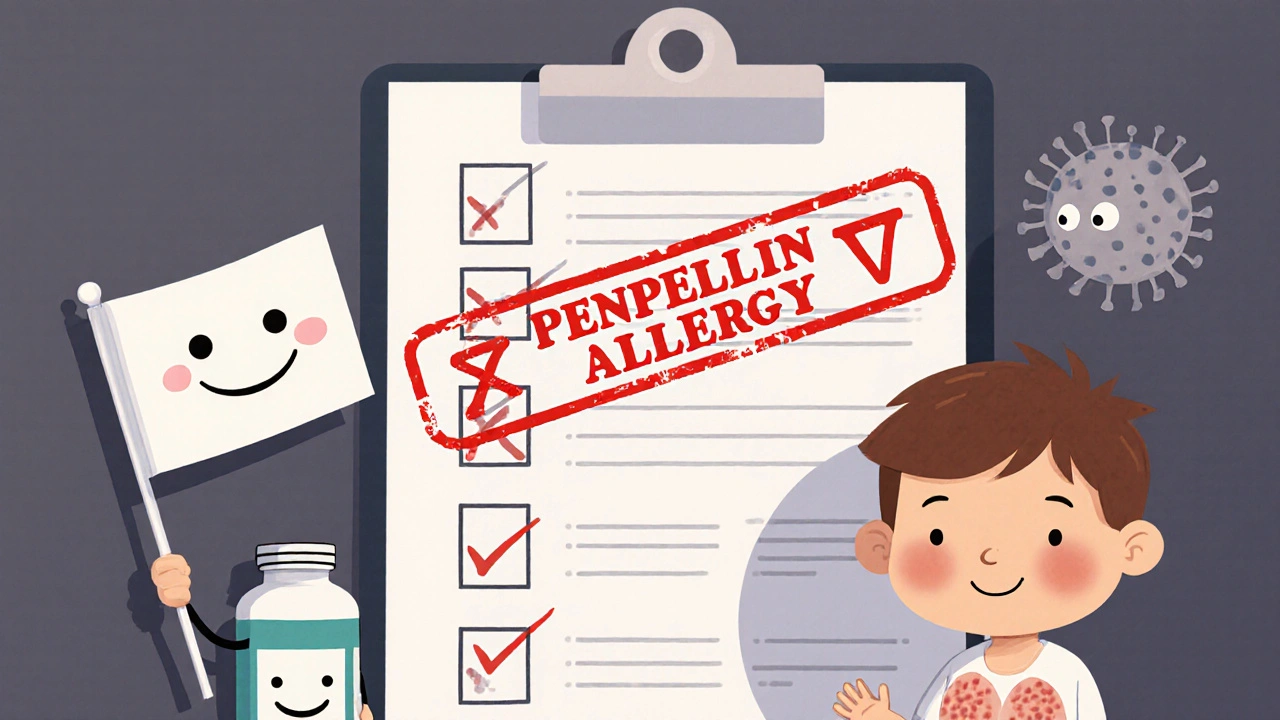
Penicillin Allergies vs Side Effects: How to Tell Them Apart and Why It Matters
Most people who think they're allergic to penicillin aren't. Learn how to tell the difference between a true allergy and a side effect-and why getting tested could save your life.
November 14 2025